





 Portuguese
  English
  Spanish
  5 min of reading
  0 comments


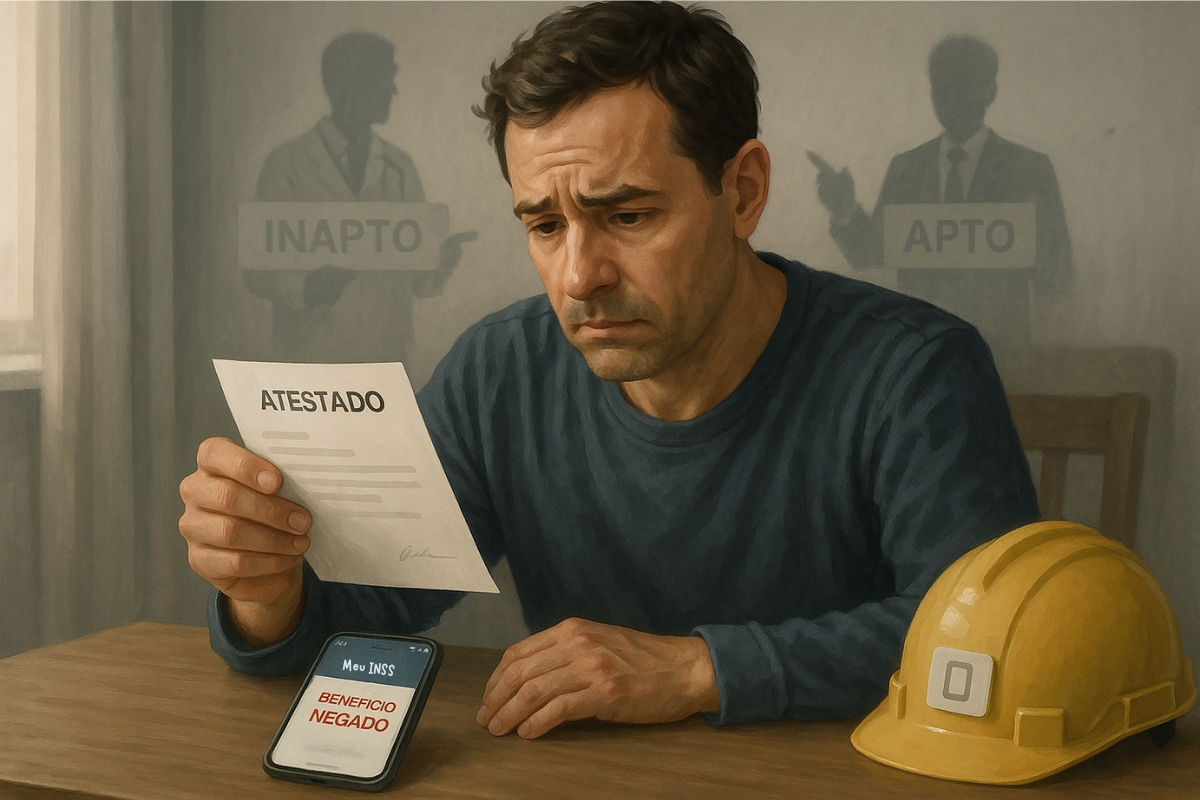
Even When Sick, the Worker May Have Their Benefit Denied and Be Left Without Salary. See Why This Happens and What Steps to Take to Quickly Reverse the Decision
Receiving a medical certificate stating that you need to take time off and still having your sick pay denied by INSS is a situation that scares many people. In addition to the anxiety about health, there is the worry about how to pay the bills. In some cases, this denial creates something even worse, called benefit limbo, when the person is left without benefits and without salary at the same time.
The official name of the benefit today is temporary incapacity assistance, but many people still use “sick pay.” The logic remains similar. It is meant for those who are ill or recovering from an accident and, for a period, cannot work.
Why INSS May Deny Even With a Certificate
For INSS, what matters is the result of the assessment conducted by the institute itself. This means that a certificate from your doctor, no matter how serious, may not be enough if the expert believes you are still able to work. This mismatch happens frequently and is one of the main causes of denial.
-
Government enacts new law: paternity leave increases from 5 to 20 days with gradual increases until 2029, and Social Security pays the paternity salary; companies no longer bear the absence cost, estimated at R$ 5.4 billion.

-
End of the 1-hour lunch break in the CLT? Current labor law maintains the break, allows for negotiated reductions, and defines rules for working hours and home office in Brazil.

-
Employee Fired After Accumulating 114 Days of Medical Leave in One Year, Labor Court Upholds Company’s Decision

-
Employee Fired While Treating Depression Wins in Court and Vale Is Required to Rehire Him Following Decision Based on the CLT and INSS Benefits


There is also a chance that INSS denies for “paper” reasons. This could be due to the lack of an updated exam, a very short medical report, absence of information about your job role, or even issues regarding contribution and insured status. In other words, sometimes the person is genuinely incapacitated but fails to prove it in the way required by INSS.
What is Benefit Limbo
Benefit limbo occurs when there is a conflict between two assessments. On one side, INSS assessment states the worker is fit. On the other, the company’s doctor or a private doctor asserts that the person cannot return yet. The result: the company doesn’t allow the person to resume activities, and INSS doesn’t pay the benefit. Income disappears overnight.
In practice, it is like being stuck between two closed doors. And the longer this situation lasts, the greater the risks of debt, worsening health, and even dismissal due to lack of clarity about returning to work.
What to Do Right After the Denial
The first step is to understand the reason for the denial. This appears on the app or website Meu INSS, in the area for results of the incapacity benefit. It usually states whether the denial was due to lack of medical evidence, insurance requirements, or the expert’s assessment on the day of the exam. Knowing this helps to choose the next step.
With the reason in hand, it is worth gathering everything that supports the current incapacity. Recent reports, new exams, prescriptions, and a clear description of what you cannot do at work make a difference. A good medical report explains the illness, treatment, estimated time off, and, most importantly, which activities in your role become impossible at that moment.
Request for Reconsideration and New Assessment
Those who disagree with the result can make a request for reconsideration. It is a kind of new assessment within INSS itself. The deadline is usually up to 30 days after being notified of the denial, so it is not something to put off.
In this request, you can attach additional medical documents and request another assessment. It is important to bring recent exams because INSS assesses incapacity in the present. If the material is outdated, the expert may understand that the situation has already changed.
When Administrative Appeal is Applicable
If the reconsideration does not resolve the issue, there is still the administrative appeal to the Social Security Appeals Board. It also has a 30-day deadline from the denial you wish to contest. You can do this through Meu INSS or by calling 135.
Here, the idea is to explain why you disagree and keep the documentation well organized. There is no need to use complicated terms. What matters is to show that incapacity exists and is well proven.
And the Company in This Story?
In limbo, communication with the company needs to be careful. If the occupational doctor deems you unfit, keep that document. It is strong evidence that you are not in a condition to return. If the company insists on your return, request everything in writing and keep records. This can be essential if you need to appeal.
In some cases, the company can reassign the worker to a role that is compatible with temporary limitations. When this is possible and safe, it can prevent the problem from dragging on.
If Nothing Works, the Justice System May Help
When INSS maintains the denial even with strong medical evidence, many people resolve the situation in court. The judge usually requests a new assessment, conducted by an independent doctor, and reevaluates the case. If it is proven that you were indeed incapacitated, the benefit may be granted and paid retroactively.
This does not mean that every case needs to go to court. But it is a possible avenue when the administrative route does not work and the person continues without income.
How to Avoid Falling into Limbo
The best way to avoid limbo is to arrive at the assessment well-prepared. Complete reports, recent exams, and a clear explanation of the work you do greatly increase the chances of granting. It also helps to bring an organized history of treatment, showing that incapacity is not just a “guess,” but a real problem monitored by professionals.
If there is a denial, acting quickly makes a difference. The sooner you request reconsideration, appeal, or legal advice, the shorter the time without money. And, amidst all this, taking care of your health remains a priority. The benefit exists to protect the worker during a fragile moment. If it was unjustly denied, you have paths to seek your right.










Seja o primeiro a reagir!