





 Portuguese
  English
  Spanish
  4 min of reading
  0 comments



Hong Kong Researchers Present A Breakthrough In Perovskite-Silicon Tandem Cells, Raising The Energy Efficiency Of Solar Energy And Pointing To New Pathways For More Powerful And Accessible Photovoltaic Systems
A group of researchers from Hong Kong has revealed a scientific milestone that could radically transform the global energy matrix. The study, published by Gizmodo Brazil this Friday (14), details how perovskite-silicon tandem cells have achieved efficiencies close to 40%, surpassing the theoretical limit of 34% established by the Shockley-Queisser limit for solar cells with a single junction.
What Are Perovskite-Silicon Tandem Cells?
This technological leap represents a turning point in the race for energy efficiency, placing solar energy on a new level of competitiveness against fossil fuels and other renewables. Solar energy is about to break its own historical ceiling.
The perovskite-silicon tandem cells combine two photovoltaic layers: one of silicon (traditional material) and another of perovskite (synthetic material with a crystalline structure). This architecture allows capturing different ranges of the solar spectrum, reducing thermal losses and increasing the conversion of light into electricity.
-
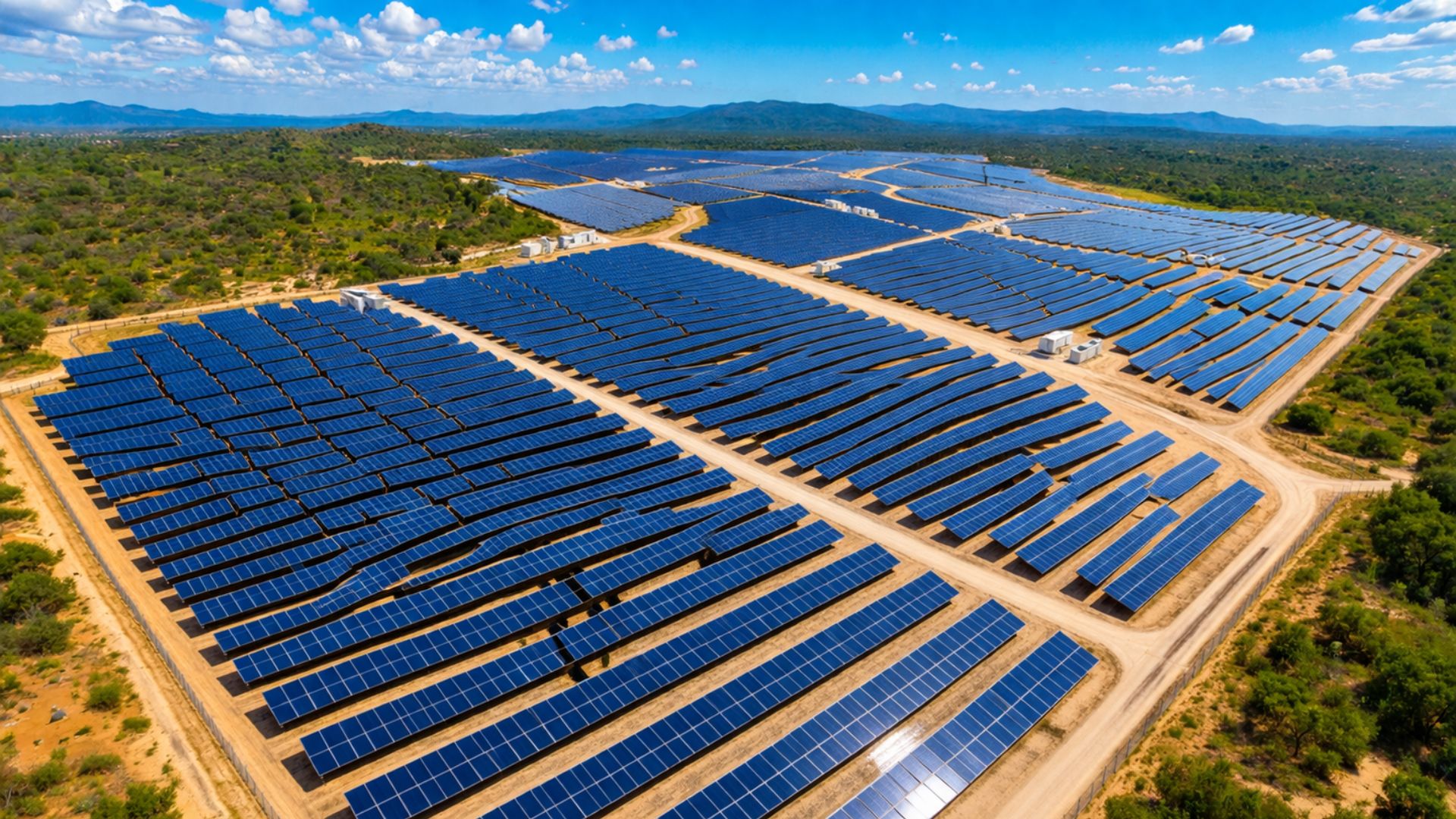
The Sol do Agreste Photovoltaic Complex begins operations in Pernambuco and accelerates the expansion of solar energy in Brazil, directly impacting the reduction of emissions and strengthening the sustainable energy matrix.
-
Roraima bets on the sun to escape high tariffs: Amid the energy crisis and price hikes, solar energy is growing in Roraima and transforming consumption in the North region.

-
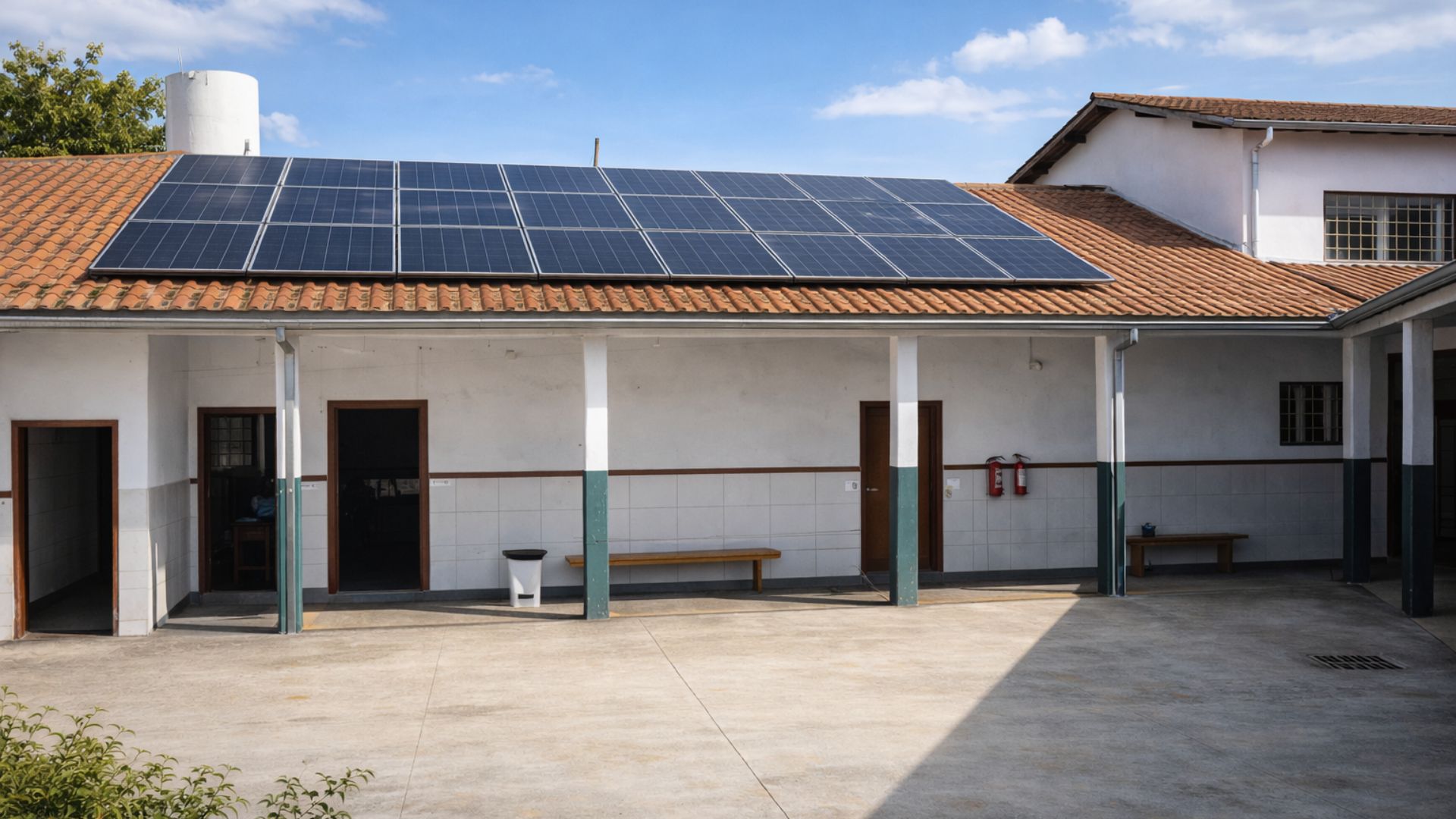
Copel boosts solar energy in Paraná and brings innovation to public schools, promoting savings on electricity bills, energy efficiency, and a direct impact on the quality of education.
-
Brazil reaches historic milestone in solar energy: Sector surpasses 2 million accumulated green jobs and generates billions in the national economy even under market pressure.

- The perovskite layer absorbs high-energy photons.
- The silicon layer utilizes lower-energy photons.
- Together, these layers maximize energy efficiency without compromising stability.
According to expectations from companies like LONGi Solar, a leader in photovoltaic research, this technology is considered the next generation of solar cells, with the potential to replace conventional models on a large scale.
Why Is The Solar Energy Advancement In Hong Kong So Relevant?
Hong Kong has become a hub of solar energy innovation, bringing together research centers and universities with significant investment in clean technologies. The study released in November shows that local scientists have managed to:
- Surpass the physical efficiency limit with tandem cells.
- Maintain stability and durability, two historical challenges of perovskite.
- Reduce production costs, bringing the technology closer to commercial viability.
This advancement not only breaks technical barriers but also reconfigures the future of solar energy, making it more accessible and efficient. Hong Kong takes center stage in the photovoltaic revolution.
Energy Efficiency: Surpassing Physical Limits
The achievement of 40% energy efficiency represents a leap of decades compared to conventional solar cells, which hover around 20% to 25%. With this, it is expected:
- Drastic reduction in the cost per watt generated.
- Less need for installed area for the same production.
- Acceleration of the global energy transition, especially in countries with high solar incidence.
This advancement positions perovskite-silicon tandem cells as ideal candidates for urban, industrial, and rural applications, with a direct impact on decarbonizing the energy matrix.
Technical Challenges And Next Steps For Solar Energy
Despite the enthusiasm, there are still obstacles to large-scale adoption:
- Industrial scalability: producing en masse without losing efficiency.
- Long-term stability: ensuring performance for decades.
- Regulation and certification: adapting international standards to new technology.
However, the pace of advancement is promising. Institutions like KAUST and Fraunhofer ISE have also reported efficiencies close to 33% in tests with tandem cells, reinforcing the global trend.
Comparison Between Solar Energy Technologies
| Solar Technology | Average Efficiency (%) | Cost Per Watt (USD) | Stability |
| Conventional Silicon | 20–25 | 0.20–0.30 | High |
| Perovskite-Silicon Tandem Cells | 33–40 | 0.10–0.20 (estimated) | Moderate |
| Thin Film (CIGS, CdTe) | 10–15 | 0.25–0.35 | Medium |
This comparison shows that although tandem cells still face stability challenges, their projected performance and cost make them highly competitive.
Solar Energy And Impact On The Global Matrix
Solar energy is already the fastest-growing renewable source in the world. With the advancement of perovskite-silicon tandem cells, this trend is expected to intensify. According to the International Energy Agency (IEA), the installed capacity of solar energy is expected to double by 2030, and high-efficiency technologies will be essential to meet climate targets.
- Countries like China, India, and the United States lead in investments.
- Europe bets on innovation to reduce energy dependence.
- Latin America, including Brazil, has abundant solar potential and growing interest in advanced technologies.
Practical Applications And Potential In The Solar Energy Market
With higher energy efficiency, perovskite-silicon tandem cells can be applied in:
- Residential and commercial roofs with limited space.
- Solar plants in dense urban areas.
- Portable equipment and electric vehicles.
- Satellites and aerospace applications.
How Does The Advancement In Hong Kong Inspire New Research?
The success of the researchers in Hong Kong serves as a catalyst for other initiatives. Universities and innovation centers around the world are accelerating studies on perovskites, seeking:
- New, more stable compounds.
- Cheaper manufacturing processes.
- Integration with smart energy systems.
Additionally, startups and technology companies are investing in commercial prototypes, with plans to launch tandem panels in the market by 2027.
What Does This Advancement Represent For The Energy Future?
The development of perovskite-silicon tandem cells in Hong Kong represents more than a technical achievement: it is a symbol of how innovation can break physical barriers and accelerate the transition to a sustainable energy model.
With superior energy efficiency, lower cost, and global application potential, this technology can redefine the role of solar energy in the global matrix. Hong Kong’s leadership in this process shows that urban centers with strong investment in research can play a leading role in the fight against climate change.








Seja o primeiro a reagir!