





 Portuguese
  English
  Spanish
  4 min of reading
  86 comments


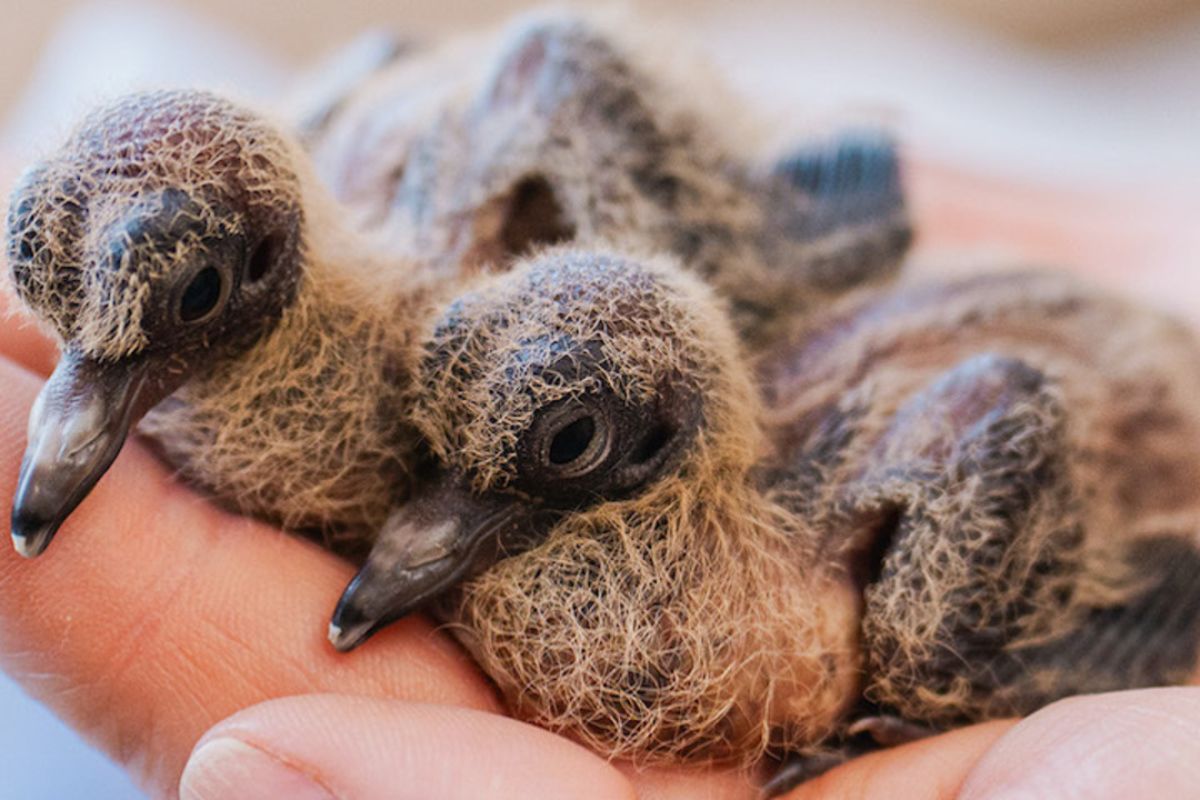


The Socorro Dove Considered Extinct in the Wild Since the 1970s Returns to the Center of Global Conservation After the Birth of Eight Chicks in a European Zoo, Reinforcing International Programs, Genetic Preservation, and the Real Possibility of Return to Original Habitat in the Future.
A bird declared extinct in the wild for over 50 years has surprised science again by recording the birth of eight chicks in captivity, a landmark that rekindles the hope of reversing one of the most emblematic collapses of modern conservation. The achievement took place in a large European zoo and involves a species that now survives exclusively under human care.
Currently, about 200 individuals of the bird exist in zoos and conservation centers spread across Europe and North America. This contingent represents the only barrier between the survival of the species and definitive extinction, turning each new birth into a strategic event for the future of conservation.
The Silent Disappearance of the Bird in Nature

The bird Socorro Dove is native to Socorro Island, an isolated Mexican territory in the Pacific Ocean, and its disappearance was not the result of a natural process.
-
After 14 years of waiting, a rammed earth mansion built in 1702 in the North Zone of São Paulo will become a park with leisure facilities and green areas, with a million-dollar investment.

-
With 2 unfinished nuclear reactors, up to 25 billion in costs, and proven fraud, the Nukegate case has left 800,000 consumers still paying today for energy that will never be produced.

-
The household appliance that consumes the most energy in Brazilian homes is not the air conditioner; it is located in the smallest room of the house, is used daily, and can account for up to 25% of the electricity bill, while an alternative in the same outlet can reduce this cost by up to 75%.

-
Son of a seamstress from the rural area of Ceará who did not speak English wins a scholarship of over 2 million reais at Williams College, one of the top 10 universities in the United States, covering everything including dormitory, meals, and annual trips to Brazil.


Throughout the 20th century, the introduction of invasive species drastically altered the ecological balance of the island, causing a rapid and irreversible decline in the wild population.
Domestic cats brought by humans began preying on eggs and adults, while sheep destroyed vital native vegetation for food and nesting.
In just a few decades, the bird was no longer observed in the wild, until researchers officially confirmed its extinction in nature in the 1970s.
Survival Guaranteed Only by Captivity
What prevented the total disappearance of the bird was the existence of small groups kept in captivity before the final collapse.
These individuals gave rise to what conservationists call a safety population, created with the aim of preserving the species outside its natural environment while long-term solutions were being studied.
This population functions as a living genetic bank.
Each individual is crucial for maintaining genetic diversity, reducing risks of inbreeding, and ensuring that the bird remains biologically viable, even after decades of absence in nature.
The Birth of the Eight Chicks and Its Meaning

The recent birth of eight chicks represents a decisive advance within this global effort.
It proves that the bird not only survives in captivity but maintains stable reproductive capacity, an essential condition for any future reintroduction plan.
In terms of conservation, successful reproduction goes beyond symbolism.
It expands the genetic base, strengthens breeding populations, and reduces dependency on a few pairs, a critical factor for species that have undergone severe population bottlenecks.
How the International Breeding Program Works
The reproduction of the bird occurs within a program coordinated among zoos in different countries.
The pairs are defined based on detailed genetic analyses, avoiding breeding between related individuals and reducing the risk of hereditary problems.
The enclosures are designed to simulate, as closely as possible, the natural conditions of Socorro Island.
There is strict control of diet, adequate spaces for flight, specific areas for nesting, and constant monitoring by specialized biologists and veterinarians.
Each chick born is monitored from the first days of life.
The Challenge of Reintroduction to the Original Habitat

Despite the progress represented by the new chicks, the reintroduction of the bird into the wild still depends on a series of environmental conditions.
Socorro Island has undergone invasive species eradication programs in recent years, but the complete recovery of the ecosystem is a long and complex process.
Only with the restoration of native vegetation and the definitive elimination of introduced predators will it be possible to ensure a safe environment for the return of the bird.
Any reintroduction without these steps could repeat past mistakes and compromise decades of conservation efforts.
A Global Symbol for Modern Conservation
For scientists, the trajectory of this bird is both a warning and a demonstration of resilience.
It highlights how human interventions can lead a species to extinction in just a few decades, but also shows that science, when well-coordinated, can prevent definitive extinction.
Each chick born in captivity represents more than the survival of a rare bird.
It symbolizes the concrete possibility that extinction is not always a final point and that, with time, planning and international cooperation, species lost in the wild may one day return to exist freely.
Do you believe that captive conservation programs can truly return species extinct in the wild to their original habitats?







Todabia ay barias..en un lugar ….
Excelente el trabajo que realiza pero como observación para no confundir,deberían diferenciar entre mamiferos y aves,a las cuales no se les da ese apelativo de polluelos
Protect the nature.