





 Portuguese
  English
  Spanish
  4 min of reading
  0 comments


Exceptional Fossil Of A Prehistoric Bird Weighing About 33 Grams, Preserved In A Lagerstätte Deposit, Reveals Accumulation Of More Than 800 Stones In The Esophagus, Allowing Researchers To Identify A Likely Cause Of Individual Death Approximately 120 Million Years Ago
A prehistoric bird the size of a sparrow, which lived approximately 120 million years ago, died after getting more than 800 small stones stuck in its esophagus, in an episode considered by researchers as the almost certain cause of its death and one of the rare cases of identifiable individual demise in the fossil record.
Rare Discovery Allows Identification Of The Cause Of Death Of A Prehistoric Bird
The fossil belongs to the species Chromeornis funkyi, a newly described prehistoric bird that caught the attention of paleontologist Jingmai O’Connor from the Field Museum when analyzed in a Chinese collection. According to the researcher, it is extremely uncommon to determine the cause of death of a specific individual from fossils.
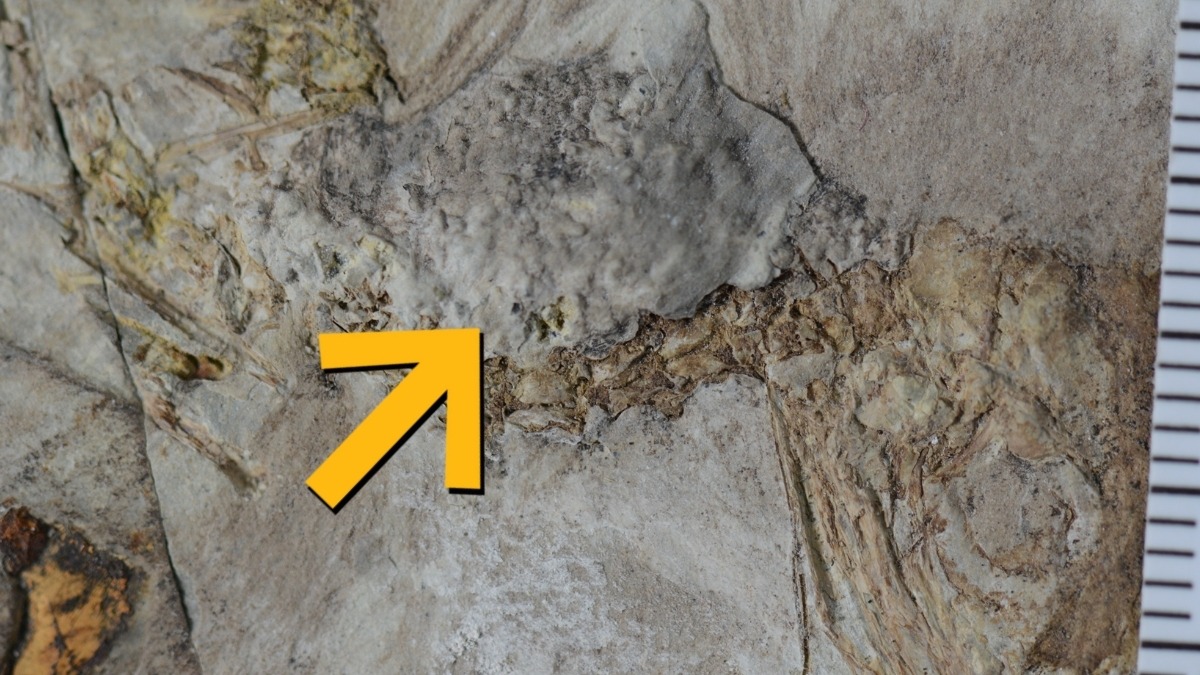
The bird had a compact mass of small stones located in its esophagus, just below the neck bones.
-
Motorola launched the Signature with a gold seal from DxOMark, tying with the iPhone 17 Pro in camera performance, Snapdragon 8 Gen 5 that surpassed 3 million in benchmarks, and a zoom that impresses even at night.

-
Satellites reveal beneath the Sahara a giant river buried for thousands of kilometers: study shows that the largest hot desert on the planet was once traversed by a river system comparable to the largest on Earth.

-
Scientists have captured something never seen in space: newly born stars are creating gigantic rings of light a thousand times larger than the distance between the Earth and the Sun, and this changes everything we knew about stellar birth.

-
Geologists find traces of a continent that disappeared 155 million years ago after separating from Australia and reveal that it did not sink, but broke into fragments scattered across Southeast Asia.

The position and volume of this material indicate that the choking occurred while the bird was still alive, probably during an attempt to regurgitate, leading to the animal’s death. O’Connor states she is almost certain that this process was fatal for the small bird.
Exceptional Preservation In A Lagerstätte Fossil Deposit
The specimen was found in a fossil formation classified as Lagerstätte, known for preserving organisms with an extraordinary level of detail. In the case of this prehistoric bird, the fossil preserved not only bones and beak, but also outlines of the skin of the neck, wings, and legs, as well as feathers, traces of dark pigment in the eyes, and possible muscle indications.
This degree of preservation allowed researchers to accurately reconstruct the animal’s anatomy and determine its position in the evolutionary tree of prehistoric birds. The specimen weighed about 33 grams and was part of the extinct family Longipterygidae, characterized by small birds with teeth only at the tips of long, pointed beaks. The closest known genus is Longipteryx.
Analysis Of The Stones Rules Out Natural Deposition After Death
Upon examining the strange concentration of stones, researchers identified a crucial detail. The mineralogy of the pebbles differed both from the rock surrounding the fossil and among themselves. This diversity ruled out the hypothesis that the material was deposited in the esophagus after death, by natural processes at the bottom of a lake.
The conclusion was that the prehistoric bird deliberately swallowed the stones while it was still alive. However, the location in the esophagus, rather than the stomach, raised immediate doubts about the reason for this behavior. According to O’Connor, there is no similar record in other known fossils, making the find even more intriguing.
Stones Did Not Aid Digestion, Indicate Anatomical Data
In many modern birds, the ingestion of stones occurs as a digestive aid. These elements, called gastroliths, are lodged in the gizzard and help grind food with the aid of a muscular gastric mill. When they become too smooth, some birds regurgitate the stones and replace them with rougher ones.
In the case of Chromeornis funkyi, anatomical data indicates that the Longipterygidae family did not possess a functional gastric mill. Furthermore, the number and volume of the stones were incompatible with the digestive capacity of a bird of that size. More than 800 units were identified, some of which were not even proper stones, resembling small balls of clay.
Based on this data, researchers clearly state that the stones were not ingested to aid in digestion. This point eliminates one of the most common explanations for similar behaviors in modern birds and reinforces the anomalous character of the case.
Disease May Have Led The Prehistoric Bird To Atypical Behavior
In the absence of a digestive function, scientists considered the possibility that the prehistoric bird was sick. In modern birds, there are records of stone ingestion associated with attempts to eliminate parasites or compensate for nutritional deficiencies. These behaviors are often observed in debilitated animals.
The provisional hypothesis raised by the team suggests that the bird, possibly ill, began to ingest large quantities of stones. At some point, it attempted to regurgitate the accumulated material, forming a mass too large to be expelled. The resulting blockage in the esophagus would have caused the fatal choking, a rare but plausible outcome according to the preserved data.
Later Extinction Does Not Invalidate The Scientific Value Of The Unique Specimen
Although Chromeornis lived millions of years before the mass extinction of the Cretaceous-Paleogene, which occurred 66 million years ago, its entire lineage ultimately disappeared in that global event. Nevertheless, this unique fossil provides a limited but valuable window into understanding physiological and behavioral aspects of these birds.
According to researchers, learning about extinct species and their vulnerabilities can indirectly contribute to reflections on current conservation. The research detailing the case was published in the journal Palaeontologica Electronica, reinforcing the importance of the find as one of the most peculiar examples ever documented in the study of prehistoric birds.








-

Uma pessoa reagiu a isso.