





 Portuguese
  English
  Spanish
  8 min of reading
  0 comments


Marine Birds Return to Forgotten Islands, Deposit Guano on a Colonial Scale, Reactivate Dead Soils, Make Plants Sprout, Strengthen Coral Reefs and Accelerate Environmental Regeneration in 2026 Now
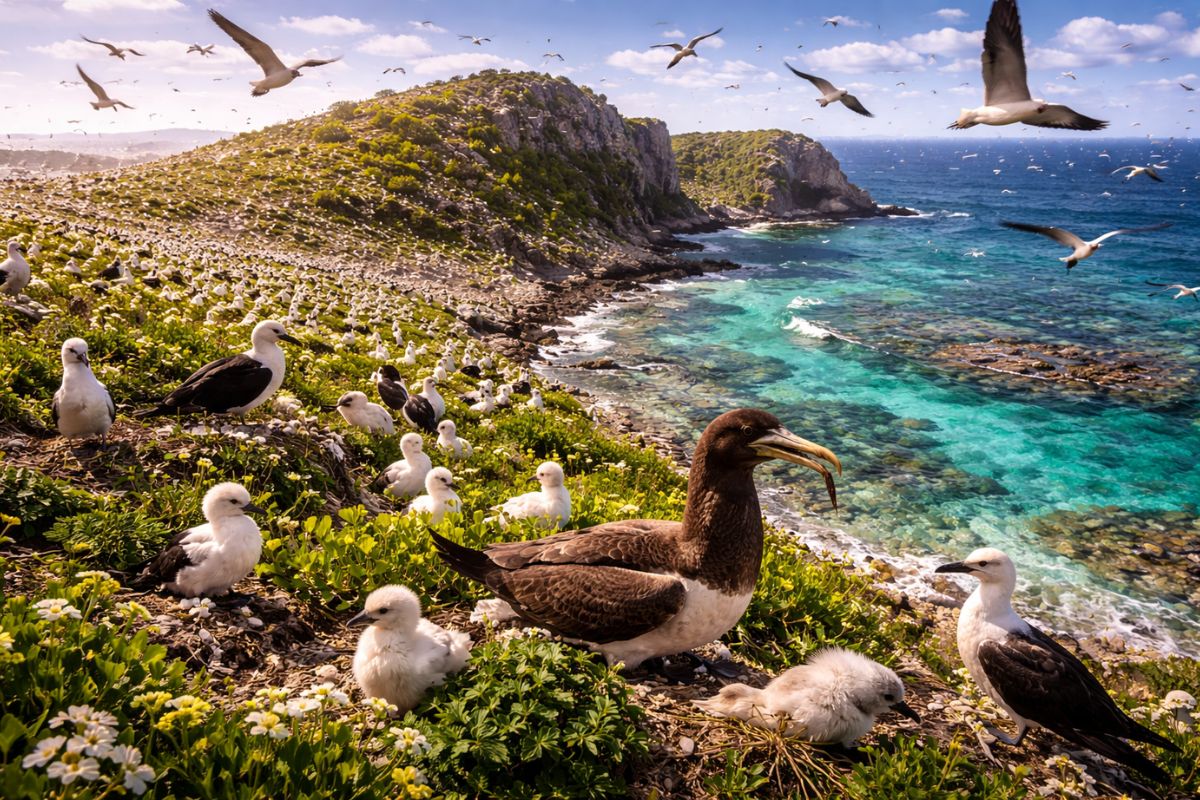
After decades expelled from remote islands and coastal areas, marine birds are returning and reactivating a circuit that connects ocean and land: they feed at sea, return to nest and rest on solid ground, and over days and seasons, continuously deposit guano. This nutrient-rich material changes the chemistry and biology of the soil, increases water retention, helps native vegetation return, and allows part of these nutrients to drain into the adjacent sea, directly impacting coral reefs and fish biomass.
The phenomenon appears associated with Pacific islands, Mexican islands, the Falkland Islands in the South Atlantic, and also with archipelagos and oceanic islands in Brazil, with references to Alcatrazes on the São Paulo coast, as well as monitoring in Fernando de Noronha and the Rocas Atoll. In parallel, rehabilitation actions and planned releases in Santa Catarina linked to Brazilian institutions such as Univali are being implemented, along with initiatives related to the Albatross Project. In 2026, the highlight is the speed: marine birds can reactivate degraded systems with a daily flow of nutrients that isolated human interventions, such as spot planting, cannot always maintain at the same pace.
Where Is This Happening and Why Is the Return So Visible

large red pouches on their throats
Photo: Léo Francini
The return of marine birds tends to be evident because it happens in “packages” of colonies.
-
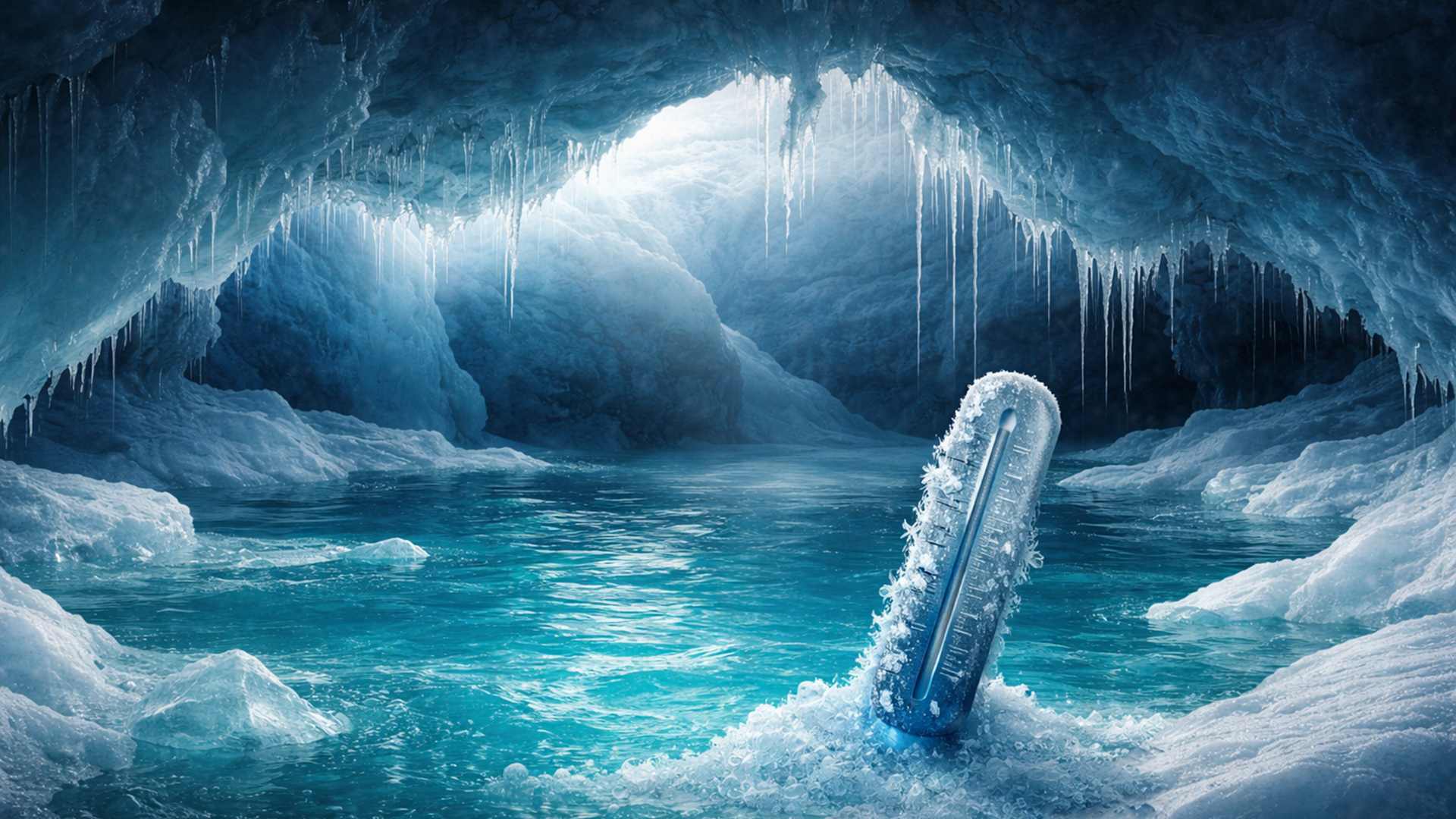
The coldest seawater ever recorded in Earth’s history was hidden under extreme ice 717 million years ago and reached an impressive -15°C.
-
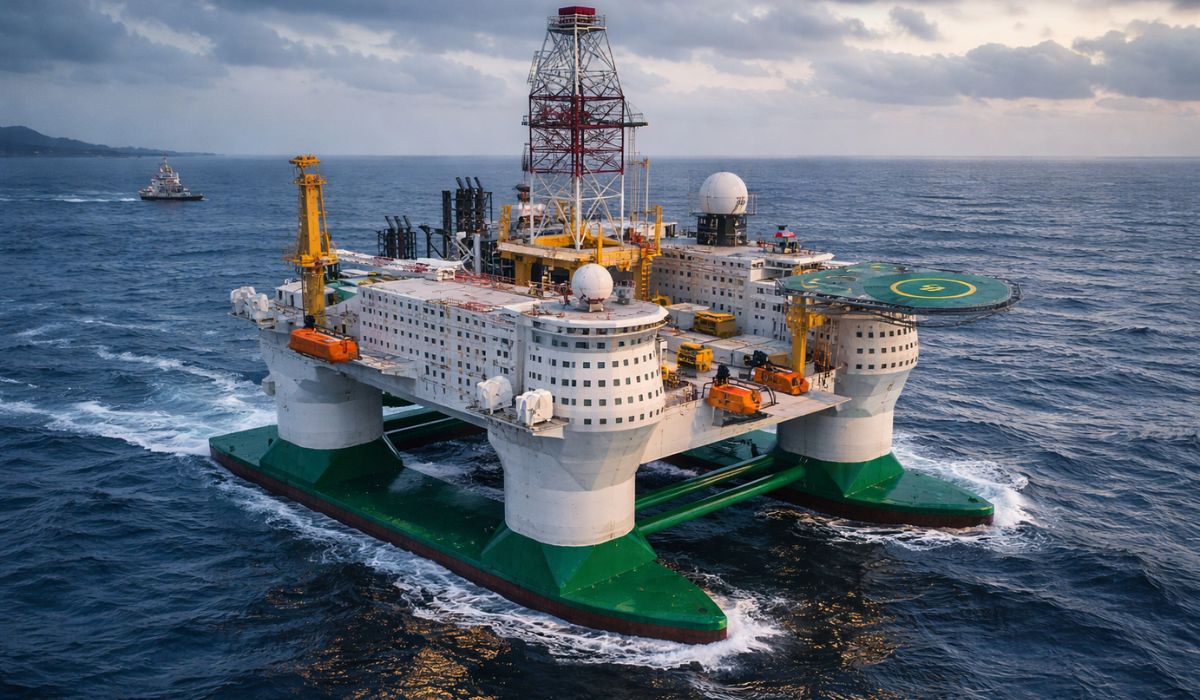
China has launched the world’s first floating artificial island, a scientific structure designed to face open seas, test equipment weighing hundreds of tons, and reach depths of 10,000 meters.
-
China accelerates global science and may surpass the United States in 2 years with increased public investment, continuous growth, and direct impact on the global technological competition.

-
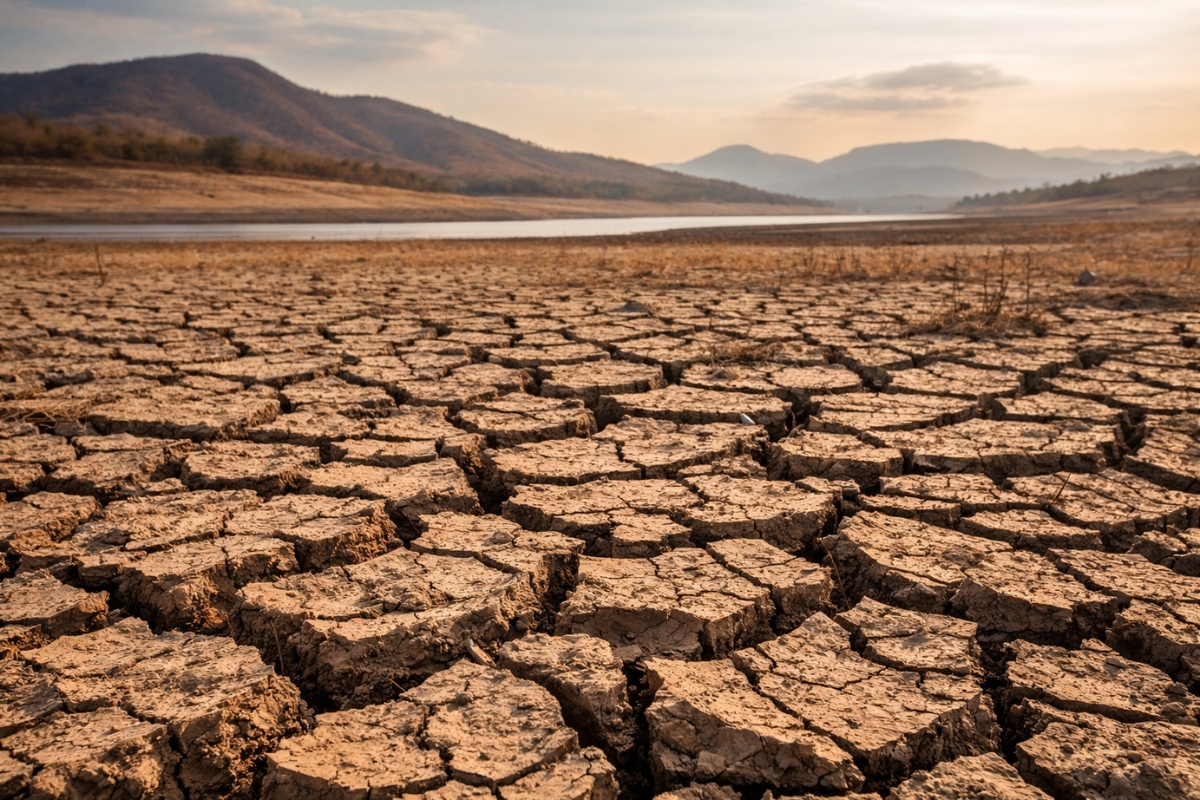
Scientific studies indicate that drought may be strengthening a much greater silent threat: more resistant superbugs.

When an island becomes occupied again, it is not a solitary individual but a group of birds with colonial behavior, repeating landings, competing for nesting spots, vocalizing, and creating a cycle of permanent presence during the breeding season.
This pattern has been associated with islands that had been empty for decades and have seen the return of colonies after changes in local conditions.
In Brazil, the cited examples include the Alcatrazes archipelago on the São Paulo coast and oceanic islands under monitoring, like Fernando de Noronha and the Rocas Atoll.
In Santa Catarina, there is a focus on scheduled releases of rehabilitated birds, with direct mention of Univali.
Outside the country, there are cases linked to Mexican islands and the Falkland Islands, as well as operations in Pacific islands, creating a global picture in which islands previously described as “abandoned” or degraded are functioning again as biological hubs.
Which Marine Birds Are Returning and How Do They Behave on These Islands

The described return involves typical groups of coastal and oceanic colonies.
Among the marine birds mentioned are boobies (referring to the red-footed booby in general examples and the brown booby in the Brazilian context), frigatebirds, shearwaters, albatrosses, and petrels, along with terns as a Brazilian example.
The key point is not just the species but the way of life: many of these marine birds are highly faithful to nesting areas and tend to return to specific locations when the environment becomes safe again.
They use the island as a base, land in resting areas, build nests, incubate eggs, and raise chicks.
In this process, they begin to deposit guano repeatedly in the same sectors, which concentrates nutrients and creates “fertility zones” in places previously described as barren soils, impoverished, or devoid of vegetation.
In large colonies, this deposition shifts from being an occasional event to a continuous flow, day after day.
Why Did Marine Birds Disappear for Decades: Invasive Predators and Habitat Loss

The prolonged absence of marine birds is linked to accumulated factors over time, with a central point: invasive predators.
Rats, cats, and pigs introduced by humans have been cited as the main cause because they attack eggs, chicks, and even adult birds in island environments where many marine birds lack behavioral defenses against predatory mammals.
Another component is habitat degradation, including the removal of native vegetation for uses such as plantations and pastures, which eliminates protected locations for nesting.
Historical human exploitation also appears, with hunting, egg collection, and guano mining as factors that have decimated entire colonies.
Lastly, pressures operate outside the island, such as fishing and pollution, including the impact of plastics and losses from bycatch, reducing populations and hindering recovery even when the area appears suitable again.
What Is Guano and Why Does It Change “Dead” Soil So Quickly
The engine of this return is guano, described as a high-power natural fertilizer because it transports nutrients from the ocean to land.
The material is linked to nitrogen and phosphorus, functioning as a type of “natural NPK,” also referring to micronutrients such as calcium and magnesium.
In practice, this makes a difference on four levels at once:
First, guano delivers basic nutrients in an environment where they were lacking.
Second, it feeds microorganisms and reactivates a soil microbiome that had been weakened.
Third, it improves the chemical and physical conditions of the terrain, impacting pH and water retention.
Fourth, it creates a continuous cycle: the more birds, the more guano; the more fertility, the more vegetation; the more vegetation and stability, the greater the chance of the colony remaining.
This effect is especially relevant in islands described as “arid landscapes” or “dead soils.”
In these contexts, the problem is not just a lack of seeds, but a lack of an environment capable of supporting germination and growth.
With the repeated deposition linked to marine birds, the ground ceases to be an “inert substrate” and begins to behave like living soil, with more moisture and more biological cycles.
How Marine Birds Help Plants to Sprout and Vegetation Succession to Restart
The return of vegetation is treated as a result of fertilization and the resumption of vegetation succession.
When guano accumulates, it creates points where plants can establish themselves more easily.
The very dynamics of the colony also alters the terrain: trails, nesting areas, and resting sectors can open spaces, redistribute organic matter, and create mosaics of microenvironments.
In islands previously described as “avian deserts,” the transformation tends to appear as sprouting in patches, gradual coverage increase, and changes in habitat structure.
Over time, vegetation reinforces the process: roots stabilize the soil, reduce erosion, help retain water, and support more life.
In this circuit, marine birds are not just “visitors”: they function as a daily maintenance mechanism because they continue depositing nutrients while they remain there.
From Soil to Sea: The Path of Nutrients to Coral Reefs and Fish
A central detail is that nutrients do not remain trapped on the island.
Rain and runoff carry some of this material to the nearby sea, and the described effect includes increased coral growth and increased fish biomass.
The logic is one of connectivity: marine birds bring nutrients from the sea to the island, but part returns to the ocean in dissolved or particulate form, feeding coastal productive chains.
This cycle is associated with more resilient reefs, as corals and fish respond to changes in nutrient availability and local productivity.
In an environmental stress scenario, a reef that receives this boost may have a greater recovery capacity.
Therefore, the return of marine birds is presented as a type of “biological engineering” that acts simultaneously in two ecosystems, land and sea, without relying on traditional physical work.
How Colonies Are Being Recovered: Eradication, Social Attraction, and Translocation
The return of marine birds is described as a combination of natural recovery and active restoration techniques.
The first step is to make the island safe, with eradication of invasive predators such as rats and cats.
Without this, eggs and chicks remain vulnerable and the colony cannot sustain itself.
Next comes the so-called social attraction, because colonial birds tend to avoid silent and “empty” islands.
Three main resources have been cited: decoys (replicas positioned as if there were already a colony), sound systems reproducing noises of an active colony, and in some cases, mirrors and scents to simulate presence and activity.
When no colony exists nearby and spontaneous return is unlikely, chick translocation occurs.
The described dynamic is straightforward: chicks are taken from healthy colonies to the new island weeks before they are ready to fly, receive supplemental feeding until they gain independence, and “learn” that location as a reference.
Later, when they reach reproductive age, they return to breed where they associated their first flight, reinforcing the establishment of a resident population.
The Brazilian Context in 2026: Releases, Archipelagos and Insular Monitoring
In Brazil, the mentioned framework includes scheduled releases in Santa Catarina with mention to Univali, as well as the activities of projects like the Albatross Project and references to archipelagos and oceanic islands.
Alcatrazes is cited as an example on the São Paulo coast, with the presence of species like brown booby and terns.
Fernando de Noronha and the Rocas Atoll are also involved as areas where monitoring of marine birds and the insular environment is relevant for biodiversity and the stability of ecosystems.
The sensitive point here is that Brazilian islands function as breeding bases and resting areas, and any disruption, whether by invaders, human disturbance, or pressure in the sea, tends to break the cycle.
When the cycle resumes, the effect is chain-like: more marine birds, more guano, more fertility, more vegetation, more stability, and more connectivity with the surrounding sea.
What Changes Now: From “Animal” to Ecological Infrastructure
The reading that emerges from this set of information is that marine birds cease to be merely indicators of conservation and become treated as ecological infrastructure.
They operate a service that does not depend on fuel, machinery, or logistics: daily transport of nutrients between ecosystems, fertilization of island soils, and strengthening of nearby marine environments.
When the aim is to accelerate the recovery of arid landscapes and strengthen reefs, the presence of colonies becomes a strategic factor.
The island does not change by miracle, it changes by flow: landing, nesting, guano, rain, soil, plant, runoff, reef, fish, and again.
In your view, should marine birds have stricter protection areas around islands precisely because of this direct effect on soil and coral reefs?




-

-

-

-

34 pessoas reagiram a isso.