





 Portuguese
  English
  Spanish
  7 min of reading
  2 comments





For Avi Loeb, the Comet 3I/ATLAS Could Be an Interstellar Object That Functions as an Alien Spaceship and Represents a Global Event Risk Monitored by Space Agencies.
The Comet 3I/ATLAS has entered the scientific community’s radar as the third interstellar object detected passing through the Solar System, but it gained another layer of attention after Harvard astrophysicist Avi Loeb suggested that its characteristics are so unlikely for a natural body that they could be better explained if it were an alien spaceship in transit. Based on estimates of mass, jet behavior, and trajectory, the researcher describes the object as at least a million times more massive than previous visitors, raising doubts about its origin and warning of the risk of a rare, yet potentially global event.
While NASA and the European Space Agency are planning detailed observations of the Comet 3I/ATLAS, including a dedicated campaign from the JUICE mission between November 2 and 25, 2025, the debate expands beyond academia and reaches the general public. On one side, there is fascination with the possibility of extraterrestrial technology; on the other, a responsibility to treat extraordinary hypotheses with scientific rigor, while not losing sight of the importance of planetary defense and the systematic monitoring of objects that cross Earth’s vicinity.
Who Is Avi Loeb and Why Does His Voice Influence the Debate
Avi Loeb is one of the most well-known astrophysicists today, affiliated with Harvard and the leadership of the so-called Galileo Project, an initiative that seeks to systematically investigate evidence of extraterrestrial technology.
-
Italian researchers have detected what appears to be a second Sphinx buried under the sands of Egypt, and satellite scans reveal a gigantic underground megastructure hidden beneath the Giza Plateau for over 3,000 years.

-
There are 4,223 drums and 1,343 metal boxes concreted with 50-centimeter walls that store the radioactive waste from Cesium-137 in the worst radiological accident in Brazil, just 23 kilometers from Goiânia, with environmental monitoring every three months.

-
Giant Roman treasure found at the bottom of Lake Neuchâtel in Switzerland reveals an advanced trade system, circulation of goods, and armed escort in the Roman Empire about two thousand years ago.

-
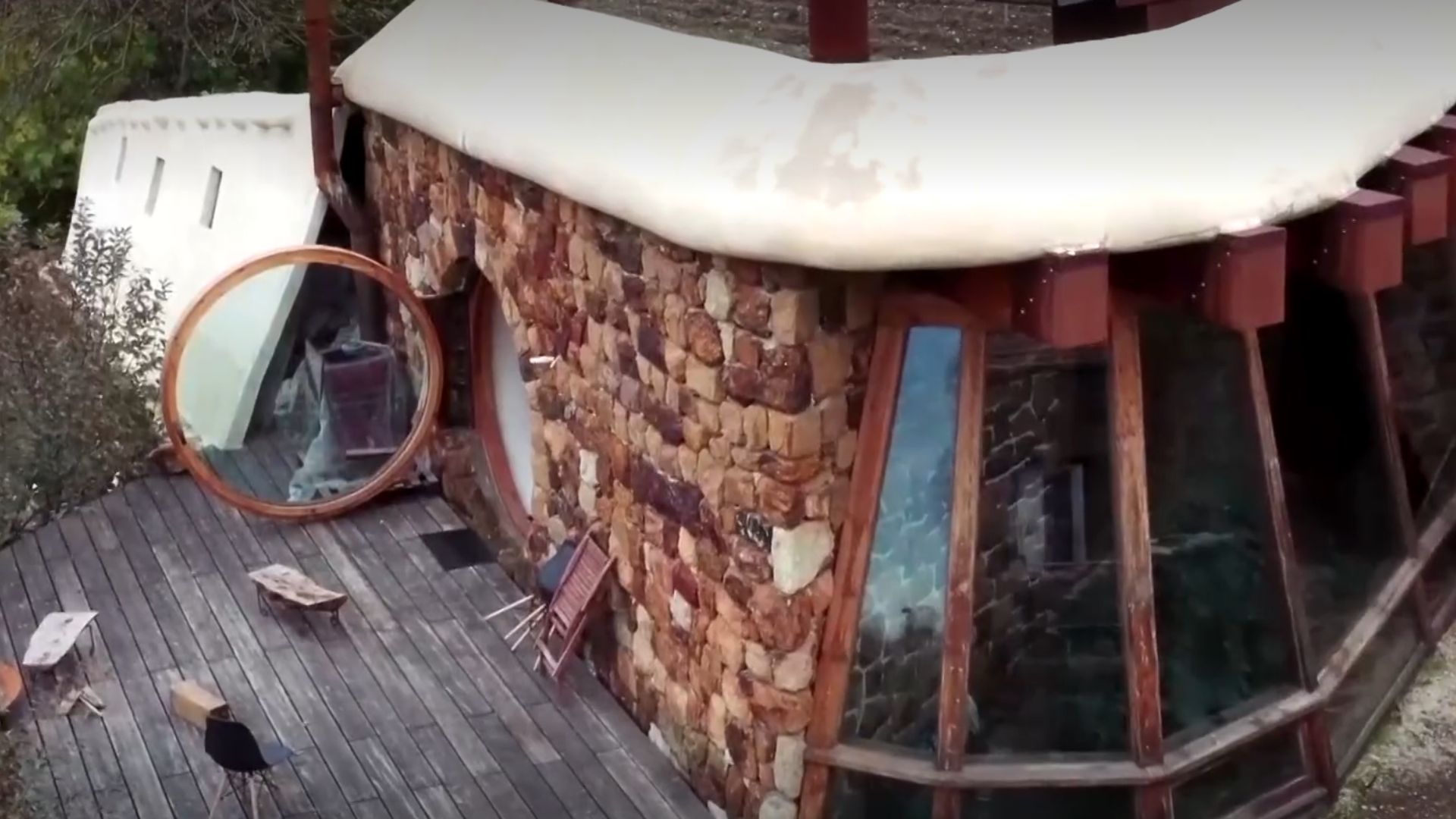
He buried 1,200 old tires in the walls to build his own self-sufficient house in the mountains with glass bottles, rainwater, and an integrated greenhouse.

In recent years, he has stood out for arguing that certain interstellar objects, like 1I/Oumuamua, could have artificial origins, which has placed him in a position of great visibility and strong contestation among peers.
In this context, when Loeb comes forward to assert that the Comet 3I/ATLAS exhibits characteristics that would align it more with a spaceship than a typical natural comet, his assessment gains immediate traction.
The combination of solid academic credentials and a willingness to explore hypotheses outside of the consensus makes his statements catalysts for debate, both within scientific environments and in media and social networks.
What Makes Comet 3I/ATLAS So Unusual
The starting point of the discussion is the scale of the Comet 3I/ATLAS.
Based on mass estimates, Loeb argues that the object could weigh more than 50 billion tons, a number that, according to him, would be at least a million times greater than the estimated mass of 1I/Oumuamua, the first recorded interstellar object.
For the astrophysicist, this size discrepancy challenges traditional models of the formation of rocky and icy bodies in interstellar space.
In addition to mass, other elements come into play: speed, jet activity, and trajectory through the Solar System.
The comet exhibits jets that, in the usual interpretation, would result from the sublimation of volatiles heated by sunlight, a typical mechanism for natural comets.
However, Loeb considers that the set of characteristics of 3I/ATLAS is statistically improbable compared to what one would expect to observe over a decade of monitoring, suggesting that there is something atypical about the behavior of this particular object.
The Hypothesis of Alien Spaceship and the Role of Jets
In Loeb’s formulation, the central element to support the spaceship hypothesis lies in the interpretation of the jets of the Comet 3I/ATLAS.
Instead of viewing them merely as natural sublimation of ice and other compounds under the influence of the Sun, he proposes that these jets may be equivalent to technological thrusters, responsible for adjusting the object’s speed and trajectory, similar to artificial rockets.
To argue in favor of this interpretation, the astrophysicist compares the efficiency of different forms of propulsion.
Chemical rockets reach exhaust velocities of around 3 to 5 kilometers per second, much higher than the velocities associated with the natural ejection of cometary volatiles.
Ion thrusters, in turn, can achieve even higher ranges, between 10 and 50 kilometers per second.
In Loeb’s view, an advanced alien technology could operate at velocities exceeding current ones, drastically reducing the mass loss necessary to generate the observed thrust, which would make plausible a scenario in which the jets are the result of a propulsion system from a large spacecraft.
“Cosmic Black Swan” and Concerns About a Global Event
Beyond raising the hypothesis of artificial origin, Loeb associates the Comet 3I/ATLAS with the possibility of a “black swan event” of global significance.
The term, borrowed from risk theory, describes rare occurrences that are hard to predict but can have potentially enormous impacts.
In this context, a giant interstellar object, with unusual behavior and a trajectory that interacts with the inner Solar System, comes to be seen as something that deserves special attention from monitoring agencies.
References to a possible global event do not necessarily imply an imminent impact with Earth, but point to the need to treat 3I/ATLAS as a case study strengthened for planetary defense protocols.
Rumors of a potential silent reinforcement of monitoring systems by space agencies fuel conspiracy theories, but do not replace the transparent analysis of observational data.
Loeb’s point is that, given an object so far outside the standard, it would be prudent for global institutions to evaluate scenarios and strategies should the artificial origin be confirmed.
Monitoring of Comet 3I/ATLAS by Space Missions
From an operational standpoint, the Comet 3I/ATLAS is already on the planning of major missions.
NASA reported that the perihelion in relation to Earth is expected to occur on December 19, 2025, at which point the object will be in a particularly favorable position for observations from different instruments.
During the same period, the JUICE probe from the European Space Agency will have from November 2 to 25 a dedicated window to study the object using a series of specialized sensors.
This type of monitoring is essential for reducing uncertainties about mass, composition, and dynamics.
Observations at multiple wavelengths allow for comparing the behavior of 3I/ATLAS with that of classic comets, robustly testing whether the jets and brightness curve follow known patterns or if they genuinely deviate from what would be expected.
The more data that is collected, the greater the scientific community’s ability to validate, refute, or adjust hypotheses about the nature of the object, whether they are conventional or bolder.
Chemical Signatures and “Messages” from Other Planetary Systems
Regardless of the spaceship hypothesis, the Comet 3I/ATLAS has already proven to be scientifically valuable.
The Neil Gehrels Swift Observatory of NASA identified the presence of hydroxyl gas (OH) associated with the object, a chemical signature directly linked to water.
For researchers like Professor Dennis Bodewits from Auburn University, detecting water or even its ultraviolet echo in an interstellar comet is akin to reading a kind of message sent from another planetary system.
This type of detection indicates that the processes of formation and composition of icy bodies outside the Solar System may share similarities with the comets we know locally, which helps build a comparative view of the chemistry and dynamics of planetary systems.
At the same time, the existence of water in such a large and unusual object keeps the discussion open about the environment where 3I/ATLAS formed and the mechanisms that launched it onto a trajectory that crossed the paths of the Sun and Earth.
Between Speculation and the Scientific Method
The hypothesis that the Comet 3I/ATLAS could be an alien spaceship is, in essence, a speculation formulated from real, albeit incomplete, data.
In the scientific method, such proposals need to be confronted with independent observations, analyses from other research groups, and alternative models that attempt to explain the same phenomena in a more conservative manner.
Extraordinary ideas require equally robust evidence to be accepted as the principal explanation, especially when they suggest extraterrestrial technology.
At the same time, completely ignoring unconventional hypotheses can lead to missed opportunities in emerging areas of investigation.
The balance lies in maintaining intellectual openness without abandoning rigor.
In the case of 3I/ATLAS, this means continuing to accumulate data, calibrating mass and activity estimates, comparing with other comets, and assessing whether the “ten unusual characteristics” pointed out by Loeb withstand broader analysis.
The more transparent this process is, the less room there will be for distortions and sensationalist readings outside the technical environment.
Conclusion: How to Follow Comet 3I/ATLAS with Critical Sense
The case of the Comet 3I/ATLAS encapsulates several elements that tend to attract public attention: a giant interstellar object, a Harvard astrophysicist proposing the hypothesis of an alien spaceship, references to a possible global event, and the mobilization of major space missions to study the phenomenon.
To take this combination seriously means recognizing the scientific value of the object, keeping track of ongoing observations, and at the same time, maintaining distance from hasty conclusions, remembering that the scientific method advances precisely by systematically testing hypotheses.
As the key observation dates approach and the flow of data about the Comet 3I/ATLAS increases, the expectation is that the picture will become clearer, whether to reinforce the reading of an extremely unusual natural comet, or to keep alive the discussion on artificial origins at a purely hypothetical level.
In light of this scenario, a question for the reader remains: as you follow new information about 3I/ATLAS, do you lean towards seeing the object primarily as an extreme comet or do you consider it plausible to take seriously the alien spaceship hypothesis defended by Avi Loeb?










Se um cientista, com um conhecimento muito acima do meu, lança essa hipótese, quem sou para divergir dessa ideia. Acredito nele!
Considero plausível a hipótese de espaçonave alienígena