





 Portuguese
  English
  Spanish
  5 min of reading
  0 comments


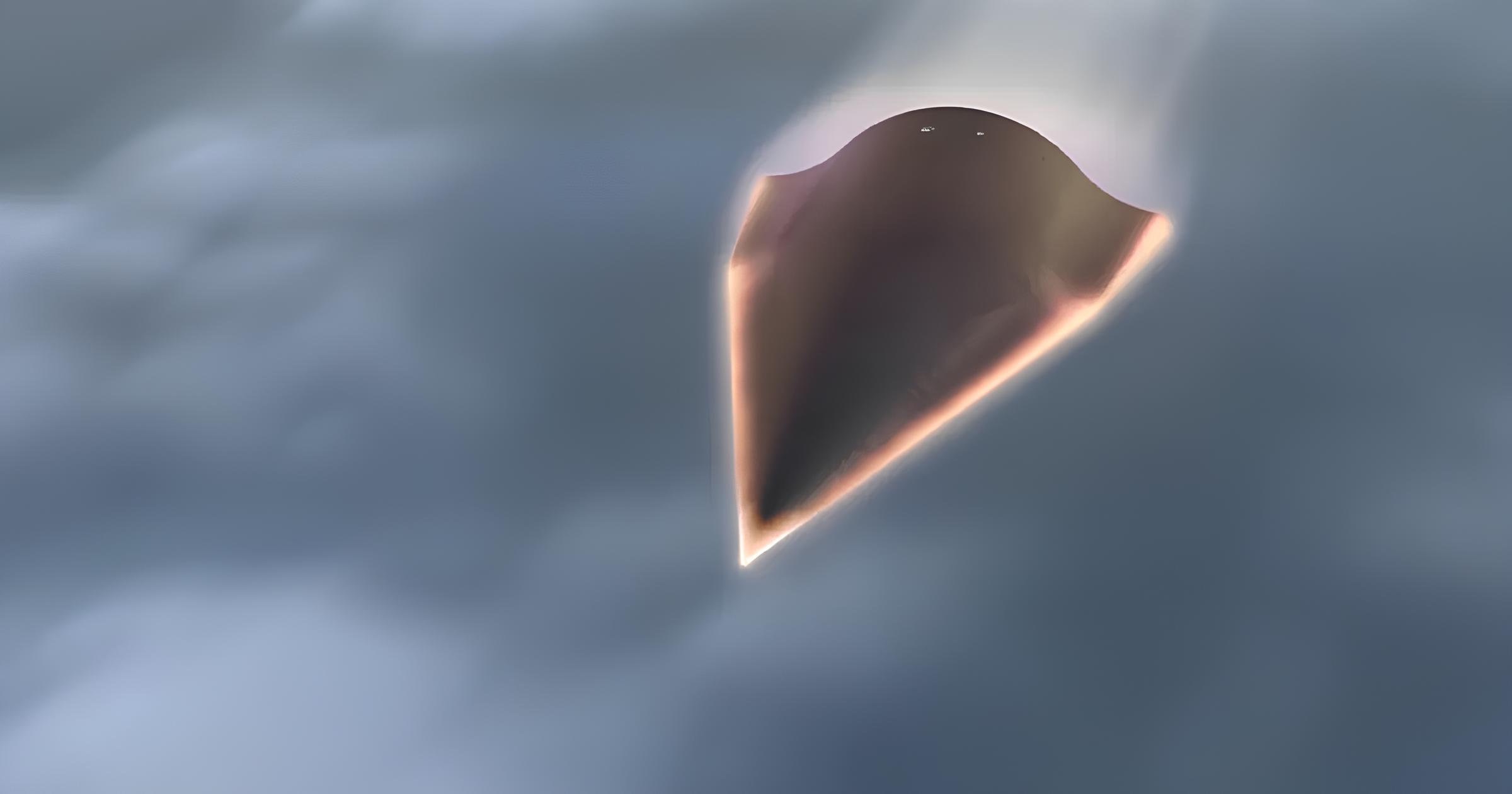
Meet The HTV-2, The Secret US Military Program That Exceeded Mach 5 Speed. Learn All About The US Hypersonic Plane That Could Reach Nearly 24,000 Km/h
The development of hypersonic technologies represents one of the largest ambitions of the military aerospace industry in recent decades. At the center of this technological race was the ambitious HTV-2 project, part of the secret military program of the United States known as Falcon Project. It is a hypersonic plane from the US, designed to reach speeds exceeding Mach 20, far surpassing the Mach 5 speed limit, considered the starting point for hypersonic vehicles.
Despite the advancements, the program was canceled after only two test flights. No complete public explanation was provided, which generated mystery around one of the boldest projects of DARPA (Defense Advanced Research Projects Agency of the US). This article details the trajectory of the HTV-2, the challenges faced, and the project’s impact on the future of hypersonic technology.
What Was The HTV-2 And The Falcon Project – The Secret US Military Program


The Falcon (Force Application and Launch from Continental United States) was a program initiated in 2003 by DARPA and the US Air Force. Its main goal was to develop technologies for global strike vehicles with near-instantaneous response time. The HTV-2 (Hypersonic Technology Vehicle 2) was an unmanned technology demonstrator that made up one of the most advanced phases of the project.
-
While the world looks at oil, the war with Iran is already disrupting helium supply from Qatar, affecting car and iPhone chips, threatening AI expansion, and putting pressure on aluminum packaging at the highest value in four years.

-
Global warming will expose a treasure hidden under the ice of Antarctica and may spark an international dispute over gold and valuable minerals.

-
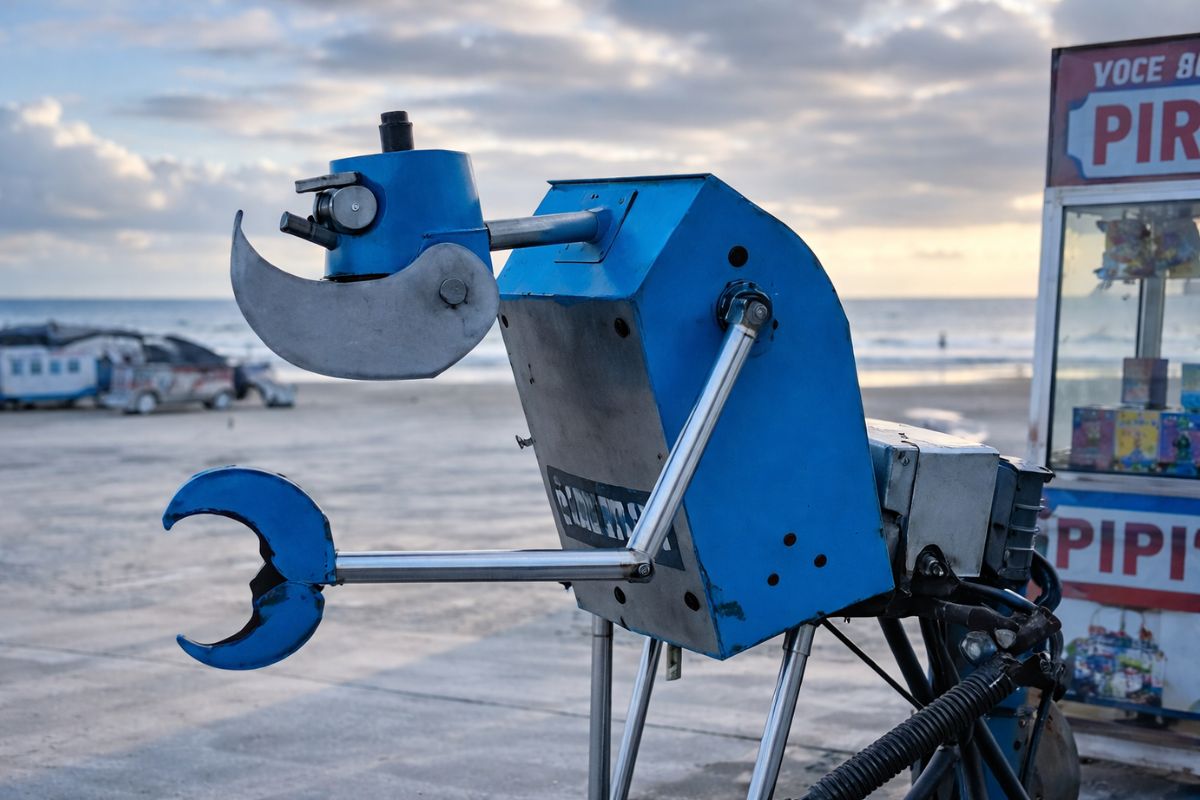
A street vendor from Praia Grande built a robot made of scrap from scooters and washing machines that pulls his popcorn cart on the beach, emits sounds, and interacts with customers, becoming an attraction on the coast of São Paulo.
-
The specifications of the Xiaomi 18 Pro Max have been leaked, and the highlight is a dual 200 MP camera with a new 22-nanometer technology that promises to consume less energy and capture details in shadows and bright areas using LOFIC HDR.

The design of the HTV-2 resembled an arrowhead, without its own propulsion. The vehicle was launched by a rocket, separated from the capsule, and made a gliding flight at Mach 20 speed — about 24,000 km/h — within the Earth’s atmosphere. The flight began in suborbital space and continued for thousands of kilometers until it vanished into the Pacific.
The ultimate goal was to test the viability of a rapid global strike system capable of hitting any target on Earth in less than an hour, without the need for nuclear weapons.
First Test: HTV-2 In 2010 – US Secret Military Program
The first test of the HTV-2 took place on April 22, 2010, launched from Vandenberg Air Force Base in California, using a Minotaur IV Lite rocket. The plan was for the HTV-2 to separate from the rocket at an altitude of approximately 100 km and glide for about 30 minutes over the Pacific Ocean.
During the flight, the vehicle successfully reached Mach 20 speed, but after about nine minutes of controlled flight, it lost stability. Sensors indicated a series of oscillations until the safety system was activated, and communication with the vehicle was lost.
Despite the failure, the test was considered partially successful, as it provided about three minutes of valuable data on aerodynamics and material resistance under extreme conditions.
Second Test: New Attempt In 2011
On August 11, 2011, DARPA conducted the second test flight of the HTV-2. As with the first, the vehicle was launched by a Minotaur IV Lite rocket and was supposed to glide at hypersonic speed. The mission lasted just over nine minutes, but again resulted in failure.
In this flight, the HTV-2 began to behave anomalously after coming into contact with the atmosphere at high speed. Subsequent analysis suggested that the vehicle’s external coating was compromised by extremely high temperatures that exceeded 2,000 °C. The extreme heating led to the detachment of part of the airframe, resulting in loss of control and impact in the ocean.
Technological Challenges Of Hypersonic Flight
Designing a hypersonic plane like the HTV-2, which exceeds Mach 5 speed, involves dealing with a complex set of challenges. The main one relates to aerothermal effects: traveling at Mach 5 or more generates friction with the air that heats the fuselage to temperatures that can melt conventional metals.
Furthermore, maintaining control and aerodynamic stability at such high speeds requires extremely precise engineering calculations and materials resistant to deformation. The guidance and navigation systems need to work perfectly even under extreme pressure and heat.
In the case of the HTV-2, the main obstacles were:
- Structural Stability In Hypersonic Gliding Flight;
- Thermal Resistance Of The Exterior Coating;
- Real-Time Data Collection Capability At Extremely High Speeds;
- Loss Of Communication Amidst Plasma Generated By Atmospheric Friction.
Program Cancellation: Mystery And Caution
After the two tests with limited results, DARPA announced that the HTV-2 would not conduct a third flight. The program was formally terminated without further details. The official justification was that the data collected from the two flights was sufficient to support future studies.
The total cost of the HTV-2 program is estimated to have exceeded US$ 300 million. Considering the technological risks and the limited results, the suspension of the project was seen as a strategic redirect, although without a detailed explanation to the public or specialized media. Some experts suggest that the project may have been reallocated to classified programs or other technological focuses.
Impact And Legacy For The Future
Although the HTV-2 program was canceled, its results profoundly influenced the development of new hypersonic technologies. Data on material behavior, aerodynamics, and control at high speeds was utilized in subsequent projects, such as:
- X-51A Waverider: experimental vehicle developed by the US Air Force and Boeing, which reached Mach 5 in sustained flight.
- SR-72: Lockheed Martin’s concept for a new US Hypersonic Plane for reconnaissance and strike.
- HAWC (Hypersonic Air-breathing Weapon Concept): DARPA’s latest project in partnership with Raytheon and Northrop Grumman, focusing on hypersonic cruise weapons.
Furthermore, the Falcon Project served as a proof of concept for the “Prompt Global Strike,” a military doctrine that remains active, aimed at striking any point on the planet rapidly and accurately, without relying on nuclear warheads.
Global Hypersonic Race
The closure of the HTV-2 does not mean the end of American ambition for hypersonic supremacy. On the contrary, the technology continues to develop, especially in light of the growing global competition.
Russia and China have already announced successful tests with hypersonic weapons, such as the Avangard and DF-ZF, which are reportedly already operational. This has heightened the urgency for the Pentagon to accelerate its own programs. Strategic pressure increases each year, with hypersonic speed being treated as the new frontier of global military superiority.
The HTV-2 was a bold step toward mastering extreme speed. Although the project did not achieve all of its objectives, it represented a crucial advance in understanding hypersonic technologies and their military applications.
As part of a secret military program, the US hypersonic plane challenged the limits of modern engineering and revealed the difficulties of operating at speeds exceeding Mach 5. Its tests provided valuable insights that continue to influence the direction of global hypersonic aviation today.
The race continues, and the lessons from the HTV-2 are undoubtedly an essential part of the foundation upon which the next hypersonic vehicles — whether for strike, reconnaissance, or transport — will be built.








Seja o primeiro a reagir!