





 Portuguese
  English
  Spanish
  9 min of reading
  0 comments


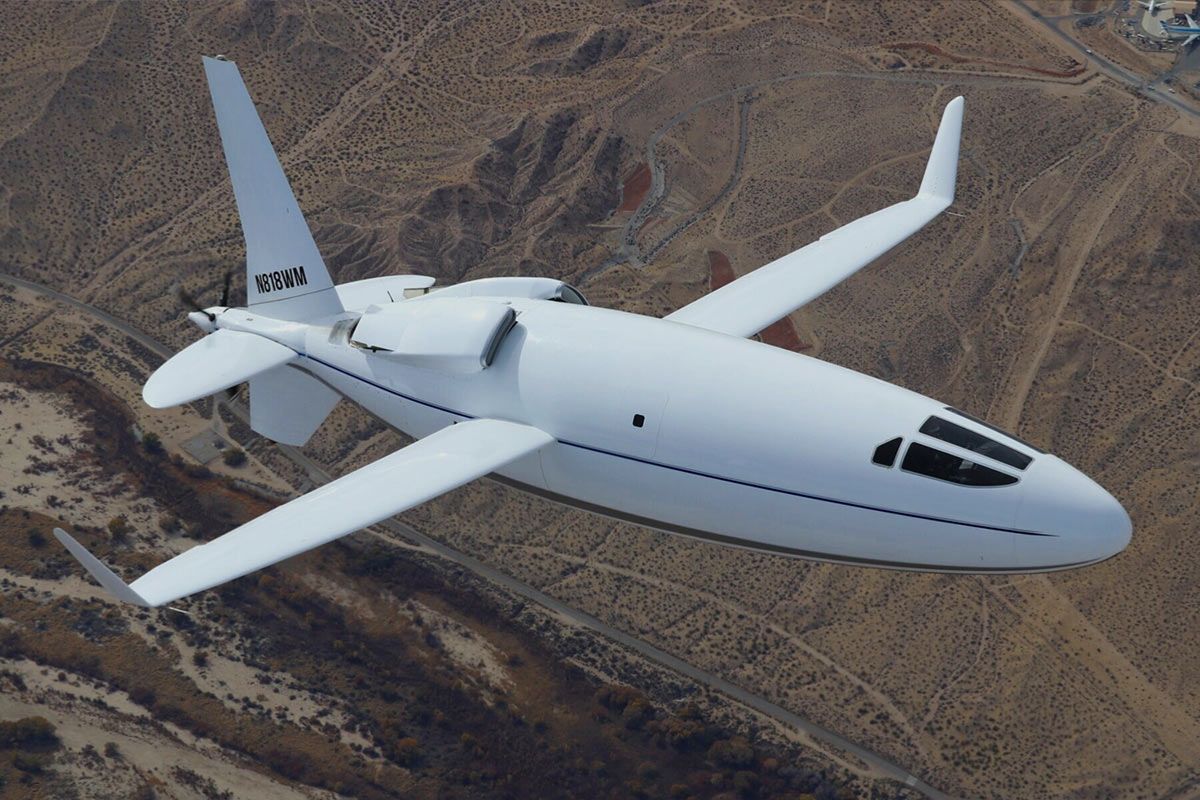
With Oval Fuselage To Favor Laminar Flow, Long High Aspect Ratio Wings, And A V12 Turbo Diesel Engine In The Tail, The Celera 500L Says It Reduces Drag By 59% And Gets 18 To 25 MPG, Targeting 5,100 Miles Of Range And New Logic For Global Business Jets
The Celera 500L appears as one of those ideas that seem exaggerated until numbers and engineering choices start to fit together. The proposal is simple to explain and difficult to execute: to make an aircraft that moves through the air with much less aerodynamic “mess”, consuming little fuel to go far and fast.
Behind the nickname “airplane that drinks less than an SUV,” there is a specific technical promise: to maintain as much laminar flow over the aircraft as possible, reducing drag, power requirement, and, in turn, consumption and emissions. Auto Aviation packages this aiming at business aviation, with a cabin for six passengers in the first version and a path to grow, while trying to turn comfort and privacy into direct flights with costs closer to commercial fares.
The Oval Body And The Idea Of “Smoothing” The Air Around

The oval fuselage is at the center of the Celera 500L’s narrative because it directly relates to the goal of reducing drag. Practically, the company bets that the shape, combined with very smooth surfaces, helps keep the air “organized” along the hull, favoring the laminar flow. When the flow remains laminar for longer, the effective drag and associated losses decrease, and this changes the energy calculation needed to sustain speed and altitude.
-
In a flooded well, archaeologists found a 1,700-year-old Roman egg that still contains clear and yolk intact inside the very thin shell.

-
Something is happening around the Earth: Inside the huge explosion of fireballs in 2026

-
A hot air bubble coming from Argentina expands over Brazil, causing thermometers to exceed 38 degrees with a thermal sensation of 40 degrees in late March, affecting 6 states at once.

-
The radish leaf that almost everyone throws away has more polyphenols, flavonoids, and fiber than the consumed root, and a 2025 study showed that the leaf contains compounds that protect the intestine, combat inflammation, and may inhibit the growth of cancer cells.

The leap that Auto Aviation suggests comes from comparing this scenario with turbulent flow, where air layers mix chaotically and increase losses. The company even cites a 59% drag reduction compared to a similarly sized aircraft, precisely for “holding” the transition to turbulence over larger parts of the aircraft. It’s an aggressive promise, but coherent with the target: to reduce the power required to do the same work.
Laminar Flow: What It Delivers And What It Demands
Laminar flow is almost an aerodynamic “economy mode,” except it’s sensitive. To remain laminar, the flow requires continuity, surface finishing, and geometry that avoids disturbances. In theory, this improves efficiency, range, and even speed, because less energy turns into heat and turbulence around the aircraft. In practice, anything that “spoils” the surface, imperfections, irregularities, and small alterations in the flow can prematurely introduce turbulence and eat into some of the expected gains.
That’s why the Celera 500L is a topic of conversation: it’s not enough to have a different design; the aircraft needs to deliver that performance outside the lab, in real operation. The company sells the idea of a “super smooth blade” and optimized surfaces to keep the air flowing stably, connecting this to a “eight times” better fuel economy in some scenarios. The more responsible reading is to treat these results as goals and projections of the project, and look for maturity indicators, such as the information about more than 55 successful test flights.
Long And Thin Wings: Aspect Ratio, Lift, And “Minimum Drag”
Besides the fuselage, the wings of the Celera 500L appear as the other pillar of efficiency: long, thin, with a high aspect ratio. This type of wing is usually associated with better lift per unit of induced drag, especially in regimes where the plane wants to “carry” with little aerodynamic waste. It’s the same logic that makes gliders look “exaggerated” in their wings: they survive on efficiency.
Auto Aviation provides numbers to reinforce the argument: it claims a glide ratio of 22 to 1 and even states that it would be possible to shut off the engine and glide for up to 125 miles, something that would be about three times better than typical. Even without entering the competition of “better than typical,” the technical message is clear: the aircraft aims to maintain energy and lift longer, losing less speed and altitude to drag. If this holds up in operation, it helps both in range and flight flexibility, including in consumption optimization scenarios.
Turbo Diesel V12 Engine In The Tail: Why It Matters In The Design
The Celera 500L breaks away from the “executive jet standard” by choosing a single turbocharged V12 diesel engine in the rear, described as developed by a German manufacturer. The engine position is not just an aesthetic detail: according to the proposal, it helps avoid distorting the flow over the aircraft, preserving that cleaner flow and thus keeping drag low for longer. In other words, the propulsion was placed where it would disrupt the aerodynamics the design tries to protect the least.
Another point is the cascading effect: if drag drops, the power required drops, and the aircraft needs to “work less” to maintain cruise. This is used to support the idea that expensive jet engines wouldn’t be necessary to achieve high speeds and altitudes.
The company even mentions a target of up to 460 mph at 50,000 feet, which, if achieved, would place the aircraft in a tempting performance range for business aviation. The caution here is to separate what is a declared goal from what is a certified delivery, because speed, altitude, and efficiency rarely go together without large engineering and validation demands.
“Drinks Less Than SUV”: What 18 To 25 MPG Means In An Airplane
The comparison with SUVs stems from the attention-grabbing number: 18 to 25 mpg, a common metric in automobiles, here applied to the Celera 500L. Simply put, mpg stands for “miles per gallon,” and the rhetorical impact is immediate because most people associate airplanes with much higher consumption than cars. It’s a straightforward way to translate efficiency to the public, even though the comparison between different categories always requires caution.
The technical value of citing mpg is not in the meme, but in what it implies: an aircraft with much lower consumption per distance tends to excel in range and cost per mile, especially on routes where aerodynamic efficiency weighs more.
The company also claims that the aircraft can cover about 5,100 miles, giving as an example a trip from Alaska to Mexico using 80% less fuel than a comparable aircraft. When a project announces this type of savings, it is indicating that it wants to rewrite the cost of convenience, that invisible cost of flying direct, with privacy, avoiding large hubs and long connections.
Executive Cabin, Operation, And The “Shortcut” Of Regional Airports
The proposal of the Celera 500L is not just aerodynamic; it’s about usability. The initial version was designed for six passengers in an executive cabin, with an ambition to scale up to 19 passengers later. This positions the aircraft between classic business aviation and an idea of “premium semi-collective,” in which the cost may become less prohibitive if operational costs truly fall.
Auto Aviation also uses a strong logistical argument: the need for short takeoff length and, with that, potential access to over 5,000 regional airports, contrasting with about 500 served by commercial airlines in the U.S.
The logic is simple: if you take off and land in more places, you avoid congestion, delays, and cancellations associated with large airports, getting closer to the final destination. The promise here is to transform total travel time, not just flight time, which makes a big difference for those paying for flexibility.
On cost, the figure of US$ 328 appears as announced operational cost, accompanied by the claim of being “five times more effective” than comparable executive jets in performance and comfort.
As the unit and exact context of the number are not made explicit, the most honest approach is to treat it as an order of magnitude of promised cost, rather than a fixed value for any scenario. In aviation, cost per hour, per mile, and per cycle changes greatly with maintenance, fuel, operation, and route profile, and that’s precisely where efficient projects aim to win.
The Second Step: Hydrogen, Fuel Cell, And The Leap To “Zero Emissions”
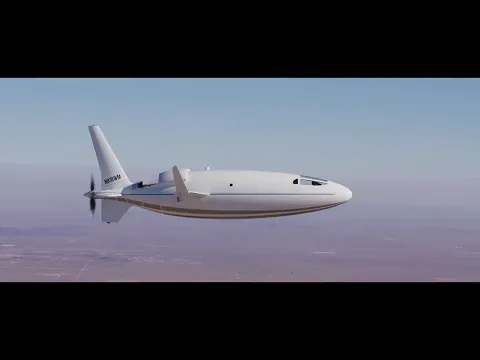

The roadmap of the Celera 500L includes a second phase of propulsion: a hydrogen electric powertrain, announced as part of a collaboration with ZeroAvia, to develop a 600 kW fuel cell system.
The idea is known: hydrogen fuels the fuel cell, which generates electricity, which powers electric motors, which turn the propellers, with water as the initial byproduct. It’s the type of proposal that tries to combine aerodynamic efficiency with a cleaner energy matrix, reducing local emissions in flight.
The project mentions a range of around 1,150 miles with zero emissions, enough for relevant segments, such as an example route between Los Angeles and Seattle. This points to a very clear use: short and medium trips, where the range doesn’t need to be intercontinental, but needs to be practical and repeatable.
The inevitable challenge passes through energy density, system weight, storage, and refueling infrastructure, as well as certification and logistics, because hydrogen is not just “fuel,” it’s also a production and distribution chain.
The very mention of scientists working to improve energy density of batteries and the expectation of technological evolution suggests that the plan does not rely on a single miracle, but on a sequence of improvements.
Even so, what makes the Celera 500L a curious case is the internal coherence: first drastically reduce the energy required to fly, then make the energy “cleaner.” When the aircraft requires less power to maintain performance, any alternative propulsion technology has a better chance of fitting.
What Really Can Change, And What Still Needs To Be Proven
The Celera 500L attracts attention because it attempts to tackle a tough point in aviation: efficiency rarely comes “cheap,” and when it does, it pays off in complexity.
Maintaining laminar flow at scale, ensuring consistent surfaces, and sustaining performance in varied conditions is a package of engineering and validation. The fact that the company cites dozens of test flights indicates there is walking ahead, but it doesn’t close the discussion, because prototype and commercial operation are different worlds.
There is also the issue of scope: the proposal itself acknowledges that the benefits of the design do not easily scale to large commercial airplanes.
This makes the target more specific and perhaps more plausible: business aviation and direct routes between pairs of cities, with costs and speed comparable to commercial fares, but with the convenience of privacy and proximity.
It’s an attempt to transform “who flies” and “how they fly,” not necessarily “how the whole world flies.”
In the end, what is at stake is whether the promise of efficiency, consumption in the range of 18 to 25 mpg, range of 5,100 miles, and high-altitude performance can go through the funnel of certification, production, and daily operation, and then still sustain a transition to hydrogen with 1,150 miles of range with zero emissions.
If it works, it changes the cost and time equation for a significant portion of trips; if it doesn’t, it still leaves lessons about applied aerodynamics and the limits of laminar flow.
The Celera 500L has become a topic of conversation because it mixes unusual aesthetics with measurable ambition: reducing drag, cutting consumption, extending range, and, in a second phase, bringing aviation closer to emissions-free flight with hydrogen.
It’s the kind of project that tests how far efficiency can redesign routes, costs, and propulsion choices, especially when the goal is to fly direct, with less dependence on large airports.
If you had to bet, what would convince you that the Celera 500L can move from “impressive concept” to routine in the air: the consumption numbers, the promise of range, or the idea of accessing regional airports to avoid congestion?
And in a very practical choice: would you fly in an executive with a V12 diesel engine today, or would you only trust it when the hydrogen plan was mature?






-

-

-

-

9 pessoas reagiram a isso.