





 Portuguese
  English
  Spanish
  5 min of reading
  0 comments


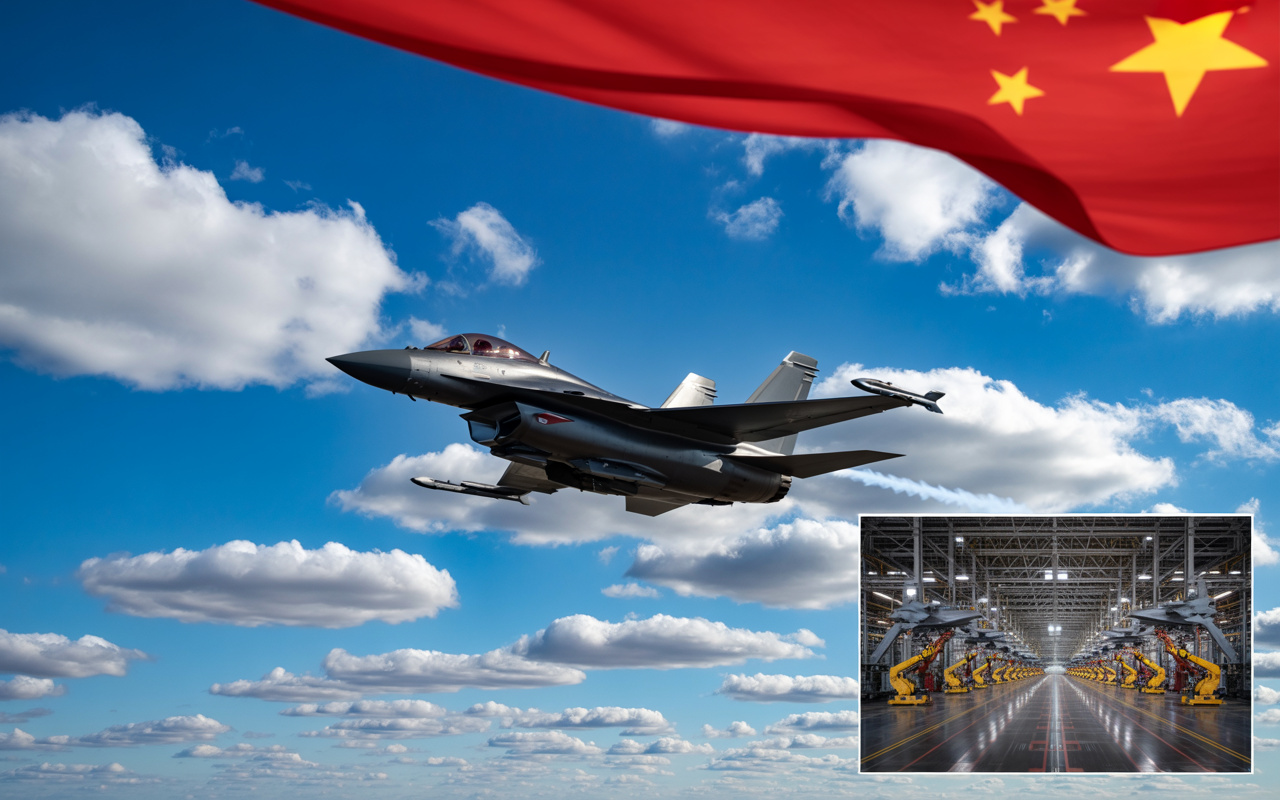
AVIC Has Revealed a New 270 Thousand Sqm Factory for Mass Production of the Stealth Fighters J-35 and J-50. According to Engineer, the Goal Is to Manufacture Fighters “Like Cell Phones”.
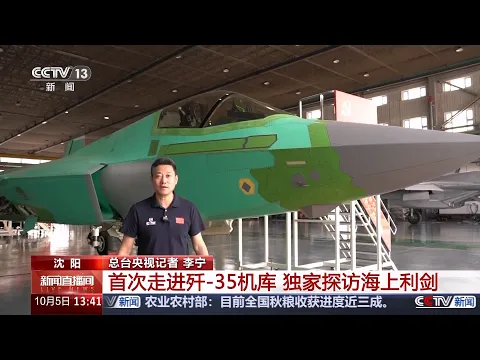
China has taken another bold step in the global military technological race. The Shenyang Aircraft Manufacturing Corporation, a subsidiary of the Aviation Industry Corporation of China (AVIC), announced in July 2025 the construction of a gigantic production plant dedicated to the stealth fighters J-35 and J-50 — models designed to rival the American F-35 Lightning II.
The new facility, which occupies an area of 270,000 square meters, is equipped with four pulse assembly lines, an advanced production methodology that promises to elevate the efficiency and speed of Chinese aeronautical manufacturing to unprecedented levels.
During the announcement, AVIC’s chief deputy engineer, Sun Cong, stated that the goal is ambitious:
-
Historic bankruptcy of Centauro shocks the market, and the century-old company puts more than 500,000 products, machines, and complete infrastructure up for online auction.

-
New shoe factory in Ceará is expected to create 400 jobs and strengthen the local economy.
-
No one imagined it, but a mixture of sawdust with a mineral that fights fires surprises scientists with a result that changes the course of fire-resistant construction.

-
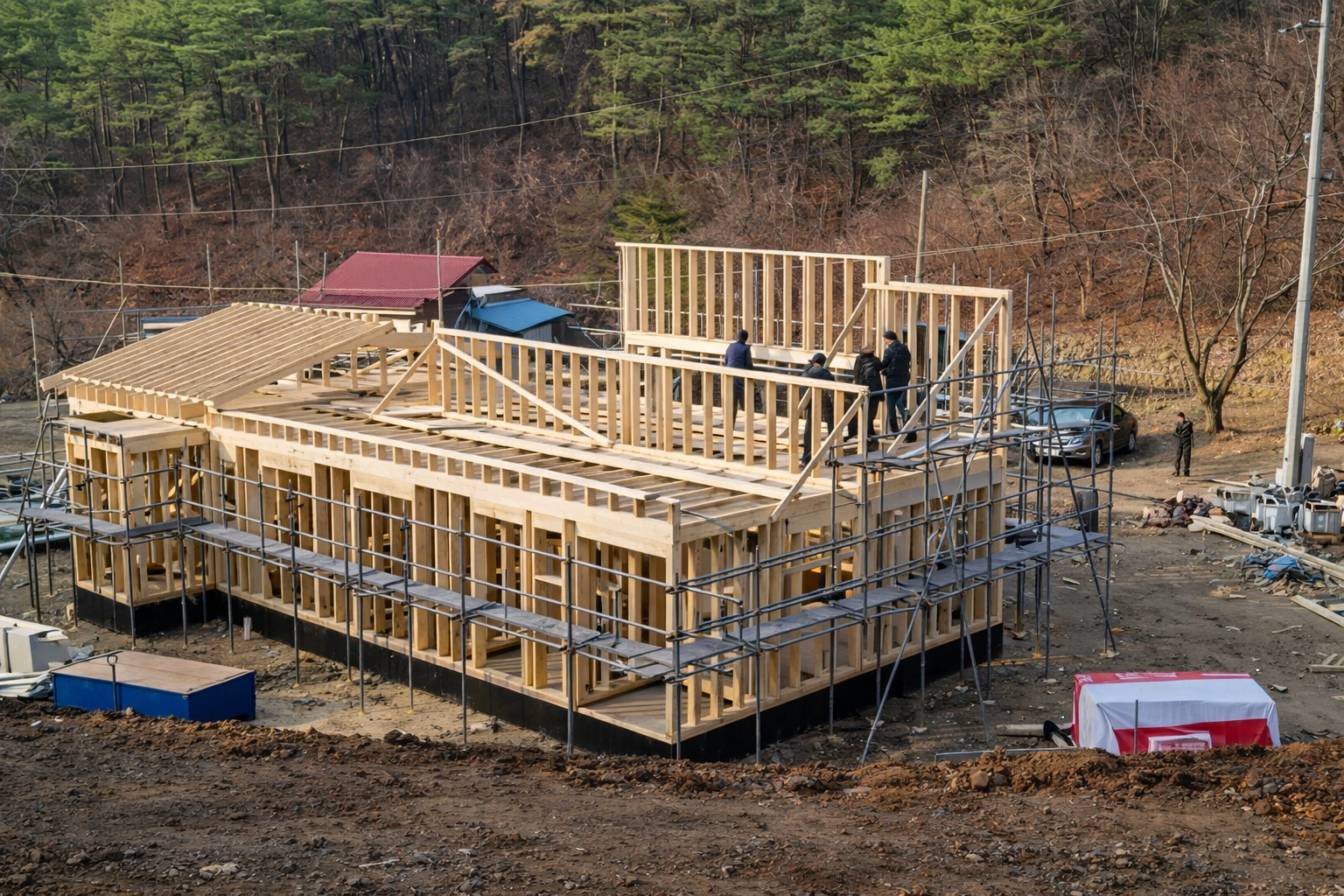
From empty land to a high-end house, wooden construction uses a lightweight system, metal structure for the foundation, ventilated ceramic cladding, and special windows to create an efficient and comfortable living space throughout the year.

“In the future, we will manufacture fighters like we manufacture cell phones.”
The phrase went viral on Chinese social media and was interpreted as a sign that the country intends to transform military production on a large scale, applying typical concepts from the electronics industry — such as total automation, modularity, and high-frequency assembly cycles — to combat aviation.
Pulse Assembly Line: The Industrial Revolution of the Skies
The term “pulse assembly line” refers to a mounting strategy similar to those used in automobile and electronics factories. Instead of moving aircraft manually between different sectors, all units advance simultaneously through assembly stations at regular intervals, known as “pulses.”
This technique reduces logistical bottlenecks, improves precision in the integration of components, and allows for standardized real-time quality control.
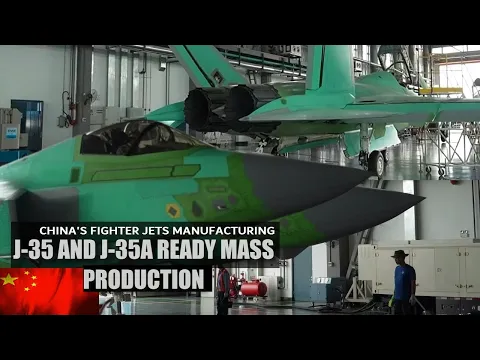

Sources close to the industry, cited by outlets like Aerospace China and Global Times, state that the plant has been designed to support an estimated annual production of up to 100 J-35 fighters, although AVIC has yet to officially confirm this number. If the pace is achieved, China will become the country with the largest manufacturing capacity for stealth fighters on the planet.
The J-35: The Naval Fighter That Challenges the F-35
The J-35, also known as FC-31 Gyrfalcon, is a fifth-generation stealth fighter developed for operations both on land bases and on Chinese aircraft carriers, such as the Fujian (CV-18).
Equipped with WS-19 thrust vectoring engines and AESA radar, the J-35 represents the direct evolution of the FC-31 prototype presented by Shenyang in 2012. The most recent images, released in September 2025, show the fighter conducting takeoff and landing operations aboard the Fujian carrier, the most advanced in the Chinese fleet.
According to military analysts, AVIC’s intention is to produce the J-35 on a large scale to gradually replace older fighters, such as the J-15, and consolidate China’s aerial presence in the Indo-Pacific.
The J-50: The New Mysterious Fighter From China
In addition to the J-35, AVIC’s factory is expected to produce the J-50, also known as J-XDS, a project still shrouded in secrecy. The model, which has been spotted in flight tests, features a tailless design with a lambda wing, similar to the concept of the American Next Generation Air Dominance (NGAD).
Although AVIC has not confirmed specifications, unofficial sources suggest that the J-50 will be a sixth-generation fighter, equipped with embedded artificial intelligence, capable of operating in networked coordination with loyal wingman drones and adaptive propulsion systems.
The program is being described as the next technological leap for China towards automated air superiority — a concept aimed at combining manned and unmanned aircraft under human supervision guided by AI.
From Handcrafted Workshop to Automated Production
AVIC’s new factory represents a paradigm shift. Until a few years ago, the production of Chinese fighters still followed a semi-artisanal model, with teams working manually on the integration of fuselages and components.
Now, with robotized lines, precision sensors, and integrated digital control, AVIC aims to drastically reduce costs and increase delivery cadence. This transformation places China on a direct collision course technologically with the United States, whose military-industrial complex, led by Lockheed Martin, still dominates the sector.
According to engineer Sun Cong, the goal is to apply the model of efficiency and scale typical of smartphone companies:
“If we can assemble 100 million cell phones a year, we can manufacture hundreds of fighters automatically and with absolute quality control.”
Experts point out that the Chinese model combines vertical integration (total control of supply chains) and complete digital integration — an approach that reduces dependence on external suppliers and strengthens the military self-sufficiency of the country.
A Strategic Move in the Global Race for Air Superiority
The announcement comes at a time of increasing geopolitical tension. China, which has already had the J-20 Mighty Dragon in operation since 2017, is now aiming for a stealth carrier-based fighter model to confront the U.S. Navy.
Meanwhile, the United States is developing the NGAD, and Europe is advancing its FCAS (Future Combat Air System) project — a joint program among France, Germany, and Spain.
AVIC’s decision to invest in mass production and total automation indicates that Beijing does not just want to compete in technology, but also aims to dominate in volume, which could alter the strategic balance in the Pacific.
The Future of Chinese Military Aviation
With the J-35 already operating on aircraft carriers and the J-50 at an advanced stage of development, AVIC consolidates itself as the epicenter of Chinese military aviation.
The new plant in Shenyang, with modular and scalable capacity, reinforces the country’s ambition to achieve total independence in defense and cutting-edge aeronautics by 2035.
For China, manufacturing fighters “like cell phones” is not just an industrial metaphor. It is the realization of a new era where technological supremacy becomes a production line product — fast, precise, and strategically planned.








-

Uma pessoa reagiu a isso.