





 Portuguese
  English
  Spanish
  6 min of reading
  0 comments



In The State Of Washington, Lake Ketchum Received Two Initial Applications Of Aluminum Sulfate And Sodium Aluminate To Block Phosphorus In The Water And Sediment, Reduce Algae, Increase Transparency, And Test A Chemical Recovery Without Revolting The Entire Bottom Of The Reservoir In Controlled Annual Operation.
The Lake Ketchum, in the northwest of Snohomish County, about three kilometers north of Stanwood, underwent an unusual intervention to try to correct a problem that had accumulated for decades at the bottom and in the water column. Instead of relying on full dredging of the bed, the project focused the response on applications of aluminum sulfate and sodium aluminate to trap phosphorus in the water and sediment.
The choice was not random. Before the restoration, the lake recorded phosphorus levels 13 times higher than the values set by the state, a condition that fueled recurring blooms and compromised the public use of the area. The core of the strategy was to interrupt the internal pollution cycle, especially the annual return of the nutrient stored at the bottom, without needing to mechanically remove all the accumulated material.
Why Lake Ketchum Collapsed In Quality

The starting point of the crisis was both chemical and structural. Lake Ketchum was receiving phosphorus from three main fronts identified in the study conducted between 2010 and 2012.
-
Dozens of Chinese research ships are discreetly mapping the ocean floor in three oceans – and naval analysts see a military pattern.

-
The winter of 2026 in Brazil will not be what you expect: meteorologists warn that the season will be warm and rainy at the same time due to the advance of El Niño, which is already warming the Pacific and changing the climate of the entire country.

-
For the first time, humanoid robots will compete in a full half-marathon without any human assistance in Beijing, with over 100 teams from China registering machines that need to complete the course with autonomous navigation on two legs.

-
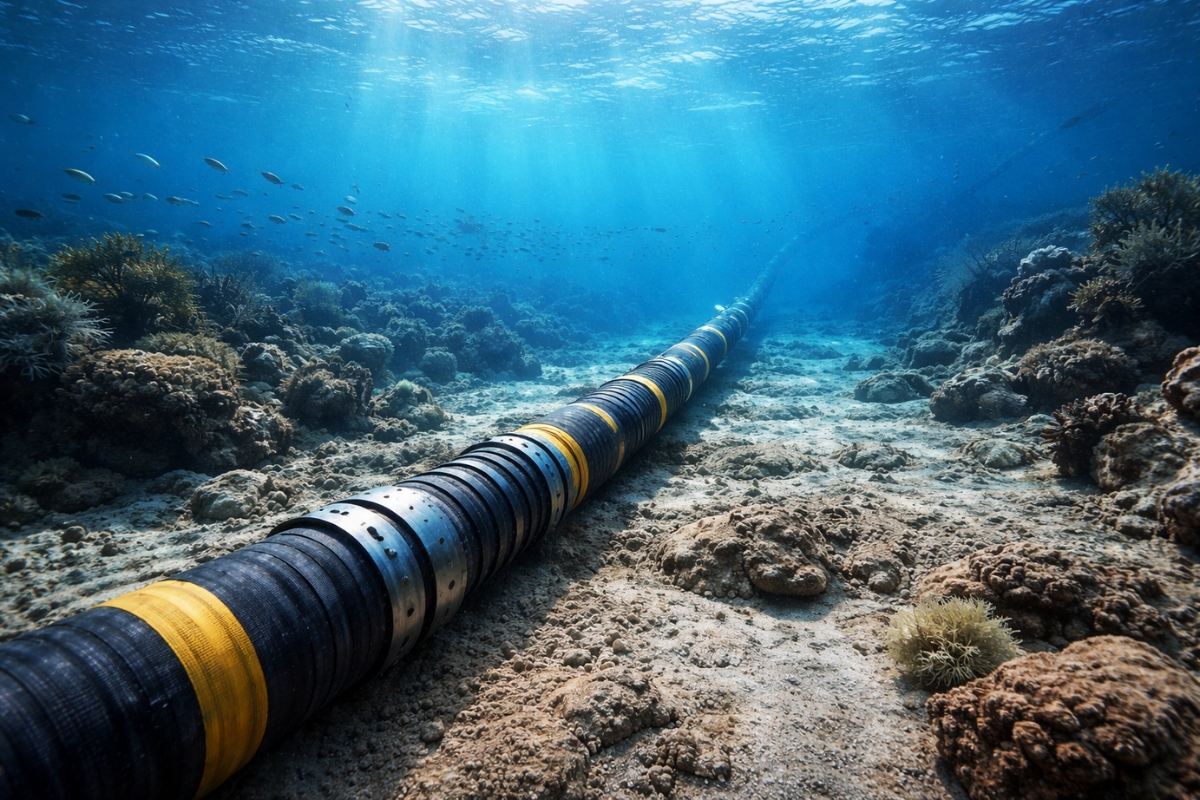
Submarine cables installed to transmit the internet now also help scientists detect earthquakes.

The lake’s inlet accounted for 23% of the load, draining an old dairy farm with already overloaded soils.
Other residential sources, such as septic tanks, fertilizers, pet waste, groundwater, and rain runoff, accounted for 4%.
But the decisive data was at the bottom. No less than 73% of the phosphorus came from the lake’s own sediments, accumulated over decades.
This internal stock was reactivated year after year, returning to the water and fueling new blooms. That is why the project did not limit itself to looking at the margins or the surface.
The most persistent contamination was buried in the sediment, and without neutralizing this reservoir, any improvement would be temporary.
This technical reading explains why the dredging of the entire bed did not become the central solution.
Removing the entire bottom of a 10.5-hectare public lake would mean a more extensive, costly, and disruptive operation.
The plan developed by the Department of Surface Water Management with the residents preferred another route: using treated aluminum to immobilize the phosphorus exactly where it sustained the problem, both in the water and in the sediment.
How Aluminum Was Applied And Why 2014 Did Not End The Operation

The most critical element of the plan was an initial large-scale treatment with aluminum sulfate, followed by smaller annual maintenances with the same product.
According to the project, this method was considered the most effective for controlling phosphorus in lakes because the compound permanently binds to the nutrient present in the water and sediments, removing its availability for new blooms.
Sodium aluminate came in as a pH buffer, stabilizing the application.
In May 2014, contractors applied over 13,400 gallons of liquid aluminum sulfate and 7,400 gallons of sodium aluminate.
The dosage was calculated to remove phosphorus from the water column and inactivate most of the nutrient stored at the bottom of the lake. However, the first operation had to be interrupted before completion due to complications that led to the death of some fish.
This showed that the technique was promising, but required much stricter operational control.
The second large-scale treatment took place in March 2015. In this phase, another 13,000 gallons of aluminum sulfate and 8,100 gallons of sodium aluminate were used.
To prevent the previous problem from repeating, the company improved the method of mixing the products in the water, and the application was brought forward to early in the year, before blooms progressed. This time, the execution was completed without complications.
From 2016 on, the lake began receiving smaller annual applications focused on the phosphorus that continues to enter through the outlet during winter.
What Changed In The Water And Sediment After The Treatment
The measured results after the intervention show why the project gained technical weight. Total phosphorus concentrations dropped by 95% in surface waters and 98% in bottom waters.
In practice, this means that the mechanism that returned the nutrient from the sediment to the water was almost eliminated. The heart of the problem was at the bottom, and that is where the chemical response produced the greatest effect.
The improvement was not restricted to nutrient indicators. Algae levels in summer, measured by chlorophyll a, dropped by more than 85%, while the average transparency of the water increased by 1.8 meters.
This jump is important because it makes visible the difference between a lake dominated by internal phosphorus load and a lake where this circulation has been contained.
There was only one potentially toxic bloom recorded in spring 2020, shortly before the annual treatment, which that year was postponed due to COVID-19.
This 2020 data is relevant because it prevents a simplistic reading. The project did not demonstrate that a single isolated application would solve everything forever.
What it showed was something else: a heavy chemical intervention, followed by annual maintenance, can replace complete dredging as the main axis of water recovery.
The success, therefore, is not in a miraculous and definitive solution, but in a continuous system of blocking phosphorus with controllable cost and scale.
How Much It Costs To Keep The Lake Stable And Who Pays The Bill
Between 2014 and 2015, the initial treatments with aluminum sulfate cost approximately US$ 250,000. From 2016 to 2020, annual costs remained relatively stable, ranging between US$ 40,000 and US$ 50,000.
Starting in 2021, however, the scenario began to change due to rising and unpredictable prices of aluminum, transportation costs, and inflation. For the period from 2024 to 2029, the annual estimate jumped to around US$ 94,000.
Funding was also organized in a shared manner.
The original planning and initial treatments were funded by property owners around the lake, the County’s Surface Water Management, the Stillaguamish Clean Water District, and the Washington State Department of Ecology.
After the initial phase, the cost base began to depend on local residents and the county’s public structure. Since 2024, SWM covers 60% of the cost, up to a limit of US$ 60,000, while the lake community responds for 40% and for any amount exceeding US$ 100,000.
This arrangement matters because it shows that recovering the water was not just a laboratory decision, but also an institutional and financial one.
The lake community helps fund the process through fees charged by the Lake Ketchum Shores Improvement Club, supplemented by a water management service fee created in 2017 at the request of the residents themselves.
Without this recurring funding model, the improvements achieved in the sediment and water could be lost over time.
Why The Project Did Not End With The Initial Improvement
Even with the significant reduction of phosphorus, the algae control plan continued to be implemented because the problem did not depend solely on the accumulated past at the bottom.
The study already showed that the lake inlet continued to bring part of the external load, especially from the old dairy farm and from diffuse sources in properties within the watershed.
Therefore, the project combined chemical treatment with continuous monitoring, protection of wetlands, and actions to reduce pollution in neighboring lots.
At this point, the LakeWise program comes in, created to encourage small but persistent changes in properties that drain into the lake.
The goal is to reduce phosphorus coming from fertilizers, septic tanks, pet waste, and runoff from roofs and sidewalks.
The restoration, therefore, does not depend only on the aluminum released into the water, but on the simultaneous containment of the sources that could replenish the system and once again compromise the transparency and quality of the reservoir.
The case of Ketchum is particularly interesting because it escapes the more intuitive logic of removing everything through dredging.
Instead, the project treated the lake as a chemical and hydrological system that could be rebalanced by immobilizing phosphorus at the exact point where it sustained the blooms.
The toughest test was not only to make the application work but to keep the water clean without needing to disturb the entire bottom every year.









-

-

-

-

-

-

34 pessoas reagiram a isso.