





 Portuguese
  English
  Spanish
  4 min of reading
  0 comments


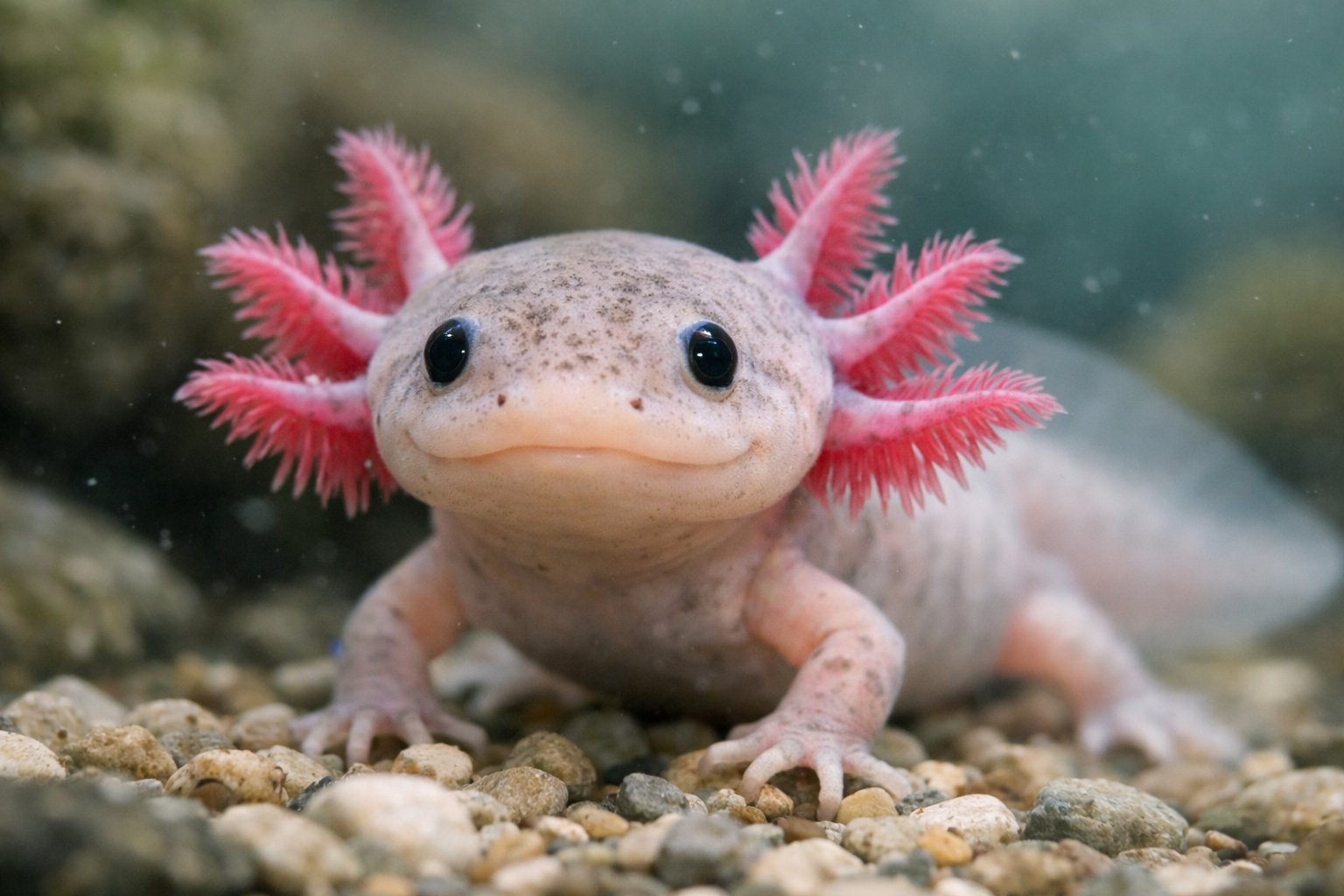
Rare creature of nature combines permanent youthful appearance with biological capabilities that challenge known limits and arouse global interest in science
The axolotl has become a true sensation among scientists and curious individuals precisely because it brings together two characteristics that, at first glance, seem incompatible within the same organism. On one side, there is its juvenile appearance, which remains practically unchanged throughout its life. On the other, its impressive regenerative capacity, capable of reconstructing complex body parts with an efficiency rarely observed in the animal kingdom.
The information was disclosed by “O Antagonista”, in content authored by Matheus Nazário Pedroso, which details how this amphibian has become one of the most intriguing examples of modern biology. Furthermore, according to scientific analyses and educational content, such as those presented by the Real Science channel, the axolotl continues to be the subject of advanced studies that may directly influence the future of regenerative medicine.
Why the axolotl seems to never age and maintains a juvenile appearance throughout its life
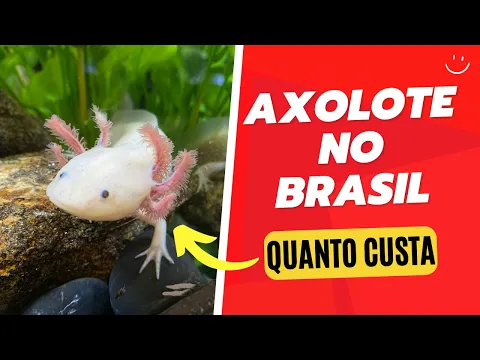

First of all, it is important to understand that the axolotl has a biological condition known as neoteny. In simple terms, this means that it retains typical larval characteristics even after reaching sexual maturity. In other words, unlike most amphibians, it does not undergo a complete metamorphosis.
-
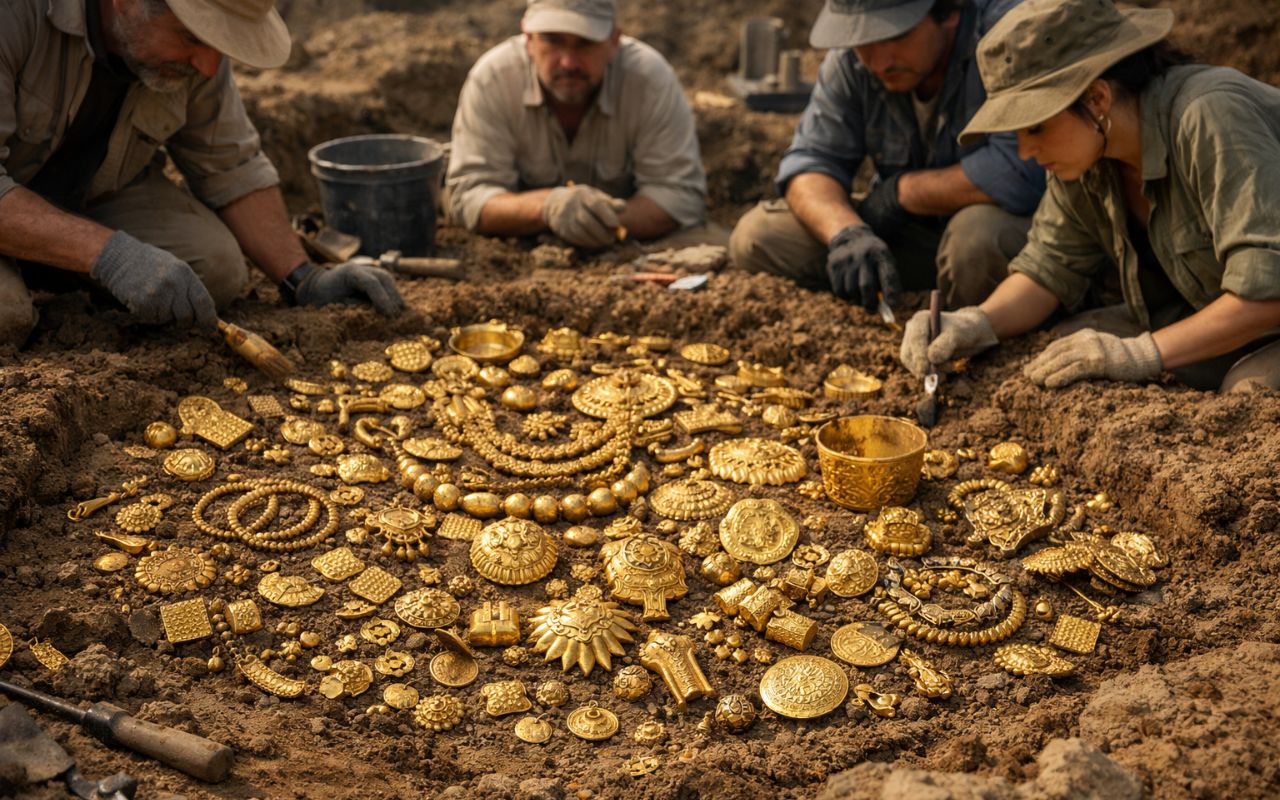
Workers find 3,000 gold jewels during construction: Accidental discovery revealed the world’s oldest gold, over 6,000 years old, and the find shows that societies already had elites and wealth in prehistoric Bulgaria.
-
He left a simple house to create a 5.3 billion euro empire: the unbelievable story of Federico Marchetti, the genius behind YOOX who revolutionized luxury e-commerce and rewarded his team with 50 million.

-
An explosive device was found on the Copacabana boardwalk this Monday, and the Bomb Squad had to be called in urgently to remove the object before something happened.

-
MDF furniture swollen from moisture doesn’t need to go to waste because two inexpensive techniques with sandpaper and waterproof varnish can restore its functionality without having to replace any parts.

Consequently, this characteristic causes the animal to retain traits considered juvenile, such as its delicate external gills, the rounded shape of its head, and its seemingly “unfinished” body appearance. Thus, the result is a look that conveys an almost childlike sensation, something that immediately draws attention.
Moreover, this distinctive appearance directly contributes to its popularity. After all, the contrast between its complex biology and its “smiling face” creates an emotional connection with the audience, which explains why the axolotl frequently appears in viral content about nature curiosities.
How the axolotl’s regenerative capacity impresses scientists and could revolutionize medicine
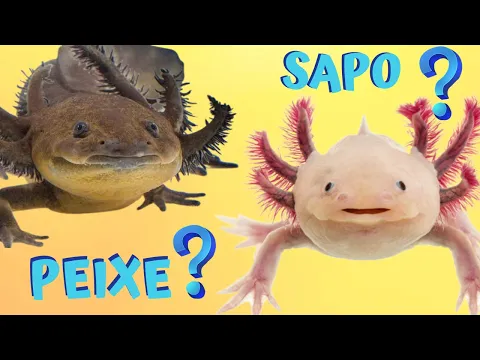
However, it is not just its appearance that makes it special. On the contrary, what truly places the axolotl at the center of scientific research is its extraordinary regenerative capacity.
Unlike most animals, it can reconstruct complex body structures without leaving permanent scars. This includes not only limbs but also highly specialized tissues. For this reason, it has become an essential model for studies on cell regeneration, wound healing, and organ reconstruction.
Additionally, this ability presents enormous potential for medical applications. Researchers believe that by understanding the biological mechanisms of the axolotl, it will be possible to develop innovative treatments for humans, especially in cases of severe injuries and degenerative diseases.
Among the main factors that explain its scientific relevance are:
Rare regeneration
The axolotl can recompose body parts with an efficiency that seems to surpass the known limits of biology.
Constant juvenile appearance
Its delicate look is a direct result of maintaining youthful characteristics throughout its life.
High scientific value
It is widely used as a reference in studies on tissue regeneration, biological development, and advanced medicine.
What makes the axolotl’s biology so unique and why it challenges natural standards

At the same time, what makes the axolotl even more fascinating is the combination of factors it presents. It is not just an animal with an isolated ability, but rather a set of characteristics that, together, challenge the most common expectations of biology.
Firstly, it retains juvenile traits even in adulthood, something extremely rare among amphibians. Furthermore, it lives exclusively in an aquatic environment throughout its life, which further differentiates it from species that undergo metamorphosis.
Another important point is its striking appearance, easily recognized due to its visible external gills, which resemble small feathers around its head. As a result, it has become one of the most curious and iconic animals of exotic fauna.
Among the main aspects that support this fame are:
- retains larval characteristics even after reaching sexual maturity
- permanently lives in an aquatic environment
- has highly visible external gills
- is a global reference in regeneration studies
- is considered one of the most curious animals in modern science
Why the axolotl draws so much attention and what it reveals about the limits of nature
Finally, the fascination with the axolotl goes far beyond its appearance or biological abilities. In fact, it represents a break from important paradigms about the functioning of life.
First, it challenges the idea that growth necessarily implies the loss of juvenile characteristics. Second, it calls into question the known limits of biological regeneration, showing that the body can indeed have a much greater capacity for reconstruction than previously imagined.
Thus, the Mexican axolotl is not just a curious animal. It is, above all, proof that nature still holds surprising solutions, often more complex and innovative than any scientific prediction.
Therefore, it is not an exaggeration to say that studying the axolotl could open doors to revolutionary discoveries. After all, by observing this small amphibian, science finds valuable clues about the future of medicine and the real limits of the human body.







Seja o primeiro a reagir!