





 Portuguese
  English
  Spanish
  4 min of reading
  0 comments


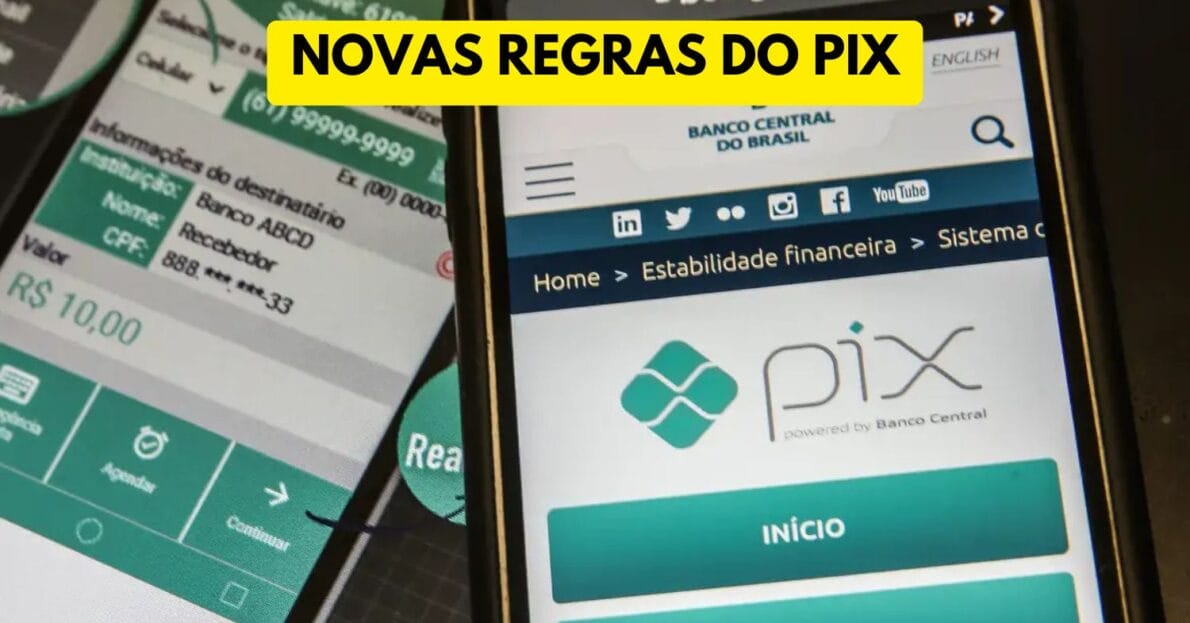
The New PIX Rules Announced by the Central Bank Aim to Increase Security and Combat Fraud by Limiting Transactions via PIX to Unregistered Devices. See How to Prepare!
If you are one of those who uses PIX for everything — paying bills, transferring money, or even shopping online — it’s good to keep an eye on the new rules that will come into effect. Starting November 1, 2024, the Central Bank announced important changes to make the system safer and reduce the scams and fraud that have been occurring with this payment method. After all, since it was created in 2020, PIX has become one of the most popular payment methods in the country. Now, with the new measures, users will need to adapt. So, if you don’t want to be caught off guard, check out everything that will change with the new PIX rules!
What Are the New PIX Rules?
The new PIX rules were announced by the Central Bank on July 22, 2024, and will take effect on November 1. The goal of these changes is clear: to increase security and make life more difficult for scammers.
The main change is that now, if you try to make a transaction from a device that is not registered with your bank, such as an unknown cell phone or computer, the amount that can be transferred via PIX will be limited to R$200. This means that if you are not using your usual cell phone or computer, you will not be able to transfer larger amounts.
-
Brazilian city bets on the business environment to generate jobs and attract investments in the energy sector — secretary reveals strategy at Macaé Energy 2026.

-
50 viaducts, 4 tunnels, 28 bridges, and 40 kilometers of bike paths: BR-262 in Espírito Santo will receive 8.6 billion reais for the largest engineering project in the state’s history, inspired by the Immigrant Highway in São Paulo.

-
Brazil produces too much clean energy and doesn’t know what to do with it: over 20% of solar and wind capacity was wasted in 2025 while investors flee and 509 renewable generation projects were abandoned in the last year.

-
Piauí will produce a new fuel that replaces diesel without needing to change anything in the truck’s engine and reduces pollutant gas emissions by half: truck drivers from all over the Northeast are already celebrating the news that will arrive later this decade.


Another important detail is that those who change their cell phone will also face some restrictions. In this case, the limit will be R$1,000 per day for PIX transactions until the new device is properly registered with the bank.
These measures have been designed to reduce the number of frauds and scams involving PIX, especially in cases where criminals gain access to the victim’s cell phone and make unauthorized transfers. Therefore, stay alert and register your devices at your bank branch to avoid headaches.
Why Did the Central Bank Implement the New Rule?
The Central Bank decided to implement these measures because of the increase in the number of scams using PIX. With the popularization of this payment method, criminals have found new ways to defraud the system, often using stolen or cloned cell phones to make unauthorized transfers.
These frauds can happen in various ways, such as in the notorious “scheduled PIX” scam, where the criminal pretends to make a payment and then cancels it, or even impersonating the victim to make transfers.
With the new PIX rule, the Central Bank hopes to make these types of crimes more difficult. Limiting the value of transfers to unregistered devices and new cell phones is a way to ensure that money is not transferred so easily, providing more security for those who use PIX daily.
How to Register Your Devices and Avoid Problems?
To avoid being stuck with the limits of R$200 or R$1,000 on PIX transfers, it is important that you register your devices with your bank account. The process varies from bank to bank, but is generally quite simple. Most financial institutions already allow you to do this through the bank’s app, without needing to go to a branch.
If you have recently changed your cell phone, it is advisable to take the initiative and register it as soon as possible to avoid the risk of being limited in transaction amounts. Remember that while your new device is not registered, the transfer limit will be R$1,000 per day.
Another important thing: pay attention to the transaction limits imposed by the new rules. Even though the idea is to increase security, these changes may impact those who need to make larger transfers frequently. So, stay informed about your bank’s deadlines and conditions to ensure that you will not have problems when using PIX.
What Else Changes with the New PIX Rule?
In addition to the value limitations for unregistered devices, the Central Bank also announced that banks will be able to use the security information stored by the PIX system to identify suspicious transactions. This means that if any transaction seems unusual, the bank may intervene and analyze the situation before approving it.
The new rules also aim to improve the security of the system as a whole, ensuring that users can continue to use PIX quickly, conveniently, and above all, safely. With the new rules, PIX adapts to the growing demand for greater security in digital transactions. After all, every day, more Brazilians are using the system, and it is essential that it remains reliable. If you use PIX regularly, it is important to stay updated on the changes and ensure that your devices are registered correctly.









Seja o primeiro a reagir!