





 Portuguese
  English
  Spanish
  3 min of reading
  0 comments


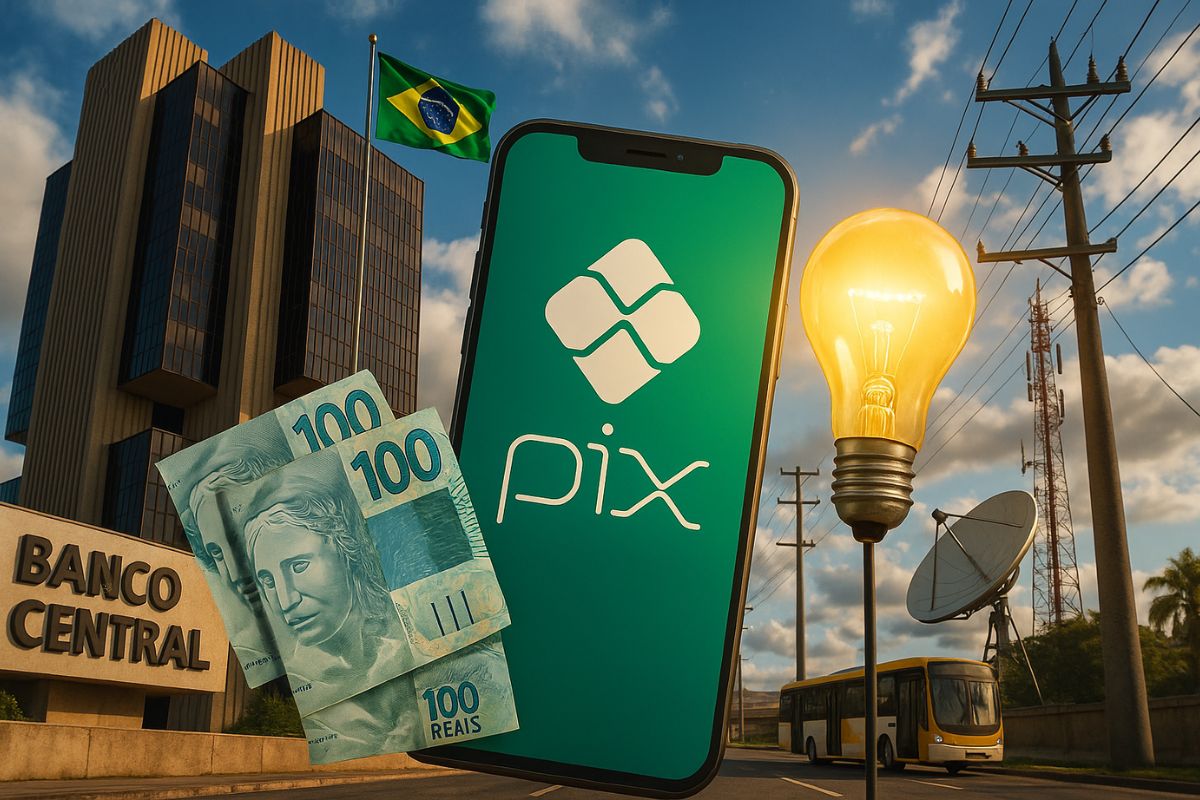
The New Automatic Pix from the Central Bank Allows Recurring Payments of Electricity, Internet, Water, Tuition, and Subscriptions with Just One Authorization, Working Between Different Banks and Gradually Replacing Traditional Automatic Debit.
Starting this Monday, the Automatic Pix is officially in operation in Brazil. The new feature, created by the Central Bank, marks a new phase in the instant payment system and promises to simplify the daily lives of millions of consumers who pay recurring bills every month.
With the Automatic Pix, just a single authorization is needed for automatic payments of services such as electricity, telecommunication, internet, streaming, schools, and health plans. The feature works between different banks, without relying on individual agreements with each institution, making it more accessible and interoperable than the traditional automatic debit.
How the Automatic Pix Will Work
The configuration of the Automatic Pix can be done directly in the bank’s app, via QR Code, or through the Pix Copy and Paste feature.
-
Brazilian city bets on the business environment to generate jobs and attract investments in the energy sector — secretary reveals strategy at Macaé Energy 2026.

-
50 viaducts, 4 tunnels, 28 bridges, and 40 kilometers of bike paths: BR-262 in Espírito Santo will receive 8.6 billion reais for the largest engineering project in the state’s history, inspired by the Immigrant Highway in São Paulo.

-
Brazil produces too much clean energy and doesn’t know what to do with it: over 20% of solar and wind capacity was wasted in 2025 while investors flee and 509 renewable generation projects were abandoned in the last year.

-
Piauí will produce a new fuel that replaces diesel without needing to change anything in the truck’s engine and reduces pollutant gas emissions by half: truck drivers from all over the Northeast are already celebrating the news that will arrive later this decade.


The customer only authorizes once, setting the limit per charge, permission to use emergency balance, and prior payment notifications.
After authorization, the system automatically performs the transfers on the scheduled dates, without the need to repeat the operation every month.
The operation is instantaneous and free for individuals, and companies pay lower fees than those for traditional debit.
One of the biggest innovations of the Automatic Pix is interoperability.
This means that a company can receive payments from customers using any bank, without needing individual integration with each institution, something that traditional automatic debit has never been able to offer.
What Can Be Paid with the New System
According to the Central Bank, the Automatic Pix was developed to serve both consumers and businesses.
Examples of use include:
- Accounts for water, electricity, gas, and telephone
- School tuition and educational services
- Health plans and insurance
- Digital subscriptions, such as streaming, magazines, and applications
- Recurring financial services, such as consortia and scheduled investments
Businesses will also be able to schedule weekly, monthly, or annual charges in a standardized and automated way. The Central Bank emphasizes that the goal is to reduce payment failures and default, in addition to facilitating the user’s financial control.
Differences Between the Automatic Pix and Traditional Debit
Although both allow recurring payments, the Automatic Pix offers significant advantages over automatic debit.
The main advantage is that it works between different banks, eliminating the limitation of agreements.
The Automatic Pix operates 24 hours a day, seven days a week, including holidays.
In contrast, traditional debit is restricted by banking hours and business days.
Another important point is that the consumer retains total control over the use of the tool: they can suspend, edit, or cancel authorizations at any time, directly through the app.
This flexibility puts the customer at the center of the process, without intermediaries and without depending on multiple registrations.
Security and Protection Mechanisms
The Central Bank guarantees that the Automatic Pix will have the same security protocols as traditional Pix, including two-factor authentication, encryption, and transaction tracking.
In case of failures or undue charges, the Special Refund Mechanism (MED) will be automatically applied.
This means that the consumer can request a refund directly from the bank, and in cases of proven fraud, the amount is fully refunded.
For the user, the main advantage is eliminating the risk of forgetting and reducing dependence on invoices and due dates.
For companies, the model improves cash flow predictability and reduces operational costs related to billing and default.
Impact and Next Steps of the System
The Automatic Pix represents another expansion of the Pix ecosystem, which already processes trillions of reais per year and accounts for over 65% of electronic transactions by individuals in the country.
With the new model, the Central Bank aims to increase the digitization of recurring payments and gradually replace automatic debits, which rely on complex and costly integrations for businesses.
Experts point out that the Automatic Pix also paves the way for new financial products, such as insurance, consortia, and fully digital subscriptions, integrated into the instant payment system.









-

-

2 pessoas reagiram a isso.