





 Portuguese
  English
  Spanish
  3 min of reading
  1 comment


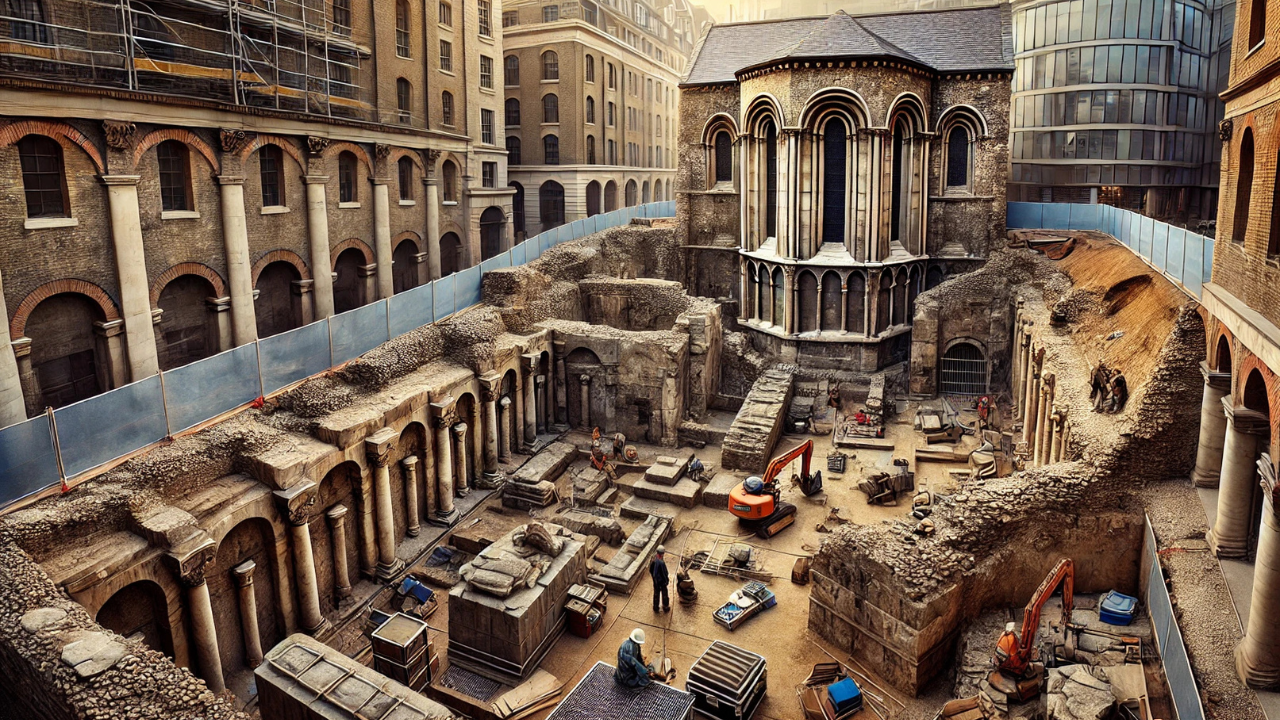


London has just gained another valuable piece in its historical puzzle. Archaeologists discovered under the basement of a commercial building on Gracechurch Street one of the most significant constructions from the Roman era: a 2,000-year-old basilica. The structure, which was part of the ancient forum of the city, sheds new light on Roman history and the beginnings of London.
A Discovery of Great Historical Importance
The team of archaeologists from the Museum of London Archaeology (MOLA) revealed that the excavation uncovered a significant portion of the city’s first basilica.
This public building was a center for political, economic, and administrative decisions in ancient Londinium, Roman London.
-
Italian researchers have detected what appears to be a second Sphinx buried under the sands of Egypt, and satellite scans reveal a gigantic underground megastructure hidden beneath the Giza Plateau for over 3,000 years.
-
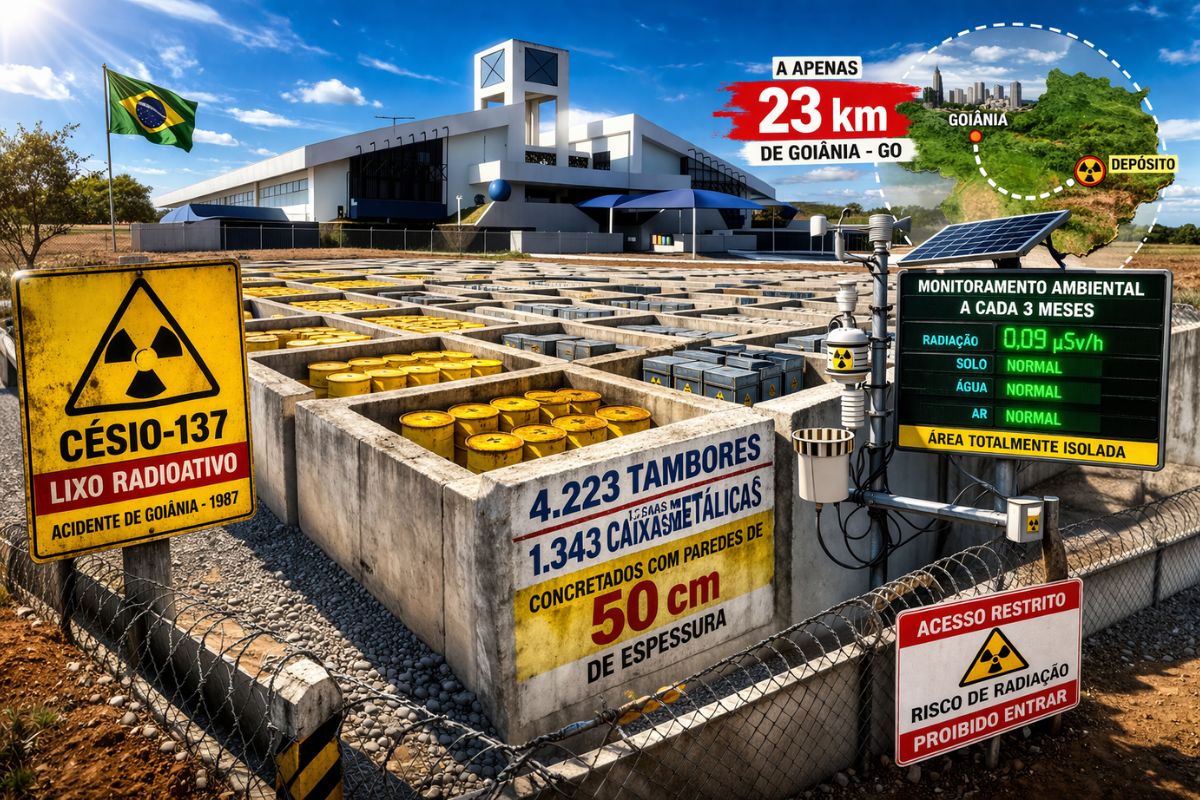
There are 4,223 drums and 1,343 metal boxes concreted with 50-centimeter walls that store the radioactive waste from Cesium-137 in the worst radiological accident in Brazil, just 23 kilometers from Goiânia, with environmental monitoring every three months.
-
Giant Roman treasure found at the bottom of Lake Neuchâtel in Switzerland reveals an advanced trade system, circulation of goods, and armed escort in the Roman Empire about two thousand years ago.

-
He buried 1,200 old tires in the walls to build his own self-sufficient house in the mountains with glass bottles, rainwater, and an integrated greenhouse.
The site, which may soon be open to the public, offers a new perspective on the city’s evolution and its role in the Roman Empire.
“This is incredible — we are at the heart of Roman London”, says Sophie Jackson, archaeologist at MOLA. “This building will help us understand better why London grew and became the capital of Great Britain.”
The Structure of the Roman Basilica
The excavation revealed sections of a stone wall that was part of the basilica’s foundation, an imposing structure about 40 meters long, 20 meters wide, and 12 meters high.
It is estimated that the building had two and a half stories and was made of limestone sourced from Kent, in southeast England.
In addition to the fragments of the basilica, archaeologists also found historical artifacts, such as a tile marked with the seal of a Roman city authority, reinforcing the site’s importance in the administration of ancient Londinium.
The Forum and Its Role in Roman Society
The discovered basilica was part of London’s forum, a commercial and social center comparable to modern public squares.
It was where commercial transactions, trials, and law-making took place.
“The forum was the heart of Roman public life. The basilica, in particular, served as a sort of town hall and court”, explains Jackson.
Built around AD 80, just a few decades after the Romans arrived in Great Britain, the structure was used for about 20 years before being replaced by an even larger forum, reflecting the rapid growth of the city.
Plans for Preservation and Public Display
The archaeological discovery led to a change in plans for the owners of the commercial building located at 85 Gracechurch Street.
Hertshten Properties, responsible for the project, announced that the ruins will be preserved and incorporated into the new construction, allowing the public access to the historical site.
The adaptation of the new structure to the archaeological finds posed challenges for the project’s architects.
“We had to redesign columns and reduce the number of elevators to ensure the preservation of the historical site”, explains James Taylor, architect at Woods Bagot.
“However, the opportunity to allow people to explore this part of Roman history makes all the effort worthwhile.”
London and Its Roman Past
This is just another of several recent discoveries about Roman London.
Other parts of the city also house remnants of this fascinating past, such as the amphitheater beneath the Guildhall Art Gallery and the Temple of Mithras, located within Bloomberg’s offices, where an interactive sound and light installation transports visitors to antiquity.
Chris Hayward, from the City of London Corporation, emphasizes the importance of preserving these historical landmarks.
“Roman London is beneath our feet, and allowing people to experience this connection between the past and present is extraordinary”, he says. “The contrast between Roman ruins and modern skyscrapers reflects progress alongside preservation.”
With the opening of this new archaeological site to the public, London continues to unveil the layers of its rich history, connecting its Roman heritage to the vibrant metropolis it is today.










Que legal a noticia,que fraca a reportagem. Nenhuma imagem do local arqueológico ou links pra original. mas uma péssima imagem criada por IA.