





 Portuguese
  English
  Spanish
  8 min of reading
  0 comments


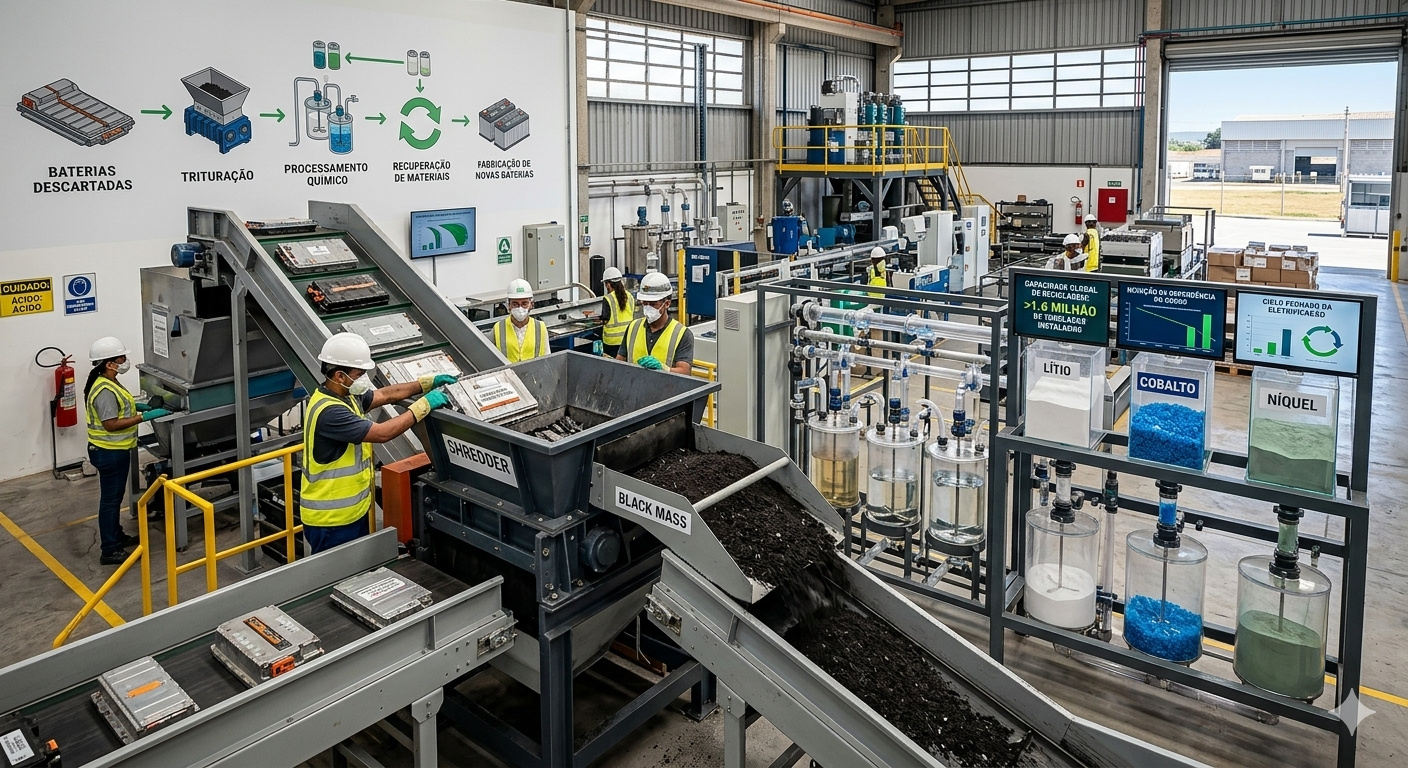
Electric Vehicle Battery Recycling Recovers Lithium, Cobalt, and Nickel on an Industrial Scale and Can Transform Used Batteries into a New Source of Strategic Metals.
The world has put over 40 million electric cars on the streets by 2023, according to data from the International Energy Agency. Within about a decade, a large portion of these vehicles will begin to face the same inevitable moment: battery replacement. This is when a strategic question arises for the energy and electric mobility industry: what to do with tons of lithium, cobalt, nickel, copper, and graphite that have already been extracted from nature, industrially processed, and used in electric vehicle batteries.
These materials do not disappear when the battery reaches the end of its life. On the contrary, they remain present in large quantities within the electrochemical cells. The central question becomes how to recover these valuable metals without the need to open new mines or further expand the environmental impact of global mining.
The answer that has been consolidating in the industry is industrial recycling of lithium-ion batteries. What was until a few years ago a niche restricted to research laboratories has turned into a global race involving automakers, battery manufacturers, and material technology companies. Currently, existing recycling facilities in the world have the capacity to process about 1.6 million tons of batteries per year, and the plants under construction are expected to raise that global capacity to over 3 million tons annually.
-
Historic bankruptcy of Centauro shocks the market, and the century-old company puts more than 500,000 products, machines, and complete infrastructure up for online auction.
-
New shoe factory in Ceará is expected to create 400 jobs and strengthen the local economy.
-
No one imagined it, but a mixture of sawdust with a mineral that fights fires surprises scientists with a result that changes the course of fire-resistant construction.

-
From empty land to a high-end house, wooden construction uses a lightweight system, metal structure for the foundation, ventilated ceramic cladding, and special windows to create an efficient and comfortable living space throughout the year.


Electric Vehicle Battery Metals Can Be Recycled Virtually Limitlessly
A typical electric vehicle battery based on NMC (nickel, manganese, and cobalt) chemistry — one of the most used outside of China — contains significant amounts of strategic materials. Each unit can include approximately 39 kg of nickel, 13 kg of cobalt, between 8 and 9 kg of lithium, about 53 kg of copper, and approximately 66 kg of graphite.
Taking all these components into account, each electric car battery concentrates more than 200 kilograms of potentially recoverable materials. This transforms discarded batteries into a kind of already refined mineral reserve ready for reprocessing.

The advantage of recycling over traditional mining is not only environmental but also chemical and energy-related. Extracting one ton of rare earths or strategic metals from virgin ore can generate up to 2,000 tons of toxic waste, along with requiring large volumes of water and energy. In contrast, recovering these same metals from used batteries requires no blasting in mines, produces much less waste, and consumes significantly less energy.
A classic example is aluminum: recycling the metal consumes about 95% less energy than producing it from bauxite. The energy logic of the metals present in batteries follows a similar principle.
Another factor that makes the process particularly appealing is a fundamental property of metal chemistry. Unlike many recyclable materials like plastic or paper, the atoms of nickel, lithium, and cobalt can be recovered indefinitely without performance loss. An atom of nickel extracted from a used battery and reinserted into a new electrochemical cell has exactly the same properties as a newly mined atom.
This means that, in theory, the same material can circulate continuously within the battery production chain for decades.
Congo at the Center of the Global Cobalt Supply Chain and the Impact of Recycling
To understand why battery recycling has gained such strategic importance, it is necessary to look at the geography of global cobalt mining. Over 70% of the world’s reserves of this metal are concentrated in the Democratic Republic of the Congo.
According to widely cited estimates in studies on the battery supply chain, around 255,000 people work in cobalt mining in the country, including approximately 40,000 children, some as young as six years old. In many cases, the work takes place in artisanal mines, with rudimentary tools and compensation below two dollars a day.
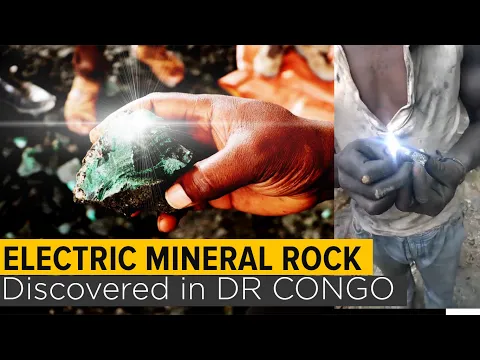
Artisanal mining accounts for something between 15% and 30% of the cobalt that reaches the global market. Once extracted, this material goes through a complex network of intermediaries that makes it extremely difficult to trace its origin. At the end of this chain are large battery factories and, consequently, electric vehicles sold worldwide.
Battery recycling does not eliminate the social problems associated with mining that has already occurred. However, it profoundly changes the equation of future demand. If it is possible to recover up to 90% of the cobalt present in used batteries and reintegrate it into the production of new cells, the need to open new mines — and to expand artisanal mining operations — could significantly decrease over time.
How Lithium-Ion Battery Recycling Works on an Industrial Scale
The recycling process begins with a fundamental safety step: the complete electrical discharge of the battery, required to avoid the risk of short circuits or fire during handling.
After this, the batteries are disassembled into modules and mechanically crushed. The crushed material goes through separation processes based on density, magnetism, and other physical properties. The final result of this stage is a highly concentrated dark powder called black mass.
This mass contains a rich mixture of valuable metals, including lithium, nickel, cobalt, manganese, and graphite. From this point, two main technological paths come into play: pyrometallurgy and hydrometallurgy.
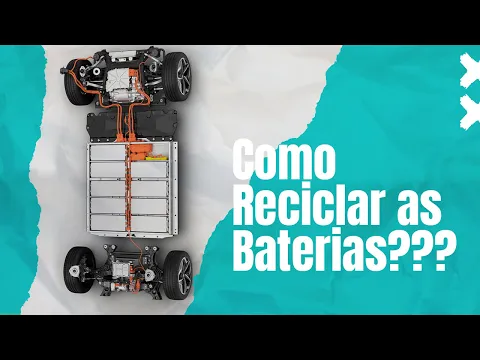
Pyrometallurgy uses extremely high temperatures to melt and separate the metals. In contrast, hydrometallurgy dissolves the black mass in chemical solutions and recovers each element through controlled reactions. In recent years, hydrometallurgy has become the dominant method because it can recover over 90% of lithium, cobalt, and nickel, while generating fewer carbon dioxide emissions.
Companies like Redwood Materials Lead Battery Recycling in the United States
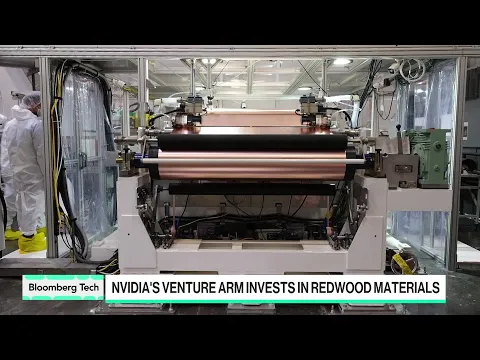
Among the companies driving this industry is Redwood Materials, founded by JB Straubel, one of Tesla’s co-founders. The company operates one of the largest lithium-ion battery recycling facilities in the United States, located in the state of Nevada.
In 2024, the facility processed over 60,000 metric tons of recovered materials, enough to produce battery materials equivalent to those used in approximately 1.5 billion cell phones.
The company has also made agreements with automakers to ensure the return of used batteries to the recycling system. In September 2024, for example, BMW announced a partnership with Redwood Materials to recycle vehicle batteries from BMW, Mini, and Rolls-Royce brands. According to the companies, the process can recover between 95% and 98% of cathode and anode materials.
China Dominates Global Battery Recycling While Europe Regulates the Sector
Globally, China greatly leads the recycling of electric vehicle batteries, controlling about 70% of the world’s installed capacity. Just in 2024, the country recycled approximately 280,000 tons of end-of-life batteries, a volume about seven times greater than what was processed in the United States during the same period.
This leadership reflects decades of industrial policy focused on the battery supply chain. In the country, manufacturers are legally required to take responsibility for recycling the batteries they put on the market.
The European Union has responded by creating one of the most stringent regulatory frameworks in the world for the sector. The new European Battery Regulation, which came into effect in 2024, sets mandatory material recovery targets.
By 2027, recyclers must recover 90% of the cobalt, copper, lead, and nickel present in each battery. For lithium, the initial target is 50% by 2027, rising to 80% by 2031. Additionally, starting in 2031, new batteries sold in Europe must contain 16% recycled cobalt and 6% recycled lithium in their composition.
The Avalanche of Retired Batteries Is Still Coming
Currently, much of the material processed by recyclers does not come from discarded electric cars, but rather from industrial waste from the battery factories themselves. During production, there are always material scraps and defective cells that can be reused.
This happens because the massive adoption of electric vehicles began to accelerate only after 2016, and automotive batteries typically have a lifespan of 8 to 15 years. The peak of the first generation of truly retired batteries is yet to come.
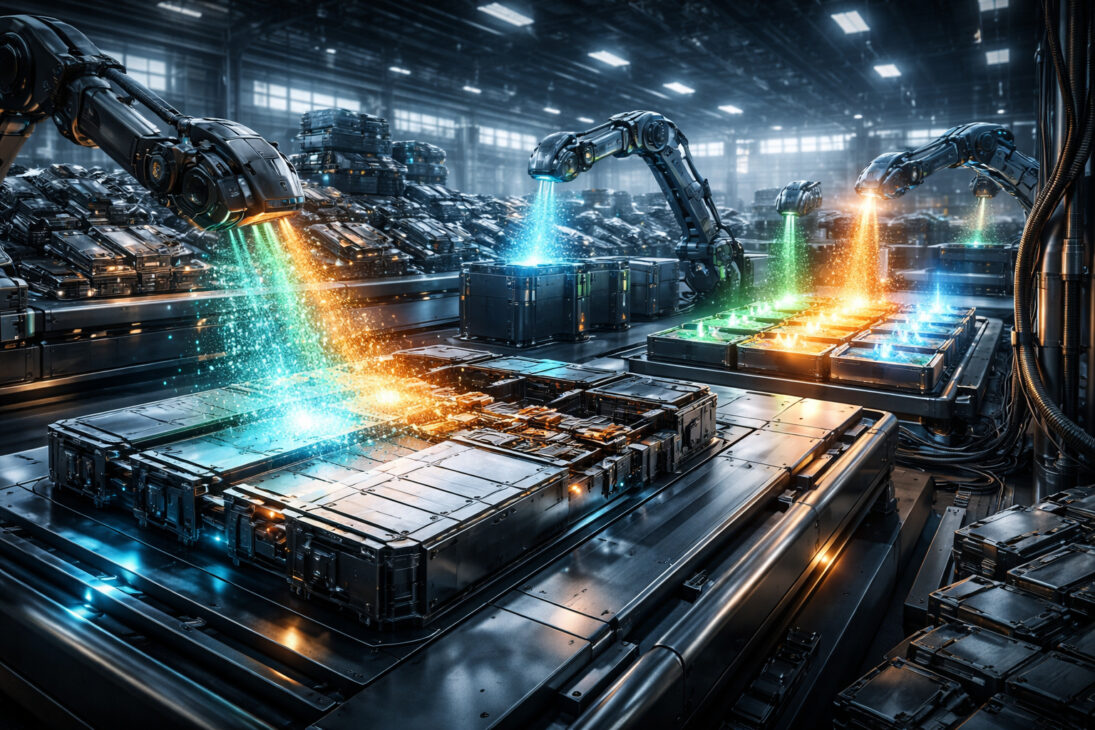
Projections from Statista, based on data from the International Energy Agency, indicate that the volume of battery materials available for recycling should grow from about 200,000 tons in 2020 to 1.4 million tons by 2030. By 2040, this number could exceed 7 million tons per year.
At the same time, global demand for lithium is expected to grow by up to seven times by 2040 to sustain the electrification of transport. Without a robust recycling system, this expansion would require a massive increase in global mining.
Battery Recycling Has Also Become a Geopolitical Issue
In addition to the environmental issue, battery recycling has also become a strategic topic in the geopolitics of natural resources. Currently, China controls over 80% of the global refining of lithium, cobalt, and graphite, even when mining occurs in other countries.
In early 2025, in response to escalating trade tensions with the United States, Beijing announced restrictions on the export of some critical minerals used in batteries and semiconductors.
In this context, domestic battery recycling acts as a kind of strategic reserve of metals. The materials are already present within national borders, incorporated into used products, and can be recovered without relying on imports.
Economic and Technological Challenges Still Limit Expansion of Recycling
Despite technological advances, the battery recycling industry still faces significant challenges. One of them is economic. Lithium prices fell between 40% and 60% during 2024 compared to the peak recorded in 2022. When newly mined metal becomes cheaper, recycled material loses competitiveness in the market.
Another challenge is the chemical diversity of batteries. Different technologies, such as NMC, LFP, and NCA, have distinct compositions and require specific recycling processes. An industrial plant optimized for one type of battery may perform less efficiently when processing batteries from another manufacturer.
There is also a significant logistical challenge. Electric vehicle batteries are heavy, classified as hazardous cargo for transport, and must be electrically discharged before any handling. Building a global network for the collection, sorting, and transport of used batteries requires investments in infrastructure comparable to those of entire industrial chains.
Today’s Electric Car Can Be Tomorrow’s Metal Mine for Electric Cars
Even with these difficulties, the direction of the industry is clear. Companies like Umicore, in Belgium, are building large recycling facilities with the capacity to handle 150,000 tons of batteries per year. Fortum, in Finland, operates a plant capable of recovering over 95% of the critical metals present in the processed batteries.
In Sweden, Northvolt has adopted an integrated model in which recycling is part of its own battery gigafactory. Waste from current production is reprocessed and reintegrated directly into the manufacturing of new cells.
The logic that is beginning to emerge from this industrial transformation is simple to state, though complex to execute. The electric car produced today can become the metal mine for the electric car of tomorrow.
Whoever masters this complete cycle — from production to industrial-scale recycling — will have control over an increasingly important part of the global energy and mobility chain of the 21st century, without needing to open a single new mine on the planet.









Seja o primeiro a reagir!