





 Portuguese
  English
  Spanish
  4 min of reading
  0 comments


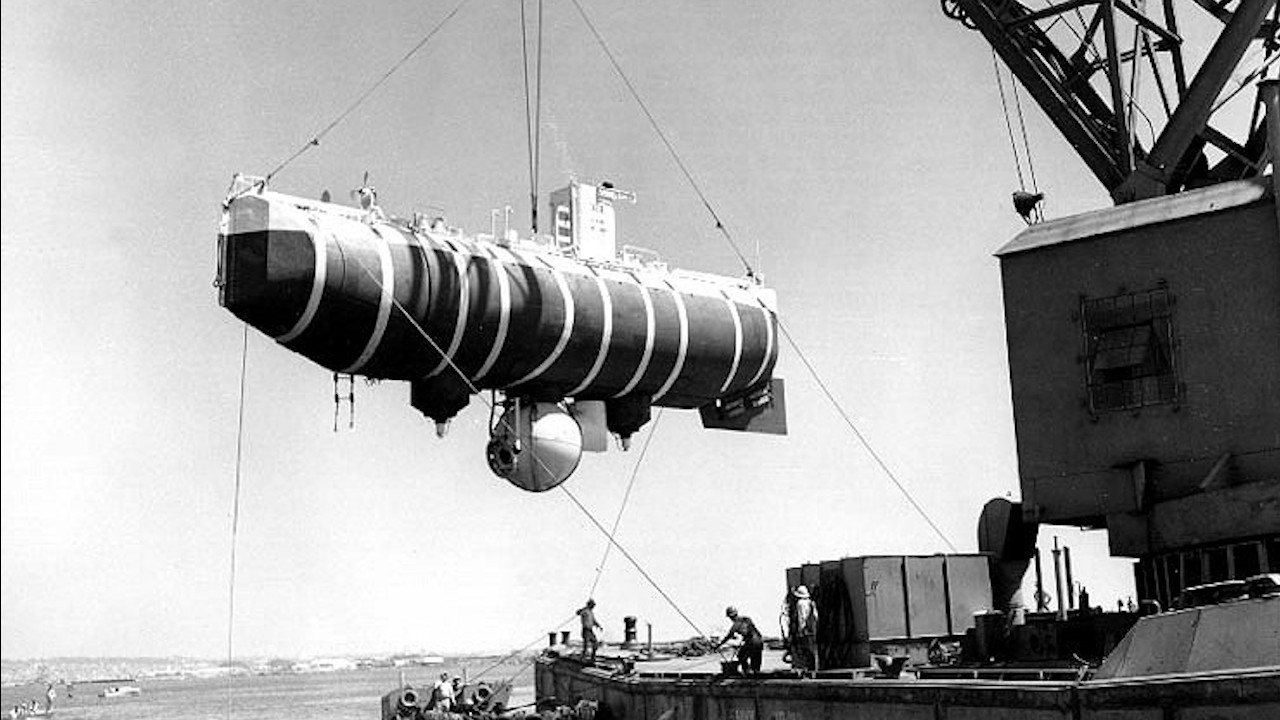
In 1960, the bathyscaphe Trieste descended to 10,916 meters in Challenger Deep, withstood more than 1,100 atmospheres, and took humans for the first time to the deepest point in the ocean.
At the height of the 20th century, when the space race dominated headlines, an equally extreme feat was happening far from the public eye, in the most inaccessible place on Earth. On January 23, 1960, the bathyscaphe Trieste achieved something that seemed impossible: descended to Challenger Deep in the Mariana Trench, reaching 10,916 meters below sea level. The feat marked the first human contact with the known deepest point of the ocean and set a technical milestone that would not be surpassed for six decades.
A Machine Created to Challenge Absolute Pressure
The great enemy of deep exploration has always been pressure. At 10,916 meters, the Trieste faced more than 1,100 atmospheres, equivalent to tons crushing every square centimeter of the vehicle.
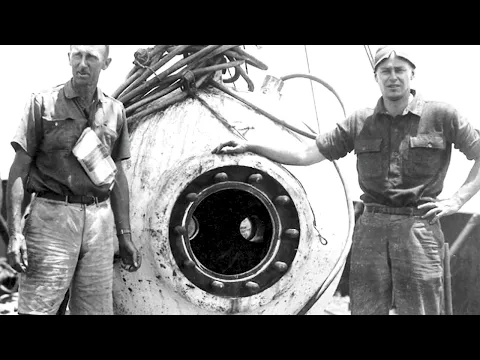
To survive this, the bathyscaphe adopted a radical solution: a pressurized steel sphere, with thick walls and only small hatches, capable of maintaining a habitable environment while the exterior was subjected to forces capable of deforming ordinary metal.
-
Motorola launched the Signature with a gold seal from DxOMark, tying with the iPhone 17 Pro in camera performance, Snapdragon 8 Gen 5 that surpassed 3 million in benchmarks, and a zoom that impresses even at night.

-
Satellites reveal beneath the Sahara a giant river buried for thousands of kilometers: study shows that the largest hot desert on the planet was once traversed by a river system comparable to the largest on Earth.

-
Scientists have captured something never seen in space: newly born stars are creating gigantic rings of light a thousand times larger than the distance between the Earth and the Sun, and this changes everything we knew about stellar birth.

-
Geologists find traces of a continent that disappeared 155 million years ago after separating from Australia and reveal that it did not sink, but broke into fragments scattered across Southeast Asia.

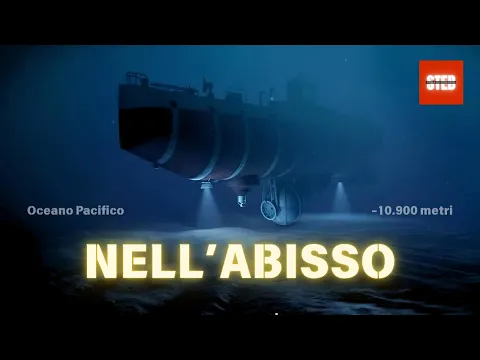

Unlike modern submersibles filled with electronic systems, the Trieste was simple and robust, designed to withstand above all.
The Historical Dive into Challenger Deep
The descent took several hours. As the Trieste sank, light disappeared completely and the hull creaked under the growing pressure. At one point, a loud crack, resulting from the breakage of an external window, nearly interrupted the mission. Still, the bathyscaphe continued.
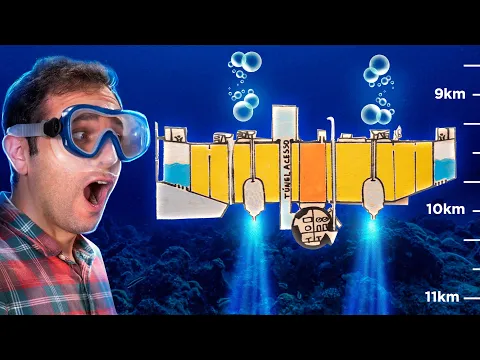
Upon reaching the bottom, at about 10,916 meters, the occupants observed fine sediments disturbed by the landing and confirmed something surprising for the time: life existed even in that extreme environment. The time spent on the bottom was short, about 20 minutes, but enough to make history.
An Isolated Feat for More Than Half a Century
The impact of the Trieste’s dive was as great as it was paradoxical. Despite the success, no other crewed mission returned to Challenger Deep for over 50 years.
The cost, risk, and technical complexity made direct human exploration unfeasible for decades, pushing science towards unmanned vehicles.
The Trieste remained as a solitary feat, cited in books and reports as proof that it was possible, but extremely difficult to take humans to the absolute limit of the ocean.
Why the Trieste Was So Important
The legacy of the Trieste goes far beyond the depth record. It proved fundamental concepts that would shape all deep ocean exploration:
– that pressurized spheres are the safest way to protect humans at great depths
– that vehicles can operate at the bottom of the ocean without being crushed
– that life is possible even under pressures considered lethal
These principles would be refined and reapplied in later projects, from Soviet bathyscaphes to modern titanium submersibles.
Comparison with Current Technology
Today, submersibles such as the Limiting Factor or the Fendouzhe use advanced titanium alloys, digital sensors, and redundant systems. Still, the basic structural logic remains the same as inaugurated by the Trieste: an extremely resilient capsule protecting humans in a hostile environment.
What has changed is the frequency. While the Trieste made a single historic dive, modern submersibles can descend repeatedly to extreme depths, safely transporting scientists and instruments.
A Milestone That Opened the Deep Ocean to Mankind
The Trieste did not explore vast areas, did not collect large quantities of samples, and did not remain hours on the bottom. Its role was different: to open the door. By proving that the ocean floor was reachable, it transformed deep exploration from a theoretical dream into a real technical challenge.
All that came after, detailed mappings, studies of extreme ecosystems, and repeated scientific missions, was only possible because in 1960, someone decided to take a simple machine to the planet’s maximum limit.
Even today, with all the available technology, the descent of the Trieste remains impressive. Not only for the depth but for the context: without advanced computers, without modern simulations, and with minimal margin for error, two men descended to the deepest place on Earth and returned alive.
Few human feats represent so well the combination of courage, engineering, and scientific curiosity as that silent dive to the bottom of the ocean.







-

-

-

-

11 pessoas reagiram a isso.