





 Portuguese
  English
  Spanish
 4 min of reading
  0 comments


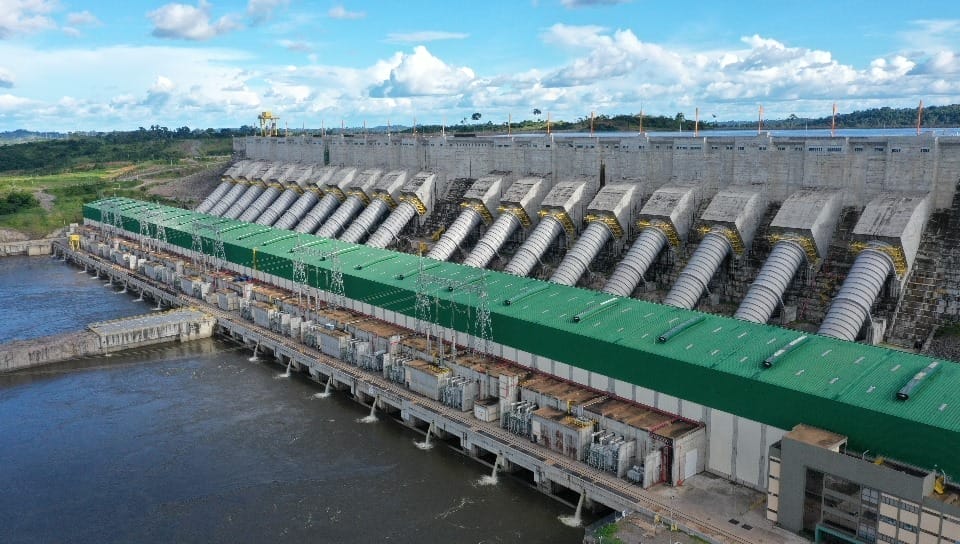
Belo Monte Generated Renewable Energy for 20 Million Households in the First Half of 2024, Representing 6% of National Consumption, Despite the Effects of El Niño.
The Belo Monte hydroelectric plant was able to provide, in the first half of 2024, adequate renewable energy to meet the needs of households located in the North, Central-West, and Rio de Janeiro regions. Even with the impacts of El Niño in the northern part of the country, Belo Monte was responsible for producing 6% of the total energy consumed in Brazil, serving approximately 20 million households.
The Belo Monte Hydroelectric Plant, considered the largest 100% national hydroelectric plant, stood out for its productive capacity during a challenging period. Its operation, even in the face of climatic adversities, proved efficient and crucial for maintaining energy stability. This hydroelectric plant is a milestone in the generation of clean and renewable energy, ensuring the supply for millions of households across the country. The commitment to sustainability and energy efficiency reaffirms the importance of investments in projects like Belo Monte.
The production of renewable and clean energy by the Belo Monte Hydroelectric Plant will continue to benefit Brazil in the first half of 2024, despite the impacts of El Niño, which reduced rainfall in the North. Throughout this period, the Belo Monte Hydroelectric Plant generated 6% (20,414 GWh) of all electricity consumed in the country, which is enough to power about 20 million households.
-
Renewable energy advances over protected areas in Brazil, and a survey by the Energy Transition Observatory reveals silent impacts that challenge environmental conservation and pressure sensitive traditional territories.

-
Rio Grande do Sul accelerates energy transition: State invests in renewable technologies and consolidates decarbonization strategies and pathways to attract billions in new industrial investments.

-
With 160,000 m² of collectors, an area larger than 20 football fields, Silkeborg, in Denmark, hosts a solar thermal plant that heats 19,500 homes and could become the largest solar heating plant in the world.

-
A study reveals the expansion of renewable energy procurement in Brazil and shows how companies are taking advantage of opportunities to reduce expenses, ensure energy efficiency, and strengthen strategic environmental commitments.


Supply Capacity of the Belo Monte Plant
The energy produced by Belo Monte between January and June of this year is sufficient to meet all the households in the North and Central-West regions, as well as the state of Rio de Janeiro, for the same period. This calculation is based on data provided by the Energy Research Company, as announced in the 2024 Electric Energy Statistical Yearbook. Furthermore, this amount of energy would be able to supply the entire National Interconnected System (SIN) for about 11 days. The SIN is a vast network that covers much of Brazil, incorporating generation systems and the extensive electricity transmission grid.
Belo Monte: A Crucial Point for Renewable Energies
The importance of renewable and clean energy sources to sustain large urban centers, boost the economy, and ensure the functioning of essential public services without negatively impacting the environment is increasingly in focus. The energy generated by Belo Monte has provided this energy security fundamental to Brazil, significantly contributing to the national energy landscape. The Belo Monte Hydroelectric Plant offers this essential reliability.
Paulo Roberto Pinto, president of Norte Energia, the operator of the Belo Monte Hydroelectric Plant, emphasized that in addition to continuous and stable production, Belo Monte responds quickly to demand, especially on peak consumption days. On the night of March 15, 2024, the hydroelectric plant generated 11,000 MW, representing 12% of the national load consumed at the time, enough to supply 60 million people. On January 12, 2024, between 7:30 PM and 9:40 PM, Belo Monte responded to the peak demand, producing 4,278 MW. To generate this amount of energy using non-renewable sources would require the emission of approximately 1.26 tons of carbon dioxide into the atmosphere.
Impact and Efficiency of the Belo Monte Hydroelectric Plant
During the first half of 2023, before the effects of El Niño had a significant impact, the production of the Belo Monte Hydroelectric Plant was 9.4% (29,125 GWh) of all energy consumed in the country, equivalent to the consumption of 30 million households.
The Belo Monte Hydroelectric Plant plays a crucial role in national energy security by maximizing its generation according to the volume of water passing through its turbines, especially during the wet season in the Amazon. This plant ensures Brazil’s energy security while other reservoirs face the dry season, generating maximum energy and contributing to the SIN while reservoirs in other basins accumulate water to meet national market needs during the dry season.
Environmental Efficiency of the Belo Monte Hydroelectric Plant
A study by the Alberto Luiz Coimbra Institute of Postgraduate Studies and Research in Engineering (COPPE) at the Federal University of Rio de Janeiro (UFRJ) concluded that Belo Monte is the hydroelectric plant that emits the least gases in the Amazon biome, being the fifth most efficient plant in the country in terms of pollutant gas intensity rate. It is estimated that, within 5 to 10 years, the flooded area of the enterprise will show progressively lower emissions. The installed capacity of the Belo Monte Hydroelectric Complex is 11,233.1 MW, with an average generation of 4,571 MW. The Belo Monte Hydroelectric Complex represents 5% of Brazil’s electrical matrix and 10% of hydraulic generation capacity, standing out as the largest 100% national hydroelectric plant.
In summary, Belo Monte is essential for Brazil’s energy security, providing a renewable and inexpensive energy source while reducing the rate of pollutant gas emissions. The plant helps maintain supply during peak consumption times and supports the stability of the National Interconnected System (SIN). As the largest fully Brazilian hydroelectric plant, Belo Monte remains a pillar of energy security and sustainability in Brazil.
Source: © maria.martinez@fsbholding.com.br









Seja o primeiro a reagir!