





 Portuguese
  English
  Spanish
  4 min of reading
  0 comments


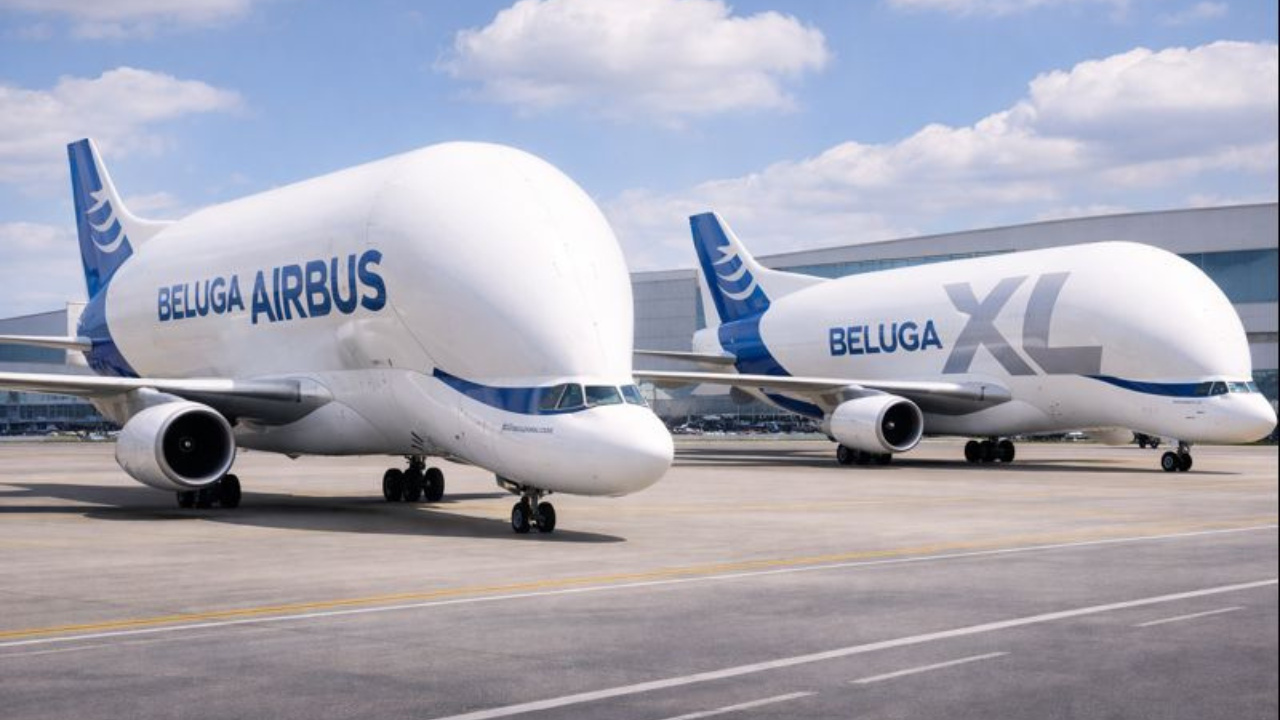
Airbus Retires The BelugaST And Considers Donating The Historical Freighter To Museums After Decades In The Transport Of Large Aeronautical Components.
The Airbus has begun the retirement process of the Airbus BelugaST, its traditional freighter, after more than two decades of intensive use in the transport of large aeronautical components.
The decision involves a complete fleet replacement with the more modern and efficient BelugaXL, and opens the possibility for a new destination for the historical aircraft: permanent exhibition in museums and educational institutions, mainly in Europe, but also in other continents.
This measure occurs now because the European manufacturer has completed the operational transition to the BelugaXL, which has fully taken over the company’s internal logistics.
-
Chaos On Airplane Could Be Expensive: Proposal Aims To Prevent Disruptive Passengers From Flying For Up To 1 Year In Brazil And Face Fines Of Up To R$17,500

-
Man Arrested After Halting Takeoff of Fire Department Helicopter During Child Rescue in Guaratuba

-
With 37 Tons of Cargo, Over 8,000 km Range, and Ability to Land on Unpaved Runways, the Airbus A400M Demonstrates How Europe Created a Military Giant That Transports Armored Vehicles, Aerially Refuels Fighters, and Operates in Conflict Zones and Humanitarian Missions Worldwide
-
Emergency Landing in Campos Amarais After Bird Strike on Small Plane

As a result, the A300-600ST Super Transporter, the official name of the BelugaST, is no longer essential to the production chain and has become a historical asset of industrial aviation.
Airbus BelugaST Marked An Era In Aeronautical Logistics
Created specifically to meet the industrial needs of Airbus, the Airbus BelugaST entered into operation at the end of the 1990s.
Over more than 20 years, the freighter was responsible for transporting large aeronautical components, such as fuselages, wings, and structural sections, between factories spread across various European countries.
Its unmistakable design, with a widened fuselage and articulated cockpit, allowed for the transport of parts that would not fit in conventional freighters.
For this reason, the BelugaST became an icon of logistical engineering and a symbol of the industrial integration of Airbus.
In total, Airbus built only five units of the A300-600ST Super Transporter, all dedicated exclusively to the manufacturer’s internal logistics.
This exclusivity increases the interest of aeronautical museums, which see the aircraft as a unique piece of the history of commercial and industrial aviation.
BelugaXL Takes Center Stage In The Transport Of Large Aeronautical Components
While the BelugaST bids farewell to regular operations, the BelugaXL solidifies its role as the new logistical pillar of Airbus.
Based on the A330-200, the model offers greater cargo capacity, superior range, and improved operational performance, meeting the current demands of aeronautical production.
Moreover, the BelugaXL handles even larger volumes, ensures efficiency in the transport of large aeronautical components, and reduces bottlenecks in the industrial chain.
This way, Airbus ensures the continuity of its global operations without relying on the previous fleet.
This technological evolution explains why the Airbus freighter from the BelugaST generation is no longer needed in active service, even while maintaining its historical relevance.
Airbus Evaluates Donating The BelugaST To Museums And Educational Centers
According to the specialized site Aerotime, Airbus has already begun talks with museums, mainly in Europe, to enable the exhibition of retired aircraft.
There are also preliminary negotiations with institutions outside the European continent, including possible interested parties in the United States.
However, the selection of locations depends on critical factors.
The available infrastructure, funding for transport and assembly, and long-term preservation conditions are decisive points.
The size of the Airbus BelugaST makes the operation complex, especially when the museum is not located near an active airport.
The volume of the fuselage and the articulated cockpit system, hallmark features of the A300-600ST Super Transporter, require specialized logistics for disassembly, ground transport, and subsequent reassembly.
Commercial Use Of The Airbus Freighter Was Discarded
Before the definitive retirement, Airbus considered expanding the use of the BelugaST for commercial heavy transport services.
The idea was to take advantage of the unique capacity of the aircraft outside the company’s internal logistics.
However, these attempts were halted in 2025.
The operational complexity, combined with low demand and competition from more versatile conventional freighters, made the project economically unfeasible.
Thus, the Airbus freighter remained restricted to its original function until the end of its operational cycle.
Legacy Of The Airbus BelugaST Remains Alive
Even out of operation, the Airbus BelugaST maintains a relevant legacy in the history of aviation.
Few aircraft have been so decisive in enabling a decentralized industrial model like that of Airbus, based on the transport of large aeronautical components between countries.
The potential transformation of these aircraft into museum pieces reinforces their historical, educational, and symbolic value.
Meanwhile, the BelugaXL continues to ensure the logistical efficiency of the manufacturer, representing the continuity of a unique solution that has shaped the global aeronautical industry.










Seja o primeiro a reagir!