





 English
  Francês
  Alemão
  Italiano
  Japonês
  Norueguês
  Portuguese
  Spanish
 4 min of reading


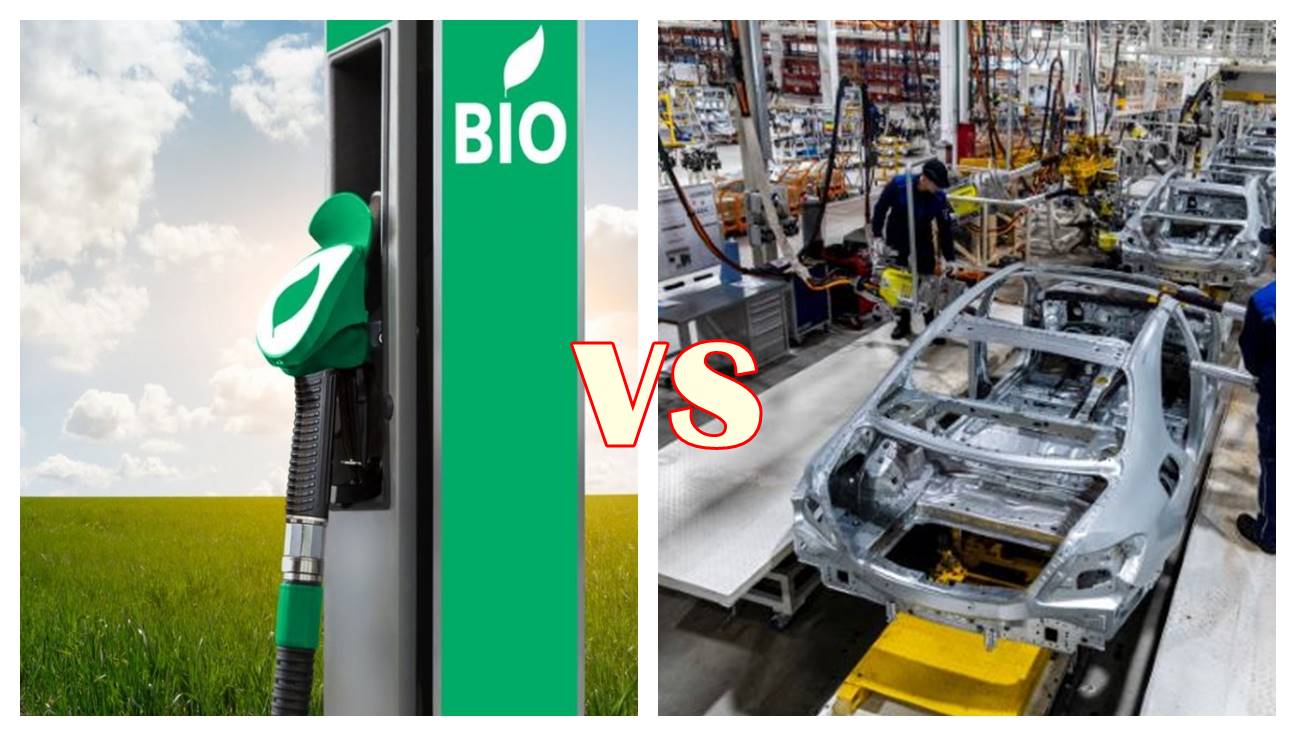
March Started with a New and Controversial Release of a Note Against Biodiesel Producers
The great “battle” between automakers and biodiesel producers is a conflict that has been going on for some time. In this regard, the month of March started with heightened feelings following the release, last Friday (09), of a note with intense criticisms of biodiesel producers. However, this is not the first time this has happened, and successive notes have been issued from both sides.
Nevertheless, the note released on the 9th was signed by nine business entities, with an offensive and strong tone. Therefore, the biodiesel industry has pressured members of the National Energy Policy Council (CNPE) to pay attention to these attacks through the media. Check out the main developments of this true “duel of titans.”
Learn a Little More About How Biodiesel is Produced with This Explanatory Video from Embrapa

Major Automakers Want to Preserve a Market Reserve Against More Modern Fuels
In light of the great environmental concern that has emerged in recent years and the search for renewable fuels, automakers still show some resistance. After all, the production of larger quantities of biodiesel and other types of biofuels could foster a new market with hybrid and electric vehicles, which has been growing worldwide.
-
With 160,000 m² of collectors, an area larger than 20 football fields, Silkeborg, in Denmark, hosts a solar thermal plant that heats 19,500 homes and could become the largest solar heating plant in the world.

-
A study reveals the expansion of renewable energy procurement in Brazil and shows how companies are taking advantage of opportunities to reduce expenses, ensure energy efficiency, and strengthen strategic environmental commitments.

-
Brazil accelerates decarbonization in the South: International forum in Foz do Iguaçu gathers leaders to discuss the advancement of biomethane in the energy matrix and the potential of “caipira pre-salt.”
-
Mato Grosso do Sul excels in the sugar-energy sector: the state reaches a milestone of 22 operating mills and accelerates the production of clean energy in MS with a focus on sustainability.

However, automakers defend their interests in maintaining a market reserve against the competition from more modern fuels. Furthermore, the increased circulation of vehicles with clean energy could affect the entire ecosystem of new car production. Thus, what we have seen is a mutual accusation between producers and automakers, in which whoever yells the loudest believes they hold the truth.
The Notes Presented Bring the Argument That Only Large Biodiesel Producers Profit from the Chain
A major fallacy and distorted argument that has been used by automakers to distance this idea of increasingly integrating biodiesel into the market is that its production only benefits large producers. However, it is proven that this is not true, as many people are involved and benefited for biodiesel to reach the final consumer.
In this sense, biodiesel production benefits everyone from grain traders to service providers of various kinds. Additionally, small and medium producers also stand out in the productive scenario, adding to job growth and stimulating regional development.
Another Common Argument is About the “Sludges” That Could Damage Vehicles Internally
Automakers and the automotive production sector have also presented arguments regarding the use of biofuels in vehicles. In this sense, what is claimed is that biodiesel promotes sludges after combustion, which are highly polluting. Furthermore, it can also sediment in vehicle equipment and interfere with functioning.
This happens because domestic biodiesel is made from ester, a compound that transforms into a pollutant compound after burning. Moreover, the production of this type of diesel is economically favorable compared to green diesel (HVO), which has higher operating costs.
However, studies have already brought several advances aimed at preventing the formation of sludge and other polluting materials. After all, the specifications of this fuel have been modified numerous times to counter these arguments.
Government Published the Final Report of Tests in 2019 and Approved B15. However, Some Automakers Refuse to Accept
The government encouraged the conduct of multiple tests with automakers and vehicle parts manufacturers regarding biodiesel. Therefore, in 2019, the report approving the use of B15 (the new national biofuel) was released.
However, the approval of this report was turbulent. After all, two automakers refused to sign the report at the final moments of its closure. Thus, many reasons have been speculated since then, without a concrete conclusion about what happened.
Green Diesel is Cleaner Than Biodiesel, but May Currently Be Economically Unviable in Brazil
However, what is under discussion is the production of green diesel, as it does not produce polluting compounds after combustion. In this sense, automakers and producers still do not agree on production, considering the economic unviability on both sides.
After all, an advanced and complex infrastructure is necessary for the production of this type of fuel, and companies have not encouraged this modernization. Furthermore, automakers are not interested as it would bring in a new fleet of vehicles to establish competition nationally.
In other words, discussions about the production of biodiesel and green diesel in Brazil remain far from over. However, what remains for us is to follow the scenes of the next chapters.






Seja o primeiro a reagir!