





 Portuguese
  English
  Spanish
  4 min of reading
  7 comments


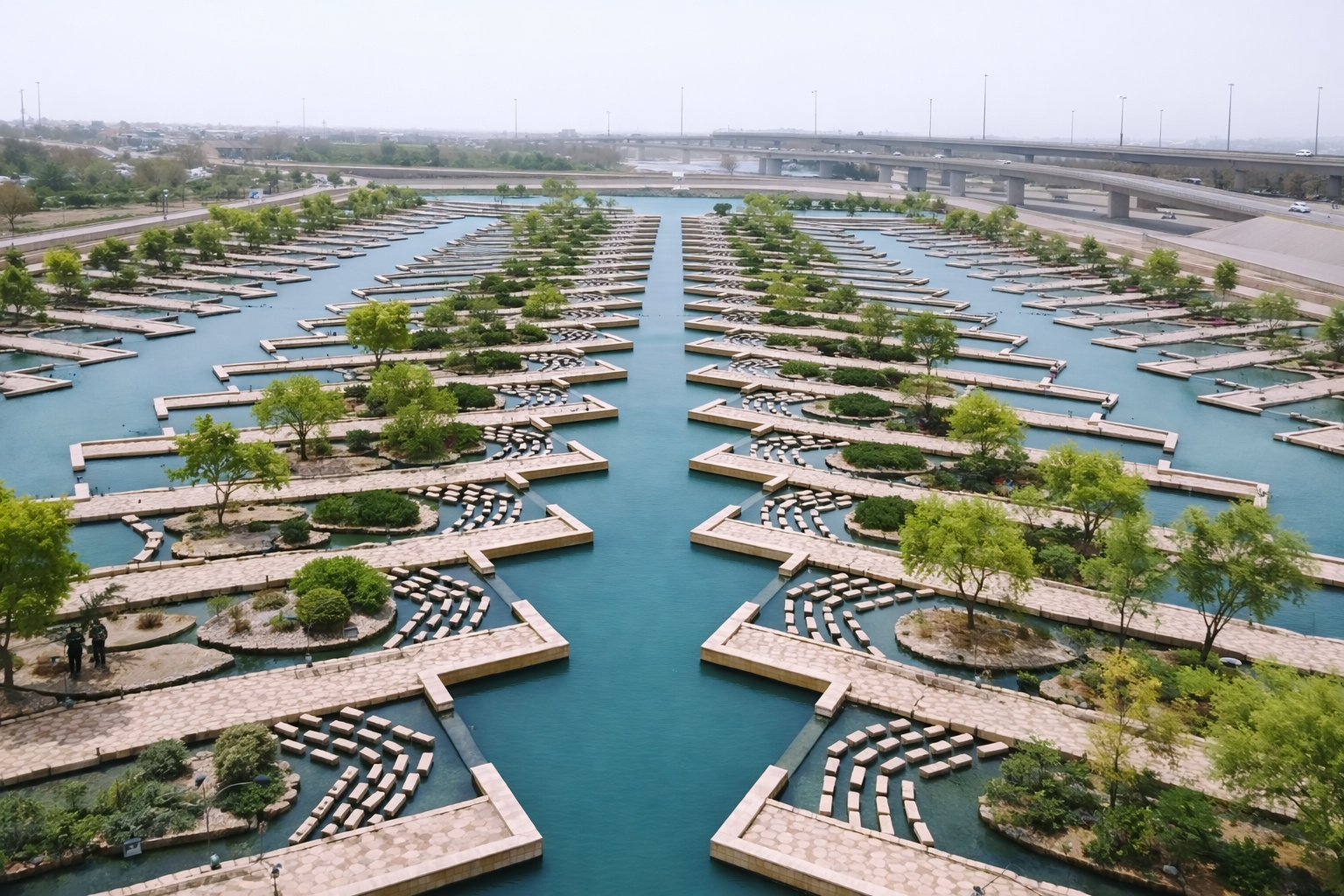


Ecological System in Wadi Hanifa Recycles Sewage and Helps Sustain 36 Million People in Hyper-Arid Region
Riyadh, the capital of Saudi Arabia, currently operates the world’s largest biological water treatment plant. At the center of a megacity built in the middle of the desert, where survival depends on advanced water technology, engineers and ecologists decided to use nature itself as an ally.
This information was disclosed by environmental documentarians and permaculture specialists who monitor ecological solution projects in the Middle East. They demonstrate how Riyadh converts urban sewage into a strategic resource for the future.
Currently, the city is home to about 36 million people in the country and faces an extreme challenge: there simply isn’t enough natural water. The region has a hyper-arid climate and receives only 100 millimeters of rain per year.
-
Friends have been building a small “town” for 30 years to grow old together, with compact houses, a common area, nature surrounding it, and a collective life project designed for friendship, coexistence, and simplicity.

-
This small town in Germany created its own currency 24 years ago, today it circulates millions per year, is accepted in over 300 stores, and the German government allowed all of this to happen under one condition.

-
Curitiba is shrinking and is expected to lose 97,000 residents by 2050, while inland cities in Paraná such as Sarandi, Araucária, and Toledo are experiencing accelerated growth that is changing the entire state’s map.

-
Tourists were poisoned on Everest in a million-dollar fraud scheme involving helicopters that diverted over $19 million and shocked international authorities.


To address the scarcity, the government imports water from the Persian Gulf. The desalination system pumps seawater under extremely high pressure through membranes that filter salt at the molecular level. After that, pipelines transport this water for nearly 400 kilometers across the desert to supply the capital.
Therefore, every drop consumed carries a high energy cost.
However, a large portion of this water ends up being discarded in toilets, sinks, and washing areas. Additionally, half of the world’s population still discharges sewage without adequate treatment, contaminating rivers and aquifers.
In light of this scenario, Riyadh decided to take action.
How Wadi Hanifa Went from Open Sewage to a Clean Waterway
For decades, Wadi Hanifa functioned as a large waste canal. Pipeline leaks, faulty septic systems, industrial effluents, and urban runoff created an unhealthy environment.
Farmers and families living on the banks directly suffered the impacts.
However, the city implemented a large-scale biological system. Instead of solely relying on industrial processes, engineers directed millions of gallons of sewage daily into an ecological complex.
This system uses plants, algae, and aquatic microorganisms to naturally purify the water.
How Natural Biocells Work
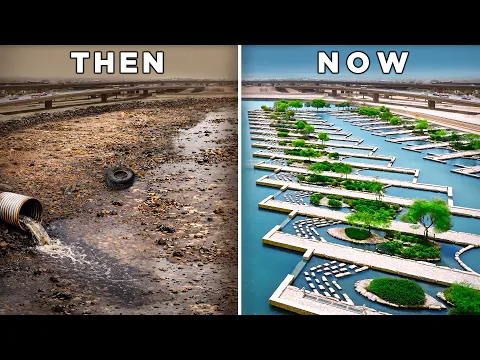

First, sewage enters through an upper channel and flows by gravity along a central axis. Then, the water passes through areas called biocells.
Each drop goes through these biocells three times over a total period of 21 hours.
In the inlet channel, pumps inject air into the water. This process increases dissolved oxygen, benefits fish, and accelerates the decomposition of harmful organisms.
After this, the water flows over a rocky bed covered with a biofilm made up of algae, plants, and microorganisms. These organisms consume pollutants and transform waste into nutrients.
Nutrients such as fecal coliforms, nitrogen, and phosphorus enter the food chain. Thus, the system converts excess pollution into biomass.
Next, the water passes through the riffles zone, where rocks create movement and increase the surface area for biological action.
Finally, the liquid reaches the outlet channel with quality sufficient for limited human contact.
Rigorous tests confirm the results: the system removes 94% of suspended solids and 89% of fecal coliforms.
Daily Production of 45 Million Gallons in the Desert
The station is designed to produce 45 million gallons of treated water per day.
This volume supplies local farmers, who use the water for irrigation and the cultivation of trees such as jujube (sidr).
Abdullah bin Ali, a farmer in the region, explains that many properties primarily operate with treated gray water. A few decades ago, producers abandoned their lands due to the unsustainable conditions of the valley. Today, the scenario has changed completely.
Reforestation and Combating Dust Storms

Riyadh plans to plant 7.5 million trees by 2030. This project aims to reduce extreme heat and mitigate dust storms that affect the quality of life of the population.
However, planting millions of trees in the desert requires constant irrigation. As evaporation exceeds the annual rainfall volume by more than 25 times, the trees need regular supply.
For this reason, the reuse of treated sewage has become a central part of the city’s environmental strategy.
As the population grows, the volume of sewage also increases. Consequently, the biological system receives more nutrients and expands the ecological cycle.
An Ecological Corridor of 75 Meters in the Middle of the Desert
The project transformed Wadi Hanifa into an ecological corridor of approximately 75 meters in length along the restored course.
Today, water birds, fish, and insects occupy the space. Biodiversity has increased, and the valley has become a leisure area for residents.
Moreover, experts estimate that more than 1 billion people live in desert regions worldwide. Therefore, solutions like this could become fundamental for urban survival in the future.
Instead of viewing sewage as a problem, Riyadh chose to see it as a resource.
What do you think, can transforming urban waste into ecosystems be the solution for cities facing water scarcity?










Me encanta escuchar noticias buenas
As medidas do sistema está errada e por muito em 75 metros você não faz nada biológico para tratamento de esgoto corrige as medidas o sistema funciona, só que em distância infinitamente maior pode multiplicar pôr 30 ou mais dependendo da largura e profundidade
Este artículo me Parece que es mega impactante pues siempre se ven cosas que hacen los humanos con la tecnología que ha grandes pasos avanza para beneficio de los humanos