Projeto com universidade e empresas parceiras dá destinação também a baterias usadas – créditos: BMW Group
Seja o primeiro a reagir!
BMW Is Developing a Solar-Powered Charging Station for Electric Cars in Brazil That Reuses Used Batteries from Other Models of the Brand
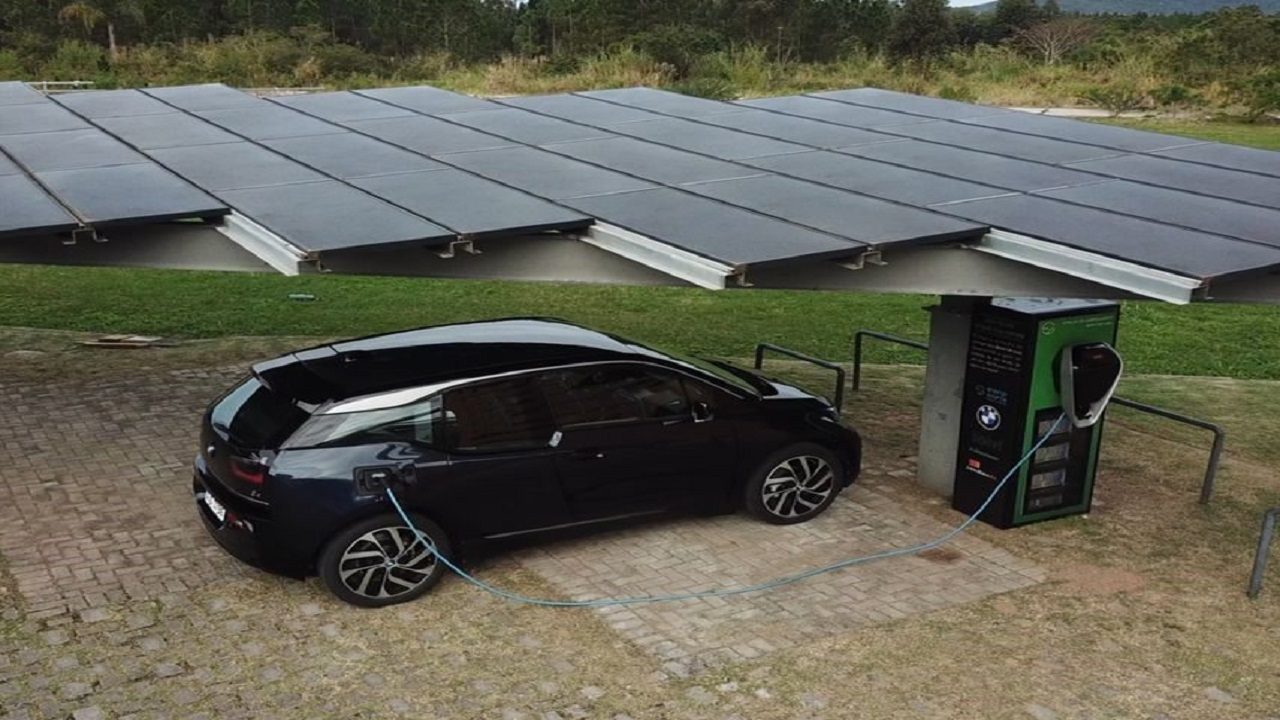
BMW Group Brazil has created a charging station for electric cars that does not require a public electricity grid. The system is powered by solar energy, independent from the public power grid, and can also provide a second life to high-voltage batteries.
The development was carried out by a team from BMW Group Brazil and other local partners such as the Strategic Research Center for Solar Energy at UFSC. In addition to this entity, involved in the project are the Solvi Group, responsible for collecting used batteries from the brand’s dealerships, and Energy Source, which manufactures and assembles energy storage systems using used and recycled batteries.
According to the Customer Support Director of BMW Group Brazil, Márcio Fonseca Filho, the future of mobility will be electric cars, and the development of an infrastructure like this solar energy system is essential.
With the project, it is possible to acquire a fully sustainable and unique solution that will allow customers to charge their electric car batteries cleanly.
Solar-Powered Charging Station Promises to Revolutionize the Market
The BMW charging system was created using old batteries removed from BMW i3 models, the first electric model to arrive in the Brazilian market. The vehicle was developed with a high-voltage battery made up of several modules that allow for quick access and individual module replacement in case of repairs. When replacement is needed, the batteries can be reused for this type of charging before being recycled.
The charging station uses eight sets of solar energy panels. The modules are connected to an inverter, which powers the electric cars through a charger and also monitors the energy produced by the panels.
BMW Charger Tests Are Positive
The initial tests of the company’s project were satisfactory, increasing the range of an electric model by 100km in just two hours of charging. This result opens doors to the idea of using mobile charging points at events or in remote locations that lack access to the public electricity grid.
Additionally, new tests are already being conducted to expand the storage capacity and reduce charging time. Another benefit of the project is the use of solar energy and the prolongation of the lifespan of electric batteries.
It is worth noting that BMW Group Brazil, which avoided the disposal of used batteries, has begun to repurpose them in Brazil. This initiative reinforces BMW’s commitment to being responsible for a sustainable mobility future. By 2030, the company aims to reduce the carbon dioxide emissions per vehicle by 80% in production, 40% in use, and 20% from suppliers, compared to 2019.
Formado em Jornalismo e Marketing, é autor de mais de 20 mil artigos que já alcançaram milhões de leitores no Brasil e no exterior. Já escreveu para marcas e veículos como 99, Natura, O Boticário, CPG – Click Petróleo e Gás, Agência Raccon e outros. Especialista em Indústria Automotiva, Tecnologia, Carreiras (empregabilidade e cursos), Economia e outros temas. Contato e sugestões de pauta: valdemarmedeiros4@gmail.com. Não aceitamos currículos!





 Portuguese
  English
  Spanish
  3 min of reading







 Valdemar Medeiros









Seja o primeiro a reagir!