





 Portuguese
  English
  Spanish
  4 min of reading
  356 comments


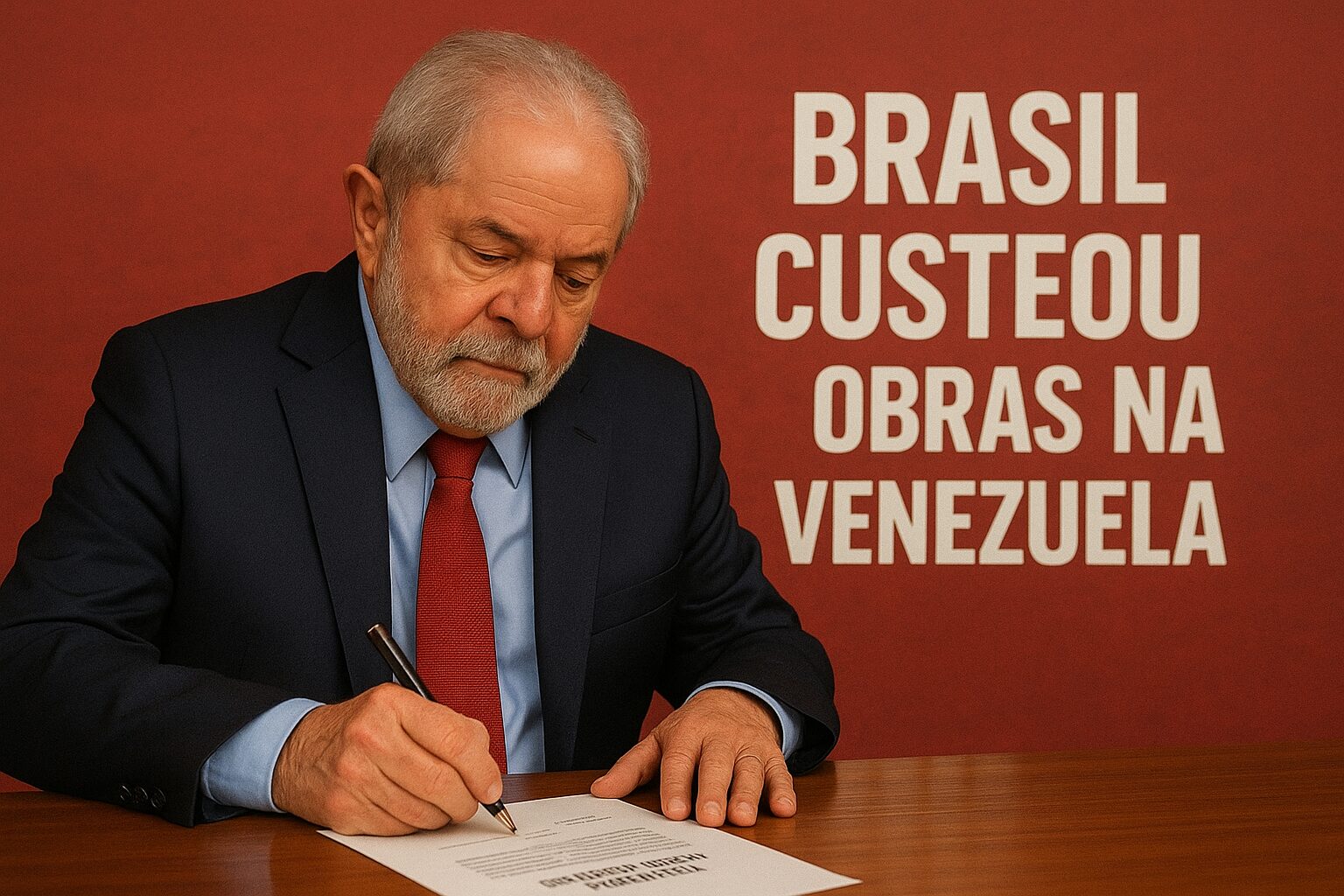


Between 2007 and 2015, Brazil Heavily Invested in Projects in Venezuela; Now Suffers Default of Billions Without Return Guarantees
Brazil heavily invested in Venezuela, allocating more than R$ 6 billion to projects such as the construction of the National Steelworks, a shipyard, and the expansion of the metro system. This movement brought to light a narrative marked by crises, scandals, and questions about the country’s economic choices.
During Fernando Henrique Cardoso’s government in the 1990s, Brazil initiated extensive financing for the construction and expansion of metro systems in Venezuela. Through BNDES, R$ 2.2 billion was allocated to Brazilian companies like Odebrecht, which undertook the task of developing these international projects.
The metro systems in Caracas and Los Teques, supported by BNDES, aimed to improve transportation for millions of passengers. The Caracas metro, launched in 1983 and expanded over the years, currently has 48 stations and spans more than 70 kilometers. In Los Teques, despite a smaller scale, the expansion was also significant.
-
China alone accounts for 70% of trade within the BRICS, while Brazil establishes itself as an essential supplier of food and minerals: understand how the group, which already represents nearly 40% of the world’s GDP, is changing the game.
-
Starting in May, those who do not have registered biometrics will not be able to apply for Bolsa Família, sickness benefits, or unemployment insurance: understand the new rule that changes access to benefits for millions of Brazilians.

-
The government opens the vault and deposits R$ 2.6 billion for the construction of Brazil’s first underwater tunnel, with a length of 1.5 km, 870 m under the sea, a total project cost of R$ 6.8 billion, and a 30-year concession.
-
A new law being voted on in Brazil proposes a minimum fare of R$ 10 per trip and R$ 2.50 per kilometer for Uber and 99 drivers, and promises to ensure they earn as well as taxi drivers did during the golden age of taxis in the country.


Another major project financed by BNDES in Venezuela was the construction of the National Steelworks, led by contractor Andrade Gutierrez. The contract, signed in 2010, provided for a loan of US$ 865 million. However, with the investigations of Operation Car Wash, this financing was ultimately suspended.

Since 2018, Venezuela and Cuba have stopped paying their debts to BNDES.
Missed Opportunity: Resources That Could Benefit Brazil
The economic crisis in Venezuela and the corruption scandals involving Odebrecht, especially revealed by Operation Car Wash, compromised the continuity of these projects. Revelations pointed to schemes of bribery and illegal financing in Venezuelan presidential campaigns, further aggravating the situation.
This investment in Venezuela’s metro system is a clear example of the missed opportunity to apply these resources to infrastructure improvements in Brazil. Delays in construction and Venezuela’s default generate criticism of Brazilian foreign policy and economic management.
Venezuela’s Billion-Dollar Debt to BNDES
Since 2010, Venezuela has faced a severe economic crisis that prevents it from meeting its financial commitments to Brazil. Among these commitments is payment for the development of metro projects, which are part of a debt that exceeds US$ 6 billion.
Meanwhile, Brazil faces a significant deficit in public transportation, with over 850 kilometers of metros and trains needed to meet demand. The decision to invest in international projects, rather than prioritizing internal needs, raises serious doubts about the management of public resources.
With overdue payments, the story of investments in Venezuelan metros becomes a warning about the risks of large investments abroad, without solid guarantees of return or concrete benefits for the Brazilian population. The debate over this financing should continue as new developments emerge.
Debt Growth in 2025 and Stagnation in Negotiations
Despite the expectations of the Brazilian government, Venezuela’s debt to Brazil continues to grow in 2025, with no concrete signs of payment. Just in the first three months of the year, the amount increased by US$ 53 million, reaching a total of US$ 1.766 billion, equivalent to over R$ 10.3 billion. This increase primarily refers to late payment interest, as no payment has been made since 2018, according to data released by Revista Veja.
With the prolonged default, the loss falls directly on Brazil. The Guarantee Fund for Exports (FGE), maintained with resources from the National Treasury, has already had to cover a substantial part of these amounts, transferring the burden to the Brazilian taxpayer.
Even after Nicolás Maduro’s official visit to Brazil in 2023, no concrete proposal for settlement was presented. President Lula continues to assert that countries “eventually pay,” but negotiations remain stalled, according to findings from Gazeta do Povo.
Besides Venezuela, Cuba and Mozambique are also in default with Brazil. Together, the debts total over US$ 1.2 billion, according to records from BNDES itself. So far, no new financing has been approved for these countries, and the bank is awaiting approval from the National Congress to resume similar operations, as reported by Valor Econômico.
Lula Supports Loans to Debtor Countries
President Lula has advocated for BNDES financing to other countries. “Everyone pays, you may have difficulties here or there, but everyone pays,” he said. However, BNDES data indicates that three countries, including Venezuela, owe a total of R$ 8.2 billion to Brazil. Venezuela alone has failed to pay more than R$ 3.45 billion since 2018, while Mozambique owes R$ 641 million and Cuba over R$ 4.32 billion.
These loans, officially called “export financing program for engineering services,” have benefited large Brazilian contractors such as Odebrecht, Andrade Gutierrez, Queiroz Galvão, Camargo Correa, and OAS—all involved in corruption scandals in Operation Car Wash. The debts remain with the countries that received the loans, which are responsible for settling the amounts.
Between 1998 and 2017, BNDES lent R$ 55 billion, with 88% of this total released between 2007 and 2015, during the governments of Lula and Dilma, facing criticism that public money may have been used to benefit allied governments.
In Cuba, for example, Brazil financed the construction of the Port of Mariel, at a cost of R$ 4.2 billion. As collateral, Cuba presented assets from the tobacco industry, tying payment to cigar production. In Venezuela, Hugo Chávez’s government benefited from the expansion of the Caracas Metro, the construction of a shipyard, and the National Steelworks, whose works were interrupted. In Mozambique, the loans financed the construction of Nacala Airport and the Moamba Major Dam, with contracts signed from 2011, during Dilma’s administration, but with Lula’s approval.







Onde se lê BNDES, leia-se LULA DA SILVA!
Como sempre com a petezada no poder só os países companheiros recebem dinheiro. Aqui entre Itajaí e navegantes o financiamento é externo. E como sempre os juros saem do lombo do povo.
Isto é um desgoverno, como pode ter pessoas q acreditam neste tipo de gente, tenho Penha de nois brasileiros.