





 Portuguese
  English
  Spanish
  6 min of reading
  1 comment


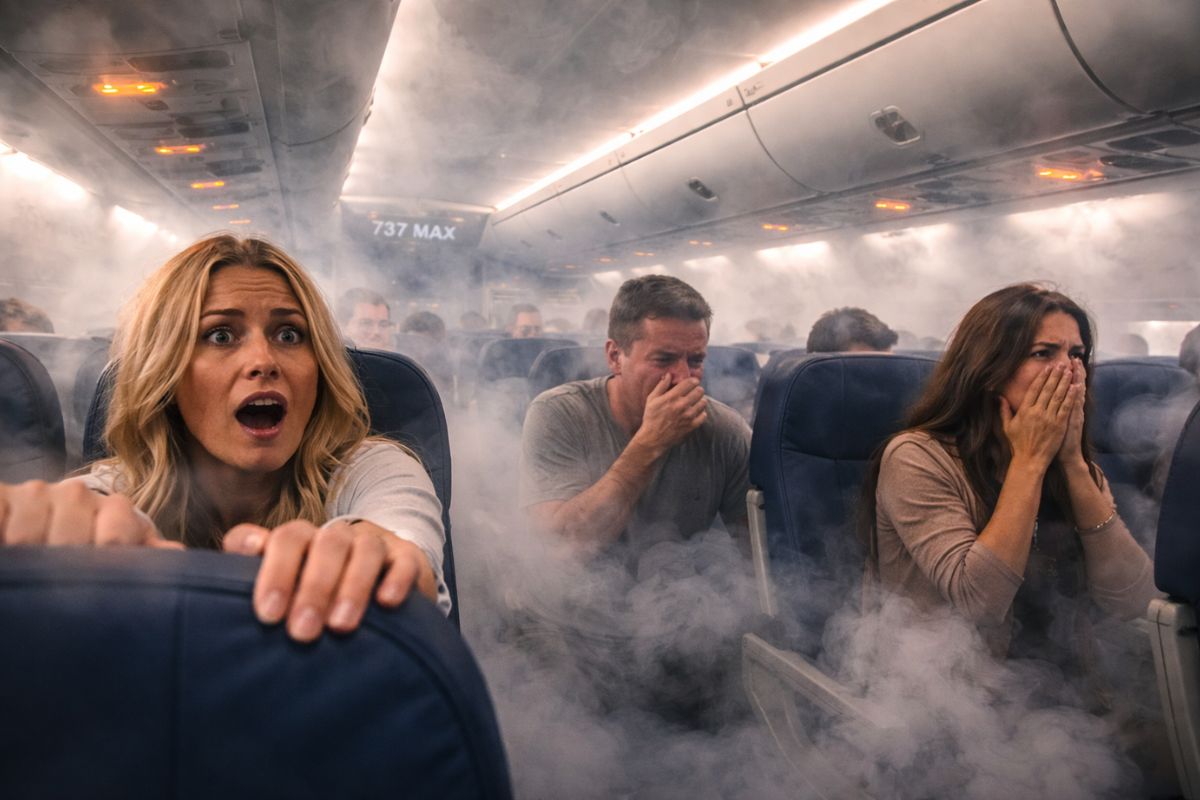


In The Case That Put The Boeing 737 MAX Under New Scrutiny, Bird Strikes During Takeoff Trigger An Engine Device That Can Release Oil Vapor Into The Cabin Air, Generate Irritating Smoke In The Cockpit And Impose Critical Decisions On Pilots In Seconds Even Before Completing The Climb.
The Boeing 737 MAX Has Returned To The Center Of A Delicate Technical Discussion After Episodes Of Dense Smoke In The Cockpit During Takeoff, With Intense Irritation In The Crew’s Eyes And Throat. The Most Concerning Point Is Not Just The Visible Scare, But The Speed At Which Contamination Can Reach The Pilots When There Is A Serious Engine Failure After Bird Ingestion.
The Cases Described Involved Emergency Returns And Safe Landings, But Raised A Larger Question About Design, Procedure, And Regulatory Tolerance. Instead Of Treating The Event As An Isolated Incident Of Bird Strike During Takeoff, The Debate Began To Look At The Path That Air Takes Within The Boeing 737 MAX And How This Route Can Bring Toxic Smoke Into The Cockpit In Seconds.
The Incidents That Triggered The Technical Alert

On March 5, 2023, A Boeing 737 MAX 8 From Southwest Experienced Bird Ingestion In The Right Engine During Takeoff.
-
Motorola launched the Signature with a gold seal from DxOMark, tying with the iPhone 17 Pro in camera performance, Snapdragon 8 Gen 5 that surpassed 3 million in benchmarks, and a zoom that impresses even at night.

-
Satellites reveal beneath the Sahara a giant river buried for thousands of kilometers: study shows that the largest hot desert on the planet was once traversed by a river system comparable to the largest on Earth.

-
Scientists have captured something never seen in space: newly born stars are creating gigantic rings of light a thousand times larger than the distance between the Earth and the Sun, and this changes everything we knew about stellar birth.

-
Geologists find traces of a continent that disappeared 155 million years ago after separating from Australia and reveal that it did not sink, but broke into fragments scattered across Southeast Asia.

From A Mechanical Standpoint, The Description Indicates That The Engine Continued To Operate Within The Expected Logic For The Type Of Damage, But The Environment In The Cabin Changed Rapidly, With Dense, Acidic White Smoke Coming From The Ventilation Outlets And Causing Burning Sensation In The Occupants.
Months Later, A New Episode In New Orleans Repeated The Logic Of The Problem, This Time Following The Impact Of A Bald Eagle In The Left Engine. The Cockpit Became So Filled With Smoke That The Copilot Could Barely See The Commander.
The Repetition In Different Contexts Took The Case Out Of The Realm Of Coincidence And Reinforced The Suspicion About A Specific Architectural Vulnerability And System Response.
The LRD And The Sequence That Transforms Mechanical Failure Into Respiratory Risk

The Central Element Of The Discussion Is The LRD, An Acronym For Load Reduction Device, Described As A Mechanical Fuse Of The CFM LEAP 1B Engine Used In The Boeing 737 MAX.
When A Blade Sustains Severe Damage And Vibration Increases To Extreme Levels, This Device Intentionally Releases To Allow A Small Displacement Of The Rotor And Reduce Loads That Could Reach The Wing Structure.
The Problem Arises Because This Displacement Opens A Breach In The Engine’s Internal Seal And Allows The Rapid Escape Of Very Hot Lubricating Oil, Cited As Approximately 15 Liters In Fractions Of Seconds. This Oil Is Atomized In The Compressed Air Flow, Vaporized By Heat, And Drawn In By The Air Collection System Used For Pressurization And Ventilation.
It Is In This Chain That An Engine Event Becomes A Cabin Event, With The Potential To Contaminate The Cockpit During Takeoff Before An Efficient Manual Response.
Why The Boeing 737 MAX Appears More Sensitive In The Cockpit
The Explanation Presented For The Increased Sensitivity Of The Boeing 737 MAX, Compared To More Modern Aircraft In Air Architecture, Centers Around The Internal Piping And The System’s Priority Logic.
In The Design Derived From Previous Generations Of The Boeing 737, The Left Engine Has Priority In Supplying Air To The Cockpit To Ensure Stable Pressure, Creating Direct Exposure For The Pilots If The Problem Occurs On That Side During Takeoff.
In A Scenario Of Left Engine Failure With LRD Activation, The Vaporized Oil Can Be Directed First To Those Frontline Decision Makers, The Pilots.
Also In The Comparison Is The Fact That Aircraft Like The Boeing 787 Use An Entirely Electric System For Cabin Air, Significantly Reducing This Type Of Contact With The Inside Of The Engine. In The Boeing 737 MAX, The Legacy Of Design Becomes An Operational Factor, Not Necessarily A Failure In Every Flight, But A Relevant Vulnerability In A Specific Condition.
The Race Against The Clock Inside The Cabin And The Weight Of The Valve
The Gravity Of The Situation Increases Because The Regulation Valve That Should Stop The Air Flow In Case Of A Problem Does Not Close Instantly, According To The Description Of The Case.
These Seconds Of Delay Maintain The Sending Of The Mixture Of Air And Toxic Oil To The Cockpit, Just At The Moment When The Pilots Are Dealing With High Power, A Critical Phase Of Takeoff, And Need To Decide On Return, Communication, And Aircraft Configuration.
Toxicological Studies Cited In The Discussion Indicate That In The Confined Space Of A Boeing 737 Cockpit, Substances Such As Formaldehyde And Acrolein Released By The Thermal Decomposition Of Oil Can Reach Lethal Concentrations In About 40 Seconds If The Flow Is Not Interrupted.
This Transforms The Problem Into A Physiological And Operational Race, In Which Lost Seconds Between Detection, Valve Closure, And The Pilots’ Reaction Can Drastically Increase The Risk.
FAA, Recommendations And The Reason The Plane Continues To Fly
The Discussion Gained New Weight After The Mention Of An Internal FAA Report Revealed In November 2024, Which Is Said To Have Used The Term Catastrophic Potential Risk And Recommended Design And Procedural Changes.
Among The Most Immediate Responses Considered Is The Revision Of Takeoff To Temporarily Cut Off Air Collection From The Left Engine In The First Minutes Of Flight, Creating A Barrier To Prevent Contamination From Reaching The Cockpit In The Event Of Bird Ingestion.
Another Described Possibility Is To Alter The Logic Of The Aircraft To Preemptively Close The Collection Valve As Soon As Sensors Detect Extreme Vibration, Without Waiting For Engine Deceleration. However, These Measures Have Still Not Been Made Mandatory.
The Regulatory Position Presented Is Pragmatic And Controversial, Based On The Reading That While The Crew Can Land The Aircraft Safely, The Global System Remains Within Acceptable Limits Established By Current Regulations.
What This Debate Changes For Pilots, Companies And Passengers
The Boeing 737 MAX Is Not Prohibited From Flying For This Specific Reason And Continues To Operate On A Large Scale, Transporting Millions Of Passengers.
The Assessment Described Is That The Exact Combination Of Bird Ingestion And Maximum Power During Takeoff Is Statistically Rare. Nonetheless, The Rarity Does Not Eliminate The Need For Mitigation When The Potential Effect On The Cockpit And Pilots Is So Rapid And Severe.
What Changes In Practice Is The Level Of Operational Attention And Training. Pilots Now Train Their Responses Within Seconds For Toxic Smoke Events In The Cockpit During Takeoff, While Experts Push For Tougher Design Corrections And Procedures Before An Episode Ends In A Worse Outcome.
Aviation Evolves Precisely At This Point Of Friction, When Incidents Without Casualties Expose The Limits Of Technical Design And The Human Margin For Reaction.
The Case Of The Boeing 737 MAX Reopens An Old Discussion In Aviation In Very Concrete Terms: To What Extent Can A System Be Considered Safe When It Operates Within Average Standards But Still Leaves A Narrow And Critical Window Of Exposure In Rare And Extreme Situations.
Here, The Dispute Is Not Between Headline And Statistic, But Between Reaction Time, Inherited Design, And Real Protection For Those In The Cockpit.
If You Had To Prioritize A Single Immediate Measure To Reduce This Risk In The Boeing 737 MAX, Which Would Make More Sense In Your View: Change The Takeoff Procedure With Temporary Air Collection Cut, Automate The Valve Closure For Extreme Vibration, Or Redesign The Air Architecture In Future Versions, And Why?








Isn’t possible to develop a grill/mess over the jet intake to prevent birds being sucked into the engine?