





 Portuguese
  English
  Spanish
 6 min of reading
  0 comments


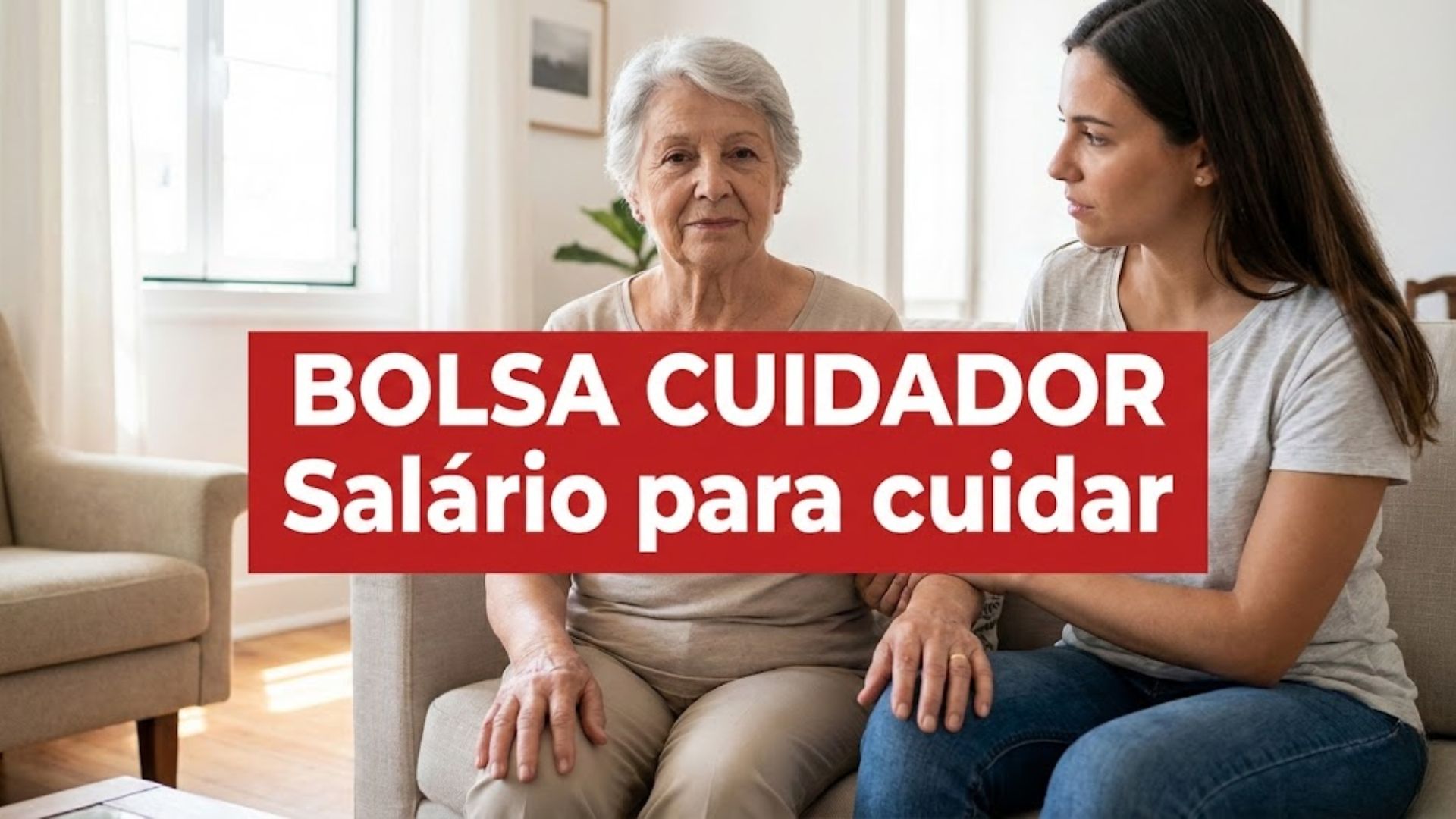
Municipal Benefit in Interior City of São Paulo Provides Monthly Transfer Linked to Minimum Wage to Support In-Home Care, with Income and Residency Requirements, Technical Assessment and Training, in Debate That Exposes Costs, Rules, and Scope.
In Paulínia, in the interior of São Paulo, there is a municipal program called Caregiver Allowance, which provides a monthly transfer equivalent to a national minimum wage to support the in-home care of dependent individuals, such as bedridden elderly people and patients with degenerative and progressive diseases.
The initiative is outlined in Municipal Law No. 4,164, which is listed as “in effect” in the legislative system of the City Council, and was regulated by a decree from the Executive Power.
The benefit amount is defined in the legal text as one national minimum wage per month.
-
The government requests the Federal Revenue Service for a new system to automate the income tax declaration, reducing errors, time, and bureaucracy for millions of Brazilians.

-
Pix in installments, international Pix, and contactless payment without internet: the Central Bank revealed the new features coming to the tool that is already used by almost every adult in Brazil.

-
Mercado Livre has just started selling medications with delivery in up to three hours to your door, and this move could completely change the way Brazilians buy medicines on a daily basis.

-
In Dubai, rising tensions from the war in the Middle East are causing super-rich individuals to leave the Gulf and direct their fortunes to a new financial refuge in Asia.


As of January 1, 2025, the federal minimum wage rose to R$ 1,518, according to a presidential decree, and, for this reason, the transfer provided in the municipal program follows this level throughout 2025.
In-Home Care and the Objective of Preventing Institutionalization
According to the municipal law, the Caregiver Allowance was created “in order to prevent institutionalization” and to allow the recipient of care to remain in their home, preserving family and community ties.
The regulatory text defines the target audience as bedridden elderly individuals, persons with degenerative and progressive diseases, or bedridden and dependent individuals, provided they are in a situation of vulnerability and social risk and require daily assistance and care.
Inclusion in the program depends on verification and certification by an interdisciplinary technical team linked to the responsible municipal departments.
In the legal design of the program, the transfer is made to a bank account of the so-called “care recipient.”

The same law establishes that the amount received must be used exclusively for expenses related to the caregiver’s compensation.
Municipal institutional materials describe the program as a support tool for the caregiver, integrated into a strategy for maintaining home care.
Income, Residency, and Caregiver Requirements
To access the benefit, it is not enough just to prove the clinical condition of the elderly person or the dependent individual.
The municipal legislation establishes combined criteria that involve residency, income, and caregiver capability.
Both the care recipient and the caregiver must have been residents and domiciled in Paulínia for at least two uninterrupted years prior to the application.
Furthermore, the family income must be up to three minimum wages per month.
Regarding the caregiver, the law requires a minimum age of 18 years, a family or community bond with the recipient, specific training as a caregiver, and an assessment by a technical team, in conjunction with the Municipal Health Department, to verify their suitability to perform the function.
The legal text also establishes priority for recipients who already receive the Continuous Cash Benefit, the BPC, a federal policy aimed at elderly individuals and people with disabilities in situations of low income.
In administrative practice, this defines a preference order based on social vulnerability criteria and the technical assessment conducted by the municipality.
Interdisciplinary Assessment, CRAS, CREAS, and Process Deadlines
The municipal decree regulating the law details the minimum composition of the interdisciplinary team responsible for screening and monitoring cases.
At least one professional from CREAS, one from CRAS, and a health professional who follows the recipient, such as members of in-home care teams, basic health units, CAPS, or other services in the network, must participate.
The same decree stipulates that technical opinions must be prepared within 15 business days from the acknowledgment of the application.
The final decision concerning the granting, suspension, or revocation of the benefit is submitted to the appreciation of the Municipal Secretary of Social Assistance and Protection of the Person.
Capacity Building and Training of Caregivers in the Program

In addition to the monthly transfer, the municipality has announced, in recent years, training actions linked to the Caregiver Allowance.
In 2023, the City Hall announced the implementation of free courses aimed at individuals who would benefit from the program, with a defined workload and participation of professionals from health and emergency response fields.
In 2025, the municipality’s official portal recorded new training directed at caregivers linked to the program, referring to technical guidance and the need for prior interdisciplinary assessment before granting the benefit.
Administrative documents sent by the City Hall to the City Council help to gauge the initiative’s reach.
In an official response sent in 2024, the municipal administration reported that the elderly caregiver course had been implemented to serve beneficiaries of the Caregiver Allowance.
According to the same document, training is one of the requirements to receive the benefit, and at that time, there were about 250 trained and qualified beneficiaries, in addition to approximately 30 individuals already assessed by technicians for possible entry into the program, which would justify the opening of new classes.
As per the official response, follow-up includes periodic meetings, with activities such as discussion circles, lectures, and workshops, when requested.
How to Apply and What Documents May Be Required
Information about the procedure to apply for the Caregiver Allowance has also been disclosed by the municipality.
The City Hall indicated that service may involve prior phone scheduling and that there is a requirement for registration in the PAS, the municipal social action program.
In an institutional document made available in PDF format, the municipal administration lists the necessary documentation for registration.
Among the required items are identity proofs, family composition, income documents, and, especially, proof of residency in the municipality for two consecutive years, in addition to documents related to social security or assistance benefits, such as pensions and the BPC.
Suspension and Revocation of the Benefit
The benefit provided in municipal law is not irreversible.
The legal text describes situations in which the Caregiver Allowance may be suspended or revoked.
These include cases where the caregiver starts to engage in work activities incompatible with the continuity of care, when the recipient no longer requires daily assistance, in cases of death, institutionalization, change of municipality, or loss of eligibility requirements, as assessed by social assistance services.
Demands for Changes and Expansion of the Target Audience
Legislative records show that the Caregiver Allowance has also become the subject of debate within the City Council.
In 2024, a councilor presented a recommendation to the Executive suggesting studies for potential updates to the benefit amount and partnerships with professionals in the area.
In the justification, reports from residents were mentioned regarding difficulties in finding available caregivers in the community.
In 2025, another legislative proposal was filed proposing an amendment to the law to include caregivers for individuals with level 3 autism spectrum disorder, indicating discussions about expanding the target audience.
Availability in 2025 and Limits of Public Information
Until December 2025, the law that establishes the Caregiver Allowance in Paulínia remains registered as in effect in the City Council system.
The official portal of the City Hall also maintains recent records of training and guidance related to the program throughout 2025, demonstrating the administrative continuity of the initiative.
On the other hand, the legal provisions and public documents consulted do not fix a permanent maximum number of slots nor disclose a public schedule for new grants.
Thus, the practical availability of the benefit depends on technical assessment, internal administrative flows, and the municipality’s budget allocation.
In this context, cash transfer policies aimed at in-home care appear in public debates as one of the responses adopted by local governments to the aging population and the demand for continuous care, raising questions about reach, sustainability, and coordination with other public health and social assistance services.








-

-

-

-

-

28 pessoas reagiram a isso.