





 Portuguese
  English
  Spanish
  4 min of reading
  0 comments



The Government Is Preparing A Spending Cut Plan That May Impact Bolsa Família, Proagro, INSS And BPC, With A Forecast Of Saving R$ 20 Billion With Just One Measure. See How This Proposal Will Be Sent To President Lula After The Second Round!
After the second round of the municipal elections, President Luiz Inácio Lula da Silva will receive a series of spending cut measures proposed by the economic team, as informed by Planning and Budget Minister Simone Tebet on Tuesday (15). Bolsa Família, Proagro, INSS And BPC will be affected.
The objective of the measures is to ensure compliance with the fiscal targets set for the coming years. The announcement came after a meeting between Tebet and Finance Minister Fernando Haddad, where they discussed the proposals to be sent to the president.
Tebet did not reveal specific details of the measures, but highlighted that most actions will depend on approval from the National Congress. It will be up to Lula to make the final decision on which measures will be forwarded to the Legislative. “Brazil has already done its homework on the revenue side, it is no longer possible to solve the fiscal problem through revenue,” Tebet stated, referring to the need to cut spending to achieve fiscal balance.
-
Havan buys historic football land in Blumenau for a million-dollar amount protected by a confidentiality clause and is already planning to change even the layout of streets to build a megastore in half-timbered style costing 80 million reais.

-
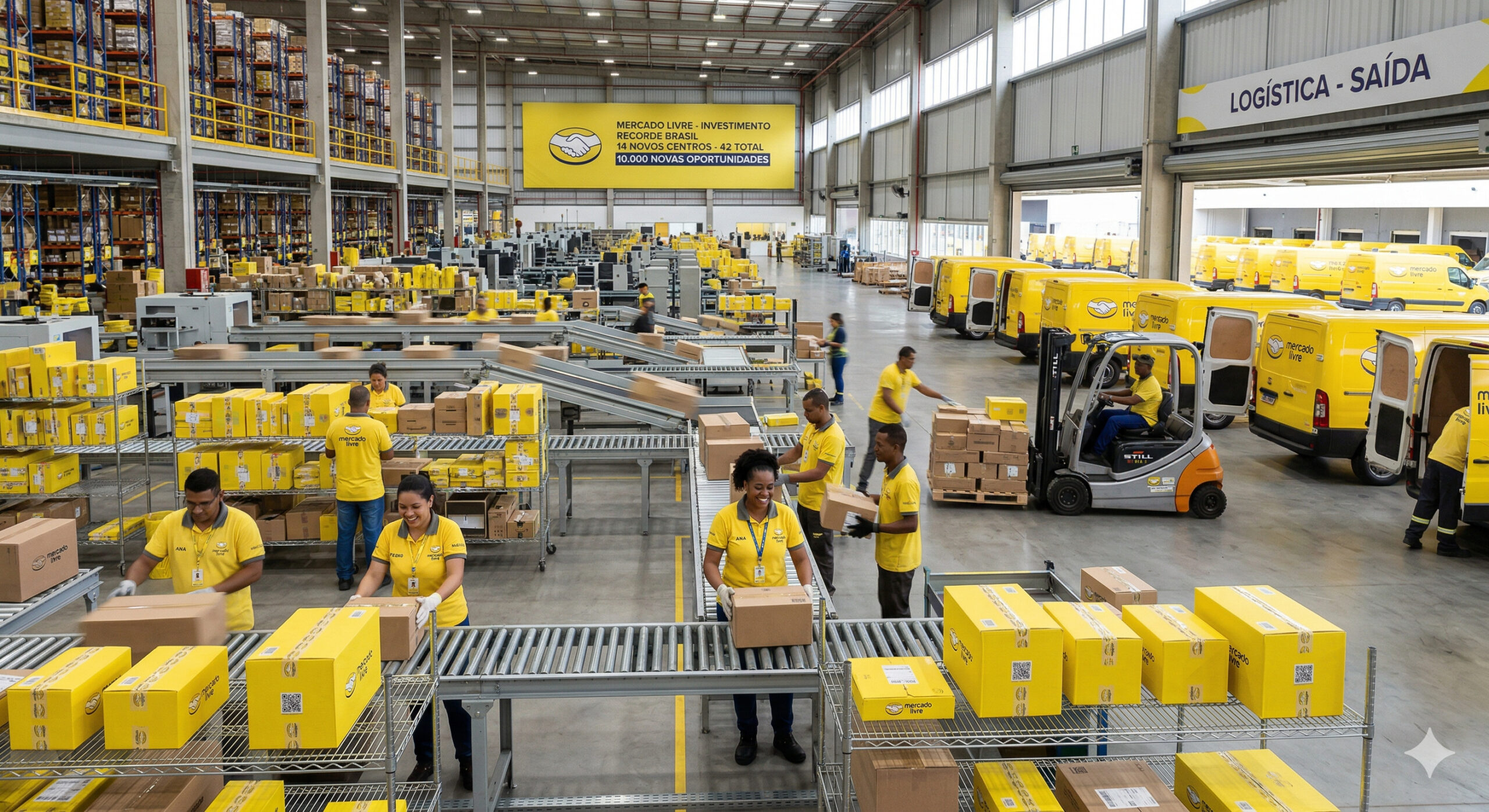
Mercado Livre “opens the vault” and announces a record investment of R$ 57 billion in Brazil in 2026, a value 50% higher than the previous year, with an expansion plan that includes 14 new logistics centers, totaling 42 units in the country and hiring an additional 10,000 employees.
-
How investment in technology can revolutionize the national economy and enhance industrial gains, according to a study that highlights the direct impact on productivity, innovation, and wealth retention within Brazil.

-
The largest food company on the planet, JBS, has just opened a 4,000 square meter laboratory in Florianópolis to develop customized proteins that modulate muscle mass gain, immune response, and metabolic performance.


Spending Cut Of R$ 20 Billion

During the press conference, the minister revealed that one of the measures, if approved by Congress, could result in an annual saving of R$ 20 billion. However, she did not go into details about what this specific measure would be. Tebet assured that the spending cut plan will be crucial to achieving the fiscal targets set, which include a zero deficit in 2024 and 2025 and a surplus of 0.25% of GDP in 2026.
The fiscal framework, according to the minister, will remain unchanged. “The fiscal framework is intact and will remain intact. There is no indication of making any kind of change. Consequently, Brazil needs to fit within the fiscal framework,” she emphasized. This reinforces the idea that the government is committed to fiscal responsibility, seeking ways to balance the budget without increasing revenue.
Measures Depend On Congress
According to Tebet, the spending review measures will be sent to Congress in 2024. The minister informed that the proposals will include ordinary and complementary bills, as well as proposals for amendments to the Constitution (PECs). She also mentioned the possibility of taking advantage of amendments already under consideration in Congress to speed up the process.
Even with the potential to save R$ 20 billion annually, the economic team is not working with a fixed savings target. Tebet emphasized that the spending reviews will not take away acquired rights. “The spending review will not take away a single right. We are not closing a budget of R$ 100 billion, R$ 50 billion or R$ 80 billion,” the minister explained.
Plan To Cut R$ 26 Billion
In August, the Ministry of Finance and the Ministry of Planning had already presented a plan to cut R$ 26 billion from the 2025 budget.
This plan focuses on actions that do not require Congress approval and aims to improve public management and reduce fraud. Of this total, R$ 19.9 billion will be saved through the review of registrations, and another R$ 6.1 billion will be reallocated from internal funds within the ministries, especially in areas such as Bolsa Família and the Program for the Guarantee of Agricultural Activity (Proagro).
The majority of the R$ 19.9 billion savings will come from the National Institute of Social Security (INSS), with R$ 7.3 billion in cuts. Of this amount, R$ 6.2 billion will be saved through a review of the Atestmed system, which grants sick leave through digital medical certificates without the need for in-person examinations. Another R$ 1.1 billion will be saved through administrative and precautionary measures.
Review Of BPC And INSS Benefits
Another focus of the government will be the Continuous Cash Benefit (BPC), whose expenses have grown significantly and led the government to block R$ 11.2 billion in discretionary spending mid-year.
With the update of the Single Registry for Social Programs (CadÚnico) and the reassessment of examinations, the government expects to save R$ 6.4 billion in 2024. In addition, the review of the granting of disability assistance in the INSS, which includes sick leave and disability retirement, is expected to generate an additional savings of R$ 3.2 billion.
Expectations
With the implementation of these measures, the government expects to reduce mandatory spending and at the same time free up resources for discretionary expenses, which are not mandatory. This could mean more room in the budget for investments in priority areas, such as infrastructure and social development.
The R$ 26 billion spending cut, already in its initial phase, is seen as an important step toward improving the quality of public spending, one of the government’s main objectives. “We are committed to improving management and ensuring that public resources are used efficiently,” Tebet stated.
With these actions, the economic team aims to ensure compliance with the fiscal targets set for the coming years, without resorting to revenue increases or the removal of rights.








Seja o primeiro a reagir!