





 Portuguese
  English
  Spanish
  5 min of reading
  162 comments





In This Article, You Will Understand How the Brazilian Economic Crisis Worsened With The Increase in Inflation and Interest Rates, In Addition to Discovering the Impacts of a Growing and Uncontrolled Social Security Deficit. We Will Explore Why the Government Avoids Touching on Unpopular Topics, Such as Social Security Reform.
Recent data released by the government and the Central Bank at the beginning of November paints a challenging scenario for the Brazilian economy. After the current Minister of Finance (or “Minister of Economy”) announced a package of measures to try to control Brazil’s public debt and manage public accounts, the dollar went out of control, treasury rates skyrocketed among other problems never seen in Brazil’s history. The combination of high inflation, rising interest rates, and a growing public deficit signals that the country is facing a large-scale economic crisis.
However, many expect the government to take charge of the situation, although it seems that, in practice, the difficulties are being pushed forward, putting Brazil’s economic future at risk.


Current Economic Situation: An Overview of Uncertainties
According to data from the Brazilian Institute of Geography and Statistics (IBGE) released in September 2024, inflation in Brazil rose to 5.5%, exceeding the government’s central target of 3% (source: IBGE, September 2024).
-
A new Brazilian shopping center worth R$ 400 million will be built in an area equivalent to more than 4 football fields, featuring 90 stores, 5 cinemas, a supermarket, a college, and parking for 1,700 cars, potentially generating 3,000 jobs.

-
Larger than entire cities in Brazil: BYD is building a 4.6 km² complex in Bahia with a capacity for 600,000 vehicles per year, but the discovery of 163 workers in conditions analogous to slavery has shaken the entire project.

-
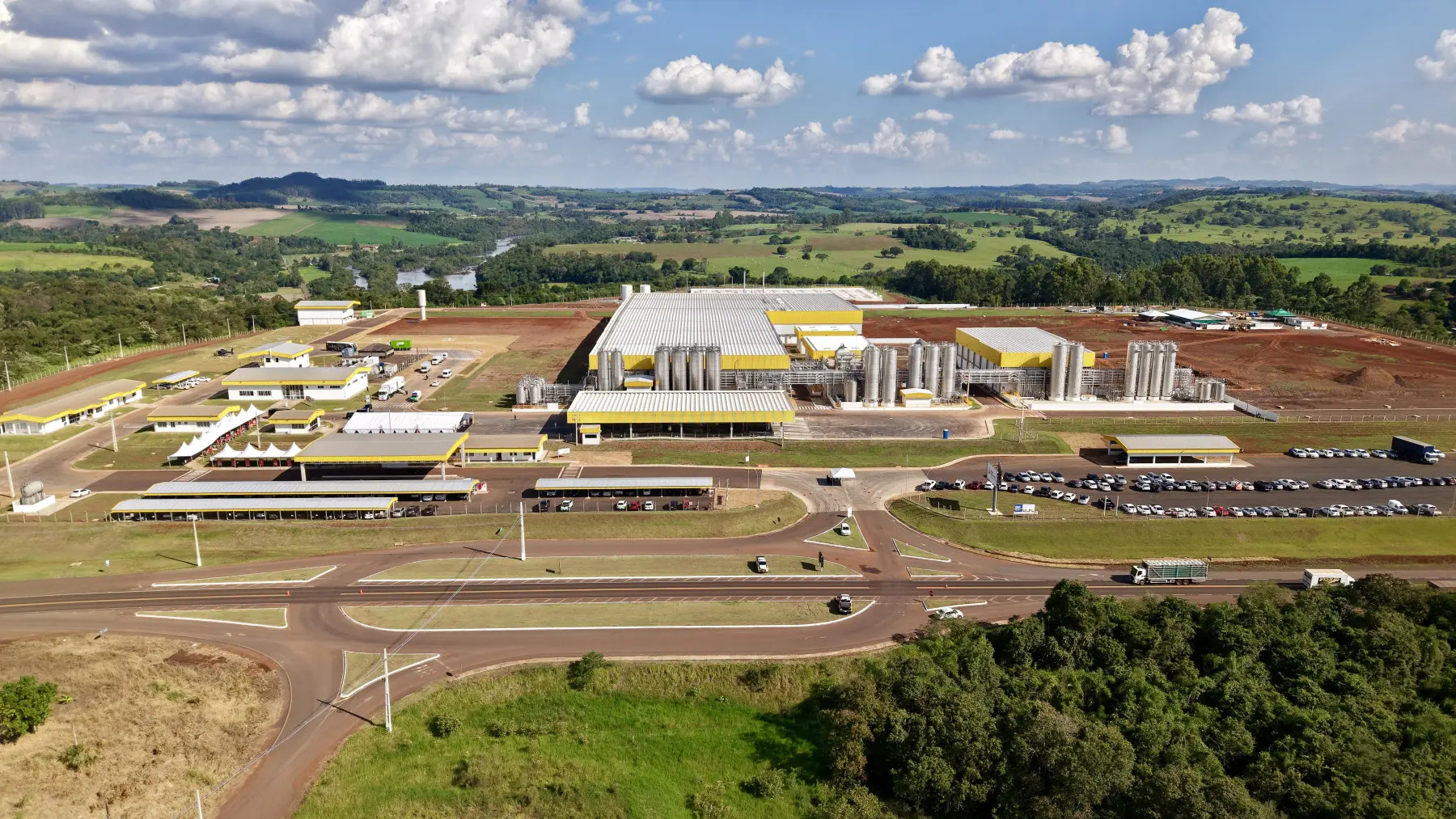
With an investment of R$ 612 million, a capacity to process 1.2 million liters of milk per day, Piracanjuba inaugurates a mega cheese factory that increases national production, reduces dependence on imports, and repositions Brazil on the global dairy map.
-
Brazilian city gains industrial hub for 85 companies that is equivalent to 55 football fields.


In response, the Central Bank raised the basic interest rate, Selic, to a record level of 11.25% per year, as a way to try to contain inflation and stabilize the economy.
This measure was announced at the last Monetary Policy Committee (Copom) meeting in November 2024, and market experts are already projecting new increases for the beginning of 2025 (source: Central Bank, November 2024).
Understand in detail in the video below:

The rise in interest rates has a direct impact on the economy, making credit more expensive, hindering economic growth, and increasing debt costs for both companies and consumers. This escalation also reflects a lack of control over public accounts.
The government faced an accumulated deficit of R$ 167 billion between January and September 2024, according to data from the Ministry of Economy (source: Ministry of Economy, October 2024).
Although revenue increased by 6% compared to the same period in 2023, driven by tax increases and the elimination of subsidies, the rapid pace of expenditures continues to pressure the national budget.
For many economists, the only sustainable solution would be to contain spending, something the government has avoided. According to projections from the Independent Fiscal Institute (IFI), maintaining this level of deficit and losing control over inflation could lead to an even worse economic crisis in 2025 if the government does not implement urgent austerity measures and fiscal reforms (source: IFI, October 2024).
The Deficit in Social Security: A Time Bomb
Another critical point is the growing deficit in Social Security. In September 2024, the Ministry of Social Security reported that the social security deficit reached R$ 50 billion, an increase of almost 20% compared to the same period in 2023 (source: Ministry of Social Security, September 2024).
This increase reflects a pay-as-you-go system facing serious demographic and economic challenges. In practice, the contributions of active workers fund the benefits of retirees, but the ratio between the two groups is declining.
In the 1990s, there were about nine workers for every retiree; today, this ratio has dropped to less than five. This structural change is concerning, as experts indicate that to sustain the pension system, there would need to be at least seven active workers for every retiree (source: Brazilian Institute of Geography and Statistics, IBGE, August 2024).
PRIMO RICO Warns of a New Crisis to Come in Brazil

The increase in life expectancy and the lack of new contributors in the system result in an unsustainable situation, where the social security deficit continues to grow with no perspective for improvement.
The informal market also contributes to this crisis. Data from the Continuous National Household Sample Survey (PNAD Contínua) from August 2024 shows that Brazil has reached a record number of informal workers, who represent a significant share of the employed but do not contribute to social security (source: PNAD Contínua, IBGE, August 2024).
With fewer people contributing and more people demanding benefits, Social Security becomes increasingly unsustainable, being described by some experts as a true “time bomb” for Brazilian public finances.
Social Security Reform: A Delayed Measure
Despite the urgency, the current government, which adopts a populist stance, avoids confronting the pension issue, even with the constant growth of the deficit. Politicians and analysts recognize that reform is an unpopular measure, and the government seems to prefer to postpone this discussion to avoid losing electoral support.
However, by avoiding the reform, the problem is pushed to future generations who will have to deal with a pension system potentially incapable of paying its benefits.
The last significant reform occurred in 2019, but with demographic changes and the continuation of the deficit, it is already consensus among economists and experts that a new reform is necessary.
Measures such as raising the minimum retirement age, encouraging the formalization of work, and adopting a more sustainable system are some actions advocated by experts to restructure the system (source: Social Security Reform, IBGE, August 2024).
Preparing for the Future: How to Protect Your Assets
With a weakened economy and a critical situation in Social Security, it is prudent for individuals to start thinking about alternative strategies to ensure a peaceful retirement and protect their assets.
The first step recommended by financial advisors is to conserve resources, avoiding unnecessary expenses and focusing on a solid financial reserve. In times of crisis, maintaining a balanced budget is essential to avoid accumulating debt.
Additionally, seeking ways to increase household income can be an intelligent solution. For those who already have a formal job, exploring extra activities like freelance work or services through apps helps to supplement income and offers greater financial stability.
This diversification of revenue sources is an effective strategy for dealing with the economic adversities that Brazil faces.
Another important point is to consider investing part of the resources in international markets, especially in dollar-denominated assets.
With the Brazilian currency devalued and domestic interest rates high, investing in stocks in the United States or in dollar-linked funds is a way to protect assets against the instability of the real and at the same time participate in markets with greater growth potential.
Share and Comment
Share your opinions in the comments and share your strategies for facing the crisis, broadening the debate and promoting community engagement.
The government may try to ignore the seriousness of the situation, but the economic reality does not wait. How are you preparing to protect your future and that of your family? In times like these, acting









Fontes e referências deste artigo: https://en.clickpetroleoegas.com.br/wp-content/uploads/2024/11/CRISE-ECONOMICA-NO-BRASIL-2024.pdf
E importante que haja uma reforma principalmente no judiciário e servidores públicos e politicos.
https://www.infomoney.com.br/economia/haddad-diz-que-inflacao-esta-controlada-e-que-ajuste-nas-contas-precisa-continuar/amp/
Acho que não vivemos no mesmo mundo não em kkkkk lula vai fazer oq ? Se em 16 anos não fez nada kkkk só olhar para os números em 4 anos estatais dando lucro e agora prejuízo, como o **** vai mudar isso, sabendo que o PT tem as famas da corrupção em suas costas, dinheiro na cueca, petrolao, mensalão e aliás a lista é grande kkkk
é junior, suas palavras mostra o tamanha da sua imbecillidade. Com lula o Brasil subiu para a 8ª Economia do mundo, saindo da 13ª posição que o Paulo Jegues deixou. Corrupção quem pratica é o Centrão, junto com os **** bozonaristas. Só em Santa Catarina **** e **** 28 prefeitos presos, Governador **** e SEnador envolvido com tráfico de drogass…
É de Direita é ****… Não salva 1
o negócio é vender tudo e voltar pra roça que eu ganho mais….
Tem que parar com esta boberada de conversa técnica.
O negócio é o seguinte o brasil tem que ter a política da moeda forte e criar mecanismo para que político nenhum possa mudar.
Porque quando teve a moeda forte (colocaran ate propaganda na televisa para quen estava no exterior voltar) veio um **** e disse que o povo tava consumindo de mais eo pais ia falir aí mudou tudo por isto meu conselho é para o senado Cŕie mecanismo para que ninguém mexa na estrutura do valor do dinheiro.
Antes de prejudicar o cidadão de baixa renda, o Governo devia fazer uma reforma dentro de si mesmo cortando todas as mordomias, demitindo contratados e cortando salários abusivos