





 Portuguese
  English
  Spanish
  5 min of reading
  0 comments


Nuclear Explosions Created the Nuclear Lake in 1971; Decades Later, It Symbolizes Soviet Ambition, Environmental Risks, and Debates That Still Resurge in Russia
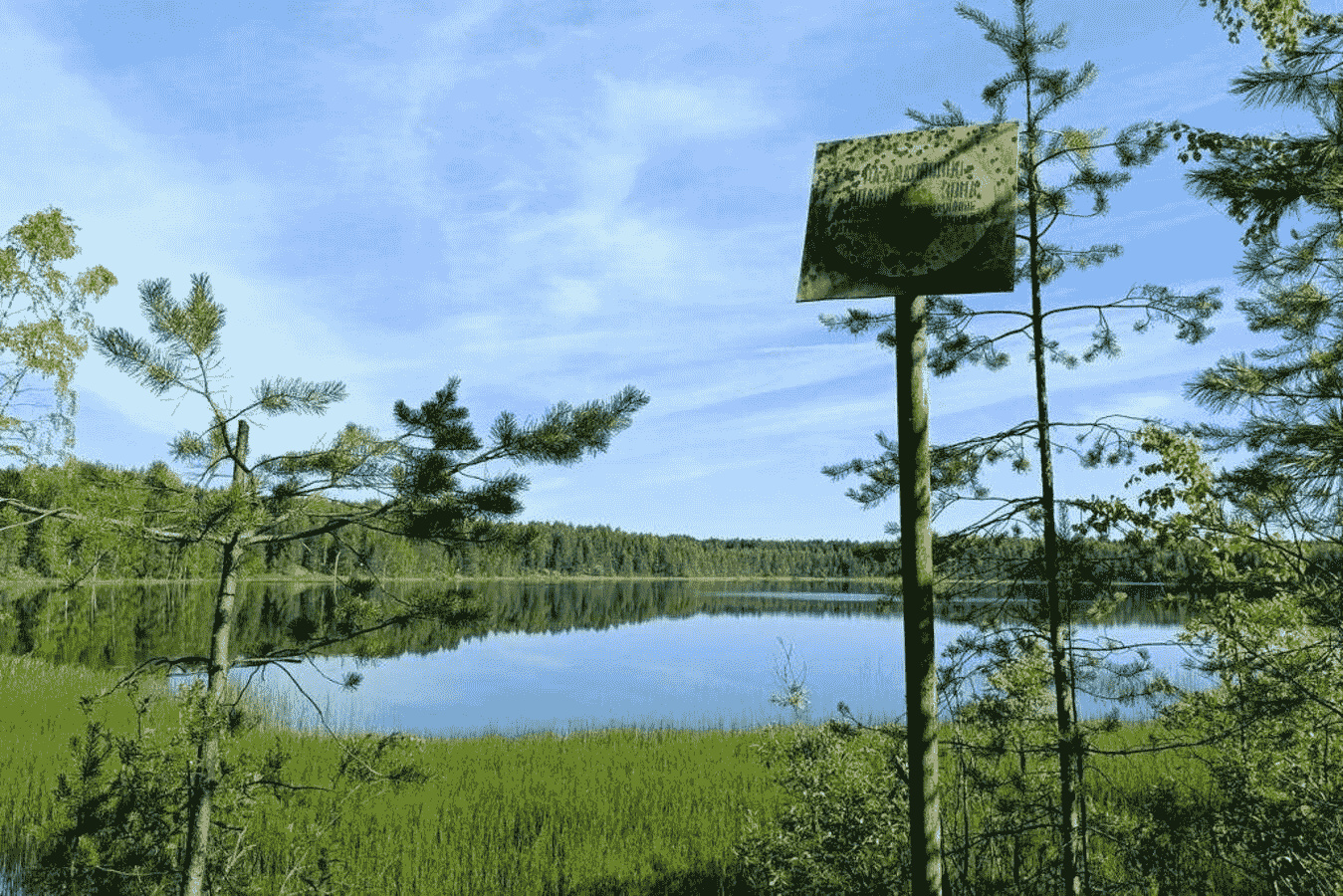
To the west of the Ural Mountains, in Russia, lies the Nuclear Lake. Access is difficult. To reach it, visitors must travel by boat along the Kolva and Visherka rivers, starting from the city of Nyrob, known for being a place of exile for opponents of the tsars.
The lake measures about 690 meters at its widest point. It does not connect directly to the dozens of nearby rivers, and the final leg of the journey requires walking along a marshy trail. On the shores, rusty metal signs warn: this is a “radiation danger zone.”
In 2024, Russian blogger Andrei Fadeev visited the site. He described the water as clear and the landscape as calm.
-
The Argentine government celebrates the lowest poverty rate in 7 years, but experts warn that the methodology has changed, real wages have fallen, unemployment has risen, and the number of people on the streets of Buenos Aires has increased by 57% since Milei took office.

-
7.8 magnitude earthquake in Indonesia frightens the population, triggers tsunami alert, and hits an island with over 200,000 inhabitants this Thursday.
-
Google will finally let you change that embarrassing Gmail address you created in your teenage years without losing any accounts, logins, or old emails: the feature is already available in the United States.

-
Heading to Brazil in a Bonanza F33 single-engine aircraft: a couple departs from Florida on a visual flight, makes technical stops in the Caribbean to refuel and organize paperwork, and begins the staged crossing until they reach the country.


Despite that, his dosimeter registered spots with radiation levels above normal. “There was no atmosphere of threat,” he stated. To him, the boreal forest seems to have reclaimed the place.
Explosions to Dig Canals
The Nuclear Lake was created on February 23, 1971. On that day, the Soviet Union detonated three nuclear devices buried 127 meters deep.
Each explosive had a yield of 15 kilotons, equivalent to the bomb dropped on Hiroshima in 1945.
The operation was named “Taiga.” It was part of the Soviet program for Peaceful Nuclear Explosions (PNE), a two-decade initiative. The goal was to open a canal connecting the Pechora River to the Kama River, a tributary of the Volga.
If completed, the project would have diverted a large volume of water to southern Russia and Central Asia, hot and densely populated regions.
It was part of a series of “river reversals” that sought to alter the course of major Russian and Siberian basins.
Immediate Impacts and External Protests
Leonid Volkov, a scientist involved in the project, described the scene of the detonation as impressive, with jets of earth and water being thrown into the air.
Moscow tried to minimize radioactive rain by using low-fission explosives. Still, radiation was detected in countries such as the United States and Sweden, which protested against the violation of the Partial Test Ban Treaty.
Soviet Megaproject
Decades later, the lake became a discreet tourist attraction. But it also symbolized one of the last Soviet megaprojects: the attempt to reverse river flow.
The idea was not new. As early as the 19th century, writer Igor Demchenko suggested diverting rivers to irrigate southern Russia and improve the regional climate. Under Stalin, in the 1930s, Soviet planners also raised this possibility.
In the 1970s, the project gained momentum. Millions of rubles were invested. About 200 institutes and 68,000 people were involved in the studies.
For Soviet leaders, transforming nature was part of the mission to build socialism and compete with the West.
Agriculture was seen as strategic. Irrigating arid areas could increase production and even save the Aral Sea, devastated by excessive use of its tributaries.
Ambitious Plans
The proposals involved canals, dams, and even series of nuclear explosions. There were plans for a 1,500-kilometer canal that would divert up to 10% of the waters from the Ob and Irtysh rivers to Kazakhstan, Uzbekistan, and Turkmenistan.
A 1975 resolution anticipated that water would reach Central Asia by 1985 and the project’s completion by 2000. The undertaking also promised to revitalize the Caspian and Azov Seas, whose levels had been declining.
Growing Resistance
But the idea faced resistance. In the early 1980s, scientists, writers, and intellectuals launched a campaign against the project.
Magazines published critical articles, and even poems mocked the ambition of “twisting the rivers’ necks.”
Among the critics was hydrologist Sergei Zalygin, who warned of exorbitant costs and uncontrollable environmental risks.
Internal studies, according to historians, downplayed the impacts, but the scientific community saw serious consequences: climate alteration, habitat destruction, and even the transfer of species between regions.
The Chernobyl disaster in 1986 reinforced these fears. The nuclear catastrophe consumed resources and brought environmental issues to the forefront of concerns. Months later, Soviet leader Mikhail Gorbachev officially canceled the river reversal project.
The Project Did Not Die
Despite the cancellation, the idea remained alive in sectors of the Russian government. In 2008, Moscow’s mayor, Yuri Luzhkov, published the book Water and Peace, once again advocating for the diversion of Siberian waters.
More recently, in 2025, Russian scientists revisited the subject, arguing that new technologies made the project more feasible.
For them, the proposal aligns with Russia’s “turn to the east” after the break with the West.
Some even suggest that diverting rivers could help mitigate global warming by reducing the amount of warm water flowing to the Arctic.
Other experts, however, warn of the opposite: the change could accelerate sea ice melting.
Future Perspectives
Western researchers assess that, even without immediate political support, the idea may resurface. Russia, they assert, is an empire of resources and may find in China an interested partner in receiving water for its agricultural regions.
Soviet academics had already anticipated this. In 1991, Alexander Yanshin and Arkady Melua wrote that the issue would return in the third millennium, pressured by water demand and population growth.
A Radioactive Legacy
The Nuclear Lake, created by the explosions of 1971, is one of the few physical remnants of the project. Russian scientists stated in 2024 that radiation levels were normal. But reports from visitors, like Fadeev, show spots still with elevated indexes.
For this reason, he decided not to enter the water. “I didn’t go swimming,” he said.
Thus, the lake remains as a testament to a time when the Soviet Union tried to bend nature to its ambitions but left behind a radioactive landscape and an idea that insists on resurfacing.
With information from BBC.








-

Uma pessoa reagiu a isso.