





 Portuguese
  English
  Spanish
 4 min of reading
  1 comment


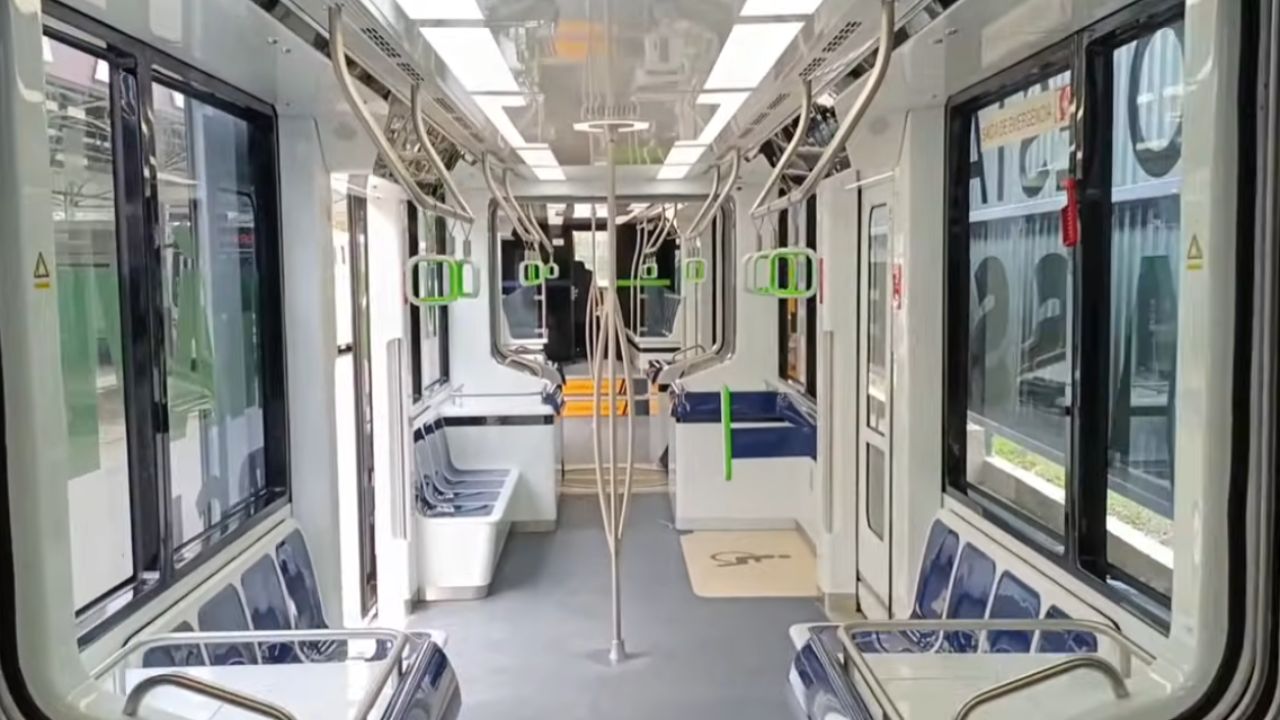


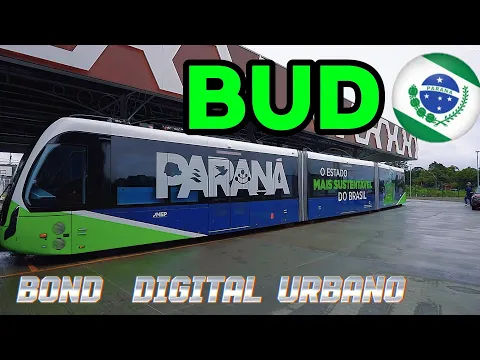
In Passenger Testing, the Digital Urban Tram of Paraná Uses Virtual Track and Electric Operation to Reinvent Public Transport in the Curitiba Metropolitan Area and Accelerate Urban Mobility
The Digital Urban Tram of Paraná began to attract attention for a simple reason: it looks like a tram but does not rely on a physical track. Instead, the system relies on virtual track and electric operation, promising to reduce costs and speed up implementation in public transport.
In practice, the proposal is to transform Paraná into a showcase of urban mobility with a model that is more flexible than traditional light rail (VLT) and more structured than a regular bus, utilizing sensors and guidance to follow the route precisely.
What Is the Digital Urban Tram of Paraná

The Digital Urban Tram of Paraná is a vehicle designed to operate as a medium- and high-capacity public transport, combining characteristics of VLT and BRT. The central difference is that it does not use steel tracks on the ground. Movement occurs via a virtual track defined by markers on the pavement and sensors on the vehicle.
-
The government puts R$ 8.6 billion on the table to change the highway (BR) with 50 overpasses, 28 bridges, 4 tunnels, and 40 km of bike lanes in 180 km of historic duplication.

-
BRL 20.1 Million Bridge Project Kicks Off: 200-Meter Construction to Improve Access in Three Cities in Minas Gerais

-
‘Endless Road’ In Brazil Is One of The Largest In The World: 145 Km Stretch On An Important Highway (BR) Crosses The West Of Bahia And Had 135.9 Km Revitalized With R$ 35.3 Million
-
Engineer From ITA Who Worked at Embraer Leads Free Flow Expansion With National Artificial Intelligence and Technology for Toll Without Barriers in Brazil

This architecture allows the project to advance with less heavy construction. Therefore, the government of Paraná treats the system as an alternative that can reduce time and costs compared to conventional rail solutions.
How the Virtual Track on Asphalt Works

The virtual track functions as a guide: instead of the vehicle “following the track,” it follows the path indicated by elements on the pavement and constant sensor readings. The result is standardized trajectory driving, which can operate in planned lanes and corridors.
In practice, the passenger experiences less “zigzagging” and more predictability in stops and alignment at stations. For the system, this means greater regularity, essential in high-demand public transport.
Why Electric Operation Changes the Game
The electric operation is presented as one of the main advantages of the project. The vehicle runs without direct gas emissions and reduces noise, which greatly matters in urban corridors and dense areas.
Moreover, electric operation improves system compatibility with environmental goals and can enhance the perception of modernity of public transport, something that many cities seek to attract new users.
Passenger Testing and the Route in Paraná

Passenger testing began on December 9, 2025, with a route departing from the São Roque terminal in Piraquara, traveling to Parque das Águas in Pinhais. The experimental operation helps gauge travel time, comfort, traffic integration, and the performance of the virtual track under real conditions.
In this phase, the Digital Urban Tram of Paraná still serves as a technological showcase and practical laboratory for operational adjustments, signaling, stops, and coexistence with other vehicles.
Capacity, Speed, and Charging
The system has been described with a capacity for up to 280 passengers and a speed of up to 70 km/h. Fast charging appears as a central feature: the model uses supercapacitors and can also operate with batteries, charging at stations with pantographs.
This setup is decisive for making electric operation viable without long breaks. If the charging cycle and autonomy can be sustained in real use, the Digital Urban Tram of Paraná strengthens its position as an alternative for urban mobility.
Sensors and Safety in Urban Traffic

As it shares the road with other vehicles, the project emphasizes resources such as sensors, radars, and video. The idea is to enhance safety, reduce collision risks, and maintain trajectory stability via the virtual track.
In such projects, safety isn’t just about avoiding accidents: it’s about ensuring regularity, reducing disruptions, and maintaining the flow of public transport during peak hours.
Cost and Implementation Time in Urban Mobility
One of the strongest arguments is the lower implementation cost compared to VLT, with a promise of being up to three times less and requiring less construction time over routes of up to 15 km. This directly addresses the pain point of cities: rail projects tend to be expensive, lengthy, and politically challenging.
If this point is confirmed, the Digital Urban Tram of Paraná could become a replicable reference for urban mobility, even outside Brazil.
What Can Go Right and What Requires Caution
The system has potential when it delivers three things simultaneously: reliability of the virtual track, efficiency of electric operation, and smart integration with existing public transport. At the same time, actual performance depends on sensor maintenance, pavement quality, lane discipline, and consistent operation.
The promise is great, but the final gauge will be daily use: occupancy, stopping time, comfort, operational cost, and the ability to maintain stable service in the long term.
Do you think the Digital Urban Tram of Paraná with virtual track and electric operation can become the standard for public transport and truly improve urban mobility, or is it a solution that will only work in very specific routes?







Mas anda do final de pinhais a piraquara?