





 Portuguese
  English
  Spanish
  5 min of reading
  0 comments


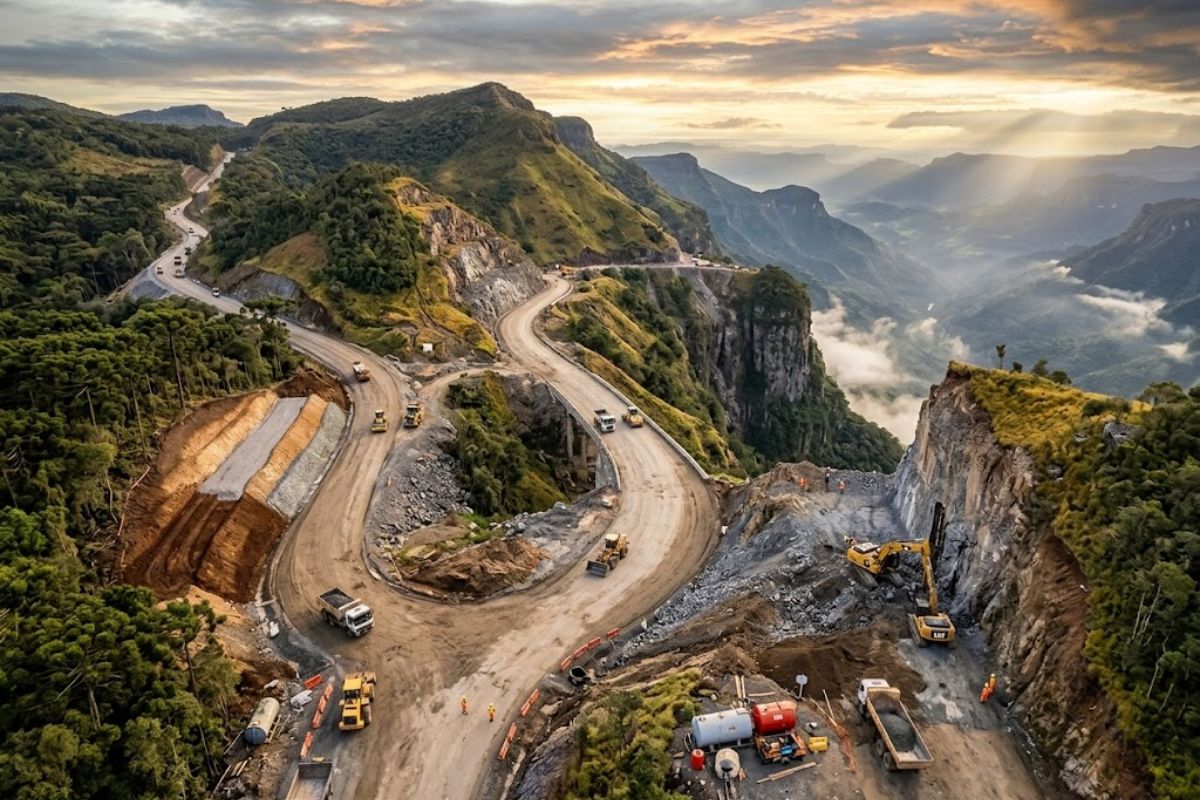
The Update of BR-285 Around Serra da Rocinha, in São José dos Ausentes, Indicates Progress on the New Route, Consolidation of Segments in Sub Base, Expectation of Connection via the Bridge over the River das Antas, and a Schedule Dependent on Weather, Earthworks, and Release of Funds.
BR-285 is entering a visibly more advanced phase in the segment near Serra da Rocinha, in São José dos Ausentes, where the new route already displays robust earthworks, heavy equipment in operation, and parts of the pavement being prepared for the next layers. The progress is concrete, although the complete connection still depends on the completion of specific points.
Throughout the stretch, the scenario shows a project that has moved from the roughest stage of cutting and moving material to a stage where the sub base, locking with macadam, and the bridge structure begin to define the real pace of delivery. This changes the perception of BR-285, because what once seemed like a distant route now has segments close to receiving the final phase before paving.
BR-285 Takes Shape in the New Route After Serra da Rocinha
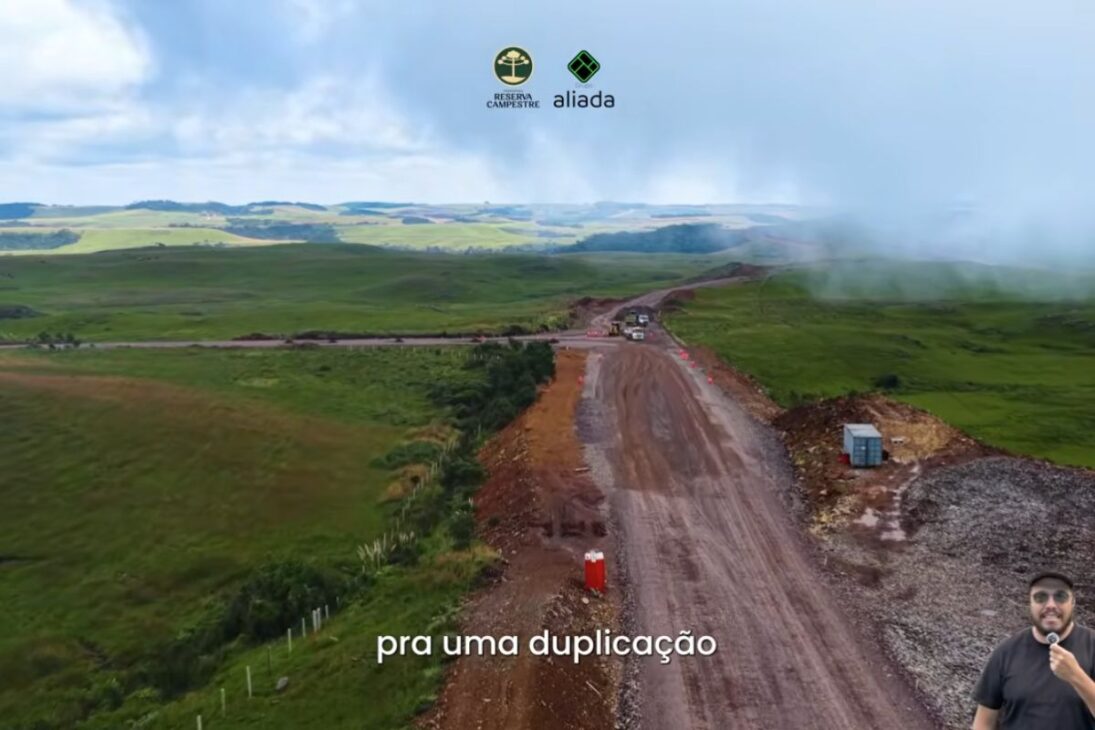
On the side heading towards Rio Grande do Sul, just after Serra da Rocinha, the new route of BR-285 already reveals a wider right-of-way.
-
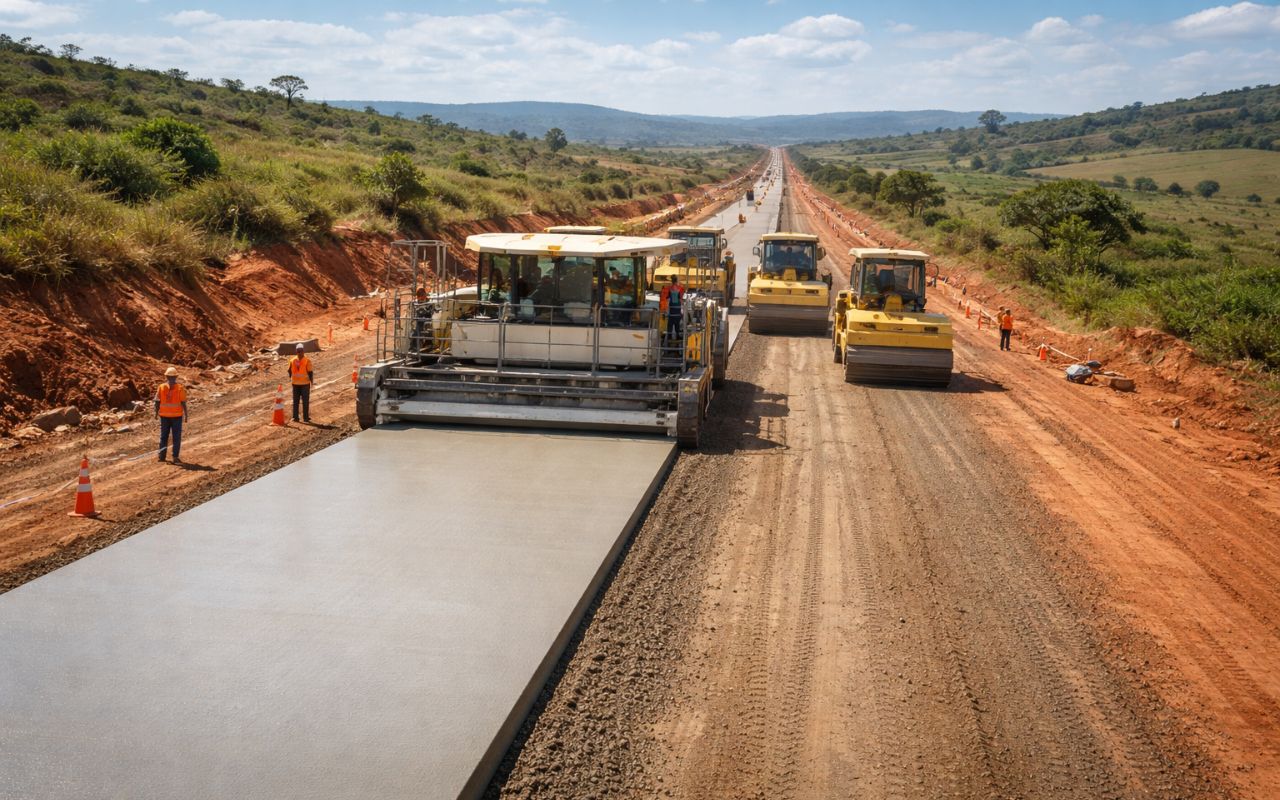
New CCR concrete paving technology promises roads up to 3x more durable, less maintenance, and cost reduction in Brazil.
-
Made from recycled plastic, plastic wood is gaining space in the construction industry because it does not rot, resists moisture, and reduces maintenance costs over the years.

-
Florianópolis will receive a million-dollar BRT that will begin construction in 2026 with nearly 400 million in funding from the federal government and the Inter-American Development Bank, and the map already shows the routes for the exclusive bus corridors.

-
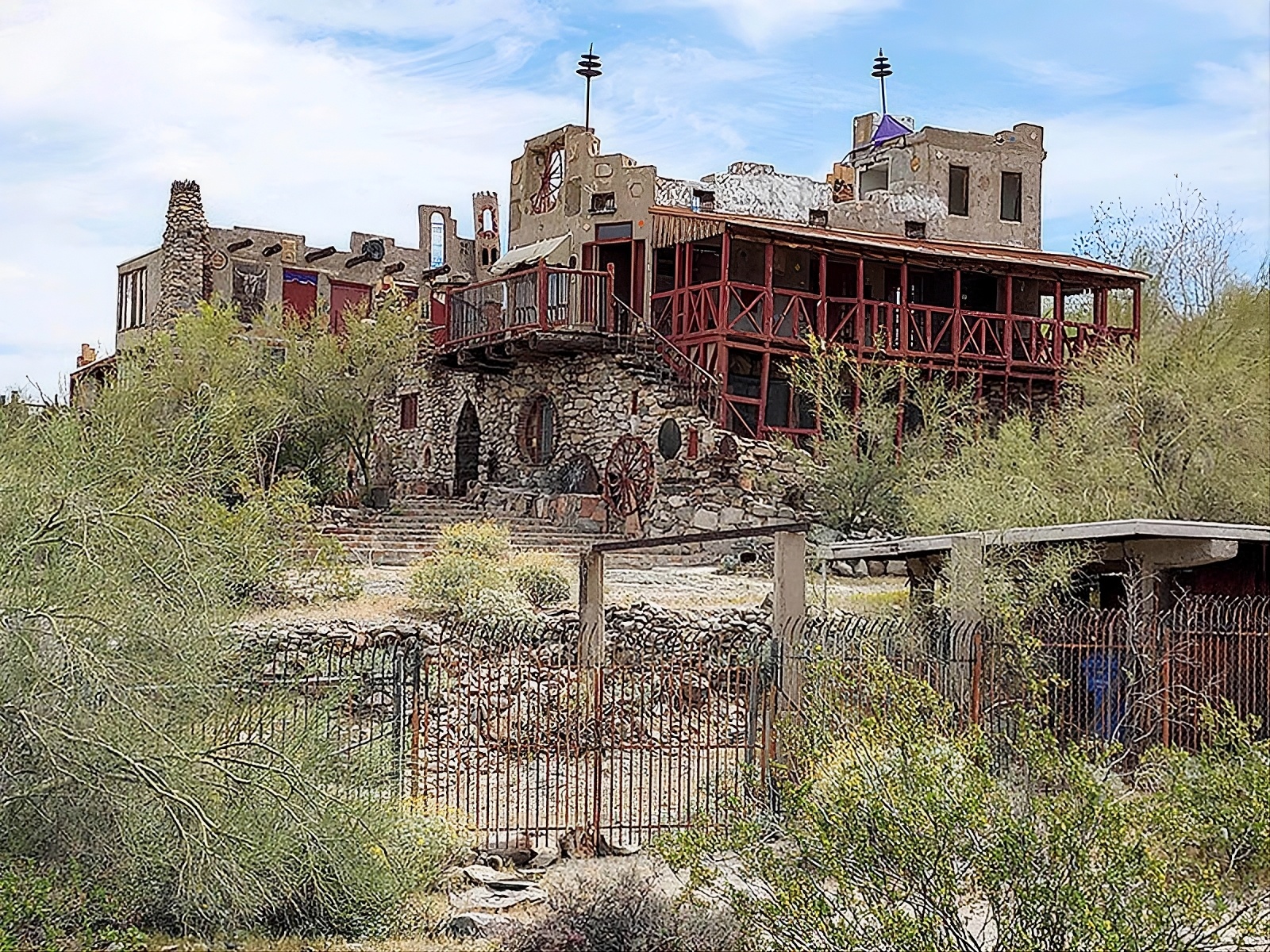
Without a blueprint, without an engineer, and using scrap from the dump, a father spends 15 years building an 18-room castle for his daughter, featuring tram tracks, 13 fireplaces, and over 700 m², which may now be demolished.

The reading of this space suggests a prediction for duplication, while the access ramp that will connect with the 020 also begins to appear more clearly. In São José dos Ausentes, the design of the highway has ceased to be just a projection and has taken on easily identifiable physical contours.
The field movement reinforces this change of stage. There are crushers operating, sections broken by blasting and jackhammers, in addition to areas where the material has already been processed to support the sequence of the platform.
The presence of the Cachoeira das Sete Mulheres very close to the new route also helps to gauge where the intervention is taking place and shows how BR-285 progresses in an area of strong scenic reference at the entrance of São José dos Ausentes for those coming from Santa Catarina.
Sub Base Shows Technical Progress and Reduces the Remaining Segment
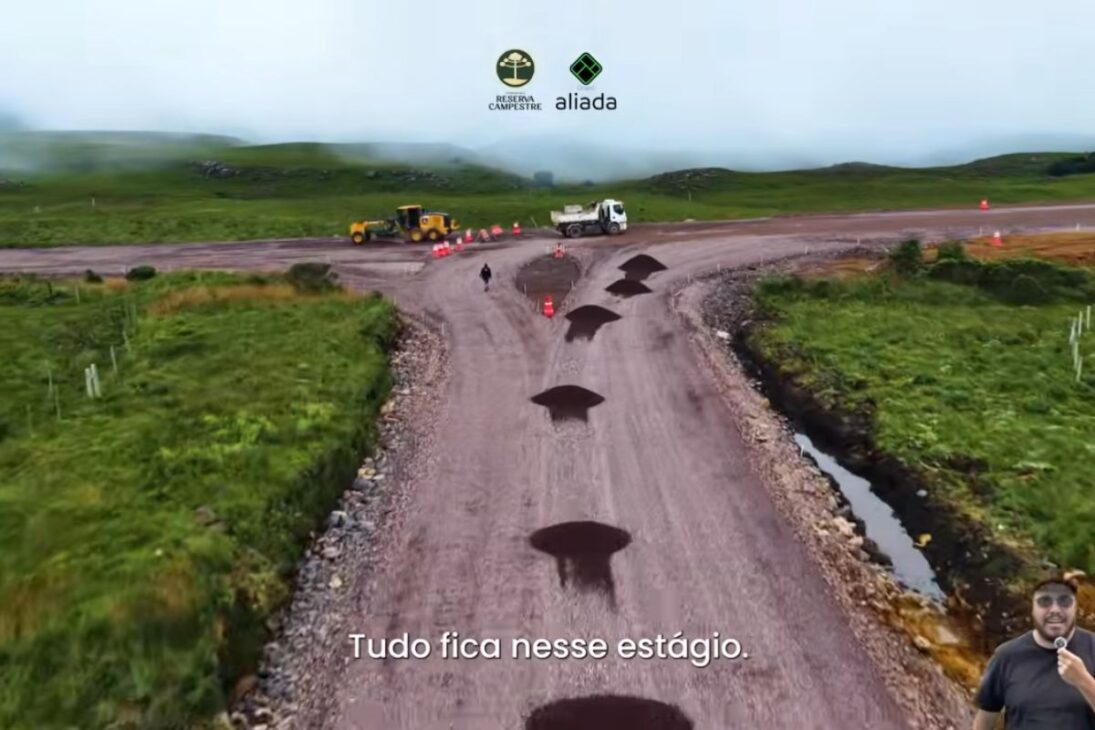
The already conformed part of the pavement indicates a subgrade with a layer of about 17 centimeters, followed by locking and then a sub base estimated at around 15 centimeters before the asphalt layer.
This detail matters because it reveals a more mature project, no longer restricted to opening a path, but focused on the structural preparation of the bed that will receive the final covering of BR-285.
According to the update, approximately 2 kilometers are still needed to complete the locking stage with macadam at the most delayed point of the earthworks.
Even so, the work front already shows an expressive picture, with 13 excavators, trucks, dump trucks, and a compactor in operation.
In several segments, the new route has already stabilized, while the sub base becomes the main indicator that the transition to asphalt has entered the practical horizon of the project.
The Bridge over the River das Antas Still Separates the Most Ready Segment from the Most Sensitive Point
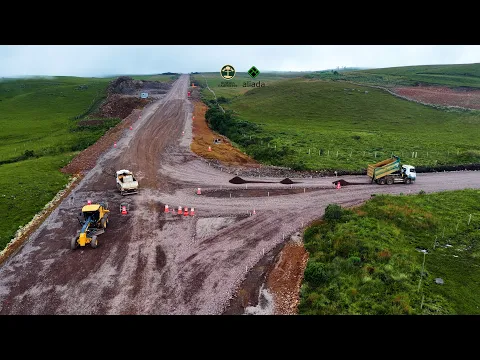

Today, the impossibility of fully crossing the segment is linked to the bridge over the River das Antas, which remains the most sensitive point in the schedule.
The stage of the pillars has been demobilized, and the informed expectation is for the release of funds still in March for the mobilization of cranes that will execute the upper part, especially beams and continuity of the superstructure.
Without this phase, BR-285 does not close the central link of this segment.
Around the bridge, however, the level of advancement is striking. The abutments have already been filled, trucks are moving around, there is wildlife crossing in place, and a hill of material is being lowered for redistribution in dumping areas.
In this context, there is a segment estimated at about 4 kilometers already locked and practically ready to receive the sequence of layers.
In São José dos Ausentes, this creates a clear contrast between what is already nearly consolidated and what still depends on the structure of the bridge to allow full continuity.
The Schedule of BR-285 Depends Less on Opening the Road and More on Weather and Funds
The reported deadline for the project is still by the end of 2026, but the interim schedule helps to understand where the true constraints lie.
The goal is to complete the earthworks by June and leave the highway in that locking stage before the final layers.
It’s no longer about opening a path, but rather turning a segment that has already been drawn into an effectively paved road.
The harsh winter in the region is considered a decisive factor for BR-285. As the lower temperatures in June do not favor the start of asphalt application, the expectation is that this service will gain momentum by the end of August.
From there, the estimate presented is three to four months to complete this phase. In other words, the new route and the sub base already put the project in an advanced stage, but the conclusion depends on two objective filters: weather and financial release.
The update of BR-285 in São José dos Ausentes shows a highly advanced project, with a recognizable new route, segments in sub base, future connection via the bridge, and a schedule that no longer revolves solely around earthworks.
The central point now is to know if the transition between completed structure and final paving will happen at the expected pace.
In your view, does this segment have real conditions to gain speed by the end of 2026, or can the bridge and winter still alter this scenario?








-

-

-

5 pessoas reagiram a isso.