





 Portuguese
  English
  Spanish
  3 min of reading


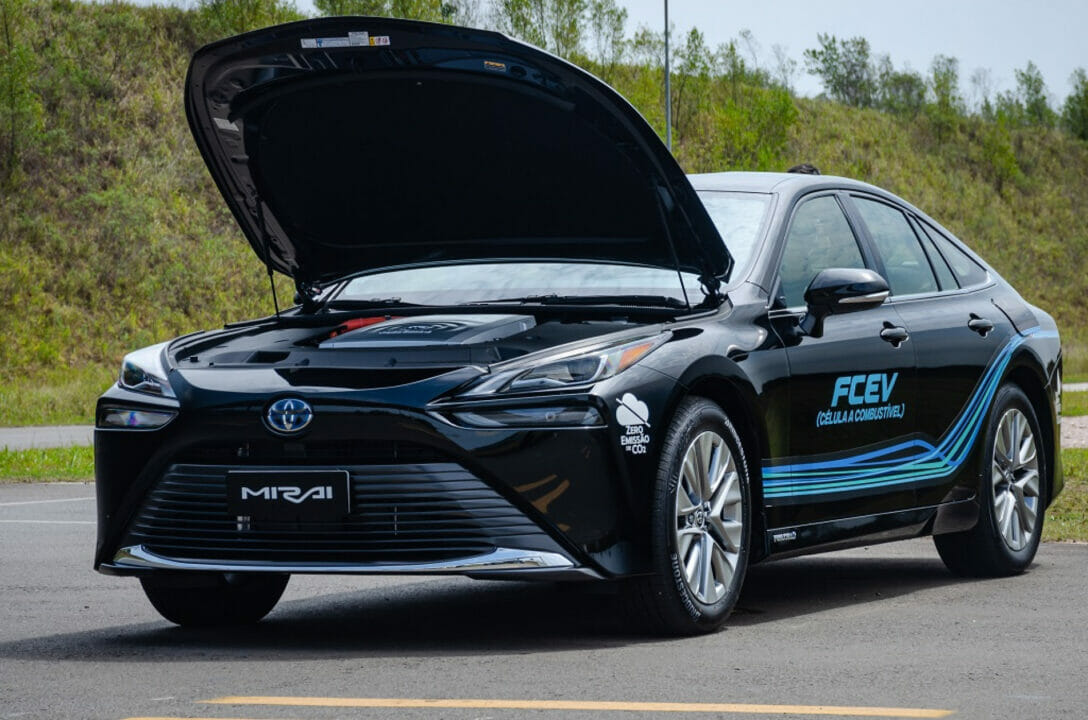
Researchers From USP Refuel The First Car With Ethanol Hydrogen. The Toyota Vehicle Can Deliver Great Autonomy And Fuel Will Be Tested In 2024.
A completely silent car powered by hydrogen that can travel about 600 kilometers without needing to refuel and emits water vapor through the exhaust. It is the Toyota Mirai, a hydrogen car that has been loaned for tests in a pilot project at the University of São Paulo (USP) that will produce the first green hydrogen based on ethanol in the world.
Ethanol Hydrogen Will Be Tested In Mid-2024
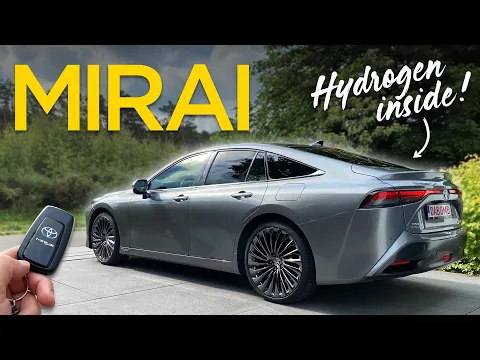

In Japanese, Mirai Means “Future”, however, despite being suggestive, the choice of the hydrogen car has nothing to do with its name, but rather because it is one of the only models equipped with fuel cells that convert hydrogen into energy.
In Brazil, for example, there are only two units of the Mirai, one that belongs to Toyota, and the other that is part of the USP project. For now, the hydrogen car is fueled with common H2V. The first tests with ethanol hydrogen should only take place in mid-2024, when the pilot plant, which is currently under construction, will be ready to produce the first kilograms of sustainable fuel.
-
Engineers propose a fourth traffic light for intersections – the change promises to affect crossings, queues, and waiting times.

-
Chevrolet Suburban Z71 lands in Brazil with a V8 engine, off-road design, air suspension, seven seats, and colossal size, a rare version imported for around R$ 1.3 million with luxury and exclusivity.

-
The Chevrolet Onix 1.0 turbo achieves 17.7 km per liter on the highway and ranks among the three most economical cars in Brazil in 2026, alongside two more expensive Toyota hybrids available at dealerships.

-
Little sister of the Hilux: Toyota launches Land Cruiser FJ with 4 radical versions, 2.7 engine with 166 hp and 4×4 traction with locking.

The green hydrogen gets its name because it is produced from renewable sources, unlike the common version which has fossil origins, mainly natural gas. Currently, the most widely used production method is the splitting of water molecules using solar or wind energy. The goal of the USP pilot project is to develop a new method, using ethanol as the source.
Green hydrogen has gained prominence in the climate debate due to its potential to decarbonize sectors such as transportation, steelmaking, chemical industry, and electricity generation itself. However, transporting the fuel is still a challenge, as it requires storage at low temperatures and high pressure, complicating logistics and raising the final product cost.
Understand How The Ethanol Hydrogen Project From USP Works
One of the project’s main bets is to overcome this barrier. This is because ethanol already has a strong infrastructure in the country, being transported relatively easily with an extensive distribution network. The pilot plant, whose construction began in August of this year, will function as a refueling station. There will be a piece of equipment called a reformer, which is the heart of the project.
The reformer has the capacity to transform ethanol into hydrogen through chemical reactions. Currently, the process can be performed, although only on a laboratory scale. The intention is to consolidate the technology to increase the volume and allow production to occur at the location where the fuel will be used, such as in a gas station, for example.
Fuel Will Power Hydrogen Car And Three More Buses
The ethanol hydrogen produced at USP will be used to power the hydrogen car and three additional buses during the tests; the ethanol is seen as an asset by researchers. First, because Brazil is a powerhouse in this market, but also due to its capacity to produce negative carbon green hydrogen, considering the absorption that occurs in sugarcane and corn fields through photosynthesis.
According to Mateus Lopes, the director of energy transition and investments at Raízen, all countries are designing energy transition strategies based on their natural and economic competitive advantages.
Since Brazil is an agricultural powerhouse, transforming ethanol into a vehicle for this highly sought-after fuel can position the country well. Lopes asserts that the USA, Europe, and Japan are viewed as potential markets for this hydrogen.








Seja o primeiro a reagir!