





 Portuguese
  English
  Spanish
  5 min of reading
  0 comments


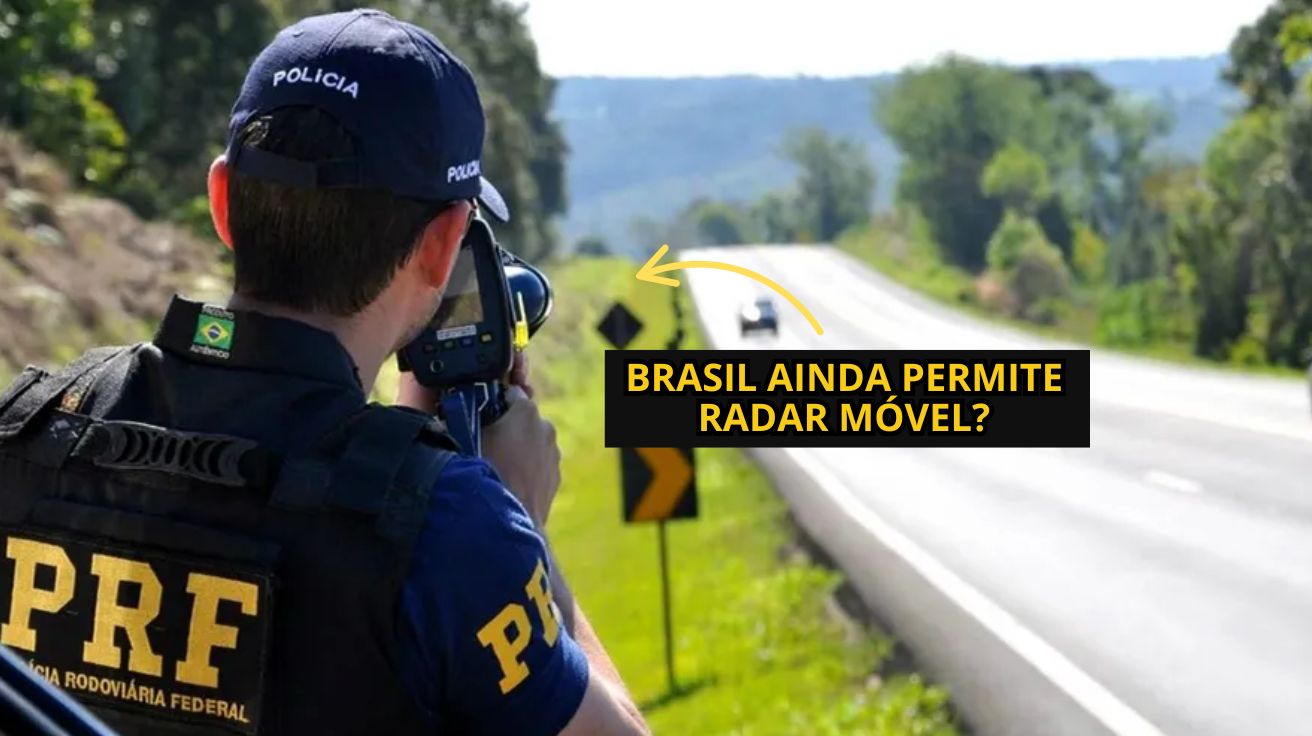
Portable Radar and Its Application in Brazil: Rules, Controversies, and Recent Changes in Legislation Impacting Traffic Enforcement, Generating Discussions About Its Effectiveness.
Who has never felt frustrated after being fined for exceeding the speed limit, especially when the radar was in a location of poor visibility?
The mobile radar is one of the most controversial enforcement devices in Brazil, generating discussions about its legality and how it is used on the roads.
However, what many drivers do not know is that the use of these radars is governed by specific regulations, and there is a lot of misinformation circulating about the subject.
-
The Argentine government celebrates the lowest poverty rate in 7 years, but experts warn that the methodology has changed, real wages have fallen, unemployment has risen, and the number of people on the streets of Buenos Aires has increased by 57% since Milei took office.

-
The 2026 electric Vitara arrives in Brazil and proves that Suzuki is not leaving: 4×4 traction, 184 hp, 61 kWh LFP battery, 293 km range, R$ 259,000, and a trunk capacity of 224 L.
-
7.8 magnitude earthquake in Indonesia frightens the population, triggers tsunami alert, and hits an island with over 200,000 inhabitants this Thursday.

-
Google will finally let you change that embarrassing Gmail address you created in your teenage years without losing any accounts, logins, or old emails: the feature is already available in the United States.


What is the mobile radar and why does it generate so much controversy?
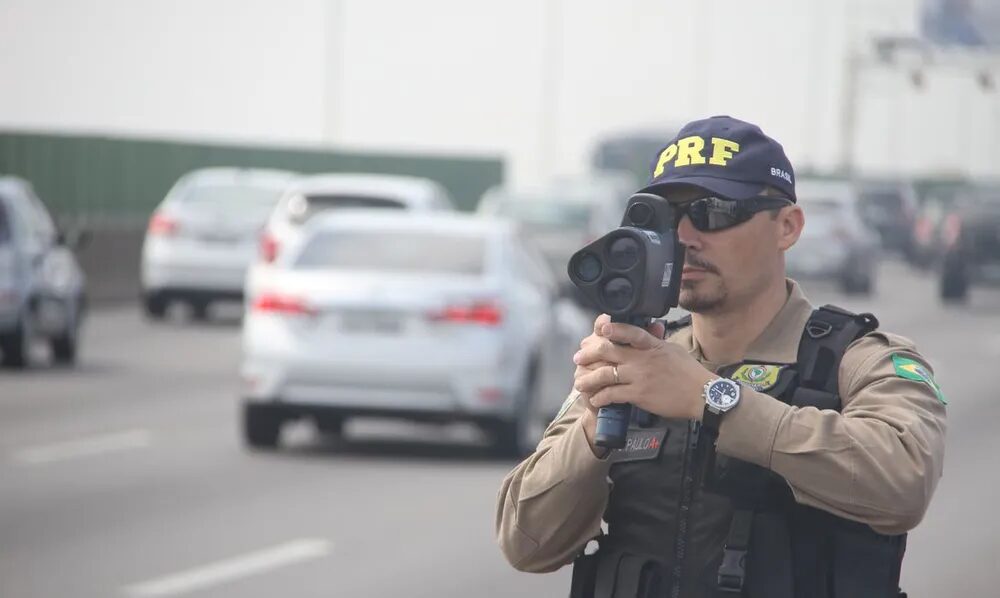
The mobile radar, also known as portable radar, is equipment designed to measure vehicle speed quickly and efficiently.
However, despite its popularity in Brazil, many people are still unaware of the rules governing its use.
First, it is important to understand that the term “mobile radar” is not the most accurate. The correct nomenclature for the device is “portable radar,” according to Resolution 798/2020 of the National Traffic Council (Contran).
Although the name may cause confusion, the portable radar is widely used by traffic authorities on various highways and in heavily trafficked urban areas.
These devices, despite generating much criticism, are not illegal, but their application must adhere to specific regulations to ensure that enforcement is fair and transparent.
Portable Radar or Gun: What Changed with the Legislation?
According to current legislation, Resolution 798/2020 of Contran, the use of mobile radars (as they were known) has been changed.
The portable radar, often referred to as a “gun,” can be used under various conditions, but there are restrictions aimed at preventing excessive or hidden use of these devices.
The main change in the legislation is that enforcement with portable radar must be visibly conducted so that drivers are aware of the equipment’s presence and can adjust to the permitted speed.
According to the Department of Highways of São Paulo (DER-SP), fixed and portable radars are the most common today.
These devices operate similarly, but the difference is that the fixed radar is installed on poles or permanent structures, while the portable one is manually operated by traffic agents.
How Does the Portable Radar Work?
To better understand how these devices measure speed, it is important to know the physics behind the portable radar.
The portable radar, unlike fixed meters that operate through sensors in the pavement, uses the Doppler effect to measure vehicle speed.
This physical phenomenon occurs when an electromagnetic wave emitted by the radar is reflected back by the vehicle, and the frequency of the wave variation indicates the car’s speed.
With portable radars, operators can check a vehicle’s speed from up to 100 meters away. Other types of technology, like LIDAR, can measure the speed of vehicles from even greater distances, reaching up to 2.5 km.
What Are the Rules for the Use of Portable Radar?
Brazilian legislation clearly defines where and how portable radars can be used.
According to Resolution 798/2020 of Contran, portable radars can be applied on highways, avenues, and urban areas with heavy vehicle traffic.
However, there are restrictions to ensure that the radar’s use is legitimate.
- In urban areas, the portable radar may only be used in locations with a maximum speed of 60 km/h or more.
- In rural areas, the minimum speed must be 80 km/h or higher.
Additionally, the responsible authorities must plan the use of these radars based on accident and speed excess data, and they must disclose the segments where the radar will be in operation.
This measure is crucial to ensure that drivers have access to information and can comply with traffic rules.
Signage and Visibility: What Does the Law Say?
Transparency in the application of fines is also a crucial point.
Brazilian legislation requires that there be clear signage before the installation of the portable radar, informing drivers that there is enforcement on the road.
This means that the “hidden” use of portable radar can be contested by drivers if there is no adequate signage.
Contran also defines that the radar cannot be obstructed by any object that hinders visibility, such as signs, trees, or bridge and viaduct structures.
The intention is to ensure that the device is visible and that enforcement occurs fairly, without any surprises for the driver.
The Bill That Could Change the Future of Portable Radar
There is, however, a proposal aimed at changing the rules for the use of these radars.
Federal deputy Carolina de Toni (PL-SC), author of Bill 4059/2024, suggests that the portable radar be prohibited in certain situations.
In her text, the deputy argues that in various locations there is no need for radars and that these devices are installed solely for the purpose of collecting fines.
If the proposal is approved, it could change the Brazilian Traffic Code, prohibiting the use of these devices in certain circumstances, especially in areas where there is no significant history of speeding violations.
The Value of the Fine and Penalties for Speeding Violations
Those caught by the portable radar violating speed limits may be fined, and the amount of the fine varies depending on the severity of the violation.
According to the Brazilian Traffic Code (CTB), fines are classified into three categories:
- Light Violation (above 20% up to 50% of the permitted speed): fine of R$ 195.23 and 5 points on the driving license.
- Severe Violation (above 50% of the permitted speed): fine of R$ 880.41, with suspension of the right to drive for up to 8 months.
These amounts can be higher if the driver is a repeat offender or if there are other aggravating circumstances.
How to Appeal a Fine from Portable Radar?
If a driver believes they were unfairly fined, it is possible to appeal the violation.
The lack of adequate signage can be one of the arguments used in the appeal, as drivers have the right to be informed of the radar’s presence before being fined.
If the radar was not properly signposted, the driver can file a Preliminary Defense with the Traffic Authority.
The appeal can also be based on other factors, such as obstruction of the radar or lack of visibility, which compromise the transparency of the enforcement process.
Is the Portable Radar Being Used Correctly?
Although the portable radar is a legitimate enforcement tool, its application must be transparent and respect the rules established by legislation.
Bill 4059/2024 could change the scenario and restrict the use of these devices if approved, but for now, drivers must pay attention to the signage and visibility rules of the portable radar to ensure that their fines are applied fairly.
Do you think that the use of portable radar is truly necessary for traffic safety, or is it just a tool for revenue generation? Share your opinion in the comments!








Seja o primeiro a reagir!