





 English
  Francês
  Alemão
  Italiano
  Japonês
  Norueguês
  Portuguese
  Spanish
 3 min of reading
  0 comments


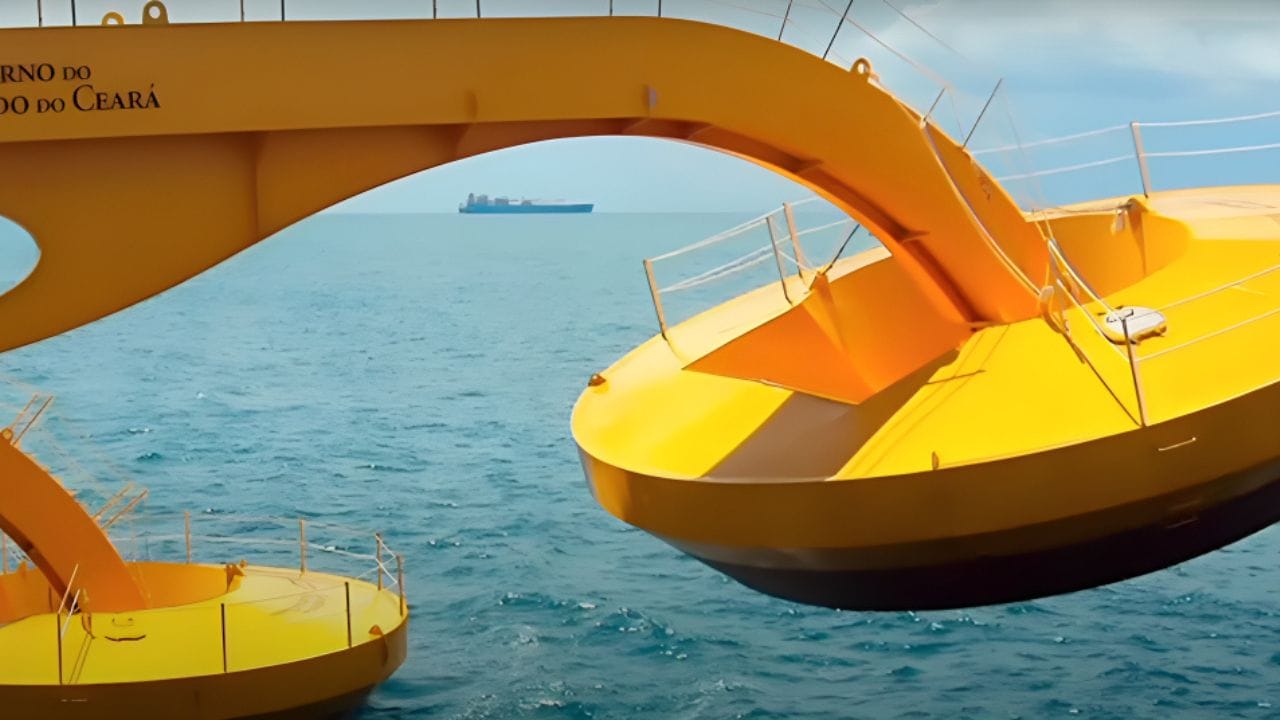
How The Northeastern Brazilian State Plans To Transform Ocean Wave Movement Into Electric Energy
Amid global discussions about the urgency of the energy transition, the state of Ceará emerges as a Brazilian example of innovation in the sector.
The focus now is on a previously underexplored source in Brazil: wave energy, harnessed from the movement of the ocean waves.
The state of Ceará is not a newcomer when it comes to renewable energy. With 98 wind farms in operation, it is the fourth largest producer of wind energy in Brazil. However, the desire to diversify the state’s energy matrix now includes harnessing energy from the waves.
-
Renewable energy advances over protected areas in Brazil, and a survey by the Energy Transition Observatory reveals silent impacts that challenge environmental conservation and pressure sensitive traditional territories.

-
Rio Grande do Sul accelerates energy transition: State invests in renewable technologies and consolidates decarbonization strategies and pathways to attract billions in new industrial investments.

-
With 160,000 m² of collectors, an area larger than 20 football fields, Silkeborg, in Denmark, hosts a solar thermal plant that heats 19,500 homes and could become the largest solar heating plant in the world.

-
A study reveals the expansion of renewable energy procurement in Brazil and shows how companies are taking advantage of opportunities to reduce expenses, ensure energy efficiency, and strengthen strategic environmental commitments.

First Wave Energy Plant in Latin America
Located in the municipality of São Gonçalo do Amarante, 60 km from the capital Fortaleza, the first wave energy plant in Latin America is situated next to the east side of the breakwater at the Pecém port.
This is a strategic point, with several national and international companies conducting significant business and investing in sustainable projects.
The wave energy project in Ceará began to be envisioned in 2004, with its first phase estimated at 3 million dollars. The plant was built with 100% national technology and designed in modules, allowing for future expansions.
According to initial estimates, the plant would have the capacity to generate up to 100 kW of energy, sufficient to supply around 60 medium-standard homes in the state.
Operation, Challenges, and Brazilian Energy Potential
The plant operates with floaters connected to a mechanical arm and a hydraulic pump. As the floaters rise and fall with the movement of the waves, the mechanical arm moves, activating the pump and generating electric energy.
However, like any technology in a maturation phase, wave energy faces challenges. The waterproofing of components and efficiency are still being tested.
Brazil has a vast coastline, over 7,000 km long. Studies by UFRJ and the Federal University of ABC point to a theoretical potential of up to 91.8 GW of wave energy in the country. However, obstacles such as environmental impacts, maritime routes, and fishing areas could reduce this number to approximately 44 GW.
The Future of Wave Energy in Ceará and Brazil
Despite the challenges, wave energy in Ceará is seen as a promising step towards a more sustainable future. If successful, this technology could not only diversify the state’s energy matrix but also serve as a model for other areas in Brazil and even for other countries.
The Ceará project could be a light at the end of the tunnel for the energy dilemma that the world faces. The need for renewable and sustainable alternatives has never been more urgent, and Ceará shows that it is attuned to this reality.







Seja o primeiro a reagir!