Portuguese
  Spanish


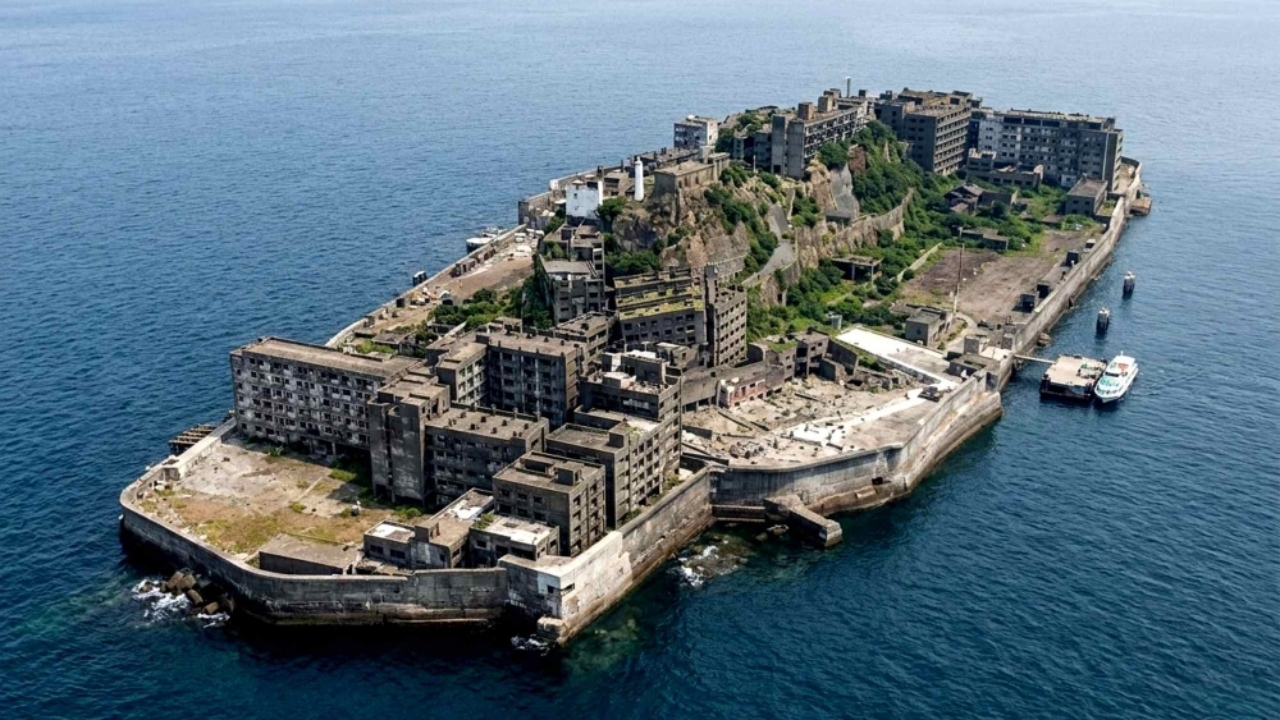

Called Battleship Island, Hashima became one of the densest places on the planet after Mitsubishi expanded 6.3 hectares with concrete, housing, and underwater mining, until the mine closed in 1974 leaving everything behind.
Hashima, known as Battleship Island, was once one of the most densely populated places on the planet per square meter. Today, the small area off the coast of Nagasaki is empty and surrounded by ruins that attract attention in Japan.
The island gained fame for resembling a warship seen from a distance. But what made the place truly remarkable was its transformation into an industrial hub linked to coal extraction under the sea, with a decisive role played by Mitsubishi.
The small island of 6.3 hectares became an industrial symbol in Japan
With only 6.3 hectares, Hashima underwent a radical change from the late 19th century. The discovery of coal in the surrounding underwater area led to the advancement of mining operations and opened the door for intense occupation of the island.
-
Former Truck Driver from Brazil Builds Logistics Company Aiming for $70 Million Revenue with 11 Branches, 700 Monthly Clients, and $10 Million Fleet Investment

-
World’s First Plasma Dress Turns Fashion Show into Scientific Spectacle with Controlled Electric Discharges and Ionized Gases in Iris Van Herpen’s Groundbreaking Tech-Fashion Creation

-
Phone Falls from Plane at 300 Meters in Rio de Janeiro, Continues Recording for 15 Seconds, Found by Environmentalist Next Day in Unbelievable Twist
-
8-Year-Old Finds 900-Year-Old Viking Bronze Buckle on Swedish Beach While Fossil Hunting




The presence of Mitsubishi completely changed the structure of the place. In addition to extraction wells, the company built housing, circulation areas, and all the necessary infrastructure to keep workers and families living in an extremely reduced space.

The concrete city was born to sustain life in the middle of the sea
To support growth, the island was expanded with landfills and protected by large concrete walls against storms and typhoons. Gradually, the place received apartments, hospital, schools, cinema, commerce, and communal areas.
The result was impressive. Hashima managed to gather over 5,000 people in a tiny area, becoming a global reference for population density and an extreme example of planned industrial occupation.

Closure of the mine in 1974 immediately emptied the island
This cycle began to lose momentum when Japan started to rely more on oil. With coal in decline and underwater exploration becoming less profitable, the mine lost its economic importance.
The mine was officially closed in 1974, and the departure of residents happened immediately. From then on, the place fell into abandonment and began a rapid process of deterioration.
Ruins open to tourism reveal the extent of abandonment
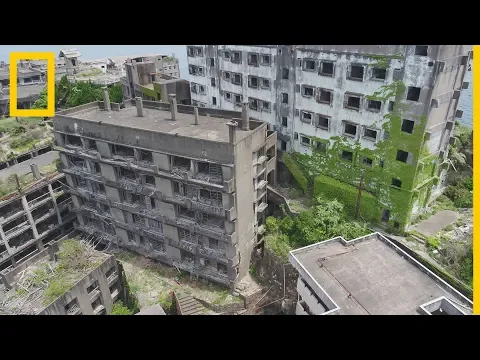
For decades, Hashima remained closed to the public. Only in 2009 did controlled visits begin through safe routes, allowing close observation of the buildings worn by humidity, salt, and time.
The current landscape mixes concrete, silence, and signs of wear almost everywhere. Vegetation has returned to appear among structures once occupied by thousands of people, reinforcing the image of a city interrupted in time.

UNESCO recognition exposed historical value and dark past
In 2015, the island was included in the list of UNESCO World Heritage sites as part of the Industrial Revolution sites of the Meiji era. The recognition highlighted the importance of Hashima for Japanese industrialization and the expansion of large business groups in the country.
At the same time, the decision reignited criticism about the island’s past. During World War II, Korean and Chinese prisoners were forced to work on the site under severe conditions marked by malnutrition, exhaustion, and deaths.
Hashima ceased to be just an old mining area and became a concrete portrait of how economic development and human cost can go hand in hand. The connection with Mitsubishi helps explain why the island remains so present in Japan’s industrial memory.
Today, the site combines tourism, ruin, and historical debate. What remains standing tells not only the story of an abandoned city but also of a process that changes the strategic reading.