





 Portuguese
  English
  Spanish
  4 min of reading


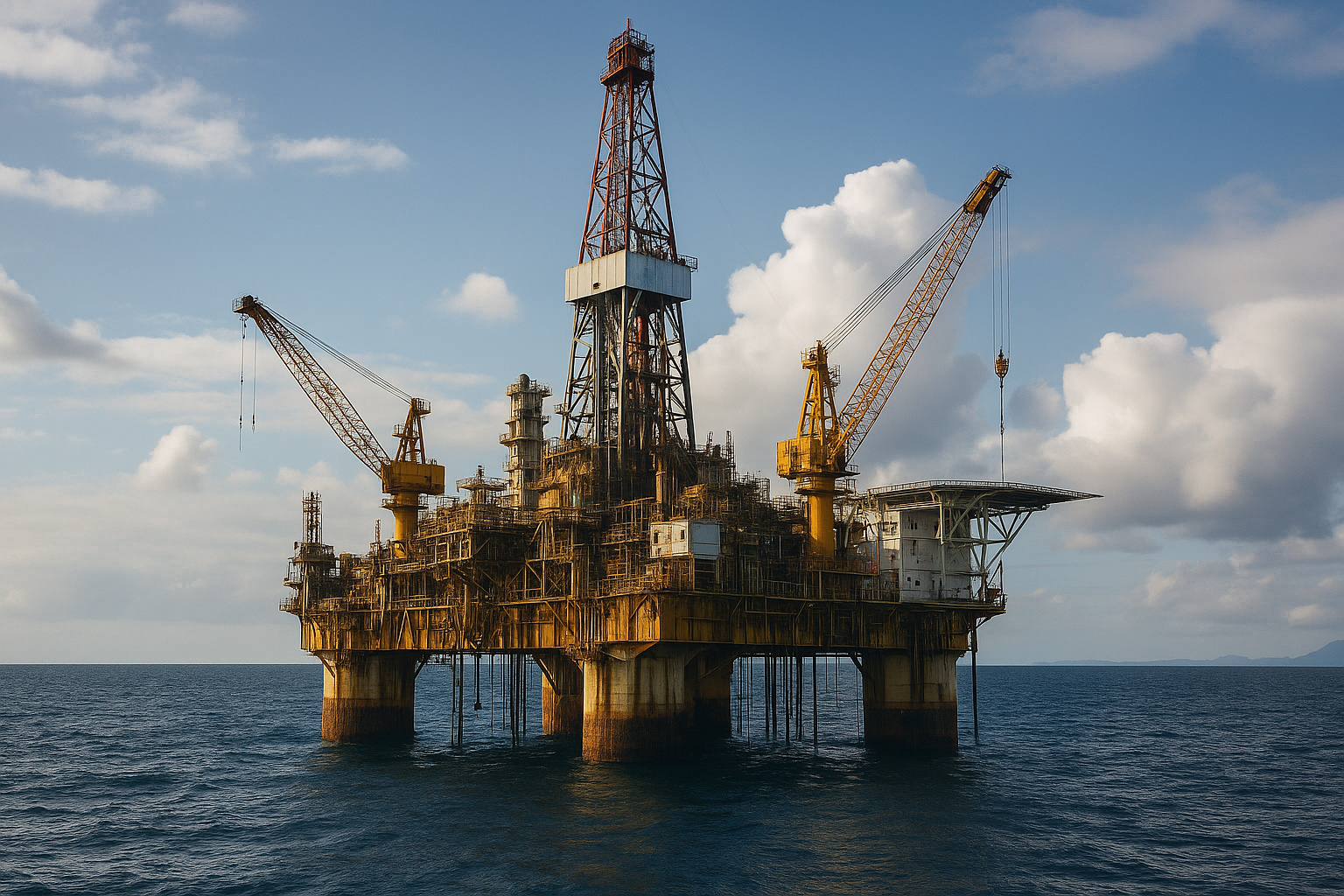
The production of oil in Brazil has reached an unprecedented milestone, according to data released by the National Agency of Petroleum, Natural Gas and Biofuels. In the monthly report published on December 2, 2025, the agency confirmed that the country achieved 4.030 million barrels per day during the month of October. As a result, Brazil consolidated its position among the largest global producers and elevated the debate on future pathways for the use of fossil energy resources.
At the same time, this historic mark reveals how the sector continues to expand, even in the face of geopolitical and environmental challenges. Therefore, this advancement necessitates broader reflections on public policies, energy planning, and social impacts.
The Historical Evolution of the Oil Industry in Brazil
The current achievement becomes even more relevant when we observe the entire trajectory of the Brazilian oil industry. Since the creation of Petrobras in 1953, the country sought energy autonomy. However, significant leaps only occurred after the discovery of pre-salt reserves.
-
Petrobras evaluates suspension of sales to distributors and considers canceling the cooking gas auction following guidelines from the Federal Government.
-
Lula reveals a masterstroke by Petrobras to undo a deal made by Bolsonaro, which involves the return of an important refinery that currently produces less than half of what was expected and makes Brazil dependent on international diesel.
-
A study confirms that the natural gas sector will reduce greenhouse gas emissions in Brazil by 0.5% and accelerate the energy transition by 2026.

-
Petrobras implements a severe adjustment and confirms a 55% increase in the price of aviation kerosene with a proposal for installment payments for the companies.


These discoveries, officially made according to the federal government in 2006, transformed the perspective of the sector. Consequently, the ultra-deep fields began to account for an increasing share of national production. Thus, the October record represents a natural outcome of ongoing investments, technological innovation, and expanded extraction capacity.
Furthermore, according to the ANP, the total oil production grew 2.9% compared to the previous month and more than 23% compared to the same period last year. These numbers reveal an upward trend that is unlikely to reverse in the short term.
The Role of Pre-Salt and the Change in Brazil’s Energy Map
Pre-salt continues to be a key player. According to official data from the ANP, more than 75% of national production comes from these areas. Thus, the region continues to strengthen the country in the global market while increasing discussions about efficiency, environmental control, and sustainability.
With each new platform, Brazil reduces external dependencies and improves its trade balance. However, this expansion also requires careful reflection. After all, while the world accelerates energy transitions, the country increases its relevance in the global oil supply.
This gives rise to a dilemma: how to balance economic growth, energy security, and climate commitment?
Oil, Economy, and Contemporary Challenges
The Brazilian economy heavily relies on oil production. This is because revenues from royalties and special participations fund public services in various states. Municipalities in Rio de Janeiro, Espírito Santo, and São Paulo, for example, structure a significant portion of their budgets around these sources.
On the other hand, experts point out that this dependence creates risks. According to analyses from the Institute of Energy and Environment, fluctuations in oil prices can jeopardize financial predictability, especially during times of geopolitical instability.
Nonetheless, the October record reinforces the strategic position of the country. As a consequence, investors are looking at the market with greater optimism, and the productive chain is strengthening.
Although the outlook is positive, there is increasing pressure for the production surge to go hand in hand with environmental monitoring and the adoption of sustainable practices.
Sustainability and Oil: An Inevitable Debate
The record production places sustainability at the center of the debate. Even though oil remains essential for the global economy, the need to mitigate environmental impacts grows year by year.
According to reports from the Intergovernmental Panel on Climate Change (IPCC), emission reductions must advance rapidly in the coming decades to avoid irreversible damage. Therefore, the increase in fossil fuel production requires robust countermeasures.
In this context, Brazilian companies are already adopting carbon reduction technologies, process optimization, and intelligent monitoring systems. Petrobras, for example, states in its annual reports that it continuously invests in energy efficiency and decarbonization. Such practices become fundamental to reconcile economic expansion and environmental responsibility.
Technology, Innovation, and the Future of Oil Exploration
The recent trajectory proves that technological innovation supports production growth. More modern platforms, underwater robotics, artificial intelligence analyses, and operational safety enhance extraction capacity and reduce risks.
According to information released by Petrobras itself in 2025, new digital solutions improve productivity and lower costs. This occurs because predictive systems anticipate failures, reduce downtimes, and increase efficiency.
As a result, the national industry is preparing to compete on a global scale for more decades, even amidst environmental and economic pressures.
The Geopolitical Impact and Brazil’s Insertion in the Global Market
The October record strengthens Brazil’s geopolitical prominence. In a world marked by conflicts, sanctions, and fluctuations in energy supply chains, countries with strong production gain strategic relevance.
Thus, Brazil’s position becomes more robust, as the country does not depend on imports for domestic supply. Additionally, oil exports continue to grow and expand national revenues.
On the other hand, this expansion requires responsibility. According to experts from the EPE (Energy Research Company), Brazil must remain attentive to OPEC movements, international volatility, and global regulatory changes. Therefore, long-term planning is essential.
Possible Paths for the Future of Oil in Brazil
The record not only celebrates an achievement but also opens space for structural reflections. After all, oil will remain important, but will coexist with a global energy transition.
Various experts believe that Brazil can:
• increase investments in clean technologies associated with oil
• strengthen emission reduction plans, especially in the pre-salt
• diversify its energy matrix to gain resilience
• encourage research on carbon capture and environmental control
These strategies will allow the country to maintain competitiveness and climate responsibility simultaneously.









Seja o primeiro a reagir!