





 English
  Francês
  Alemão
  Italiano
  Japonês
  Norueguês
  Portuguese
  Spanish
  3 min of reading
  0 comments


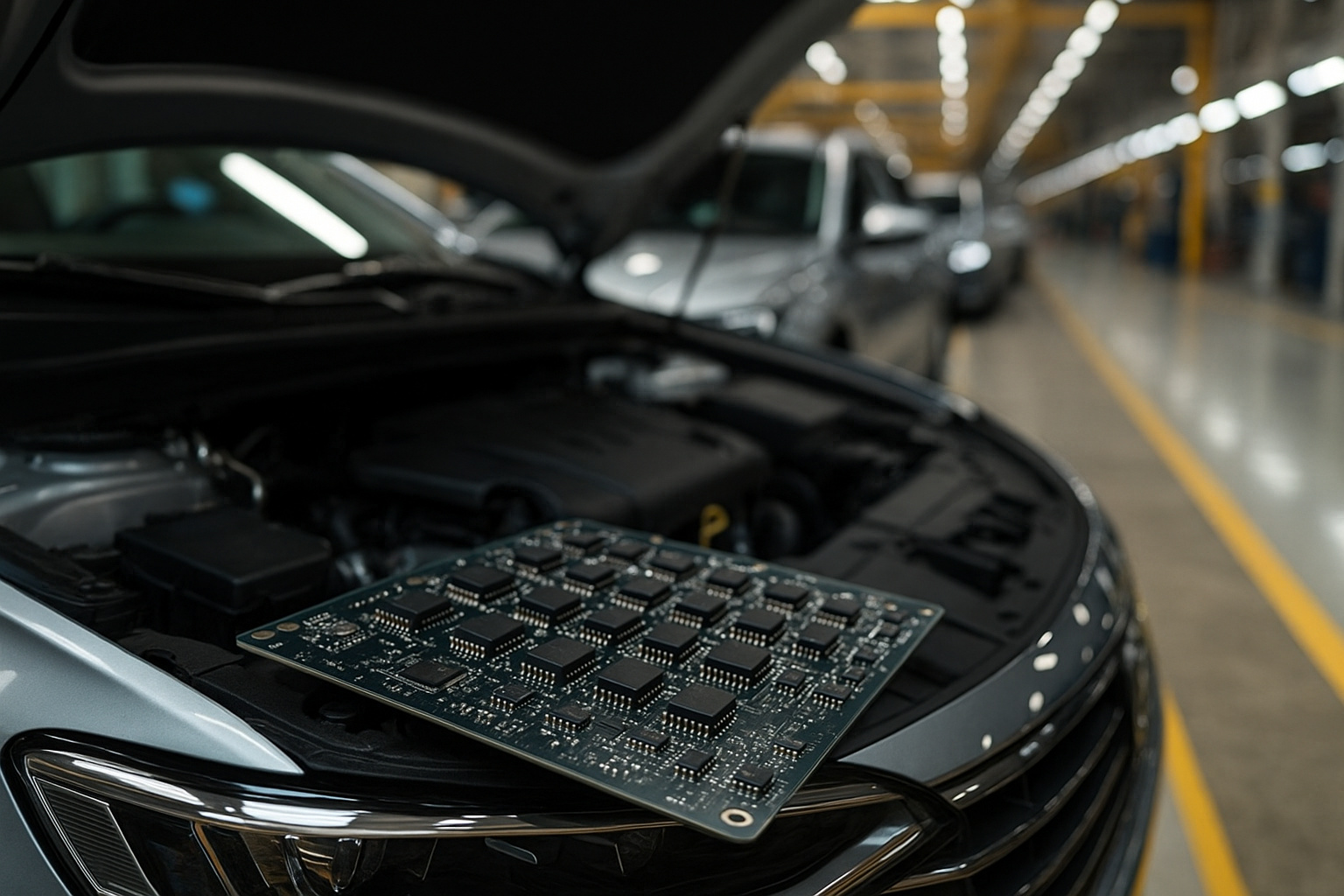
Brazilian Government Secures Direct Channel with Beijing to Release Semiconductor Imports and Prevent Collapse
On November 1, 2025, the Brazilian government established a direct agreement with China to ensure the continuous supply of automotive chips.
These components are essential for national production, and their absence would cause significant harm to the economy and job creation.
The measure, coordinated by Vice President Geraldo Alckmin, prevented the shutdown of automakers, which almost entirely depend on imported semiconductors.
According to Anfavea (National Association of Automotive Vehicle Manufacturers), the agreement ensures stability in the production chain and strengthens the strategic dialogue between the two countries.
Political Interference Accelerated Negotiation
Since October 2025, Anfavea had warned of the risk of chip shortages in the automotive industry.
The deadlock began after the Netherlands nationalized Nexperia, a Chinese semiconductor manufacturer, citing national security risks.
In response, Beijing suspended exports of chips, directly affecting Brazil, which almost entirely depends on these components.
The chips control engines, brakes, airbags, and electronic systems, being essential for the production of modern vehicles.
Faced with the risk of shutdown, Geraldo Alckmin, Vice President and Minister of Development, Industry, and Commerce, initiated emergency negotiations with China to restore supply.
ARTICLE CONTINUES BELOWSee also
Engineers propose a fourth traffic light for intersections – the change promises to affect crossings, queues, and waiting times.

Chevrolet Suburban Z71 lands in Brazil with a V8 engine, off-road design, air suspension, seven seats, and colossal size, a rare version imported for around R$ 1.3 million with luxury and exclusivity.

The Chevrolet Onix 1.0 turbo achieves 17.7 km per liter on the highway and ranks among the three most economical cars in Brazil in 2026, alongside two more expensive Toyota hybrids available at dealerships.

Little sister of the Hilux: Toyota launches Land Cruiser FJ with 4 radical versions, 2.7 engine with 166 hp and 4×4 traction with locking.
China Creates Direct Channel to Release Exports
With the new measure, confirmed by Ambassador Zhu Qingqiao in Brasília, Brazilian companies will be able to request special export licenses on a “case-by-case” basis from the Chinese government.
This way, the process will be conducted by the Ministry of Commerce of China, allowing greater speed in the analysis of import requests.
This initiative, in turn, will enable automakers and domestic suppliers to maintain the regular supply of semiconductors, thereby preventing losses in the auto parts, steel, plastics, and rubber chain.
The president of Anfavea, Igor Calvet, highlighted that the swift response of the federal government was crucial to mitigate the impacts of the crisis.
Additionally, he reinforced the importance of diplomatic cooperation to ensure productive security and predictability in the market.
According to Calvet, “this partnership demonstrates institutional maturity and mutual trust between the two countries,” which strengthens the Brazilian and international industrial environment.

Global Semiconductor Crisis Exposes Sector Vulnerability
The chip shortage is not a recent problem and has been worsening since 2021.
Due to the trade war between the United States and China, the entire global semiconductor supply chain was affected.
Consequently, the crisis intensified when the Netherlands intervened in the Nexperia company, deemed strategic for the Chinese technology industry.
As a result, China temporarily prohibited the manufacturer from exporting chips and also restricted the purchase of foreign raw materials.
According to industry analysts, although Nexperia’s chips are not highly complex, they are fundamental due to their widespread use in the automotive industry.
According to estimates from Anfavea, if the deadlock persists, Brazilian factories could stop in up to three weeks, which would represent a massive economic impact.
Moreover, this interruption would jeopardize thousands of jobs and significantly reduce the industrial sector’s revenue in the country.
Economic Importance and Future Outlook
The Brazilian automotive chain employs 1.3 million workers and represents one of the pillars of the national economy.
Thus, diplomatic mediation between Brazil and China plays a crucial role in avoiding a productive collapse and preserving jobs.
Despite the momentary truce, experts say the main challenge now is ensuring the efficient implementation of special licenses.
These permits will be monitored by Anfavea and the Brazilian ministries, which oversee the progress of requests.
The sector remains on alert, as international trade tensions could still affect the global chip supply.
Nonetheless, the new bilateral agreement represents a step forward for Brazilian industrial sovereignty and reinforces the importance of economic diplomacy.
Will industrial diplomacy become Brazil’s main economic defense tool in the coming years?








Seja o primeiro a reagir!