





 Portuguese
  English
  Spanish
  5 min of reading
  2 comments


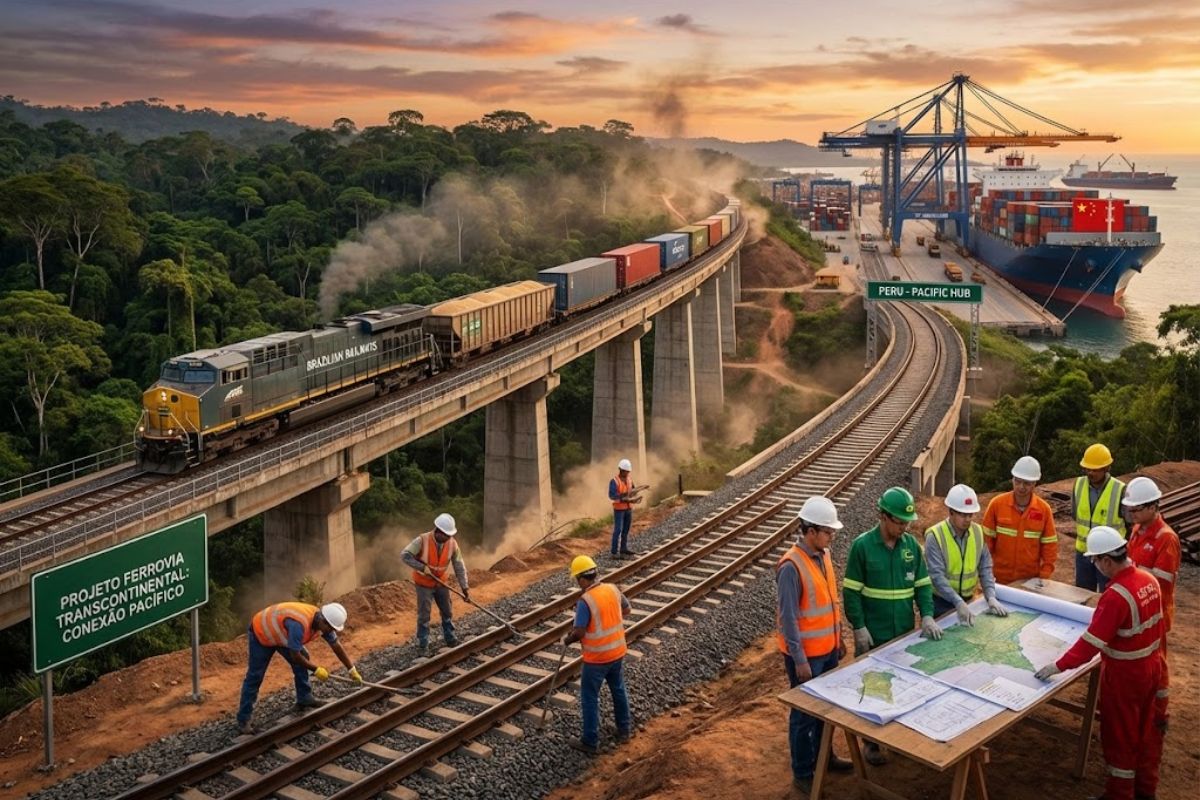


With Investments in Railways, Brazil Repositions Its Logistics Strategy, Brings Peru and China Closer in the East-West Corridor, Prepares Direct Link to the Pacific, and Tries to Reduce Export Costs, Emissions, and Dependence on Congested Maritime Routes, an Offensive That Could Redefine Jobs, Investments, Integration, and Brazil’s Protagonism in Foreign Trade Chains
On December 8, 2025, in Brasília, the Ministry of Transport received a delegation of lawmakers from Peru and Ambassador Rômulo Acurio to present the new National Railway Grant Policy, consolidating railways as the central axis of Brazil’s logistics strategy. The meeting detailed the project portfolio in the sector and reinforced the role of the East-West Corridor as a structural link between the agribusiness of the interior and ports directed towards the Atlantic, and, in the future, the Pacific.
The agenda, officially released on December 9 and updated on December 10, 2025, highlights the government’s attempt to transform the railway network into a continental integration platform with neighboring countries and to attract foreign capital. At the same time, it opens space for Brazil, Peru, and Asian partners to compete for routes, freight, and value chains in a scenario where infrastructure becomes a decisive criterion for competitiveness.
Railways as the Axis of the New Logistics Policy
When presenting the National Railway Grant Policy, the National Secretary of Railway Transport, Leonardo Ribeiro, stated that the government decided to promote investments in railways as a strategy for economic development, reduction of logistics costs, and job and income generation.
-
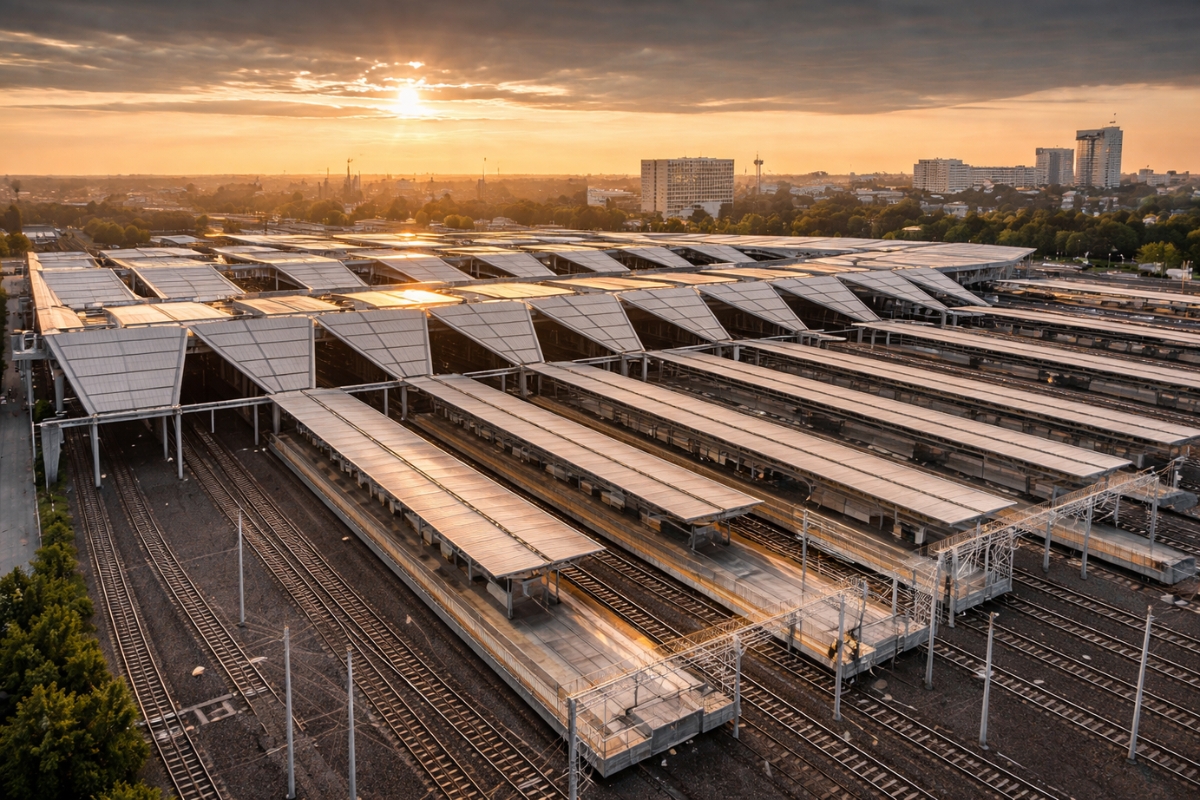
In A European City, The Country’s Largest Railway Junction Was Modernized Without Closing Its Doors, Kept Trains Running During Years Of Construction, Now Serves Up To 60,000 Passengers Per Day, And Installed Solar Panels That Generate About 30% Of Its Energy
-
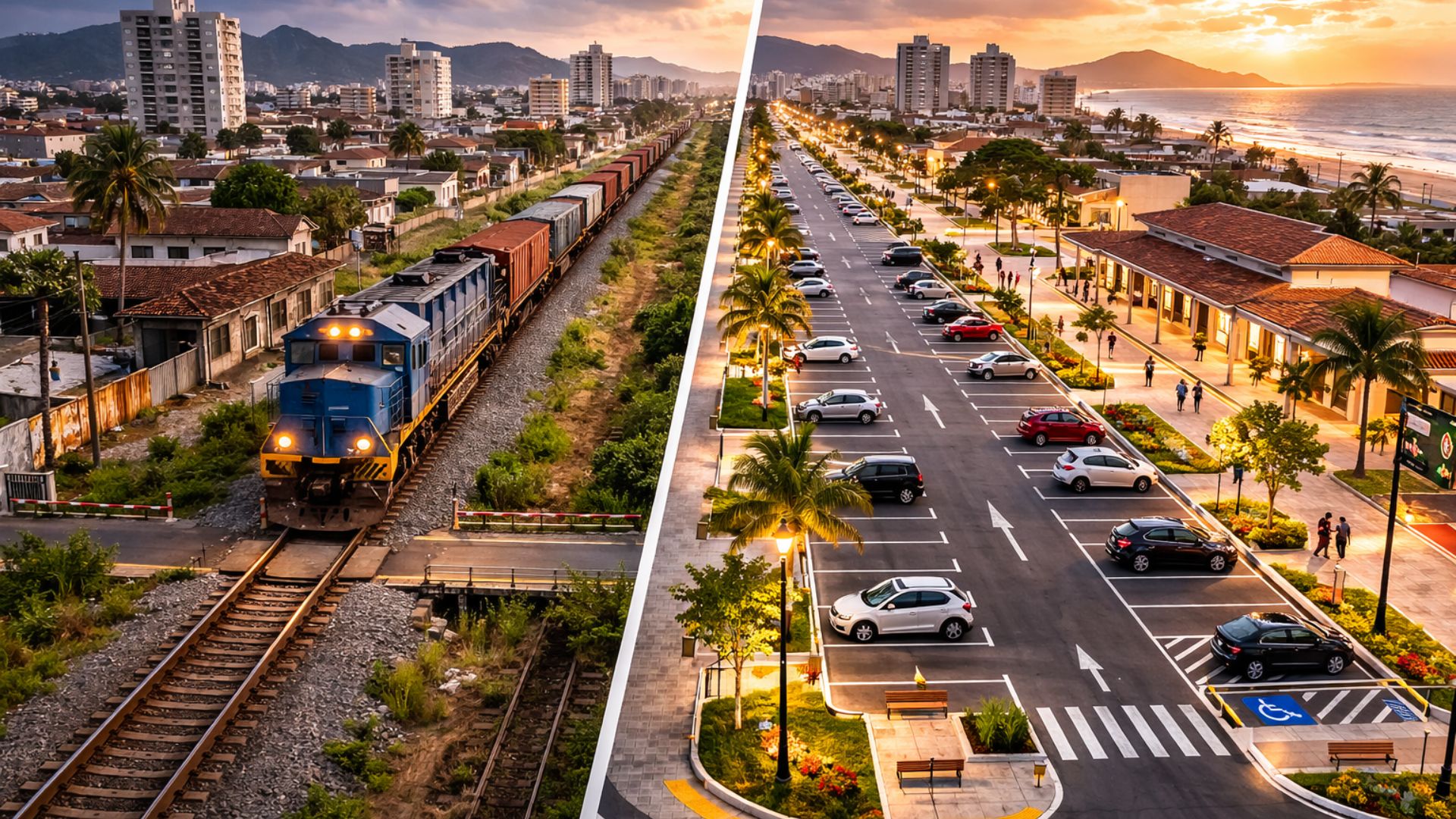
Famous Brazilian Railway May Become a Parking Lot
-
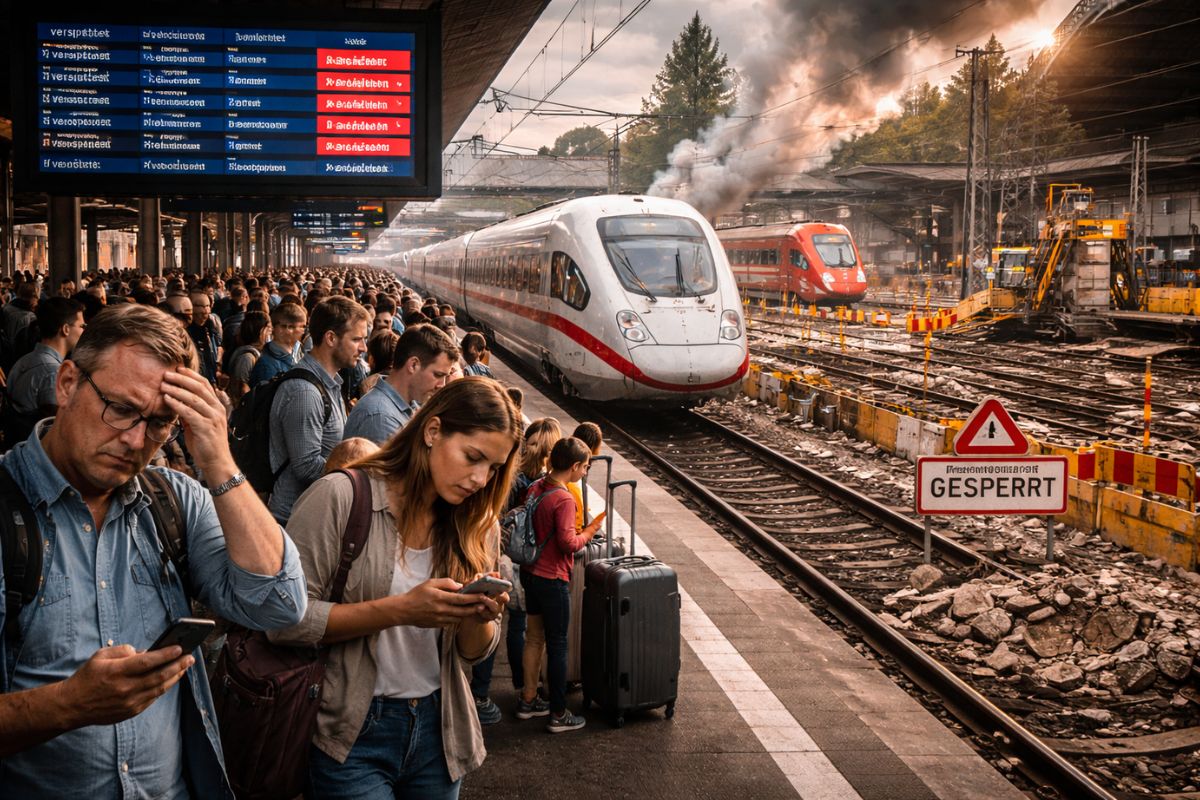
The Country of “Punctual As a Train” Admits It Has Lost Control: High-Speed Trains Delay, Stop, Disappear from the Map and Turn 6-Hour Trips into 10, While Deutsche Bahn Promises Restructuring in 2026 But Faces 19th Century Infrastructure, Staff Shortages and Sections Closed for Months
-
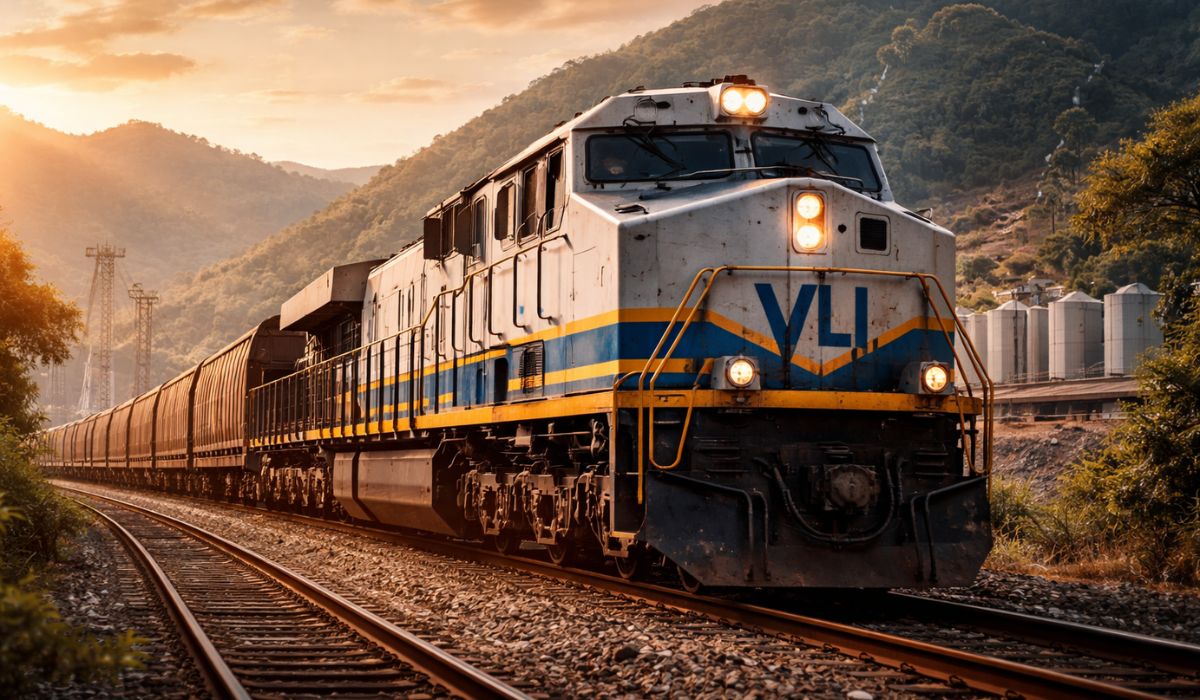
With an Investment of R$ 700 Million in One of the Country’s Main Rail Networks, VLI Reinforces Infrastructure, Receives 8 New Locomotives, and Expands the Corridor Connecting 7 States, Boosting Jobs and the Transportation of Grains, Ore, and Oil Products to the Port of Santos

The idea is to combine concessions, authorizations, and new financial instruments to unlock projects with fiscal responsibility and regulatory predictability.
According to Ribeiro, the new model aims to provide legal security for the private sector to participate in long-term projects, especially in the grain and mineral export corridors.
By prioritizing railways in high-demand stretches, the government tries to remove long-distance trucks, reduce emissions, and make heavy transport more efficient, bringing Brazil closer to international commodity flow standards.
The policy also engages with the energy transition.
By concentrating large volumes on electrifiable or more energy-efficient tracks, railways are presented as an alternative to decrease diesel consumption, alleviate congested highways, and reduce the cost per ton transported.
The official narrative links this change to a new phase in infrastructure, where logistics and climate are no longer separate agendas.
Brazil as a Reference for Peru in Railway Restructuring
The presence of Peruvian lawmakers in Brasília was not merely ceremonial.
Ambassador Rômulo Acurio emphasized that Peru sees the Brazilian experience as a roadmap to make up for lost time in its own railway sector.
By observing how Brazil restructures grants, regulations, and incentives for railways, Lima seeks references to structure Andean projects and connections to the interior of the continent.
The former President of the Congress of the Republic of Peru, Eduardo Cavides, even invited the Ministry of Transport to present the Brazilian model in Lima at a specific event on the topic.
The expectation of the Peruvians is that technical dialogue will help define priorities for routes, concession models, and financing mechanisms, reducing political and regulatory risks.
For Brazil, being used as a reference in railways by a strategic neighbor means expanding regional influence and reinforcing the narrative of leadership in South American infrastructure.
Technical railway cooperation opens doors for business partnerships, engineering contracts, standardization of solutions, and possible consortiums in corridors that cross borders, increasing the geopolitical weight of the Brazilian network on the continental map.
East-West Corridor, Pacific, and Chinese Interest
In the project portfolio presented to the Peruvian delegation, the highlight was the East-West Corridor, defined by the Ministry of Transport as essential for the flow of production from the central region of the country.
The route is designed to connect areas of strong agricultural expansion to the coast, shortening distances to deep-water ports and integrating different branches of railways already granted or planned.
Leonardo Ribeiro acknowledged that there is international interest, including from China, in linking the East-West Corridor to a future bi-oceanic corridor that connects the Atlantic to the Pacific.
In this view, Brazilian railways would no longer only serve to transport grains and minerals to the ports of the Southeast and Northeast but would become part of a transcontinental route capable of reducing travel days to Asia.
This design frames China as a potential financier, operator, or purchaser of capacity on these tracks, given its status as the main destination for Brazilian commodity exports.
At the same time, the Chinese interest raises alarms about the need to balance external capital, regulatory control, and strategic autonomy, avoiding a situation where a single partner concentrates vital logistical decisions for agribusiness and industry.
Challenges to Transform Railways into a Lasting Competitive Advantage
Despite the optimistic discourse, experts remind us that the success of the new National Railway Grant Policy will depend on the ability to coordinate the federal government, states, investors, and impacted communities.
Railway projects require decades of planning, complex environmental licensing, and demand security, or they risk becoming underutilized assets.
Another challenge is ensuring that railways do not replicate a development model limited to low value-added exports.
While lowering freight costs for grains and minerals, the tracks can also be used to integrate industrial hubs, logistics nodes, and processing centers, stimulating more sophisticated chains along the route.
Public policies will need to promote this combined usage.
Finally, integration with Peru and other neighbors will depend on diplomatic agreements, technical standardization, and regulatory compatibility, including in potential partnerships with China.
If these elements are aligned, railways can shift from being a historical bottleneck to a strategic asset in transforming Brazilian exports and inserting the country into new global routes.
And you, do you believe that placing railways at the center of the strategy can really change Brazil’s weight in international trade in the coming years?









Sim as ferrovias, deve ser o centro de interesses do Brasil, devido seu lucro certo e rapidez , faz o país crescer ainda mais, com o transporte ferroviário.
Mas sem esquecer do policiamento ostensivo ferroviário, que são uma categoria existente e profissionais, ainda existe no Brasil em média de 3.000 homens de levantar esta segurança pública ferroviária
A PFF está no ART. 144 inc. ||| da Construção Federal de 1988.
Tem que fazer uma rodovia ligando cruzeiro do sul a Pucalpa e futuramente essa ferrovia margeando essa rodovia!!. Essa ferrovia tem de rachar RO e Acre..