





 Portuguese
  English
  Spanish
  5 min of reading
  0 comments


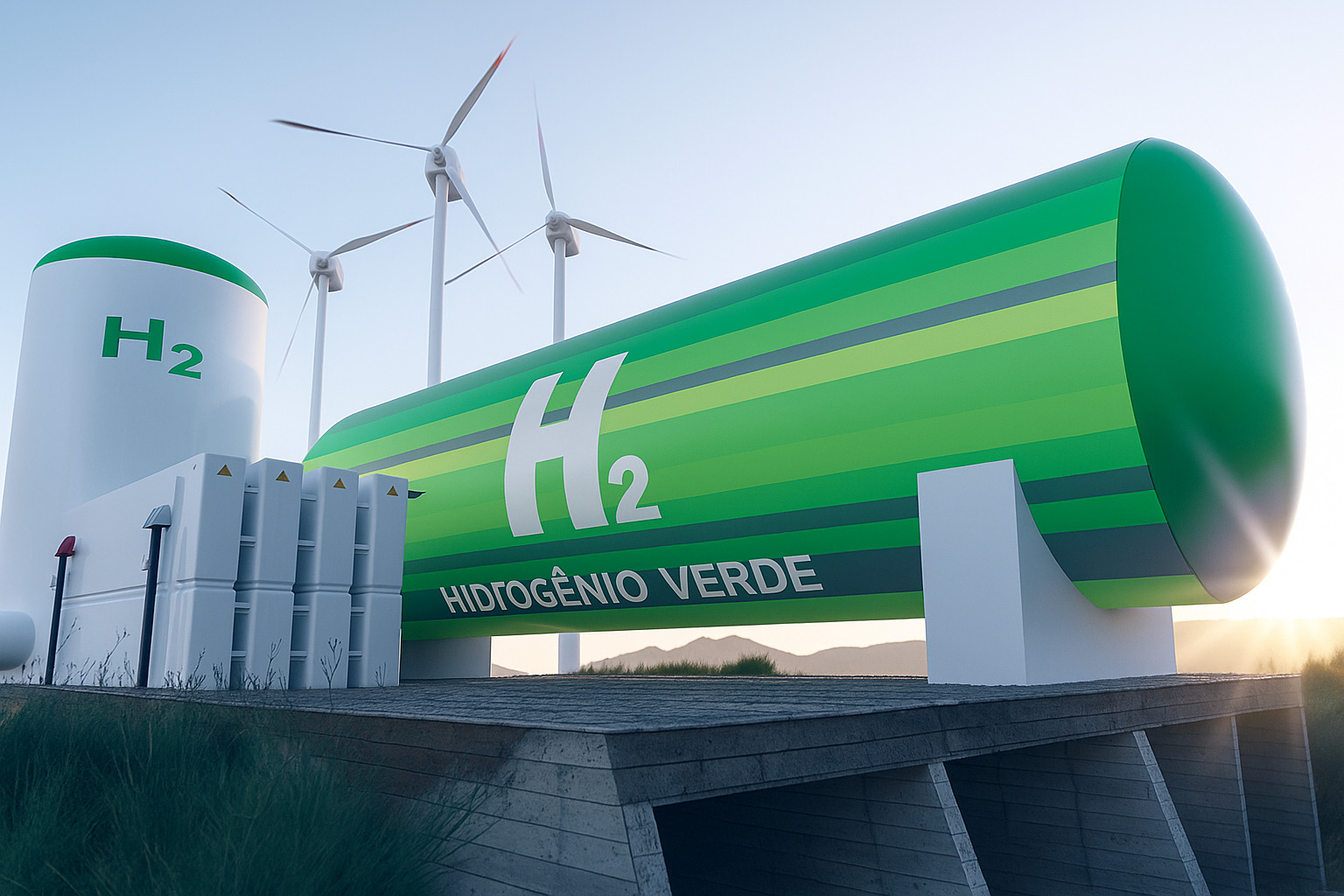
Discover How Green Hydrogen Projects Are Gaining Momentum in Brazil and Driving the Energy Transition with Billion-Dollar Investments in Clean Energy.
In recent years, Brazil has taken a prominent place in the global clean energy landscape. Based on recent data, the consulting firm Clean Energy Latin America (CELA) revealed that there are more than 100 green hydrogen projects under development in the country.
Moreover, these projects are spread across 15 Brazilian states, demonstrating a significant national effort towards the energy transition.
Even though many projects are in the early stages, they already total announced investments of R$ 454 billion.
-
Renewable energy advances over protected areas in Brazil, and a survey by the Energy Transition Observatory reveals silent impacts that challenge environmental conservation and pressure sensitive traditional territories.

-
Rio Grande do Sul accelerates energy transition: State invests in renewable technologies and consolidates decarbonization strategies and pathways to attract billions in new industrial investments.

-
With 160,000 m² of collectors, an area larger than 20 football fields, Silkeborg, in Denmark, hosts a solar thermal plant that heats 19,500 homes and could become the largest solar heating plant in the world.

-
A study reveals the expansion of renewable energy procurement in Brazil and shows how companies are taking advantage of opportunities to reduce expenses, ensure energy efficiency, and strengthen strategic environmental commitments.





As a result, this set of initiatives represents a demand for about 90 gigawatts (GW) of installed capacity, reinforcing the commitment to low-carbon energy sources.
Therefore, the country positions itself as a potential international leader in the production of sustainable fuels.
The Origin of Hydrogen as Clean Energy
Since the early 20th century, the search for alternative energy sources has driven various scientific advancements.
In this context, hydrogen has always been of interest, mainly because it is the most abundant element in the universe.
However, to utilize it as an energy source, it must be extracted from molecules such as water or natural gas.
Traditionally, the industry performs this extraction through natural gas reforming, a process that results in what is known as grey hydrogen.
However, this method emits large amounts of CO₂, which significantly contributes to worsening the climate crisis.
Consequently, the world has begun to seek cleaner alternatives. One of them is green hydrogen, produced through water electrolysis using electricity from renewable sources, such as solar energy or wind energy.
As there are no carbon emissions in this process, green hydrogen has become essential for countries that wish to decarbonize their economies.
Brazil’s Calling for Green Hydrogen
Brazil is one of the countries with the greatest potential to produce green hydrogen at scale.
This is primarily because it already has a predominantly renewable electricity matrix and abundant natural resources.
Since the 1970s, the country has invested in hydropower, and in recent decades has strengthened the use of solar and wind energy.
Therefore, the country brings together the ideal conditions to lead this new energy frontier.
The abundant water resources, for example, ensure the basic input for electrolysis.
Similarly, the vast expanses of sunny land and constant winds favor the installation of renewable power plants.
Additionally, Brazil is strategically located to serve international markets, as it has direct access to the Atlantic Ocean.
This way, hydrogen production can be exported in its raw form, in liquid form, or converted into ammonia, which facilitates transportation.
Current Landscape of Projects in the Country
Based on CELA’s survey, the projects go beyond simple hydrogen production.
They also include strategic derivatives, such as green ammonia, e-methanol, and green steel.
All these products are essential for decarbonizing sectors such as heavy industry, fertilizers, and maritime transport.
Additionally, CELA has developed a platform that maps the main production hubs, as well as identifies end buyers (offtakers) and the status of progress of each project.
This way, the tool assists governments, companies, and investors in making more accurate decisions.
It is worth noting that green hydrogen can play a central role in Brazil’s energy transition, as highlighted by Camila Ramos, CEO of CELA.
Thus, the detailed mapping is essential to accelerate this process.
Cost Competitiveness and Economic Viability
From an economic perspective, Brazil presents very competitive costs.
According to CELA, Brazilian green ammonia can be produced for between US$ 539 and US$ 1,103 per ton, placing it within or even below the price range of ammonia produced from natural gas.
Similarly, the national green hydrogen has a leveled cost between US$ 2.83/kg and US$ 6.16/kg, depending on the project’s location.
Although these values may still seem high, they tend to decrease as the technology matures.
In other words, Brazil has a rare combination: abundant natural resources, growing technology, and access to global markets.
As a result, the country establishes itself as a potential exporter of green fuels, which can boost the economy and create jobs.
An Opportunity for a Sustainable Future
Based on this scenario, green hydrogen projects offer Brazil a concrete chance to build a more sustainable future.
After all, they help reduce emissions, diversify the energy matrix, and strengthen the green economy.
Additionally, these ventures promote technological innovation, skilled workforce training, and attraction of international investments.
States like Ceará, Bahia, and Piauí have already started structuring industrial zones dedicated to green hydrogen, reinforcing regional competitiveness.
Therefore, it is possible to affirm that Brazil is preparing to lead the new economy of clean energy.
If there is coordination between the government, the private sector, and universities, the country can establish itself as a global benchmark in green hydrogen production.
Barriers and Paths for Sector Growth
However, the advancement of this industry requires solutions for challenges that still exist.
The main one is the absence of a national regulatory framework.
Without clear rules, projects face legal risks and encounter difficulties in obtaining financing.
Furthermore, the transportation, storage, and distribution of hydrogen require specific infrastructure, which is still under development.
To overcome these obstacles, it will be necessary to invest in research, innovation, and technical training.
Fortunately, some states have been creating incentive policies and partnerships with foreign companies.
The experience of these regions can serve as a basis for an integrated federal planning, with goals, tax incentives, and credit lines aimed at the sector.
A New Energy Era for Brazil
In summary, the advancement of green hydrogen projects in Brazil symbolizes a new era for national energy.
The combination of favorable natural conditions, established renewable experience, and global climate ambition places the country at the forefront of the energy transition.
Thus, green hydrogen represents not just a technological innovation.
It symbolizes a commitment to the future — cleaner, fairer, and economically viable.
If Brazil continues to invest strategically, it may not only satisfy its own demand but also export clean energy to the world.
In doing so, the country reinforces its role as a protagonist of global sustainability.








Seja o primeiro a reagir!