





 Portuguese
  English
  Spanish
  6 min of reading
  1 comment


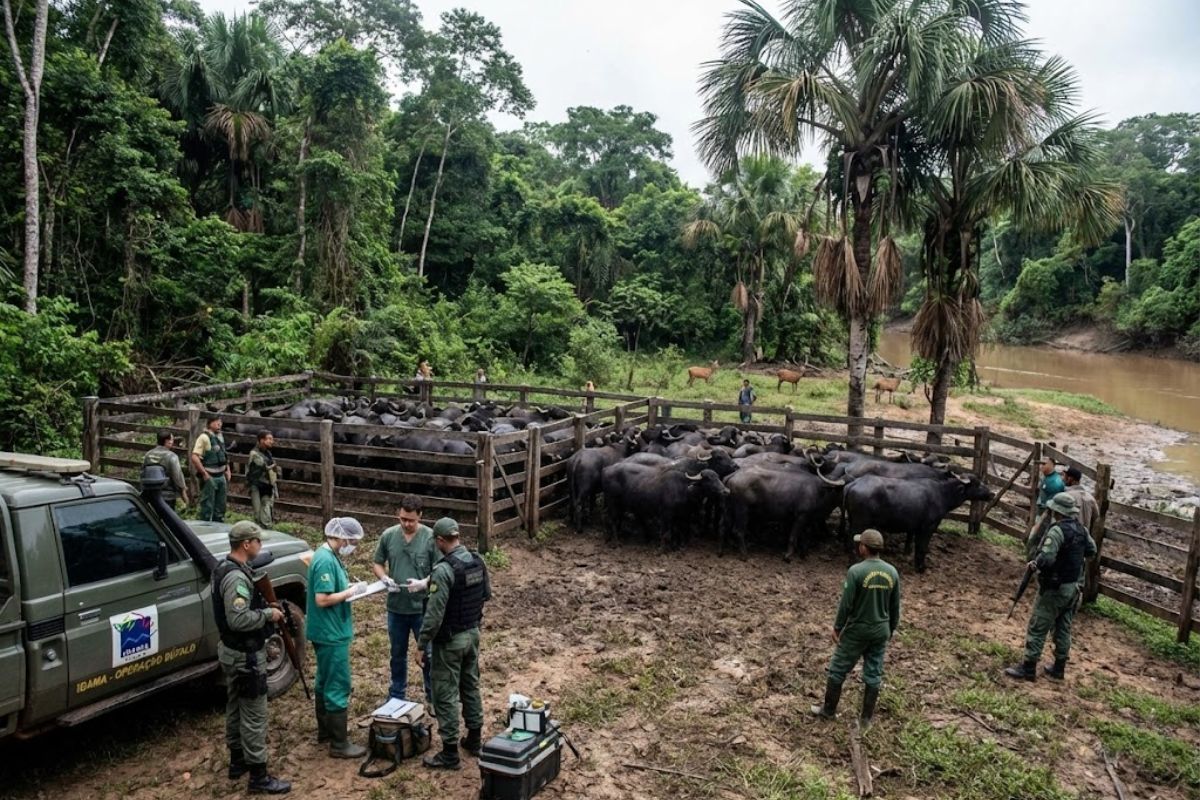


Pilot Research by ICMBio Forecasts Controlled Slaughter of 500 Invasive Buffaloes in Remote Reserves of the Guaporé Valley in Rondônia to Measure Environmental Impact, Protect Pantanal Deer, Buritis, and Rivers Threatened by a Herd Without Natural Predator That Already Exceeds Four Thousand Animals and May Reach Nearly Fifty Thousand Heads.
On December 21, 2025, a field report from G1 revealed that the Chico Mendes Institute for Biodiversity Conservation initiated a pilot research project that forecasts the slaughter of approximately 500 invasive buffaloes in isolated reserves of the Rondônia Amazon, in the Guaporé Valley, to test ways to control a herd already estimated at over 5,000 animals.
The initiative takes place in a rare area of convergence among the Amazon Rainforest, Pantanal, and Cerrado, and seeks to respond to growing pressure: studies presented to the Federal Public Ministry indicate that, without effective measures, the buffalo population could explode to around 50,000 heads in five years, exacerbating the collapse of deer, buritizais, and flooded fields.
How the Invasive Buffaloes Came to a Unique Amazon Reserve

The invasive buffaloes that currently occupy the Guaporé Valley are not native to Brazil. They came from Asia and were brought to Rondônia in 1953 as part of an official project aimed at the meat and milk trade.
-
China rejected an entire shipment of beef from Argentina after detecting an antibiotic so dangerous that it has been banned for human consumption for over 30 years, and now the export sector is facing a crisis of international trust.

-
With nearly 500 thousand tons per year, barley production is growing in Brazil, while a decline in beer consumption among Generation Z raises alarms in the sector.

-
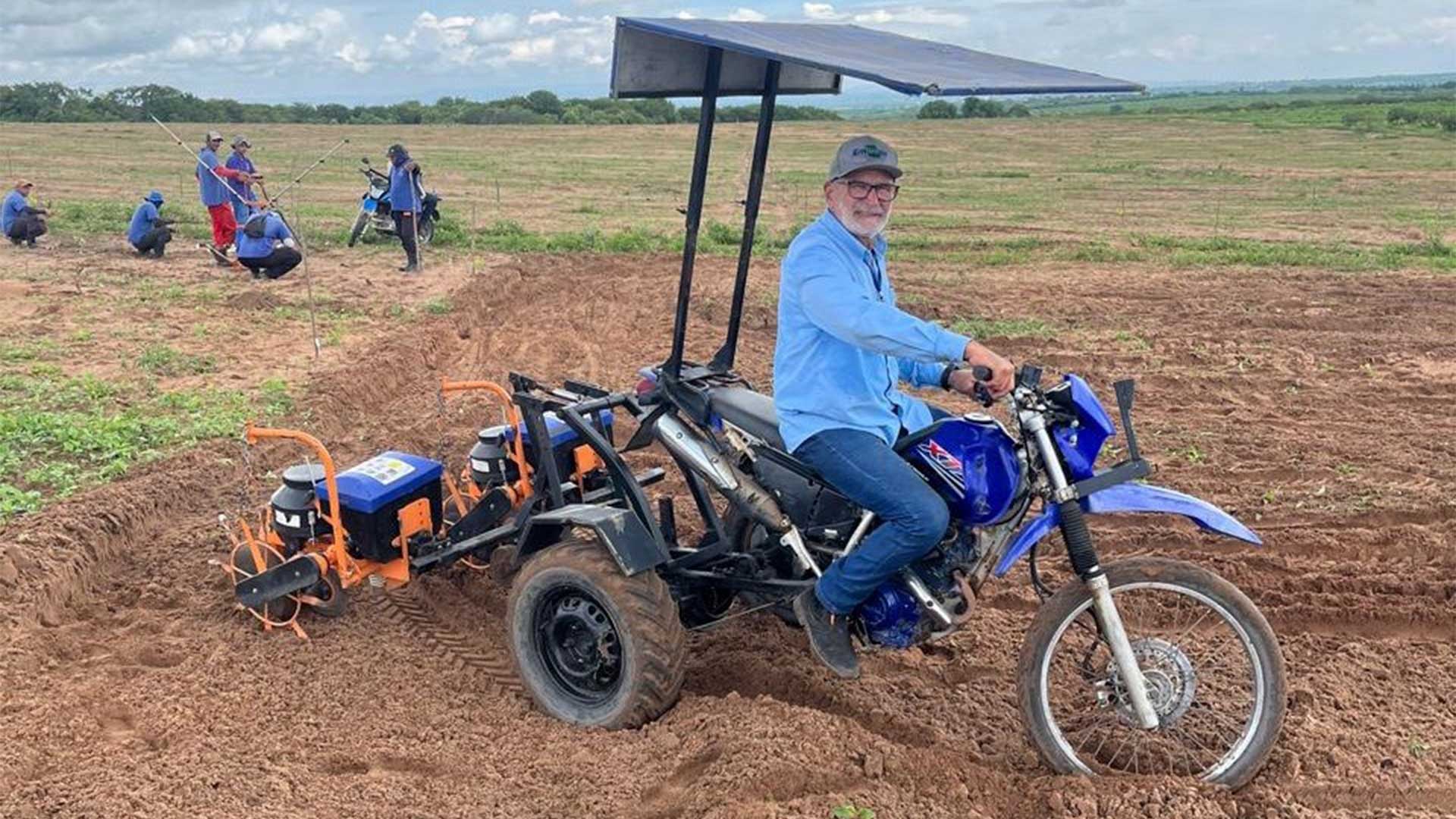
With tractors out of reach for small producers, a tricycle created by Embrapa Algodão becomes a cheap and efficient solution and gains national prominence.
-
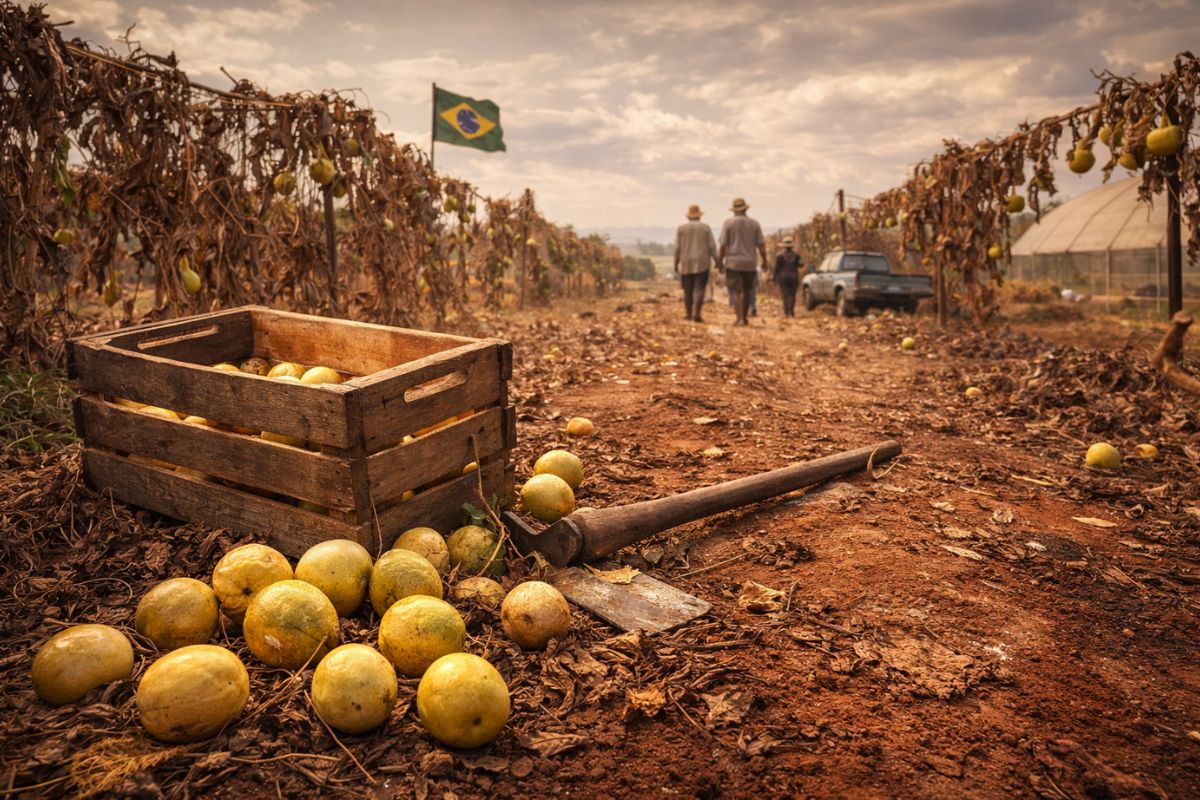
From 130 producers in the year 2000 to just 15 today: the dramatic decline of passion fruit in Araguari shows how the lack of labor in the Brazilian countryside is killing a decades-old agricultural tradition, even with Brazil being the largest producer in the world.
The plan failed, the herds were abandoned and started to reproduce freely within conservation units.
Currently, the animals roam between the Guaporé Biological Reserve, the Pedras Negras Extractive Reserve, and the Pau D’Óleo Fauna Reserve, in an isolated area of western Rondônia.
It is a unique conservation mosaic, where flooded fields, forests, and transitional areas host endemic species, many of which are recorded only there, according to ICMBio technicians.
Recent reports indicate that more than 4,000 buffaloes already live in a wild state in the region, without any sanitary control or management.
Without natural predators, the invasive buffaloes expand over floodplain areas, lakes, and natural fields, competing with native species and altering the water and soil dynamics in a territory designed specifically to protect flooded environments.
What the Test with 500 Buffaloes Aims to Measure in the Guaporé Valley
Given the logistical impossibility of removing the animals alive or dead for sanitary slaughter outside the area, ICMBio designed a research project in three fronts.
The institute itself coordinates the management of the area and the logistics of control, a specialized company volunteered to carry out the slaughter in the field, and researchers from the Federal University of Rondônia will analyze the health of part of the slaughtered animals.
The plan is to eliminate about 500 buffaloes, equivalent to 10 percent of the current herd, and closely monitor how the environment reacts.
The researchers want to know how to access the animals, what the actual slaughter capacity is in a remote area, and what happens when the carcasses are left on-site, since there is no infrastructure for large-scale removal.
Since early 2025, ICMBio has been collecting water samples in the same areas, before the control campaign, to compare water quality before and after the slaughter.
In the next phase, cameras will be installed on part of the carcasses to identify which animals feed on them, whether this benefits or harms native species, and if there is a risk of cascade effects on local fauna.
Pantanal Deer Cornered by Invasive Buffaloes
Among the species most affected by the invasive buffaloes is the Pantanal deer, listed as vulnerable to extinction.
In ten days of work with drones and walking in the region, ICMBio analysts did not record deer sharing space with the buffaloes, indicating forced habitat segregation.
The Asian animals can reach nearly two meters in height and weigh over half a ton. With this size, they trample and destroy the low vegetation that serves as food for the Pantanal deer, displacing the native herbivore to small remaining areas.
The result is the confinement of the deer in isolated pockets, with less availability of food and greater vulnerability to diseases and hunting.
The presence of invasive buffaloes also acts as a hunting vector.
Inspections have already caught hunters entering the reserves after buffalo and ultimately slaughtering other species, such as deer, caimans, and armadillos.
The concentration of large animals attracts weapons, ammunition, and illegal hunting nets into units that should be fully protected.
Buffalo Paths Turn into Drainage Channels and Dry Up Flooded Fields
A behavioral trait of the buffalo has a direct effect on the hydrology of the region. The herds move in lines, opening deep paths in the wet soil.
Over time, these paths transform into channels that divert water from its natural course, draining lagoons and wet areas that should remain flooded throughout the year.
The naturally flooded fields of the Guaporé Biological Reserve, created specifically to protect this type of environment, begin to lose water through these “corridors” opened by the invasive buffaloes.
The water that once formed shallow layers and seasonal lagoons escapes to lower points, leaving behind dry surfaces more susceptible to fire and erosion.
Another serious impact is the intense soil compaction, especially in areas near lakes. Technicians have already identified sections where the surface has sunk about one meter, exposing tree roots that end up dying.
In place of the forest, only herbaceous vegetation or bare soil remains, structurally altering the landscape that the conservation unit should maintain.
Buritis Transformed into a Cemetery and a Fire that Burned Down to the Soil
On a recent visit, field teams recorded a true “cemetery” of buritis.
These palms, adapted to permanently wet areas, lost their ability to retain water due to the buffaloes, which compact the soil, open drainage channels, and crush seedlings, hindering the natural regeneration of the buritizal.
The result is a combination of drier soil, exposed roots, and accumulation of dead organic matter.
In 2024, the region recorded for the first time a fire intense enough to burn down to the soil, something unusual in originally flooded environments.
Without reducing the pressure from invasive buffaloes, analysts estimate that the full recovery of this type of area could take 70 to 100 years, if it ever returns to its original state.
In addition to the loss of buritizais, the presence of carcasses of unlawfully slain fauna reinforces the perception that the exotic herd facilitates the entrance of hunters.
In the same space where efforts are made to protect endemic and migratory species, the combination of degraded soil, diverted water, and hunting further pressures the native fauna.
Federal Prosecutor’s Office, Federal Court, and the Larger Plan to Eradicate the Asian Buffalo
The pilot research occurs alongside a Civil Action from the Federal Public Ministry that aims to compel ICMBio and the Rondônia government to adopt urgent measures to control the Asian buffalo.
On November 24, 2025, Judge Frank Eugênio Zakalhuk recognized the seriousness of the situation and the risk of worsening with the accelerated growth of the herd.
Instead of immediately determining mass slaughter, the court decision gave three months for ICMBio and the state to present a control and eradication plan for the invasive buffaloes, with scientific methodology, risk assessment, safety measures, timeline, costs, and determination of the fate of the animals and carcasses.
The Federal Prosecutor’s Office also requested that the state bear 20 million reais in collective moral damages, intended for reforestation actions in the impacted units.
ICMBio itself states that the field research does not hinder the plan required by the court and, on the contrary, should provide technical data on health, water quality, use of carcasses by other species, and actual slaughter capacity in a remote area.
The central dispute is whether the country accepts coexisting with invasive buffaloes as a new dominant species in these flooded fields or chooses to prioritize deer, buritis, and rivers that motivated the creation of the reserves.
In light of this scenario of rapid degradation and the test to slaughter 500 animals in an isolated area, in your assessment, should Brazil move forward with a comprehensive plan to eradicate invasive buffaloes from the Guaporé Valley, or seek another solution even if it means risking the permanent loss of deer and buritizais in the region?









O brasil é uma piada, vão gastar para matar búfalos, era só legalizar a caça, vender licenças, um americano pagaria facil de 5000,00 a 10000,00 dólares para caçar um bufalo.