





 Português
  Inglês
  Espanhol
  3 min de leitura
  0 comentários


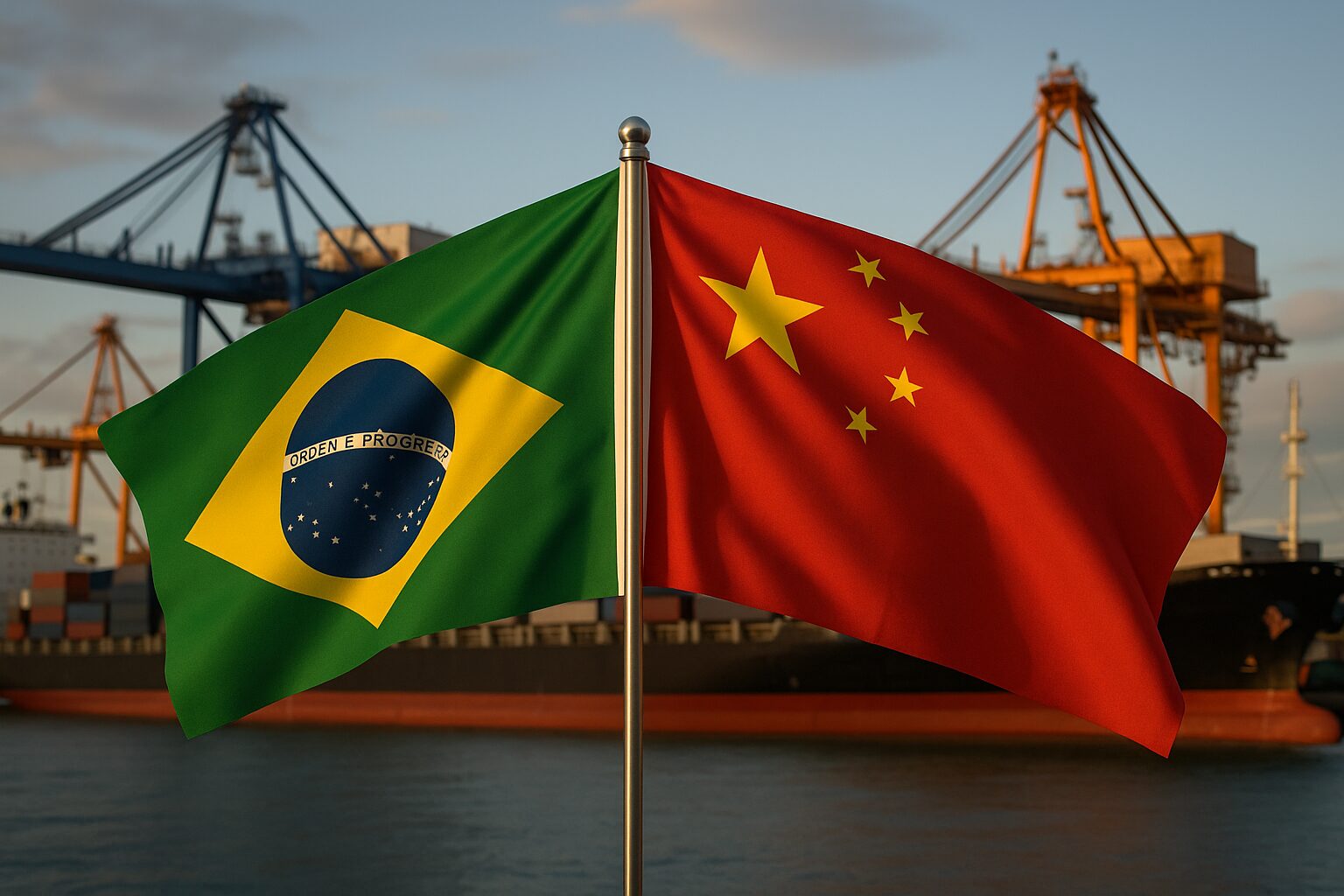
New Maritime Route Between Brazil and China, Dredging for Larger Ships and Port Expansion Mark New Phase of Naval Industry Focused on Agricultural Exports
A new phase of agricultural logistics in Brazil is starting to take shape with concrete actions to facilitate the transport of goods to China. The topic was discussed in the panel “The Role of China in the Growth of the Brazilian Agribusiness“, moderated by Maria Fernanda Delmas, editor-in-chief of Valor.
The experts gathered at the event highlighted significant advances in logistical infrastructure between the two countries.
New Maritime Link Reduces Time and Cost
One of the recent highlights is the opening of a new maritime route between Brazil and China. The link connects the Brazilian ports of Santana, in Amapá, and Salvador, in Bahia, with the Port of Gaolan, located in the Chinese city of Zhuhai.
-
Neither the USA nor China: a small European nation has become one of the largest maritime powers on the planet, controlling one of the largest merchant fleets in the world with thousands of ships and dominating the global transportation of oil and strategic cargo.
-
Scotland and the United Kingdom have created a new anchoring system that floats in the water without touching the seabed, after discovering that the current from a conventional anchor destroys up to 50 m² of seagrass meadow per event and that ship-damaged reefs showed no signs of recovery even ten years later.

-
Weighing 175,500 Tons, Measuring 345 Meters Long, and With Capacity for Over 4,300 Passengers, the Sun Princess Becomes the Largest Ship Ever Built by Princess Cruises and Attracts Global Attention for Its Huge Glass Dome Inspired by Santorini’s Architecture Installed on Top of the Vessel

-
TX-10, The Colossus of The Sea: Largest Lifter Ship in The U.S., With Two Giant Barges, 73-Meter Tall Structure, and Strength to Raise 7,500 Tons of Sunken Oil Rigs

According to Fernanda Maciel, deputy director of institutional relations at CNA/Senar, the new logistics corridor will reduce transportation time by 30 days and logistics costs by 30%.
This corridor serves strategic areas of agricultural and mineral production, enhancing the efficiency and competitiveness of Brazilian products in the Asian market. The expectation is that the new route will further strengthen the partnership between Brazil and China.
Expansion of Ports and Internal Corridors
Another point discussed in the panel was the expansion of logistical corridors in Brazil. Portos do Paraná, which manages the ports of Paranaguá and Antonina, is investing in the expansion of access routes to optimize the flow of grains.
In the road sector, the concession of 3.3 kilometers of new roads to the private sector is planned. The aim is to facilitate truck traffic and expedite cargo movement.
In the rail sector, the plans are even more ambitious. An ongoing project envisions the construction of a new railway structure in the eastern region of the Port of Paranaguá.
The area hosts 11 exporters of bulk agricultural products. The so-called Nova Ferroeste will add 1,567 kilometers to the railway network of Paraná, connecting Maracaju, in Mato Grosso do Sul, to the Paraná port. In Cascavel, Paraná, there will be branches with spurs to Chapecó and Foz do Iguaçu.
Dredging for Large Vessels
Victor Kengo, director of engineering and maintenance at Portos do Paraná, confirmed that there are plans to also expand the Waterway Access Channel.
The concession to the private sector is underway. The planned investment exceeds R$ 1 billion and includes dredging works to deepen the channel from 13 to 15.5 meters. This will allow for the entry of larger ships.
In the business area, the Chinese presence in Brazil continues to grow. The food giant Cofco, with a global revenue of US$ 50.1 billion in 2024, announced plans to expand its operations. Guo Junping, the company’s director, stated that the goal is to cover more producers and cooperatives in the country.
Another group present at the event was Citic Agriculture. Since 2017, the company has operated in Paracatu, Minas Gerais, with 1,600 employees and an investment of R$ 400 million.
The chairman, Liu Zhiyong, stated that the company and its research arm, Longping Hightech, will continue to invest in agricultural research and production in Brazil.
Warning About External Risks
Despite the positive scenario, a concern was highlighted. Larissa Wachholz, coordinator of the China Program at Cebri, warned about the possible effects of U.S. trade policy.
According to her, the protectionism of the Donald Trump administration may pose future risks for Brazil in global trade relations.
With information from O Globo.









Seja o primeiro a reagir!