





 Portuguese
  English
  Spanish
  3 min of reading
  6 comments


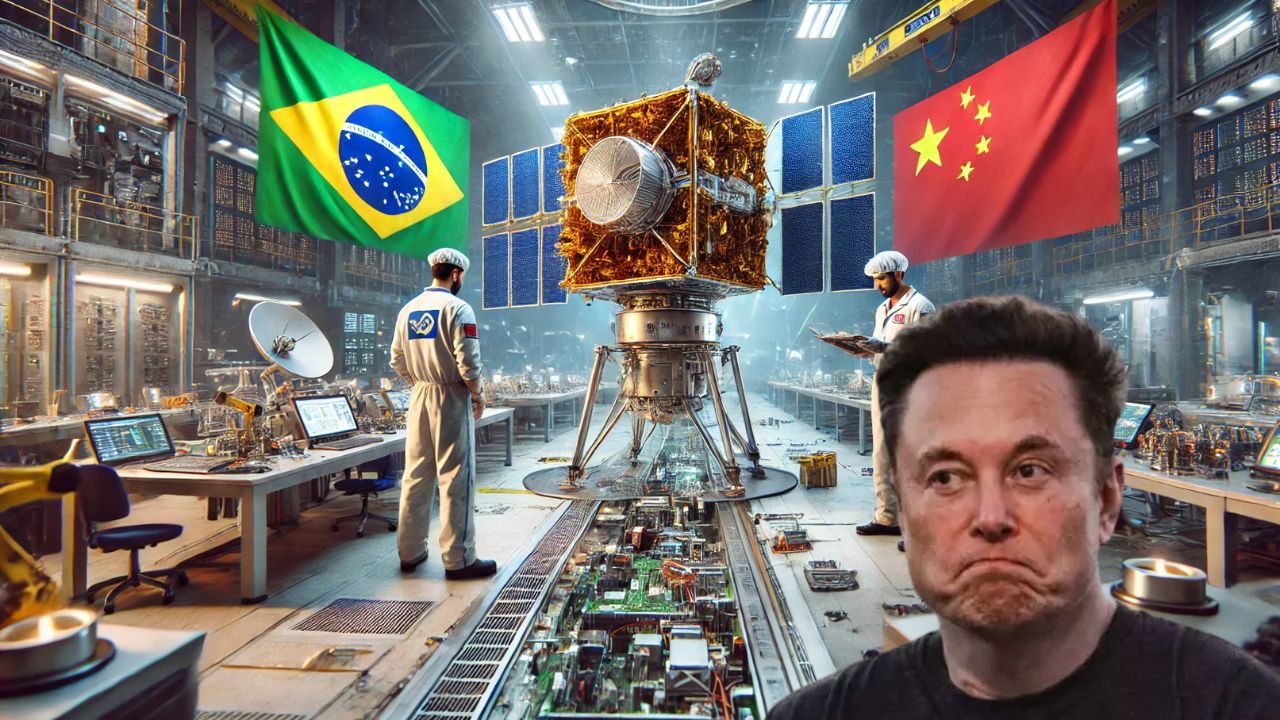

The Plan of Brazil and China to Challenge Elon Musk’s Starlink Dominance Seems Straight Out of a Sci-Fi Movie Script. After a Series of Tensions and Political Turmoils, the Two International Giants Begin to Stitch Together an Agreement That Promises to Shake Up the Satellite Internet Market. Looking for Alternatives, Brazilian Authorities See in the Chinese Company SpaceSail the Possibility of Breaking Elon Musk’s Starlink Dominance in the Country.
The Governments of Brazil and China are Negotiating a Memorandum of Understanding, Seeking to Reduce Brazil’s Dependence on Elon Musk’s Starlink, a Company That Currently Leads the Satellite Internet Market in the Country with a 45.9% Share. According to Hermano Barros Tercius, Secretary of Telecommunications at the Ministry of Communications, Talks Are Progressing Between Authorities and Representatives of SpaceSail, a Chinese Private Satellite Company.
The Idea is to Officialize the First Steps of This Partnership During the Visit of Chinese President Xi Jinping to Brazil, Scheduled for November 20. If the Memorandum is Signed, It Will Mark the Beginning of a Technical Collaboration Between the Two Countries to Establish SpaceSail in the Brazilian Market, Where Elon Musk’s Starlink Has Consolidated Rapidly.
Market Space for Brazil and China
Starlink, Which Accounts for Nearly Half of the Satellite Internet Market, Has Become a Crucial Option for Communities in Remote Areas, Such as the Amazon, and for Strategic Sectors, Including the Navy and Petrobras Platforms.
-
China has launched the world’s first floating artificial island, a scientific structure designed to face open seas, test equipment weighing hundreds of tons, and reach depths of 10,000 meters.

-
China accelerates global science and may surpass the United States in 2 years with increased public investment, continuous growth, and direct impact on the global technological competition.

-
Scientific studies indicate that drought may be strengthening a much greater silent threat: more resistant superbugs.

-
Man builds functional 5-meter submarine in his garage using gas cylinders, PVC pipes, and a refrigerator motor, and navigates with the vessel on a lake in Colombia.


However, Following Tensions Between Musk and the Supreme Federal Court (STF) in August of This Year, Questions Arose About Brazil’s Dependence on Elon Musk’s Starlink Infrastructure. In Response, Brazil Initiated Negotiations with New Suppliers, Highlighting SpaceSail, Which Operates with Low Earth Orbit (LEO) Satellites, Similar to Starlink’s.
The Crisis with Musk, Which Was Intensified by the Temporary Suspension of the X Platform (Formerly Twitter) in Brazil, Seems to Have Paved the Way for the Plan of Brazil and China to Strengthen the Presence of New Competitors in the Satellite Internet Sector.
During the Conflicts, Starlink Even Had Its Accounts Blocked by Order of the STF Due to Non-Payment of Fines. Although the Service Has Been Restored, the Episode Revealed Brazil’s Vulnerability Against Elon Musk’s Starlink.
Support from Telebras and Strategic Alternatives
One Possibility Discussed Between the Two Countries Involves the Use of Brazilian Infrastructure at the Alcântara Launch Center in Maranhão. According to Tercius, the Proposal Made to SpaceSail Would Allow the Chinese Company to Use the Base to Launch Part of Its Satellites, Which Would Speed Up the Company’s Satellite Constellation Schedule.
Furthermore, the Brazilian Government Sees Telebras as a Potential Partner to Distribute SpaceSail’s Signal, Serving Schools and Government Facilities in Hard-to-Reach Areas.
SpaceSail Plans to Expand Its Fleet of Satellites from 18 to 15,000 by 2030, Aiming to Compete Directly with Starlink’s Constellation of Approximately 6,000 Satellites. This Expansion, According to Experts, Would Benefit Both the Private and Public Sectors, Providing an Alternative to Elon Musk’s Starlink.
Importance of Competition and Future Actions
According to Thiago Ayub, Technology Director of Sage Networks, the Entry of New Players Like SpaceSail is Essential for the Health of the Brazilian Market. “With a Vital Service Like Satellite Internet, It is Crucial to Avoid Monopolies and Promote Competition That Results in Better Prices and Greater Accessibility,” Ayub Stated.
The Chinese Government, in Turn, Views the Expansion of Satellite Internet Infrastructure as a Strategic Priority, Supported by the National Development and Reform Commission. Thus, the Plan of Brazil and China is Shaping Up as a Strategic Move That Could, If Consolidated, Change the Landscape of Satellite Internet in Brazil, Opening Space for Other Competitors to Break Elon Musk’s Starlink Dominance.








Estão se **** de medo do Musk jogar **** no ventilador ! 😂😂😂
Bolso **** enlouquece kkkkk
O besteira, quem as autoridades brasileiras em frente a ELON MUSK kkkkkk parece até palhaçada