





 Português
  Inglês
  Espanhol
  3 min de leitura
  0 comentários


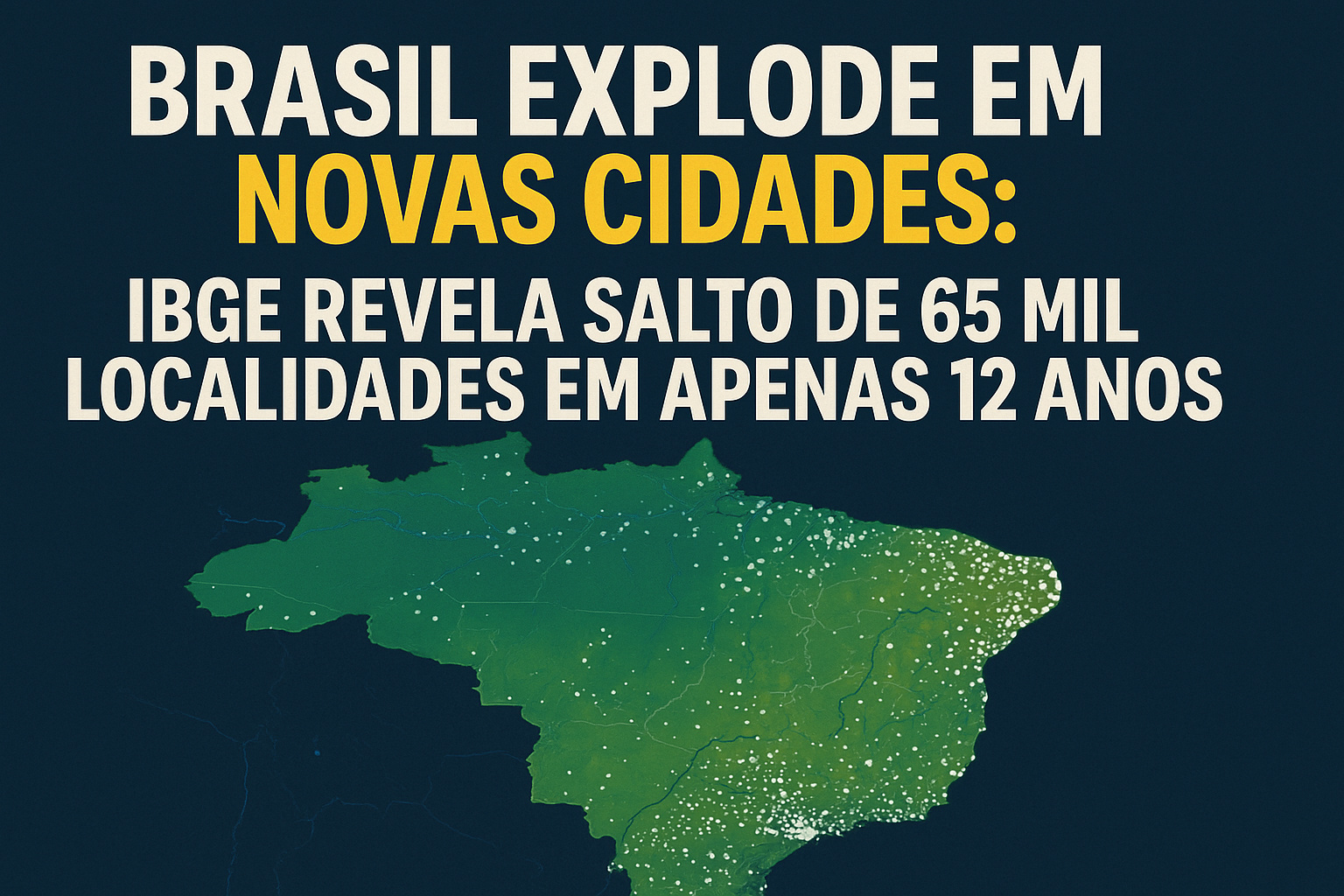
Brazil Gained 65 Thousand New Locations in 12 Years, According to IBGE. Understand How the 2022 Census Redesigned the Urban Map.
Brazil Gains 65 Thousand New Locations: What Changed in the Country’s Urban Map
Brazil underwent an impressive transformation in its urban territory over the past 12 years. The IBGE revealed that the country gained 65 thousand new locations, including cities, towns, villages, and urban centers, according to the 2022 Census data disclosed last Monday (24).
The expansion occurred throughout the national territory, showing what changed in the spatial organization of the country, who conducted the survey, when and where the changes occurred, how technological advancement contributed to this leap, and why urban growth became so significant.
The survey highlights not only the population and territorial increase but also reveals curiosities about how new cities are registered and how the mapping process has matured over time.
-
Drought may be creating stronger superbugs in the soil and helping antibiotic resistance reach hospitals, warns a study highlighting a problem that could grow alongside extreme weather.

-
The biggest scam in history: Napoleon’s France deceived the United States by selling them a territory that was Spanish.

-
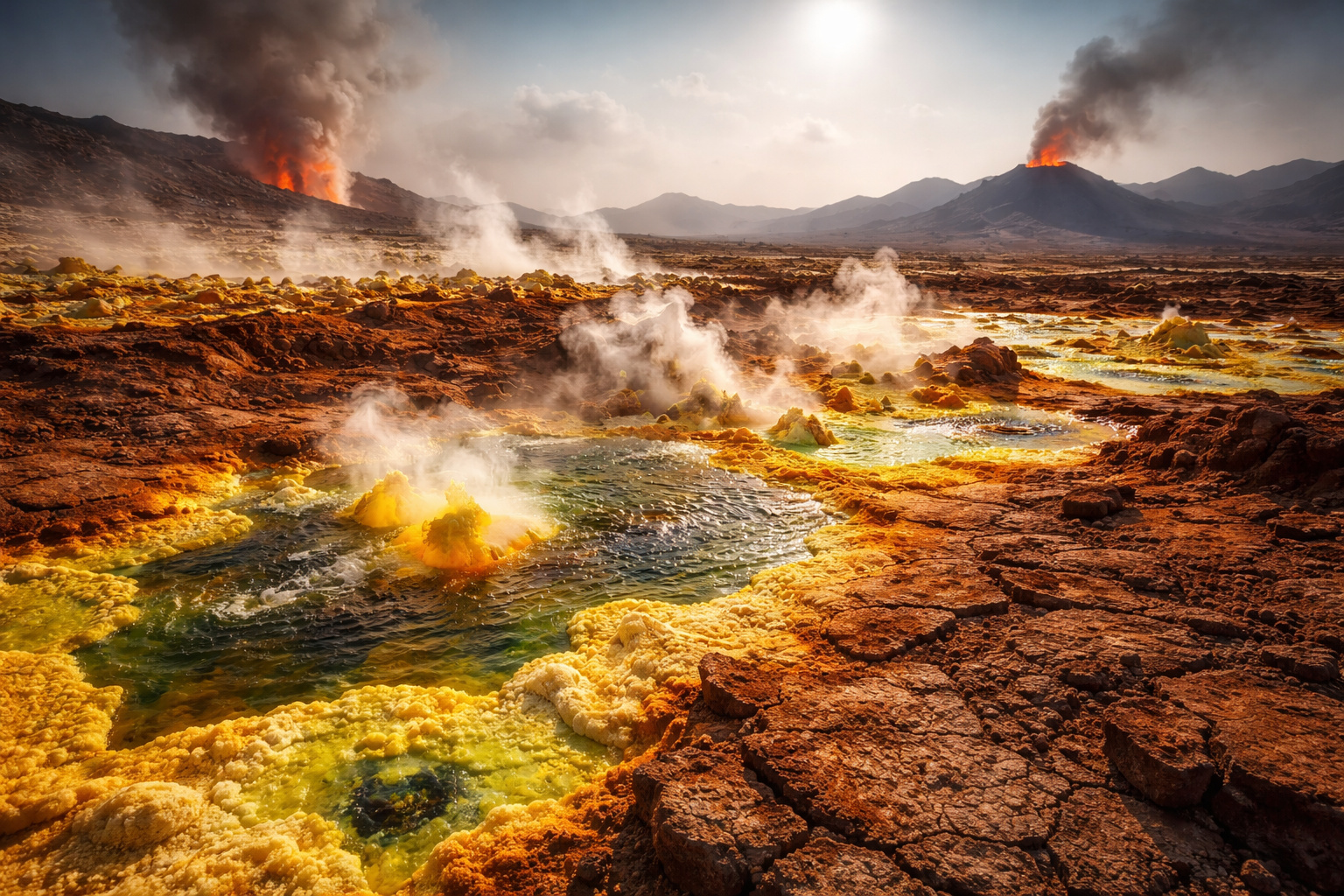
Why is the Danakil Desert so dangerous? It has unstable terrain and how extreme temperatures and toxic gases turn the region into one of the most hostile environments on Earth.
-
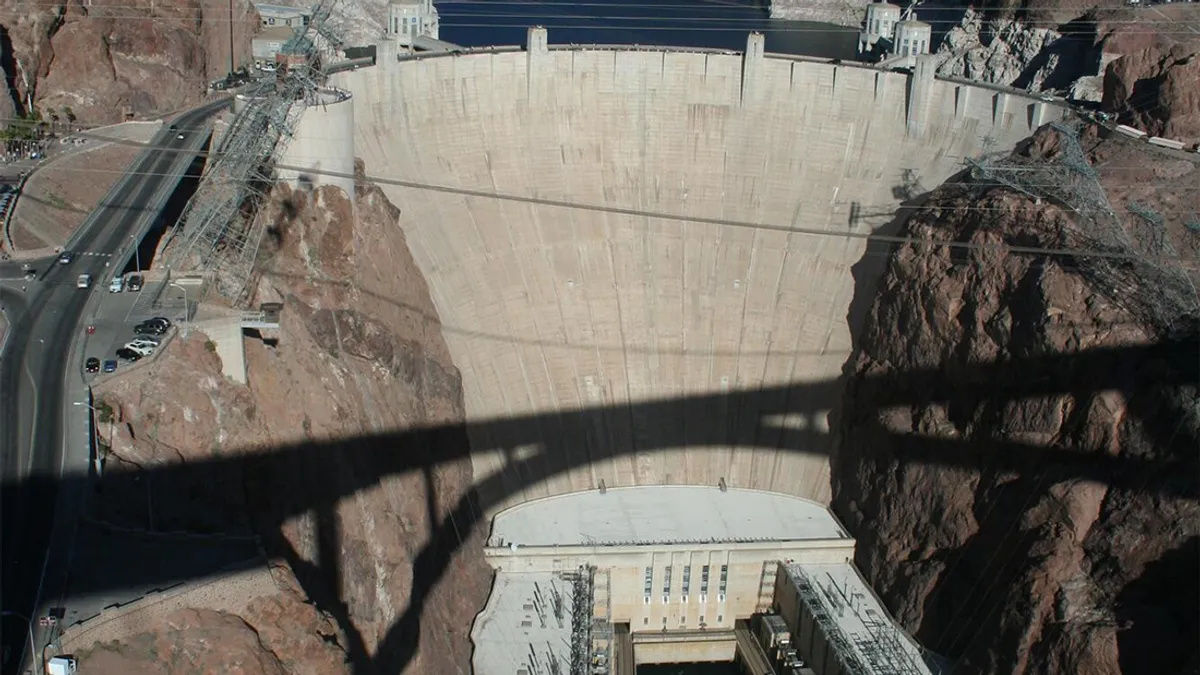
With a height of 221 meters and a capacity for trillions of liters, Hoover Dam still holds a trick that makes water defy logic.
Census Reveals 299% Jump in the Number of Locations
The data from the 2022 Census shows that Brazil reached 87,362 locations, a 299% increase compared to the 21,886 recorded in 2010. This urban growth surprises with its accelerated pace and simultaneously raises debates about the interiorization of development, the creation of new urban centers, and the impact of technology applied to geography.
Furthermore, the advancement appears in all analyzed categories, reinforcing the diversity of the Brazilian territory and its constant capacity for reconfiguration.
Technology Drives the Discovery of New Cities
The IBGE states that the expansion is not solely the result of the actual emergence of new villages or hamlets but also significant improvements in the mapping process. Thus, new tools and more robust systems allowed previously under-documented regions to be identified accurately.
According to the institute, one of the factors that most influenced this leap was the use of high-resolution satellite imagery. Therefore, areas that were previously poorly visible or misclassified have begun to be recognized as formal locations.
In a statement, the coordinator of Territorial Structures of the Geosciences Directorate, Roberto Tavares, explained:
“This is associated with the enhancement of our mapping capacity, utilizing better inputs, such as high-resolution satellite images. We have also advanced in information technologies with the structuring of geospatial databases and the use of open-source software, in addition to implementing the continuous update process of the Territorial Base during the intercensal period.”
New Methodologies Enhance Territorial Recognition
The 2022 Census also adopted improved methodologies to classify and review locations. In this way, the IBGE was able to identify complex urban structures and small population clusters that were not captured in the previous edition of the survey.
Additionally, the process of continuous update of the Territorial Base — carried out throughout the years between one census and another — ensured a more realistic and dynamic view of the country. This movement demonstrates how the combination of technology, geospatial data, and technical review has driven the registered growth.
Curiosities About Urban Growth in Brazil
Among the aspects that stand out in the survey are:
- New cities and towns have emerged more intensely in regions of agricultural expansion.
- Remote villages in the Amazon now officially appear on the map.
- The increase in locations does not necessarily mean the creation of new municipalities, but rather the identification of new population clusters.
- Part of the urban growth is associated with advancements in infrastructure and internal migration.
These curiosities reveal that Brazil is more diverse and complex than previous maps indicated, reinforcing the importance of the Census for public policies.
Urban Growth Continues to Accelerate and Challenges Public Managers
Although the number of locations has increased drastically, the challenge now lies in how to provide infrastructure, transportation, health, and education for increasingly dispersed urban structures. Thus, the IBGE data reinforces the need for more modern and integrated territorial planning policies.
The study also shows that the country continues to undergo constant transformation and that updated mapping is essential to guide investments and regional development.








Seja o primeiro a reagir!