





 Portuguese
  English
  Spanish
  5 min of reading
  1 comment


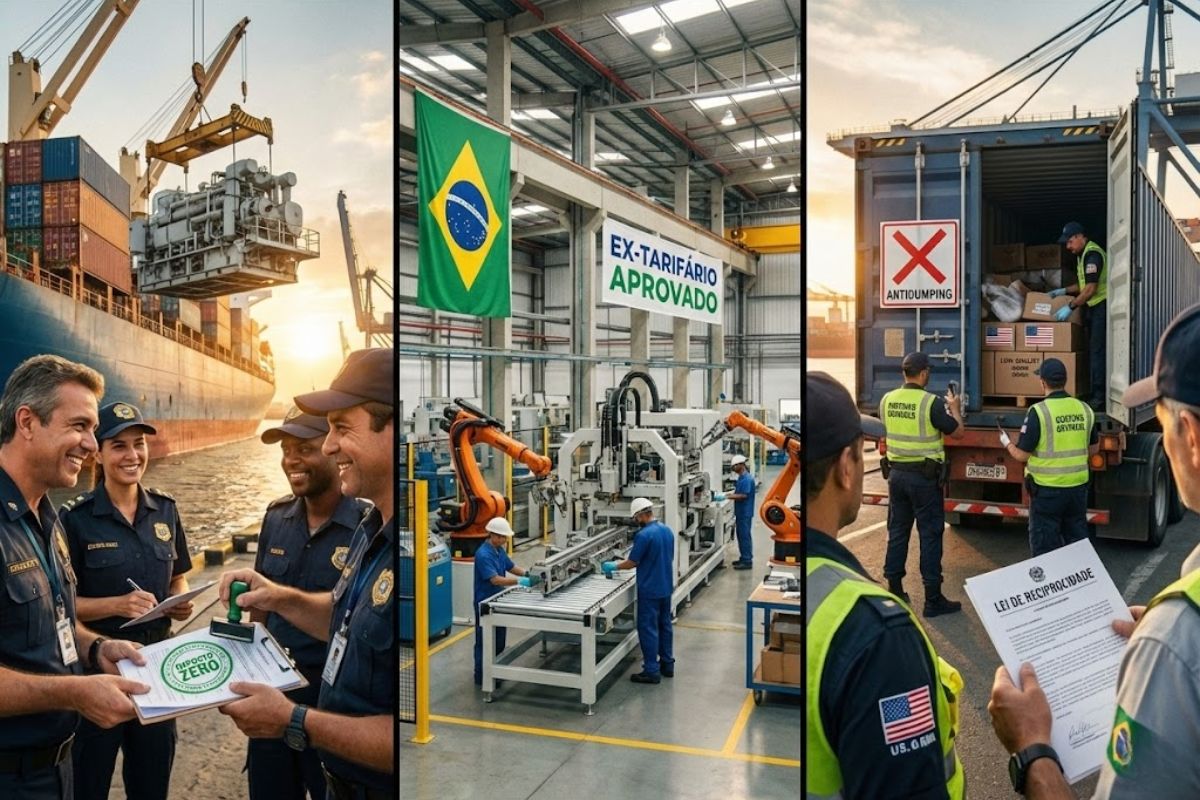


Led By Gecex, Government Closes Last Meeting Of The Year Cutting Import Taxes On Inputs, Releasing More Than A Thousand Ex-Tariffs, Increasing Tariffs Against Imbalances And Strengthening Antidumping Measures, While Activating The Law Of Economic Reciprocity With The United States To Protect Brazilian Industry In Global Foreign Trade.
On Thursday, December 18, the Executive Management Committee of the Chamber of Foreign Trade, Gecex, held its 232nd ordinary meeting, the last of the year. In the meeting, import tax cuts, temporary tariff increases, and a commercial defense package were defined to protect the Brazilian industry against the rise of imports and practices considered unfair in foreign trade.
The decisions also advance the application of the Law of Economic Reciprocity, Law No. 15,122, of April 11, 2025, regarding the United States, meeting legal deadlines and preparing for the eventual creation of a working group provided for in Decree No. 12,551, of 2025. The aim is to align trade policy with the defense of the Brazilian industry and the pursuit of more balanced competition conditions.
Import Tax Cuts Secure Strategic Inputs
One of the fronts approved by Gecex was the temporary reduction of the Import Tax for essential inputs, within the List of Exceptions to the Common External Tariff, the Letec, and the mechanism for supply shortages.
-
Elderly individuals aged 65 or older who have never contributed to the INSS can receive R$ 1,621 per month in 2026 without having paid any contributions in their lifetime: learn how the benefit works that already supports nearly 7 million Brazilians.

-
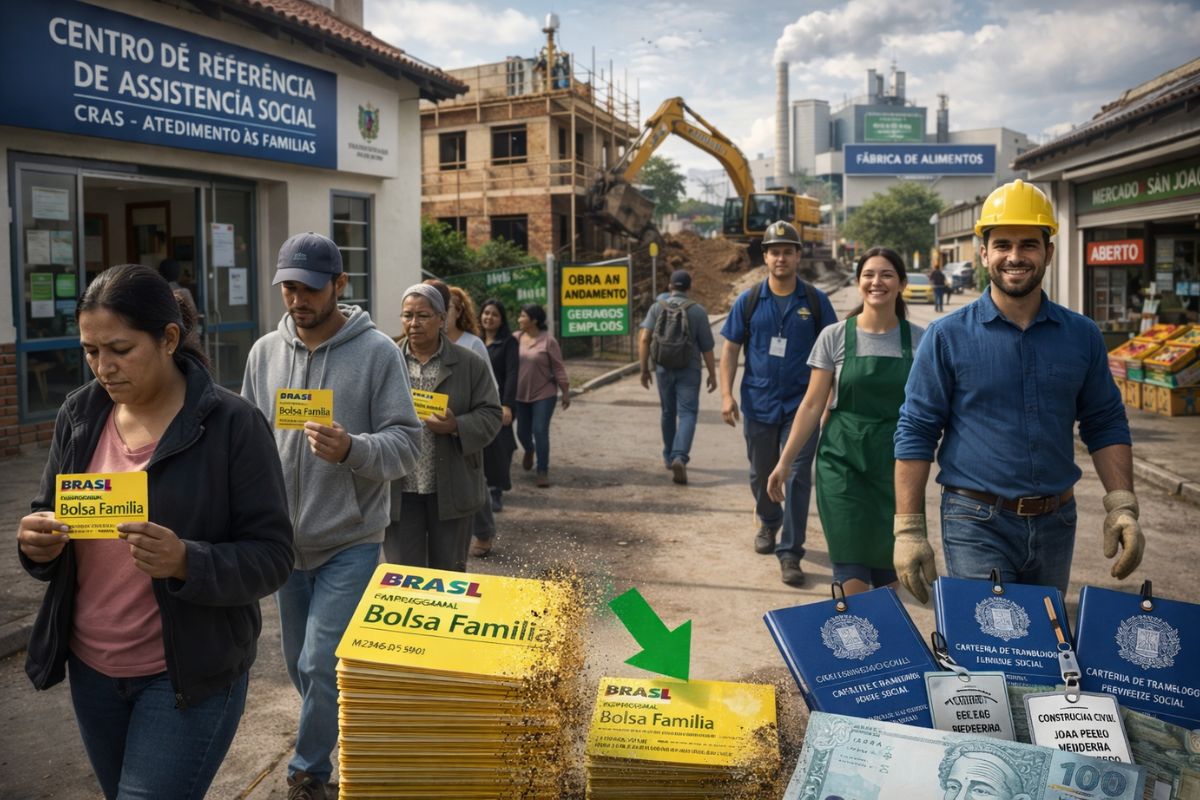
The gaucho city reduced the number of Bolsa Família beneficiaries by almost 40% in just a year and a half with active outreach that connects each registered person directly to job vacancies in Bento Gonçalves in Rio Grande do Sul.
-
The bluest city in Brazil has just gained a new floating bridge for the free crossing between the island and the mainland, connecting residents and visitors to the historic center of São Francisco do Sul every day of the week.

-
In a silent race, Shopee signs a mega contract in Guarulhos and accelerates the e-commerce war with faster deliveries, pressured shipping, and a new threat to rivals in Brazil.


The decision seeks to provide greater predictability to strategic sectors that depend on imported raw materials to maintain production.
By alleviating the cost of lacking or limited supply inputs, the government aims to prevent production bottlenecks, preserve jobs, and stop international price shocks from translating into loss of competitiveness.
According to the committee, the measure is designed to ensure supply while reducing negative impacts on the Brazilian industry and on the economy as a whole.
More Than A Thousand Ex-Tariffs To Unlock Investment And Innovation
Another relevant focus was the granting of Ex-tariffs for capital goods and technology, a mechanism that reduces the Import Tax when there is no equivalent production in the country.
Gecex approved 1,206 Ex-tariffs for capital goods, 119 for information technology and telecommunications goods, and three for self-propelled capital goods.
These concessions, which include extensions, renewals, and new requests, will be valid for up to two years. The intention is to stimulate investments in machinery, equipment, and technology that increase productivity, automation, and innovation capacity in the Brazilian industrial complex.
By facilitating access to these goods, the government hopes to strengthen the Brazilian industry in segments where modernization depends on specific imports.
Antidumping Strengthened Against Cables, Nylon, Ceramics, And Tires
To tackle unfair trade practices, Gecex approved definitive antidumping measures based on technical analyses from the Department of Commercial Defense, Decom, of the Secretariat of Foreign Trade, Secex, of the Ministry of Development, Industry, and Trade.
The focus is to protect sensitive sectors where imports at prices considered lower than fair value threaten local producers.
Among the decisions, the application of antidumping duties on imports of optical fiber cables stands out, followed by the modulation of this duty for public interest reasons.
The application of antidumping duties on imports of optical fibers was also approved, as well as the extension of measures against nylon wires, tableware, and automotive tires.
Conversely, antidumping duties on non-surgical procedure gloves were suspended, also for public interest, indicating that the calibration of tariffs takes into account not only the protection of the Brazilian industry but also the impact on consumers and essential services.
Higher Tariffs For Screws And Chemicals Amid Imbalances
The package also includes temporary increases in the Import Tax for screws and chemical products, within the List of Tariff Increases Due to Conjunctural Trade Imbalances, the so-called DCC List.
The justification is to respond to abnormal trade movements, marked by a significant increase in imports that pressure domestic production.
By raising the tariff on these items, Gecex seeks to curb surges of imports deemed imbalanced, provide relief to the Brazilian industry affected, and preserve fair competition conditions.
The measure is part of a set of commercial defense actions that try to balance economic openness with protection for sectors exposed to competition deemed predatory or artificially cheap.
Economic Reciprocity Law With The US Advances Phase
On the diplomatic and regulatory front, Gecex decided to approve the framework of a request related to the applicability of the Economic Reciprocity Law regarding the United States of America.
The law, No. 15,122, of April 11, 2025, allows Brazil to respond to restrictions imposed by other countries, seeking equivalent treatment for Brazilian companies and products.
Meeting legal deadlines, the committee opted to await the evolution of diplomatic consultations before deliberating on the creation of the working group provided for in Article 12 of Decree No. 12,551, of 2025.
The eventual application of this law may open space for symmetrical measures concerning barriers faced by the Brazilian industry on American soil, reinforcing the strategic nature of trade policy.
Package Combines Commercial Defense, Supply Security, And Diplomacy
Overall, the decisions from the 232nd Gecex meeting aim to ensure more equitable competition conditions, combat unfair trade practices, and preserve the supply of strategic inputs without halting investments.
The mix of tax reductions for inputs, expansion of Ex-tariffs, strengthening of antidumping measures, and use of the Economic Reciprocity Law demonstrates an attempt to calibrate openness and protection.
By closing the year with this package, the government signals that the Brazilian industry remains at the center of the foreign trade agenda, both in the technical realm, through tariff and commercial defense decisions, and in the diplomatic sphere, by putting reciprocity with the United States on the table.
Do you think this set of measures really protects the Brazilian industry or is it still lacking in the face of pressure from imports?










Se é importação é o outro país que taxa o produto, o Brasil pose aumentar taxa de exportação e não importação.