





 Portuguese
  English
  Spanish
  9 min of reading
  3 comments





Brazil Accelerates R$ 400 Billion in Infrastructure and Promises to Complete by 2026 Historic Works Such as Rodoanel North, Transnordestina, and Duplication of BR-381.
There are projects in Brazil that have become urban legends, not because they have been completed, but because they never end. The Rodoanel North of São Paulo, for example, had its construction started in 2013 and was halted in 2018. For 6 years, concrete beams hung in the air, unfinished tunnels became symbols of unfulfilled promises, and drivers continued to face the daily hell of Marginal Tietê. The Transnordestina began to be planned in the 1980s, over 40 years ago. Entire generations of engineers retired without seeing a single train pass over the tracks. BR-381, which connects Minas Gerais to São Paulo and Espírito Santo, earned a sinister nickname: “Highway of Death”. Hundreds of people have died in accidents over the decades while the promised duplication never left the paper.
But 2026 is turning out differently. For the first time in decades, Brazil is really finishing its mega infrastructure projects. And not just one or two, we are talking about a package of R$ 400 billion that marks the largest cycle of infrastructure investments in the country’s recent history. This is the year when old promises finally become reality.
The Largest Cycle of Works in History: R$ 400 Billion by 2026
The numbers are impressive:
-
The government requests the Federal Revenue Service for a new system to automate the income tax declaration, reducing errors, time, and bureaucracy for millions of Brazilians.

-
Pix in installments, international Pix, and contactless payment without internet: the Central Bank revealed the new features coming to the tool that is already used by almost every adult in Brazil.

-
Mercado Livre has just started selling medications with delivery in up to three hours to your door, and this move could completely change the way Brazilians buy medicines on a daily basis.

-
In Dubai, rising tensions from the war in the Middle East are causing super-rich individuals to leave the Gulf and direct their fortunes to a new financial refuge in Asia.


- Total Investment: R$ 400 billion by 2026
- Concession Auctions: 22 held in 3 years (the previous government did only 6 in 4 years)
- New Contracts: R$ 240 billion attracted from the private sector
- Goal by the end of 2026: 40 total concessions
- Investment in Railways (PAC): R$ 94.2 billion
- Workers: Over 15,000 people just in the FICO and Transnordestina railways
According to Minister of Transport Renan Filho, this is “the largest cycle of investments in our infrastructure” that the country has ever seen.
And he is right. To put it into perspective:
- The previous government invested about R$ 6 billion per year in highways
- The current government is investing R$ 15 billion per year — 2.5 times more
The result? Projects that have remained on paper for decades are finally coming to fruition.
Rodoanel North (SP): 13 Years Later, São Paulo Completes Its Ring Road
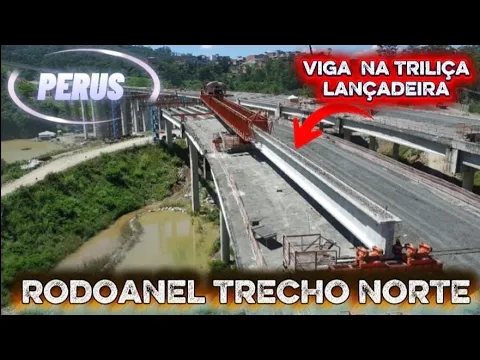

- Status: Section 1 inaugurated in December 2025 | Section 2 completion September 2026
- Length: 44 km (complete Rodoanel: 176 km)
- Investment: R$ 3.4 billion
- Impact: 10,000 trucks/day leave Marginal Tietê
The Most Anticipated Project in São Paulo
The Rodoanel is a ring road that surrounds Greater São Paulo, connecting all 10 highways that cross the metropolitan area. The idea? Allow trucks coming from the interior heading to the Port of Santos to avoid crossing the city.
The project started in the 1990s. The West (32 km), South (61 km), and East (43 km) sections were completed over two decades.
But the North Section, the last piece that would close the loop, became a saga of delays:
- 2013: Construction begins
- 2018: Construction stops due to environmental, legal, and contractual issues
- 2020: The Technological Research Institute (IPT) finds 1,300 flaws in the project, with 59 considered major construction flaws
- 2023: Concession is finally awarded to Grupo Via Appia
- April 2024: Construction is resumed — 6 years later
- December 2025: Section 1 (24 km) is inaugurated
- September 2026: Section 2 (20 km) will be completed
The Impact on Real Life
When fully completed in September 2026, Rodoanel North will:
- Remove 40,000 vehicles per day from São Paulo’s urban roads, including 10,000 trucks
- Relieve Marginal Tietê and improve mobility in the Metropolitan Area
- Connect Port of Santos to Fernão Dias Highway (which links SP to Minas Gerais and Northeast)
- Reduce accidents, as the current alternative route (Edgar Máximo Zambotto highway) has winding and dangerous stretches
- Generate 10,000 direct and indirect jobs
The project includes 7 dual tunnels, 44 bridges, 63 viaducts, and a 3.6 km branch for direct access to Guarulhos Airport. After 13 years of waiting, São Paulo will finally have its complete ring road.
Transnordestina: The Railway That Waited 40 Years
- Status: Construction at an accelerated pace, completion expected for 2026-2027
- Length: 1,757 km
- Investment: Over R$ 7 billion already spent, R$ 8 billion estimated for completion
- Impact: Connects Piauí to the ports of Pecém (CE) and Suape (PE)
- Workers: 15,000 people (together with FICO)
The Railway That Crossed Generations

The story of Transnordestina is almost comical in its tragedy. The idea came up in the 1980s, over 40 years ago. The proposal was to create a railway that would connect the interior of Piauí to the major ports of the Northeast, enabling efficient transportation of agricultural production from the region.
What happened since then?
- Decades of studies
- Plans redesigned countless times
- Construction started, halted, and restarted
- Changes in government
- Setbacks in the Court of Accounts
- Corruption scandals
Professionals who began their careers working on the project retired without ever seeing a train in operation.
The Resumption in 2019
After years of total paralysis, construction resumed in 2019. And this time, the pace is different. Currently:
- 15,000 workers are working on the project (combined with FICO 1)
- R$ 175 million of investment just in 2023
- Sections advanced are being completed
- Expected completion: 2026-2027
When completed, Transnordestina will:
- 1,757 km in length
- Link Eliseu Martins (PI) to the ports of Pecém (CE) and Suape (PE)
- Have the capacity to transport millions of tons of grains and products from the northeastern interior
- Transformative economic impact for Piauí, Ceará, and Pernambuco
After 40 years of waiting, the Northeast will finally have its railway.
BR-381: From “Highway of Death” to “Highway of Life”
- Status: Concession signed in January 2026
- Length: Important logistical corridor MG-SP-ES
- Investment: R$ 20 billion in direct investments + R$ 10 billion in maintenance (30 years)
- Impact: Connects the Steel Valley (MG) to São Paulo and Espírito Santo
The Macabre Nickname No One Wanted
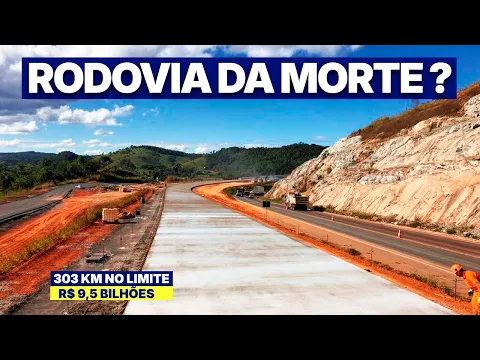
For decades, BR-381 was known by a sinister name: “Highway of Death”. And the nickname was deserved.
The highway crosses the Steel Valley, in the interior of Minas Gerais, and connects the state to São Paulo and Espírito Santo. It is one of the main routes for transporting industrial products in the country.
The problem? Sections of single lane, dangerous curves, lack of signage, absence of shoulders, and heavy truck traffic mixed with light vehicles.
Result: Hundreds of deaths over the years. Families destroyed. Workers who never returned home. The highway’s duplication was promised for decades — literally — but never materialized.
The Rebirth in 2026
In January 2026, the concession contract for BR-381 was finally signed. Minister Renan Filho called the moment a “rebaptism”: the highway will go from being the “highway of death” to becoming the “highway of life, development, and citizenship”.
What’s in store:
- R$ 20 billion in direct investment
- R$ 10 billion in maintenance and operation over 30 years
- Duplication of critical sections
- Modern signage
- Improvements in safety
- Shoulders
- Lighting
Official launch of the works: February 6, 2026, marking the entry of the concessionaire and the start of recovery works. In addition to BR-381, Minas Gerais is gaining other important concessions:
- BR-040 (Juiz de Fora-BH and Cristalina-BH)
- BR-262 (Triangle Mineiro to Betim)
Total investment in MG: over R$ 30 billion.
Bridge Over the São Francisco River: Largest Railway Bridge in Latin America
Status: Advanced work, part of FIOL 2
Length of FIOL 2: 485 km
Investment: R$ 2.1 billion
Completion: 2027 (but milestone will be reached in 2026)
The Engineering Project That Impresses
The West-East Integration Railway (FIOL 2) connects the interior of Bahia to the coast, allowing for the transport of grains and minerals. But the absolute highlight of the project is the bridge over the São Francisco River. Once completed, it will be the largest railway bridge in Latin America.
Features:
- Specifically built for heavy freight trains
- Crosses the “Velho Chico”, one of Brazil’s most important rivers
- Complex engineering due to the riverbed and water volume
- A milestone in national engineering
The bridge is already in an advanced stage of construction, and its imposing structure will become one of the symbols of Brazil’s new railways.
When FIOL 2 is completed in 2027, it will connect:
- Barreiras (BA) to Ilhéus (BA)
- Agricultural interior to the future Port Sul in Ilhéus
- 383 km of tracks (FIOL 2)
- Integration with FIOL 1 and FIOL 3 (future lines)
FICO 1: The Private Railway Coming to Life in 2026
Status: Construction underway, completion in 2026
Length: Connection from Água Boa (MT) to Mara Rosa (GO)
Investment: R$ 2.73 billion — 100% financed by Vale S.A.
Impact: Transport of grains from the Midwest
The Model That Could Change Everything
The Midwest Integration Railway (FICO 1) is a rare example in Brazil: a railway entirely financed by the private sector. Vale S.A. is covering the R$ 2.73 billion cost alone, through a model called “Cross Investment”.
Why would Vale do this? Because FICO 1 will connect the agricultural heart of the Midwest — Água Boa (MT) — to the Northern-Southern Railway in Mara Rosa (GO).
This means:
- Efficient transport of millions of tons of grains (soy, corn, cotton)
- Reduction of logistical costs for producers
- Less truck traffic on the highways
- Competitiveness for export
Currently, 15,000 workers are working on the FICO 1 and Transnordestina projects simultaneously. The expectation is that FICO 1 will be operational in 2026, marking the first major private railway completed in Brazil’s new railway cycle.
Other Important Works to be Completed in 2026
International Bridge Brazil-Bolivia (Rondônia)
- Over the Mamoré River
- Investment: R$ 421 million
- Timeline: 3 years (2026-2029)
- Links Brazil to Bolivia, opening up a South American integration corridor
Duplication BR-153 (Tocantins)
- 19 km in the Talismã section
- Completion: early 2026
- Improves fluidity for loads from the Northern-Southern Railway
Penedo-Neópolis Bridge (AL-SE)
- Links Alagoas to Sergipe
- Improves regional integration in the Northeast
Metropolitan Arc of Recife and Maceió
- Diverts heavy traffic from the capitals
- Improves urban mobility
BR-101 in Alagoas
- Duplication of strategic sections
- Facilitates access to the northeastern coast
Why This Cycle is Different?
Real Public-Private Partnership
Unlike previous cycles, where the government tried to do everything on its own, the current model combines:
- Increased public investment (from R$ 6 billion to R$ 15 billion/year in highways)
- Attraction of private capital through well-structured concessions (R$ 240 billion in contracts)
- Accelerated concessions: 22 auctions in 3 years vs 6 in 4 years under the previous government
Focus on Completion, Not on Start
Many governments love to inaugurate projects. This government is focused on finishing what has been left behind. Examples:
- Rodoanel North: halted for 6 years, resumed and completed
- Transnordestina: stalled for decades, finally progressing
- FIOL: announced 20 years ago, finally being built
Creation of Institutional Structure
- National Railway Transport Secretariat established to attract investments
- Contract Optimization Program to correct problematic old concessions
- New PAC with R$ 94.2 billion just for railways
Unprecedented Scale
Comparison with other countries:
- USA: 250,000 km of railways
- Brazil: only 12,000 km operational (out of 30,000 on paper)
Goal of the National Railway Plan:
- Nearly 5,000 km of new railways
- R$ 100 billion in investments
- 8 auctions scheduled
Included projects:
- Railway 118: Nova Iguaçu (RJ) to Cariacica (ES)
- East-West Corridor: Mara Rosa (GO) to Água Boa (MT)
- Transnordestina: completion from Eliseu Martins (PI) to ports in CE/PE
- Açailândia-Barcarena Railway: MA to PA
What Changes in Practice for Brazilians
For Drivers in São Paulo:
- Less than 10,000 trucks/day on Marginal Tietê
- Smoother traffic
- Fewer accidents
For Agribusiness:
- Cheaper transport via railways
- Competitiveness in exports
- Fewer crop losses
For the Economy:
- Reduction of the “Brazil Cost”
- More jobs (1.6 million expected)
- GDP growth
For Drivers on BR-381:
- Fewer deaths
- Safer trips
- Modern highway
The Brazil That Finally Delivers
For decades, infrastructure in Brazil was synonymous with frustration:
- Works that never finished
- Wasted money
- Broken promises
- Generations waiting
2026 marks a turning point.
The Rodoanel that took 13 years is being completed.
The Transnordestina that waited 40 years is coming to life.
The “Highway of Death” is becoming the “Highway of Life”.
The largest railway bridge in Latin America is being built.
There are R$ 400 billion invested in the largest infrastructure cycle in Brazil’s recent history.
These are not just numbers. They are:
- Lives saved on safer highways
- Jobs created across the country
- Time saved for drivers who will no longer face traffic jams
- Increased competitiveness for Brazilian products in the global market
- Integrated regions that had been isolated for decades
It is Brazil finally delivering on its promises. And when a truck driver crosses the complete Rodoanel North in September 2026, when a freight train from Transnordestina sets off from Piauí heading to the port of Pecém, when a driver crosses the duplicated BR-381 without fear, they will be witnessing not only completed projects, but a change of mindset: Brazil learning to finish what it starts.
After decades of unfinished works, 2026 will be remembered as the year the country finally closed its cycles. And that, in itself, is already historic.









Não vou desprezar os avanços, mas, se compararmos com os Estados Unidos, estamos anos luz de distância. O problema, é nós ficamos defendendo um e outro político, quando na realidade, devíamos cobrar investimento de todos eles. Nós, éramos para estar entre as 5 economias do mundo, não estamos, devido a falta de união de fazermos um País e próspero para os seus habitantes!
Propaganda enganosa eleitoral para enganar ****, não fez em 20 anos e fiz que vai fazer agora, fala maravilhas da ferroviária Transnordestina mas quando olhamos no Google não tem nem metade pronta e achei que ligava regiões importante mas liga a região riquíssima do sertão do Piauí (contém ironia) ao litoral do Pernambuco e e com trechos tão atrasados que ainda aguardando licença ambiental, PT é uma piada de mal gosto, atraso e enganação.
Concordo plenamente, estive na Bahia agora no final do ano ,so tem uns esqueletos dos viadutos ,falta aterro e colocar os trihos ,na região de Brumado ,caitite, estão trabalhando la por Serra do Ramalho BA e falta muito pra chegar no Rio São Francisco, aliás a ponte falta muito pra acabar kkkkk