





 Portuguese
  English
  Spanish
  6 min of reading
  2 comments


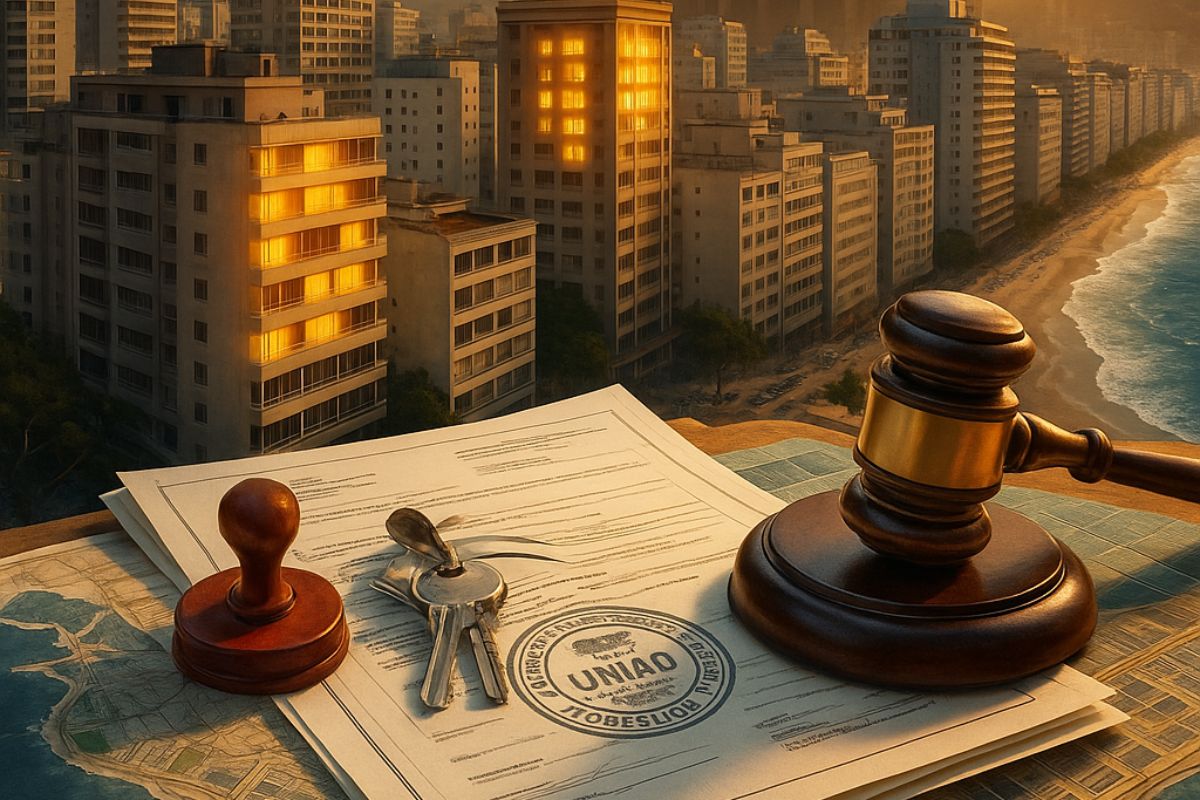


Between 2020 and 2025, at least 179 properties, valued at about R$ 219 million, were incorporated into the Federal Government and municipalities due to the absence of heirs, including apartments a few meters from the beaches of Copacabana and Ipanema, in Rio de Janeiro, and Pina, in Pernambuco.
When they die without leaving close family or a will, owners enter a specific judicial process known as succession of vacant and unclaimed inheritances, which can conclude with the permanent transfer of property to the public authorities. With the aging population, falling birth rates, and the rise of single-person households, experts point out that cases related to the absence of heirs are likely to become more frequent.
After death, if there is no spouse, children, living parents, or other relatives up to the fourth degree, the Civil Code stipulates that the assets are to be incorporated into the property of the city where the person lived or, in some situations, to the Federal District or the Union. In areas of federal domain, for example, the destination is the Union Heritage Secretariat. In practice, the absence of heirs redefines the fate of properties ranging from small urban apartments to units in valued coastal areas.
Why Unclaimed Property Goes to the Public Authorities
The starting point is a basic principle of the legal system: there can be no “ownerless” property. When there are no heirs and no will, the State acts as the exceptional successor to the deceased person.
-
With more than 635,000 doctors, Brazil sees competition increasing in large cities, and recent graduates are competing for shifts at an accelerated pace while the countryside still faces shortages.

-
The world’s first octopus farm wants to open in the Canary Islands and is already provoking an international reaction: the plan aims to produce 3,000 tons per year.

-
Drought may be creating stronger superbugs in the soil and helping antibiotic resistance reach hospitals, warns a study highlighting a problem that could grow alongside extreme weather.

-
The biggest scam in history: Napoleon’s France deceived the United States by selling them a territory that was Spanish.

Legislation assigns the public authorities the mission to represent, manage, and give social purpose to this property. The State cannot refuse this role since it acts as the provisional guardian of the assets while attempting to locate possible successors.
In this logic, the public authorities are seen as agents of property and social protection, preventing properties from being abandoned, deteriorated, or occupied irregularly, and making room for their use in public policies, rentals, or sales through bidding.
In many cases, the absence of heirs transforms what was private property into an asset serving the community.
How Vacant and Unclaimed Inheritance Works
When someone dies and there are no known heirs or will, the Justice system opens the process of vacant inheritance, a phase in which the property is under judicial custody while attempts are made to identify family members.
The judge appoints a guardian, who can be a trusted attorney of the court or a municipal representative. This guardian visits the property, gathers documents, talks to neighbors, searches for records in banks, and increasingly analyzes digital traces, such as emails and social media profiles, always with judicial authorization.
The goal is to create a complete picture of the person’s life and potential relatives.
During this stage, notices are published to call possible heirs, who have a deadline to present themselves.
If, after a year, no one comes forward, the inheritance is declared vacant. At this moment, the property temporarily passes to public ownership, but still with a kind of “waiting” period for the definitive definition.
Only five years after the date of death, if no heir comes forward, the assets are permanently incorporated into the public authorities, consolidating the legal effect of the absence of heirs.
Who Can Inherit Before the Property Goes to the State
The law outlines a order of succession preference, a sort of queue of those who can inherit before recognizing the absence of heirs. Rights to the inheritance, during the vacant phase, belong to relatives up to the fourth degree.
This includes:
- children and parents in the first degree
- grandparents and grandchildren in the second degree
- aunts and uncles and nephews in the third degree
- cousins in the fourth degree
The judge must respect this order. First, the descendants are called, then the ascendants, then the spouse or partner, and finally the collaterals, like siblings, aunts, and cousins.
Only when none of these people are located, or when they renounce the inheritance, does the absence of heirs solidify and the property progresses to the public sphere.
Even after being incorporated into public authorities, parents, children, grandparents, spouses, or partners can still file a petition for inheritance, seeking to reclaim the property, as long as they prove the relationship and comply with procedural rules.
What the Public Authorities Can Do with the Received Properties
Once the stages of vacant inheritance are completed, the properties become part of the municipality’s, the Federal District’s, or the Union’s assets, depending on their location.
Management is usually carried out by legal offices, finance secretariats, or specific property departments.
These bodies can use the property in public programs, lease it to agencies of the administration itself, or sell it through bidding, always with a purpose linked to the collective interest.
In valued areas, such as apartments near the beaches of Copacabana, Ipanema, or Pina, the asset can have a significant impact both on public finances and on housing or service policies.
On the other hand, irregular occupations of these assets can lead to repossession actions, as the public entity becomes the formal owner of the property.
The absence of heirs, in this context, also places the State in the role of mediator of land and urban conflicts.
Who Takes Care of the Property while the Process is Ongoing
During the years that Justice attempts to identify successors, the guardian of the inheritance takes on the practical administration of the property. They are responsible for the safeguarding, maintenance, and eventual regularization of documents, always reporting to the judge.
This guardian, usually a lawyer or municipal representative, must protect the economic value of the assets, preventing deterioration, non-payment of fees, and loss of potential income.
In complex situations, it may be necessary to manage more than one property, vehicles, financial investments, stocks, and even items of sentimental value, such as works of art.
Items of this nature can only be sold after the declaration of vacancy and with judicial authorization, reinforcing the exceptional nature of the State’s intervention in the face of the absence of heirs.
Why Cases of Absence of Heirs Tend to Grow
Experts point out that the phenomenon observed in the 179 properties identified between 2020 and 2025 is a symptom of profound demographic and social changes.
Brazil is aging, the birth rate is falling, and single-person families are gaining ground, with more people living alone and without descendants.
In this scenario, the absence of heirs stops being an isolated event and becomes a structural trend, especially in large urban centers, where it is common for the elderly to accumulate real estate assets but have reduced or dispersed family networks.
At the same time, the increase in formalization of records, digitization of data, and integration among justice agencies, notaries, and public administration facilitates the identification of assets and the opening of vacant inheritance processes, making the fate of the property of those who die without successors more visible.
Open Debate: Transparency, Social Use, and Succession Planning
The rise of absence of heirs raises practical and ethical questions. On one hand, there is an opportunity to increase transparency regarding properties incorporated into public authorities, clearly publicizing where they are, how much they are worth, and what purpose they serve.
On the other hand, there is an increasing discussion about succession planning, especially for individuals who live alone and want to define the fate of their property while alive through wills or donations.
In this context, the way in which the Union, states, and municipalities will manage this stock of properties is likely to become an increasingly relevant topic, both for public finances and for housing, culture, services, and urban preservation policies.
The coming decades should show whether the country will be able to turn the absence of heirs into an opportunity for qualified social use or if it will allow this property to get lost in bureaucracy.
For you, in light of the increase in the absence of heirs, should Brazil prioritize the use of these properties in specific social policies, such as housing and public services, or focus on selling them to boost municipal revenues?








Os imóveis sem herdeiros devem ser vendidos pelos municípios para reforçar o caixa público e financiar políticas específicas para a terceira idade, como cuidados geriátricos, moradias assistidas, programas de saúde preventiva e apoio a famílias unipessoais envelhecidas.
Essa medida promove a redistribuição eficiente de recursos em um país que envelhece rapidamente.
Como vc escreve bem e tem uma lógica excepcional e bem articulado. Parabéns