





 Portuguese
  English
  Spanish
  5 min of reading
  12 comments





Brazil Spends More on Public Servants Than It Invests in the Future: See the Impacts and Solutions.
Brazil has been standing out internationally, but not for the reasons we would like. While developed and emerging countries heavily invest in Artificial Intelligence (AI), cutting-edge science and technology, our country follows an opposite trajectory. The focus here is still on issues like the construction of public restrooms and outdated debates about taxes. After all, where are we headed with this outdated mindset?
In this article, we will analyze how political and economic decisions are shaping Brazil’s future, comparing our public spending and strategies with those of other countries. We will also discuss the impacts of public service on the economy, the lack of meritocracy, and the urgent need for structural reforms.
1. The Contrast Between Brazil and the Developed World
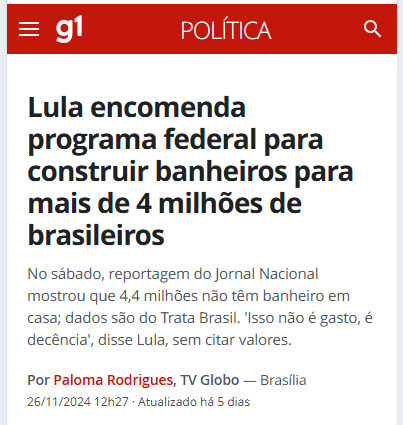
While nations like the United States invest in strategic sectors like Artificial Intelligence, aerospace industry, and cryptocurrencies, Brazil seems stuck in discussions that do not advance the country. Recently, the president stated that building public restrooms is an investment and not an expense. But is that what will drive Brazil toward development?
-
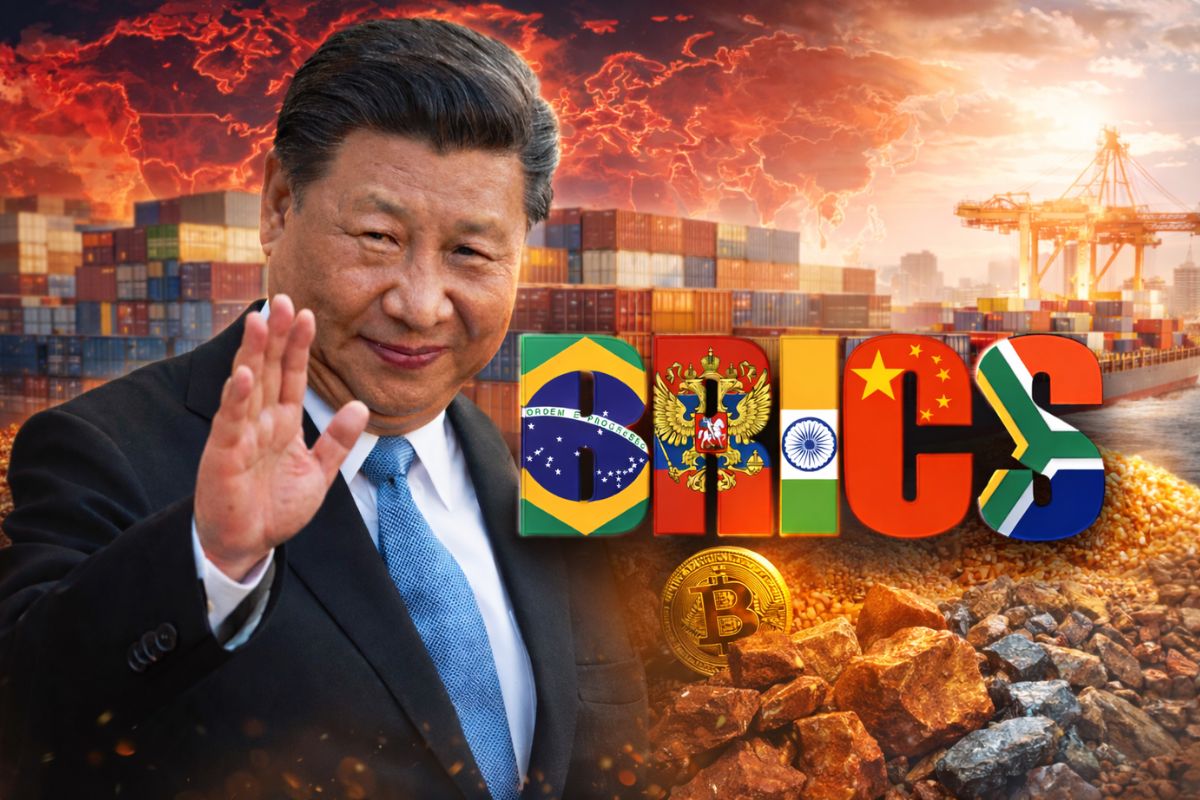
China alone accounts for 70% of trade within the BRICS, while Brazil establishes itself as an essential supplier of food and minerals: understand how the group, which already represents nearly 40% of the world’s GDP, is changing the game.
-
Starting in May, those who do not have registered biometrics will not be able to apply for Bolsa Família, sickness benefits, or unemployment insurance: understand the new rule that changes access to benefits for millions of Brazilians.

-
A new law being voted on in Brazil proposes a minimum fare of R$ 10 per trip and R$ 2.50 per kilometer for Uber and 99 drivers, and promises to ensure they earn as well as taxi drivers did during the golden age of taxis in the country.

-
Bauer Group collapses after failed judicial recovery: 25 years, 800 vehicles, and a network of gas stations leave a debt of R$ 50 million and 100 layoffs, exposing costs, tight margins, and expensive credit in Brazil.

The problem is not just the lack of strategic vision, but also the absence of a culture that values innovation and meritocracy. To give you an idea, in many developed countries, the labor market is dynamic, with low taxes and ease of hiring and firing. In Brazil, the focus remains on state protectionism and strengthening unions, which limits market flexibility and business competitiveness.
2. The Astronomical Cost of Public Service in Brazil
Brazil has 12.2 million public servants, representing 12.4% of the workforce. In comparison, countries like Denmark have nearly 30% of their workers in the public sector. But the problem is not the quantity, it is the cost. Brazil spends 13.4% of the GDP on salaries for active and inactive public servants, while the OECD average is only 9.9%.
Comparison with Other Countries:
- Chile: 13.1% of workers are public servants, but spending accounts for only 6.9% of GDP.
- Mexico: 3.8% of GDP is allocated to public service, less than half of what we spend.
- Denmark: Despite having almost triple the number of public servants, it spends 15% of GDP, but with a highly dynamic market.
Here, this cost difference is due to the stability and privileges granted to many public servants. In Brazil, 70% of public employees have job stability, while in developed countries, this practice is limited to essential functions.


3. Super Salaries and the Lack of Meritocracy
In addition to high costs, there is also the problem of super salaries. About 25,000 public servants earn exorbitant amounts, costing the country nearly 4 billion reais per year. To make matters worse, a large portion of these salaries is concentrated in the Judiciary and the Legislative, which are the most expensive in the world.
However, essential workers, such as teachers and nurses, receive low salaries. This reflects a serious inequality within the public sector, where corporatism prevails over efficiency. There is no incentive for meritocracy, and many positions offer automatic promotions regardless of performance.
4. Public Expenditures and the Sustainability Crisis
Another alarming fact is that 40% of the primary spending of the government is allocated to maintaining public servants. In countries like the United States and the United Kingdom, this percentage does not exceed 26%. This difference drains resources that could be invested in strategic areas, such as education and technology.
Moreover, Brazil has a privileged pension system for public servants, with more favorable rules than those of the INSS. This further increases the burden of public service on the budget and reduces the margin for investments.
5. Impacts on Society and the Labor Market
With so many distortions, the private sector ends up being stifled. Only 43 million Brazilians work in the private sector or are entrepreneurial. Meanwhile, over 56 million people depend on Bolsa Família, and another 39 million are retirees or pensioners.
This dependence on the state limits economic growth and job creation. Brazil urgently needs a more business-friendly environment, with lower taxes and greater freedom to operate.
6. Lessons from Other Countries
France, known for the weight of its state, spends about 60% of GDP on the public sector. However, even there, most public servants can be dismissed when their service is no longer necessary. In Brazil, this flexibility is nonexistent. Inefficient public servants remain in their positions, often without performing any relevant function.
In Colombia and Mexico, spending on public service is significantly lower, despite serving a population comparable to Brazil’s. This demonstrates that it is possible to provide quality public services without compromising the budget.
7. Necessary Reforms for a Competitive Brazil
If Brazil wants to compete on the global stage, it needs to adopt profound structural reforms. Among the main measures are:
- Reducing the Size of the State: Decrease the number of positions and privileges in public service.
- Promotion of Meritocracy: Implement systems that reward performance and eliminate automatic promotions.
- Investment in Technology: Prioritize areas such as Artificial Intelligence, scientific education, and high-tech industry.
- Flexibility in the Labor Market: Make it easier to hire and fire, encouraging job creation.
8. The Future Under Current Management
Unfortunately, the current government seems to be going in the opposite direction. The president advocates for increasing the size of the state and strengthening unions, which goes against the reforms implemented in the past, such as the Labor Reform of 2017. These measures were essential to increase market flexibility and reduce dependence on unions.
If we continue on this path, Brazil is likely to face a future of devalued currency, low economic growth, and reduced international competitiveness.
9. Do We Need to Reach Chaos to Change?
Brazil has enormous potential but continues to waste opportunities. We need leadership that looks beyond immediate agendas and invests in the future. Will we have to wait for a collapse, as happened in Argentina, to promote the necessary changes?
Leave your opinion in the comments: do you believe that Brazil will overcome these challenges or remain stuck in the past?










O site é tendencioso. Apresenta dados que não têm relação com a economia. O único intuito é atacar o governo, que está investindo no Prosub, para a construção do nosso submarino, no Alada, que vai fazer o Brasil lançar satélites brasileiros e estrangeiros no espaço. Seus mentirosos de m! Estão chateados com o corte de gastos que o Lula propôs, que atinge os privilégios do Exército? Ou querem de volta o Bolsonaro, que tentou e quase vendeu nossa Embraer para a Boeing? Bolsonaro encerrou todos os investimentos, como as pesquisas em Chips, a manutenção do nosso supercomputador, fechou o ministério da cultura etc. Que site lixo é esse?
Estuda !!!!!! e passa em um concurso público redator!!! Aí tu vai ver mérito!!
Um caminhão de clichês neoliberais. Tem coisa mais arcaica do que neolberalismo? E é sempre assim, “a Dinamarca”, a OCDE” e blá blá blá. São 800 bi de juros de dívida por ano, 760 bi para agronegócio em 2 anos, 550 bi de isenção fiscal para empresas, mamatas para igrejas, etc. E o mané tá preocupado com estabilidade e 4 bi do alto escalão do funcionalismo. Não há dúvidas de que é só mais um mau caráter recebendo um cascalho para divulgar essas groselhas