





 Portuguese
  English
  Spanish
  5 min of reading
  0 comments



Brazil Invests In Nuclear Micromodulators In Brazil With Support From The Navy, Universities With Nuclear Technology, And The Private Sector. Initiative Promises To Strengthen National Nuclear Energy With Innovation And Autonomy
Brazil has initiated an ambitious and strategic project that could place it among the global leaders in clean energy: the development of 100% national nuclear micromodulators. The initiative brings together efforts from the Brazilian Navy, public universities with research traditions, technological centers, and private companies in the energy sector. The goal is to create a new generation of modular, compact, and efficient nuclear reactors capable of generating between 1 and 5 megawatts of electrical energy, with safety and low environmental impact.
The total investment is R$ 50 million, of which R$ 30 million comes from a grant from Finep (Funding Agency for Studies and Projects), linked to the Ministry of Science, Technology, and Innovation, and the remainder from partner companies. The project is expected to last three years and could revolutionize energy supply in isolated regions and in strategic applications such as military bases, offshore platforms, hospitals, and data centers.
What Are Nuclear Micromodulators And How Do They Work?
Nuclear micromodulators are small reactors, usually the size of a shipping container, that operate autonomously for up to ten years without the need for refueling.
-
Fukushima Marks A Turning Point In Japan’s Energy Policy: After The Disaster, The Country Shut Down Its 54 Nuclear Reactors And, 15 Years Later, Only A Small Portion Have Returned To Operation

-
How Japan Overcame The Nuclear Bomb And Now Houses Millions In Hiroshima, While Ukraine Lost Chernobyl?

-
Bill Gates Receives Historic Approval to Build Giant 345 MW Nuclear Plant in the U.S. and Promises to Generate Up to 500 MW of Energy with Innovative Technology

-
India Opens Nuclear Energy to Private Capital to Accelerate Projects and Attract Billions, While Brazil Remains Stalled at Angra 3 and Discusses Who Will Foot the Bill for Completion
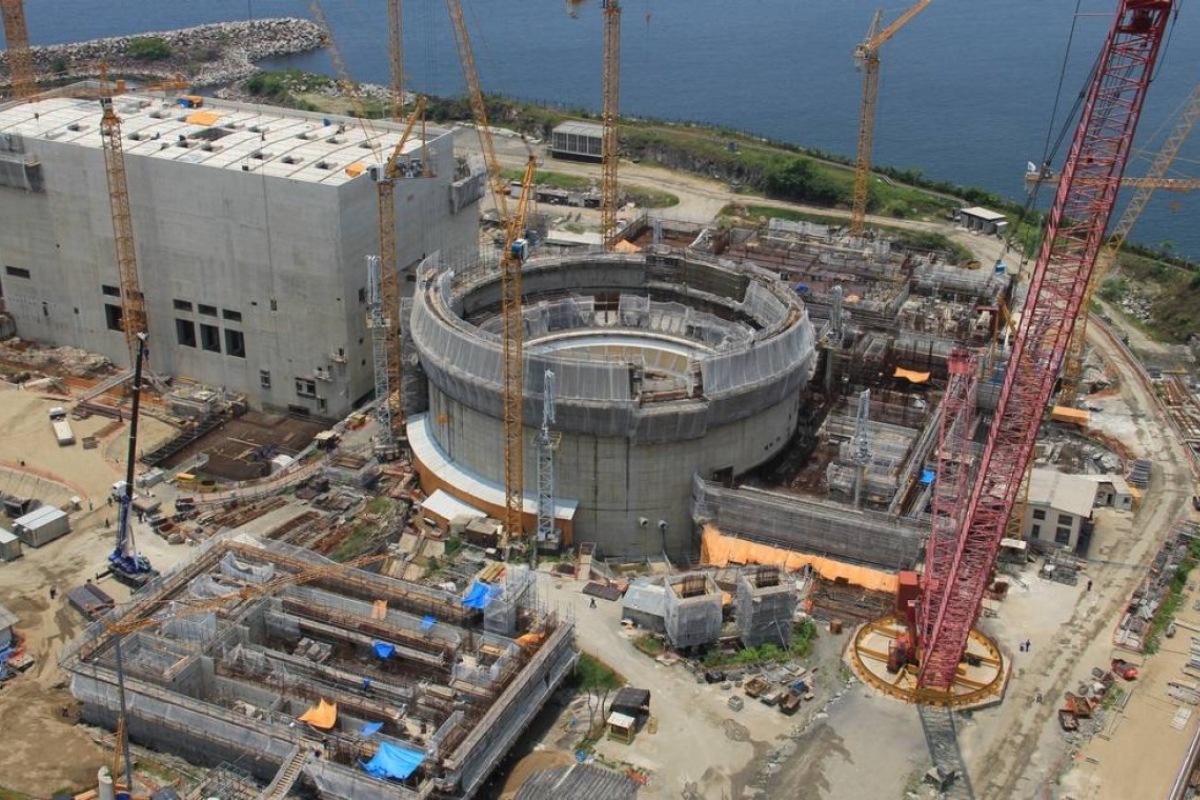

Their modular and compact design allows for easy transportation, quick installation, and remote operation. Each unit can generate 1 to 5 MW of electrical energy, enough to supply a small town, remote communities, or strategic facilities.
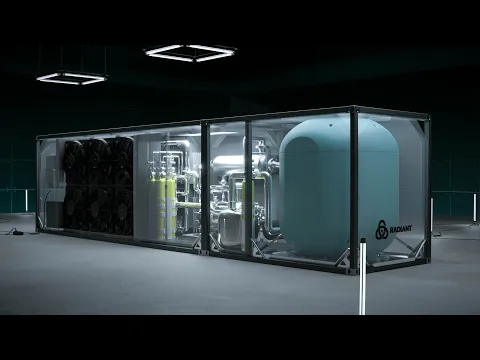

The Brazilian model differs by using thermal tubes (heat pipes) to dissipate the heat generated by nuclear fission, eliminating the need for water or gas as a cooling fluid. This significantly reduces the risk of accidents and simplifies maintenance. Additionally, the project plans to use high-energy-density fuel and autonomous control elements, ensuring stability even under adverse conditions.
Partnership Between The Navy, Universities With Nuclear Technology, And Research Centers
The development of nuclear micromodulators in Brazil involves a multidisciplinary consortium. Nine research and teaching institutions are participating in the project, including four federal universities with a tradition in nuclear science and engineering: Federal University of Ceará (UFC), Federal University of ABC (UFABC), Federal University of Minas Gerais (UFMG), and Federal University of Santa Catarina (UFSC).
The National Institute of Telecommunications (Inatel), the National Commission for Nuclear Energy (CNEN), and the institutes IPEN (São Paulo) and IEN (Rio de Janeiro) are also part of the project.
The Brazilian Navy plays a fundamental role through its Nuclear Development Directorate (DDNM) and the state-owned Amazônia Azul Technologies for Defense (Amazul).
Its experience in developing the reactor for the Brazilian nuclear submarine strengthens the technical foundation of the project. The universities with nuclear technology provide essential laboratory infrastructure and scientific knowledge for the research.
National Nuclear Energy: Advancements And Technical Obstacles
The project is currently at the level of technological maturityaTRL 3, which means that the concepts and scientific principles have already been demonstrated in a laboratory environment. The next step is to reach TRL 6, with testing in operational environments and the construction of functional prototypes.
Among the main challenges faced are the development of heat pipes capable of withstanding temperatures over 800 °C, the national manufacturing of materials such as graphite, beryllium, and uranium dioxide, as well as the implementation of intelligent and reliable control systems.
IPEN leads the studies on materials and fuel engineering, while the Navy offers support based on its accumulated experience in the nuclear sector.
These advancements could consolidate the autonomous production capacity of national nuclear energy, reducing external dependencies and strengthening the technological industry of the country.
Economic And Environmental Impacts Of Nuclear Micromodulators In Brazil
The deployment of micromodulators brings direct benefits for regional development and environmental sustainability. Many regions of Brazil, especially in the Amazon and the interior of the country, still depend on diesel generators, which are not only polluting but also have high operational costs. Micromodulators could replace these sources, providing clean, stable energy with lower logistical impact.
The estimated cost of electricity generation with micromodulators is around R$ 990 per MWh, a competitive price compared to R$ 1,200 per MWh from diesel generators in remote areas. Additionally, national nuclear energy is one of the most promising alternatives to reduce greenhouse gas emissions and meet the climate goals of the Paris Agreement.
As continuous sources, micromodulators complement well with solar and wind generation, which are intermittent. This combination can enhance the resilience of the national electric system.
International Insertion And Export Potential Of The Technology
Unlike countries that import nuclear technology, Brazil seeks a unique and independent approach. The development of nuclear micromodulators in Brazil is conceived from the outset to be fully national, with mastery over all stages, from design to fuel.
With this, the country positions itself uniquely in the international scenario. Currently, few nations have the full capacity to develop autonomous modular reactors, including the United States, Russia, and China. If it achieves its goals, Brazil could join this select group, with the potential to export its technology to developing countries in Latin America, Africa, and Southeast Asia.
This strategy of technological autonomy is also a way to guarantee energy security and reduce geopolitical vulnerabilities. By investing in national nuclear energy, the country paves the way for new partnerships, foreign investments, and strengthens its industrial base.
What To Expect In The Coming Years?
With guaranteed resources, government support, and strong academic involvement, Brazil is well-positioned to consolidate its leadership in the micromodulator nuclear sector. The success of the project may pave the way for large-scale applications, as well as inspire new innovation projects in the fields of energy and defense.
In the coming years, tests with reduced-scale prototypes, assembly of subcritical units, thermal validations, and the start of production of critical components are planned. Collaboration between universities with nuclear technology, research centers, the Navy, and the private sector will be decisive in overcoming technical challenges and accelerating progress.
If it achieves its goals, the project will transform Brazil into an international benchmark, ensuring autonomy in one of the most strategic sectors of the global economy. Nuclear micromodulators in Brazil symbolize not only technological innovation but also a bold investment in a more sustainable, secure, and sovereign future.









-

Uma pessoa reagiu a isso.