





 Portuguese
  English
  Spanish
  4 min of reading
  0 comments


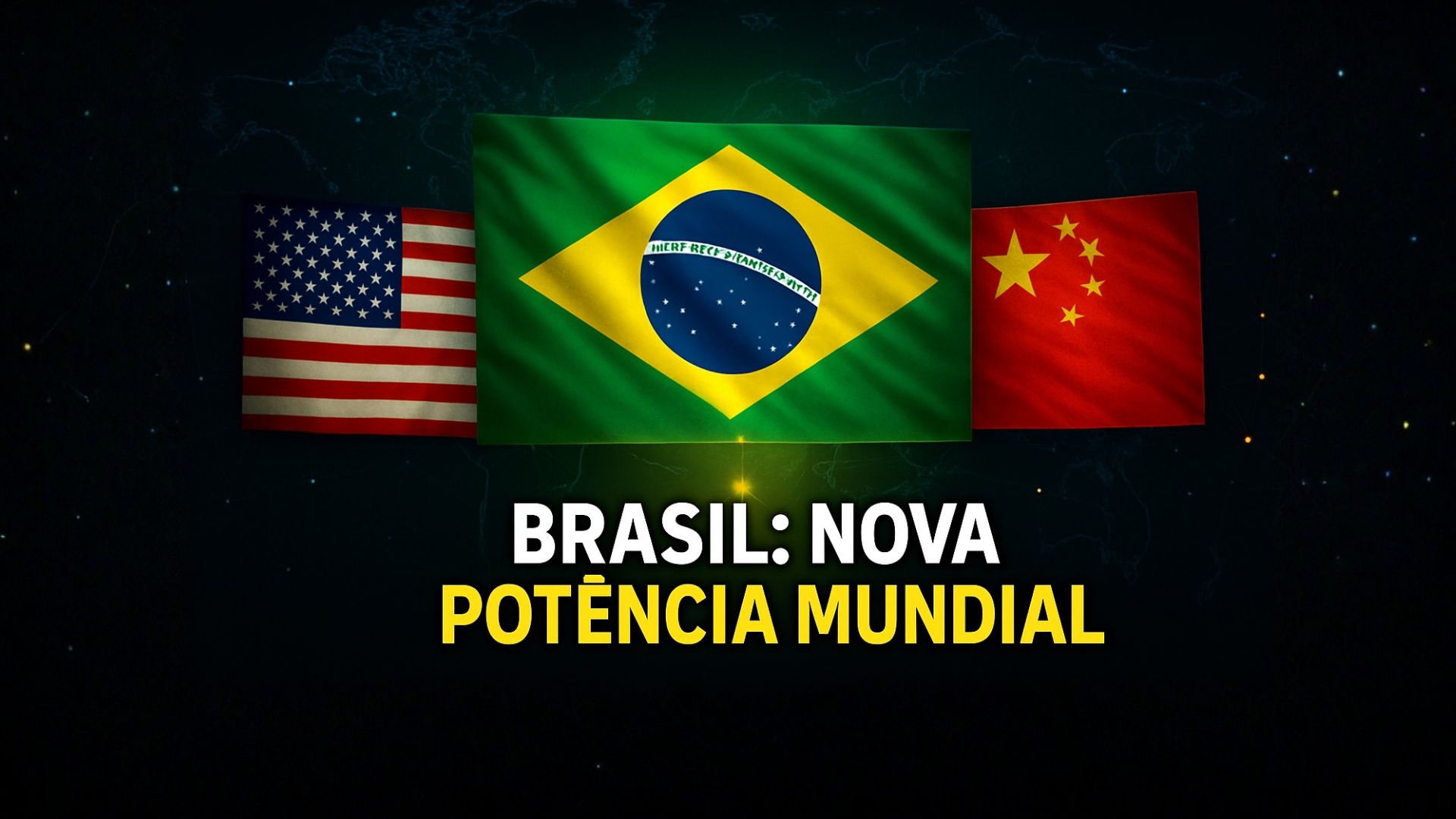
The International Scenario Mentioned by José Kobori in a YouTube Video Reveals Strategic Disputes Between the United States and China, as Well as Diplomatic Movements That Could Open a Rare Opportunity for Brazil to Expand Its Regional Geopolitical Influence.
Brazil can benefit from a transforming international scenario and expand its influence in South America.
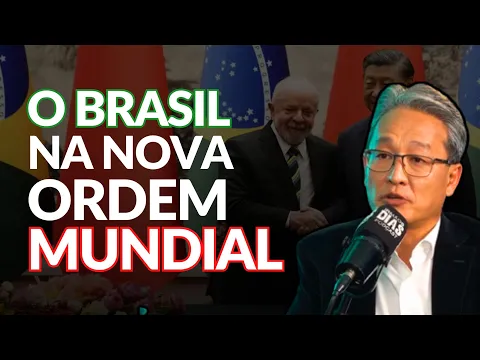
The assessment was made by writer and economics expert José Kobori in a video published on his YouTube channel, analyzing the dispute between the United States and China and the impact of this context on Brazil’s position.
According to him, the combination of the new American diplomatic stance, the long-term Chinese strategy, and the global reorganization opens a rare window for the country to reinforce its geopolitical weight.
-
Petrobras sends a message to Brazilian truck drivers after fuel collapse and reveals plan to have 100% domestic diesel.

-
Mothers and daughters come together, create an ‘express’ beauty salon and turn the idea into a network with 21 units, revenue of R$ 16.7 million and 12,000 subscribers.

-
End of the 6×1 schedule: how the reduction of hours can affect service companies, industry, and agribusiness.

-
Brazil Ignores Trump’s threats to BRICS, Buys 42 tons of gold and reduces the Dollar’s share by 6.45% in international reserves.

U.S.-China Relations and Global Impact
According to Kobori, the relationship between Washington and Beijing is currently experiencing a moment of controlled tension.
He recalled that Donald Trump, upon resuming command of the U.S. government for his second term, maintained the tough tone that marked his first tenure at the White House.
Still, the two countries resumed direct talks after a period of public spats.
As the expert highlighted, the presidents met in South Korea in a meeting described as procedural in front of cameras, but which was reportedly marked by “quite firm exchanges” behind closed doors.
Although Trump adopts a more aggressive rhetoric, Kobori noted that China responds with caution.
For him, this stance reflects a traditional pattern of Chinese diplomacy, based on patience and calculated response.
He explained that, often, this behavior can be interpreted as a sign of weakness, but it serves as a strategy in prolonged negotiations.
In the expert’s assessment, even with deep differences, the two powers tend to seek some form of accommodation to avoid global losses.
Meanwhile, medium or smaller countries observe the developments with apprehension.
Kobori emphasized that when the major players in the international economy confront each other openly, “the impact usually hits the most vulnerable first.”
On the other hand, if Washington and Beijing reach an understanding, there are concerns that some emerging nations may find themselves in an even more fragile position on the global chessboard.

Unprecedented Opportunity for Brazil
In this space of uncertainty, Brazil emerges with an unprecedented opportunity, the economist stated.
He compared the current scenario to the strategy adopted by Getúlio Vargas before World War II when the country used the rivalries between powers to accelerate its industrialization.
As he explained, Brazilian diplomacy is once again trying to balance divergent interests, approaching the United States while not ignoring the importance of China as its main trading partner.
According to Kobori, this rapprochement became evident in the negotiations led by the Brazilian government.
He reported that behind the scenes, U.S. officials recognized Brazil’s relevance in countering Chinese influence on the continent.
In his words, the message sent by Brazilian diplomats to the U.S. was clear: pressuring Brazil could bring it even closer to China.
This warning reportedly helped unlock dialogue between the two countries.
Moreover, Kobori emphasized that the Brazilian government is trying to use this repositioning to expand its maneuvering room.
He believes that the international order is experiencing a turning point and that the balance of power no longer resembles the period before Trump’s political rise in the United States.
Although the former president’s rhetoric is more forceful, the expert considers that the U.S. movement toward a strategic confrontation with China was already silently forming even before 2016.
New World Order and Power Rearrangements
In this context, the power struggles have ceased to occur only behind the scenes, becoming visible to the public and forcing countries like Brazil to redefine their positions.
Kobori stated that the world is headed toward a configuration that many call multipolar, although in his view, the current scenario is closer to a bipolar arrangement, with two dominant poles and large areas of influence.
The expert further explained that China has been consolidating strategic alliances with Russia, India, and Middle Eastern countries, a region that some scholars classify as Western Asia.
He mentioned that following episodes of instability involving Iran, Beijing intensified its engagement with Moscow and New Delhi, reinforcing an axis that spans Eurasia and alters the global balance of power.
As he recalled, Russia has an extensive territory between Europe and Asia, which strengthens this geopolitical corridor.
Brazil as a Regional Power Pole
In light of this international redesign, Brazil appears relatively isolated from the Euro-Asian bloc, situated in a region traditionally seen as under U.S. influence.
Nonetheless, Kobori assessed that the country has the conditions to play a leadership role on the South American continent if it can formulate a long-term project and articulate regional interests.
He argued that this stance would allow the country to become a “cluster of geopolitical power,” contributing to a more balanced world.
Finally, the economist stated that the current moment is historic and requires strategy.
For him, Brazil’s ability to seize this opportunity could define the place the country will occupy in the coming decades.
With this possibility, the question remains: in your opinion, will the country be able to transform this opportunity into effective leadership in South America?





-

-

4 pessoas reagiram a isso.