





 Portuguese
  English
  Spanish
  3 min of reading
  0 comments


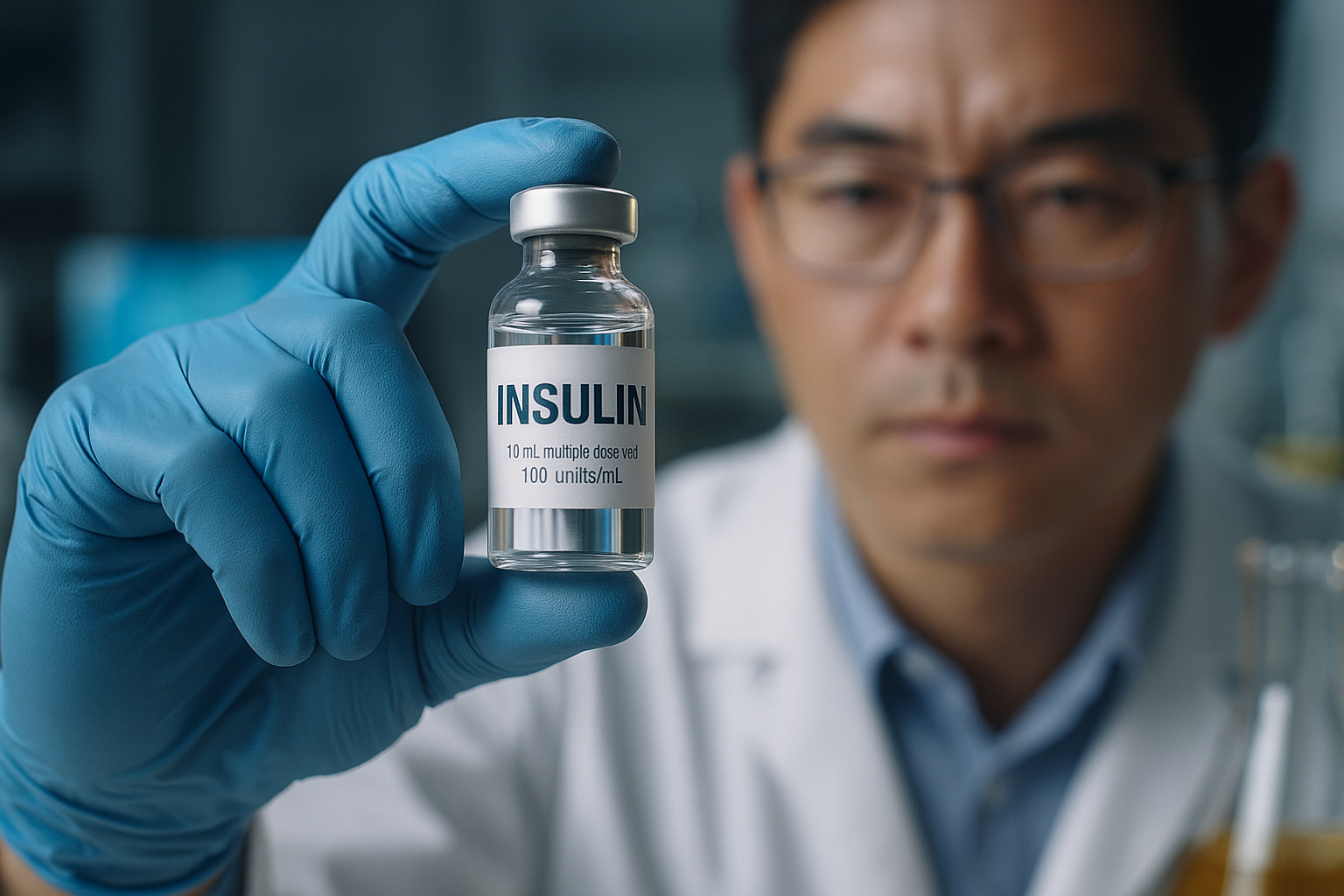
Technology Transfer And National Production Put Brazil On The Path To Independence In Public Health
Brazil has taken a decisive step towards self-sufficiency in insulin production, consolidating a unique and strategic cooperation with China. Since 2009, the two countries have maintained a solid and growing trade partnership.
However, until recently, Brazil relied heavily on the import of technologies. Now, this relationship is changing completely, as the new project led by Fiocruz (Bio-Manguinhos), Biomm, and the Chinese pharmaceutical company Gan&Lee transforms this dynamic.
The initiative transfers technology and knowledge, ensuring the country total control over the national production of the essential medication for diabetes treatment. Thus, Brazil ceases to be dependent and begins to produce internally.
-
With a cost per shot close to zero, the DragonFire laser could change naval warfare in 2027 and provide British ships with nearly unlimited defense against drones.

-
A British startup creates tires that generate electricity in electric vehicles when passing over potholes, speed bumps, and cracks.

-
Scientists have created robots made with living cells that have their own nervous system, swim on their own, explore the environment, and self-organize without any genetic engineering, and now they want to do the same with human cells.

-
Students create a solar-powered ambulance that operates without a plug, without fuel, and still keeps medical equipment running in remote areas.
Strategic Cooperation And Immediate Results
During President Lula’s visit to China in May 2025, the agreement was signed with the aim of revolutionizing insulin production.
Through the Ministry of Health, the Brazilian government and partner companies have committed to producing insulin glargine, widely used in the treatment of type 1 and type 2 diabetes.
Initially, the medication will be packaged by Biomm in Nova Lima (MG), in a factory inaugurated by Lula in 2024, symbolizing the resumption of national production after two decades of external dependence.
Additionally, according to Health Minister Alexandre Padilha, the first batch, consisting of 207,000 units of human insulin of the types regular and NPH, was delivered on July 11, 2025.
This historic milestone is part of the Partnerships for Productive Development (PDP) model that unites the public and private sectors to strengthen the Unified Health System (SUS).
Thanks to the initiative, about 350,000 people across the country are already benefiting, demonstrating the immediate impact of Sino-Brazilian cooperation.
Technological Transfer And Scientific Sovereignty
The project stipulates that, by 2035, the Active Pharmaceutical Ingredient (API) will be fully produced at the new Fiocruz factory in Eusébio (CE).
This will be the first insulin plant in Latin America, built with resources from the New PAC and an investment of R$ 930 million.
With this, the country is expected to achieve a yearly production of 70 million units, strengthening its scientific autonomy and security in national supply.
The technology transfer involves patent sharing, professional training, and factory adaptation. Thus, Brazilian engineers, pharmacists, and scientists learn directly from Chinese specialists.
In this way, Brazil advances in the global production chain, shifting from being just a buyer to becoming a producer of knowledge and innovation.
As highlighted by political scientist Diego Pautasso (UFRGS/PUC Minas), “the challenge is not to distance itself from China, but to redefine Brazil’s role as a technological protagonist.”
Impact on Public Health and National Economy
NPH insulin, with intermediate action, and regular insulin, with rapid action, are fundamental in diabetes control.
Together, they meet 50% of the national demand, which is equivalent to 45 million annual doses, reinforcing the importance of productive autonomy.
Furthermore, the federal investment of R$ 142 million strengthens the National Strategy for the Development of the Economic-Industrial Health Complex, created to reduce imports and consolidate the SUS.
According to the International Diabetes Federation (IDF, 2025), Brazil has 20 million people with diabetes, with 600,000 dependent on daily insulin.
Worldwide, 589 million adults live with the disease, and the number could reach 853 million by 2050 if measures are not taken.
Therefore, the national production of insulin represents a strategic advancement for public health and the country’s technological sovereignty.
Trade Relation Between Brazil And China In Numbers
According to the Ministry of Development, Industry, Commerce and Services (MDIC), bilateral trade amounted to US$ 157.6 billion in 2024.
Of this total, Brazil achieved a surplus of US$ 51 billion, consolidating China as its main commercial and strategic partner.
However, 87% of Brazilian exports are still concentrated in soybeans, iron ore, and crude oil, while China exports industrialized and high-tech pharmaceutical products.
Thus, the partnership for insulin production represents a milestone in national reindustrialization and strengthens technological cooperation between the two countries.
In this way, Brazil is making concrete strides towards productive autonomy, reducing global technological inequality, and achieving scientific independence.







-

Uma pessoa reagiu a isso.