





 English
  Francês
  Alemão
  Italiano
  Japonês
  Norueguês
  Portuguese
  Spanish
  3 min of reading
  0 comments


Government Maintains Dialogue with the USA and Outlines Alternatives to Protect Brazilian Sectors
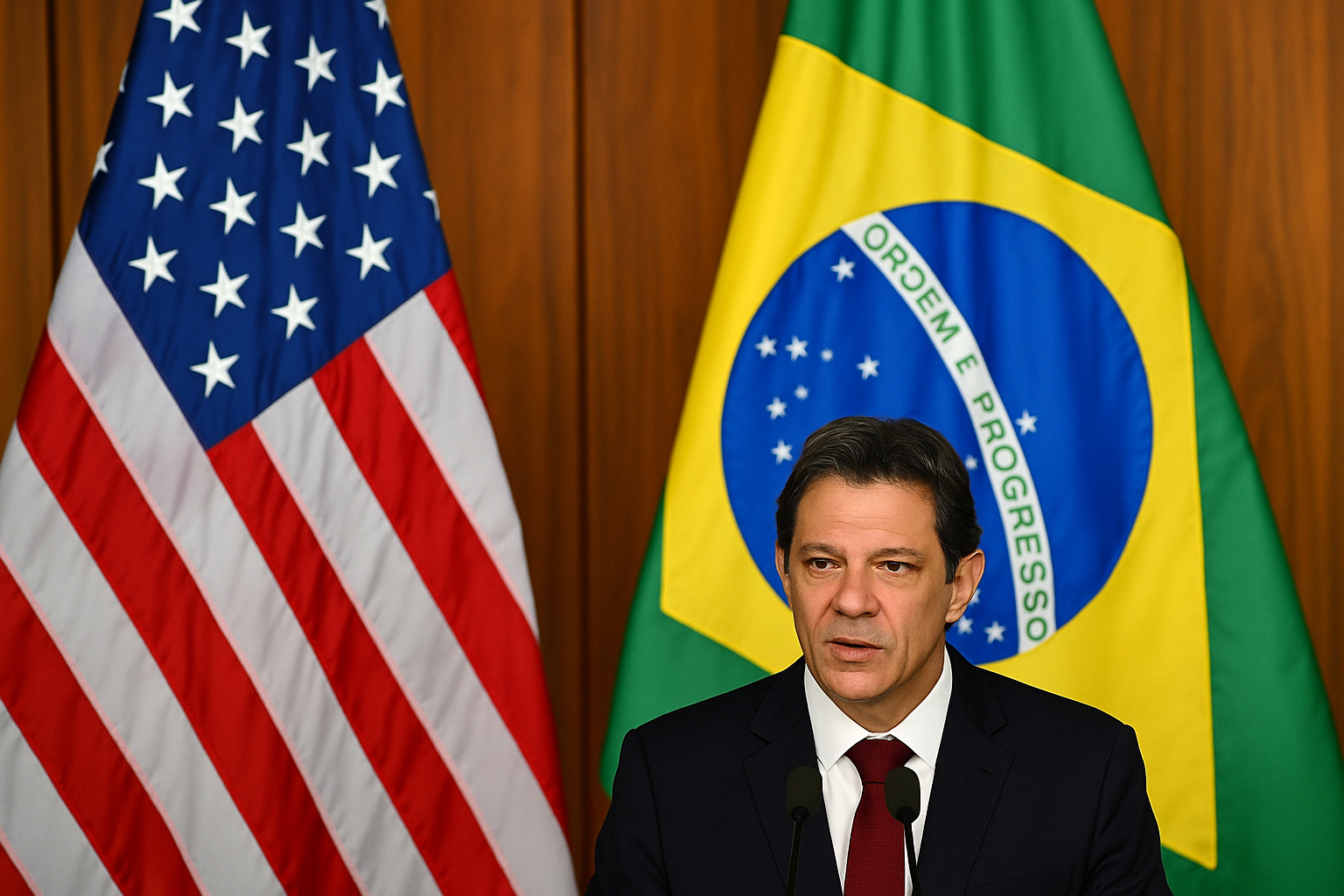
The Minister of Finance, Fernando Haddad, stated on July 21, 2025, that Brazil will not leave the negotiating table with the United States, even in the face of the massive tariff proposed by the U.S. government. The measure, announced by President Donald Trump, foresees a 50% surcharge on Brazilian imports, with implementation expected in August. Despite considering the action unfair, the Brazilian government chooses to keep the dialogue open while developing strategies to protect the most affected economic sectors.
Additionally, Haddad revealed that the economic team is already developing a contingency plan to minimize the tariff impacts on exports. The proposal, according to the minister, will be adjusted according to the decision of President Luiz Inácio Lula da Silva and may include support instruments without necessarily increasing public spending, such as specific credit lines modeled after those used during the climate crisis in Rio Grande do Sul.
Plan Seeks Alternatives Without Increasing Public Spending
The potential taxation of Brazilian products such as coffee, orange juice, and meats motivated the creation of a working group focused on identifying effective and quick solutions. According to Haddad, there is an intention to redirect part of national production to new markets, although this process requires time due to existing contracts with U.S. companies.
-
Middle East War Hits Fertilizers and Transportation and May Strain Brazilian Wallets
-
Russia Considers Suspending Gas to Europe After Surge in Energy Prices
-
How A War Thousands of Miles From Brazil Started Disrupting Global Shipping Routes, Raising Container Costs, and Putting Up to 40% of Brazilian Beef Exports at Risk
-
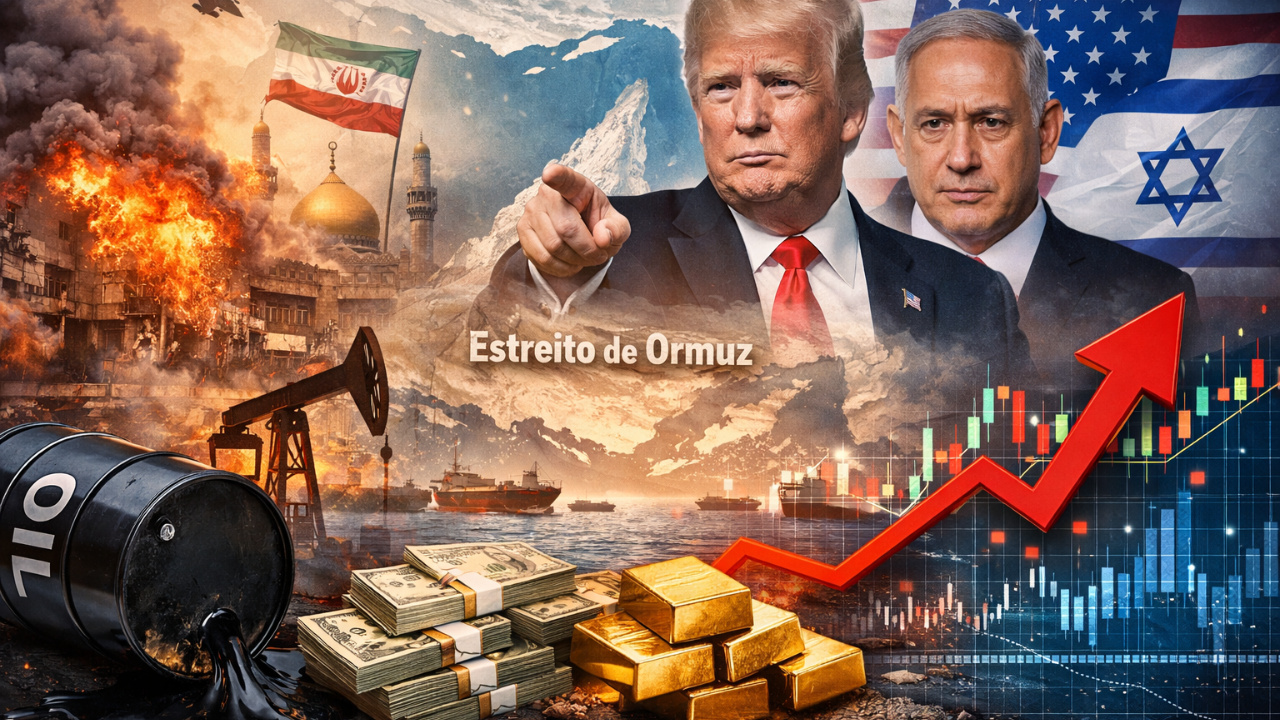
Iran-U.S. War Drives Up Oil Prices and Pressures Global Financial Markets

Thus, the Ministry of Finance is preparing specific alternatives by sector and even by company, seeking to maintain economic balance without causing fiscal imbalances. As the minister explained, this reorganization will not necessarily require an increase in public expenses, as the government intends to explore other available tools.
The recent experience with Rio Grande do Sul strengthened this strategy: emergency actions were made possible with alternative resources, demonstrating that Brazil can act in a planned and responsible manner in the face of adverse scenarios.


Reciprocal Impacts Will Also Be Felt in the United States
Despite the Brazilian government’s decision to avoid direct retaliation, Haddad emphasized that the consequences of the surcharge should also affect U.S. consumers and companies. Among the possible effects is an increase in the cost of breakfast in the United States, as items like coffee, meat, and Brazilian orange juice would become more expensive with the new tariffing.
Furthermore, strategic sectors in the USA, such as aviation, would also be affected. According to the minister, Embraer imports about 45% of the components of its planes from U.S. suppliers, reinforcing the interdependence between markets. Therefore, restrictions on one side directly impact the other, intensifying logistical and commercial challenges.
Retaliation Is Off the Table, but Reciprocity Law May Be Activated
Although Brazil does not wish to adopt retaliatory measures, Haddad did not rule out the possibility of resorting to the Reciprocity Law, recently approved by the National Congress. The regulation allows the country to apply equivalent measures in response to external actions harmful to the national economy.
“However, the president instructed the minister to keep the dialogue open with the United States, prioritizing a consensual solution. “We cannot pay back a measure we consider unfair,” declared Haddad. According to him, Brazil will continue negotiating with all countries and will defend its interests responsibly, maintaining its commitment to diplomatic and economic stability.
Brazil Bets on Diplomatic Balance with Technical Support
The handling of the tariff impasse by Brazil reflects a technical and diplomatic effort to avoid irreparable damage to the productive sector. By opting not to break off communication channels, the government demonstrates international maturity and fiscal responsibility. With planned measures, sector-specific focus, and attention to the global scenario, Brazil aims to protect its economy without severing important trade ties.
Moreover, the inclusion of the Reciprocity Law in the debate reinforces that the country is prepared to act, if necessary, always respecting international norms. Thus, while awaiting the developments of the massive tariff, Brazil operates on multiple fronts to protect its interests and maintain the stability of its exports.
And for you: Should Brazil continue to invest in dialogue or move towards a firmer reaction?









Seja o primeiro a reagir!