





 Portuguese
  English
  Spanish
  5 min of reading
  0 comments


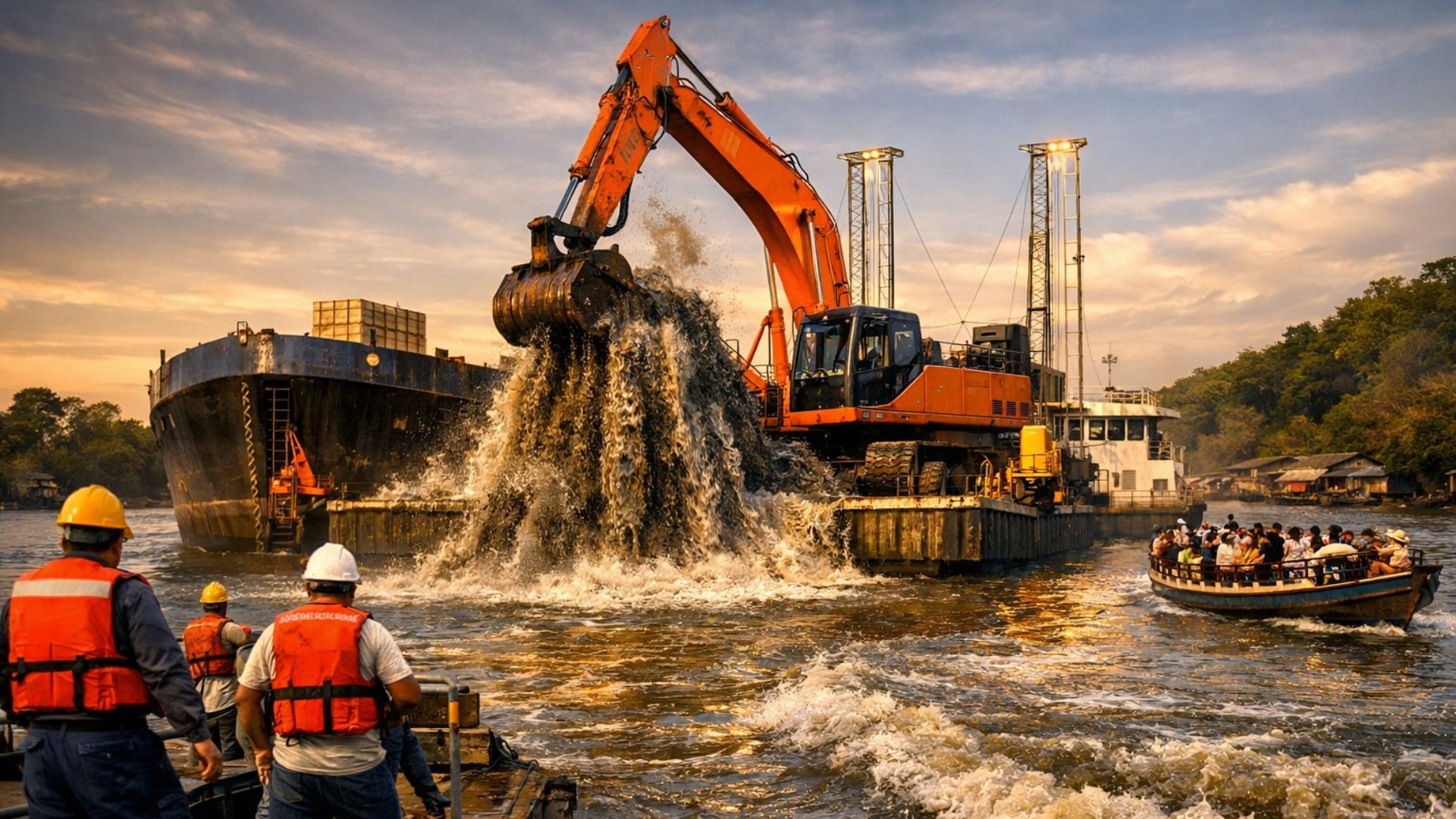
Maintenance of Brazilian Inland Waterways Gains Highlight by Removing Accumulated Sediments, Recovering Depth of Channels and Ensuring Navigation in Strategic Rivers of the North, Strengthening Supply for Riparian Communities and Expanding the Safety of Inland Transport Used Daily by Thousands of People.
Maintenance dredging in rivers used by inland navigation has gained space in federal waterway policy by preserving the circulation of vessels, keeping channels operational and sustaining the supply of communities that depend on the waterway, especially in the North region.
In these areas, water transport continues to be decisive for transportation, public services and delivery of essential supplies.
Contrary to the idea that this type of intervention modifies the river’s course, the guideline adopted by the Ministry of Ports and Airports states that maintenance dredging removes sediments naturally accumulated on the riverbed.
-
Italian researchers have detected what appears to be a second Sphinx buried under the sands of Egypt, and satellite scans reveal a gigantic underground megastructure hidden beneath the Giza Plateau for over 3,000 years.

-
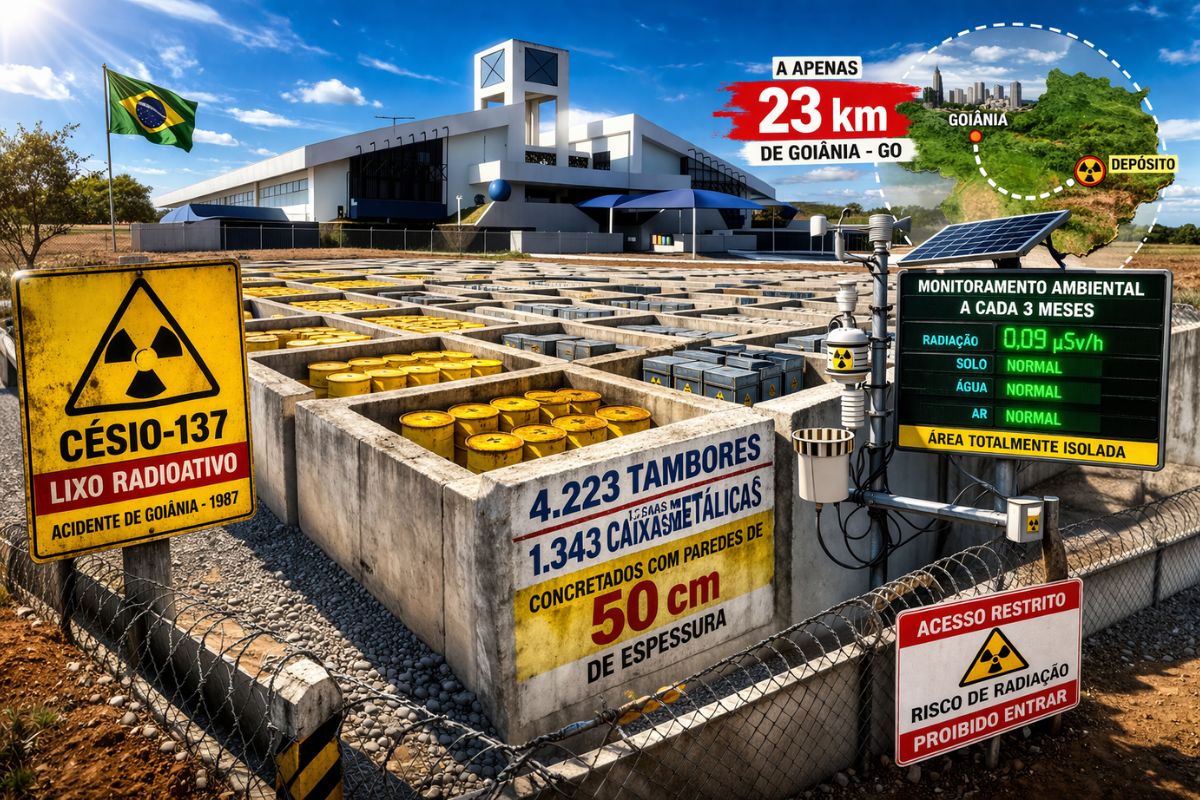
There are 4,223 drums and 1,343 metal boxes concreted with 50-centimeter walls that store the radioactive waste from Cesium-137 in the worst radiological accident in Brazil, just 23 kilometers from Goiânia, with environmental monitoring every three months.
-
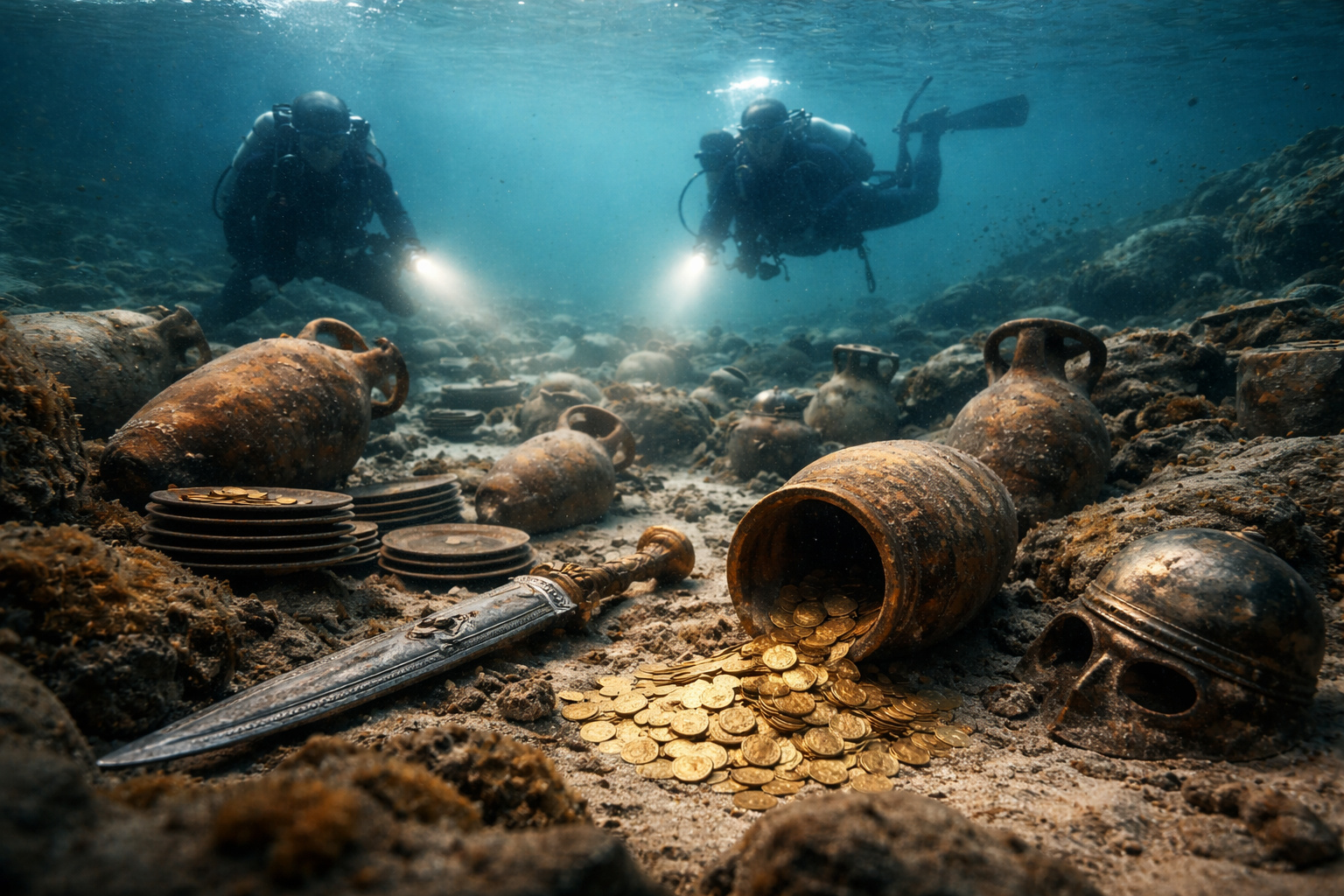
Giant Roman treasure found at the bottom of Lake Neuchâtel in Switzerland reveals an advanced trade system, circulation of goods, and armed escort in the Roman Empire about two thousand years ago.
-
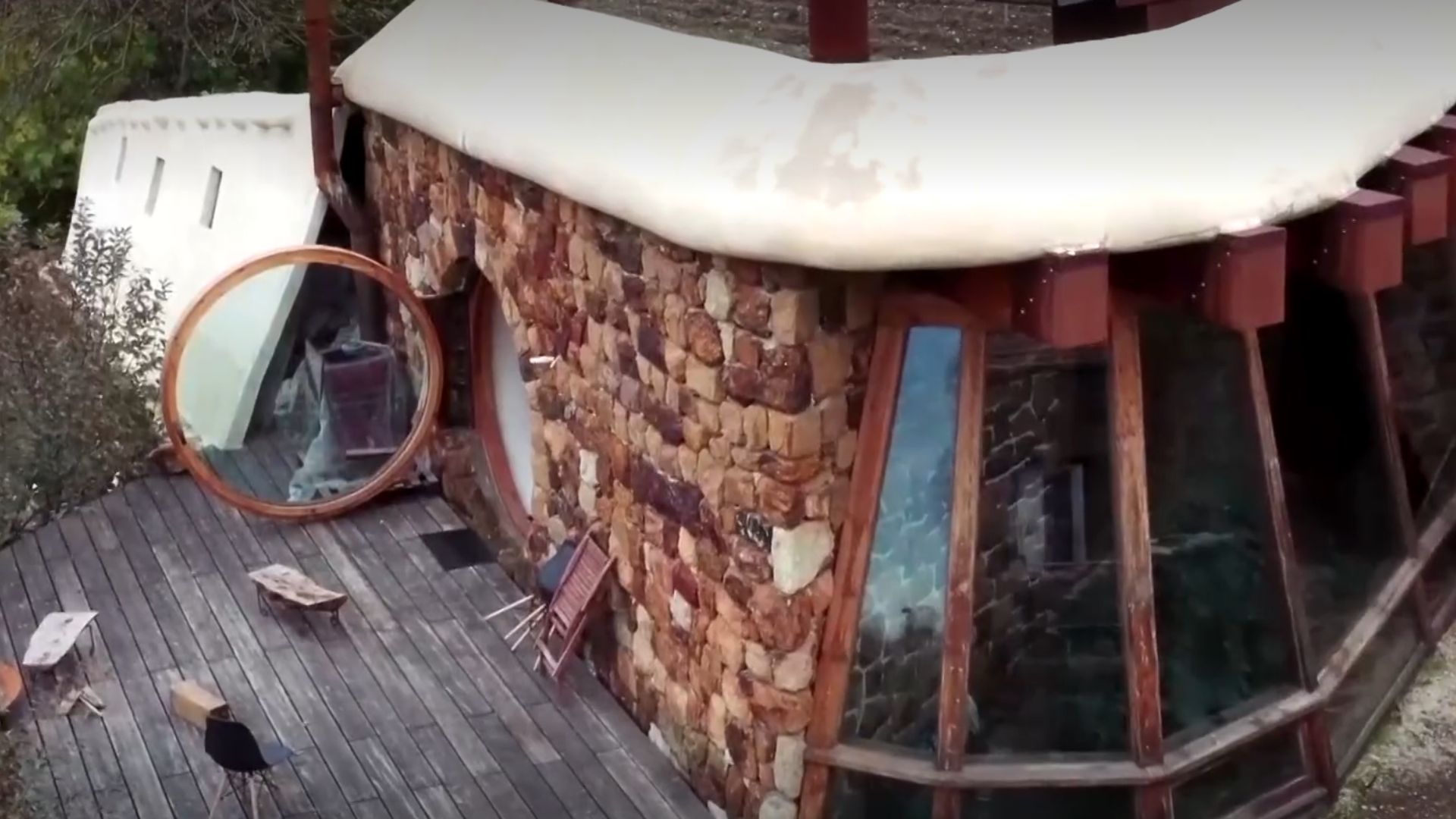
He buried 1,200 old tires in the walls to build his own self-sufficient house in the mountains with glass bottles, rainwater, and an integrated greenhouse.

The objective is to restore navigability conditions in sections already used, without promoting permanent deepening or altering the watercourse.
Dredging Keeps Navigable Channels in Brazilian Waterways
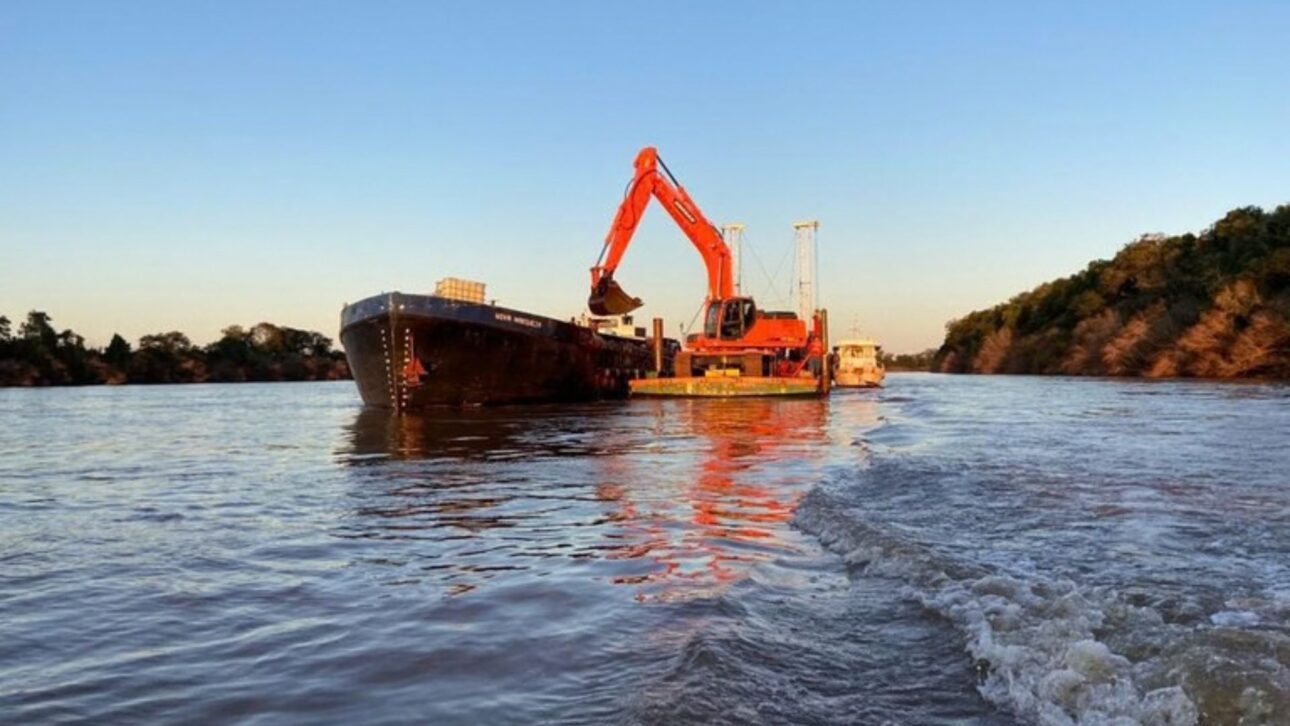
In practice, the service aims to return operational depth to channels in points affected by siltation, reducing restrictions for convoys, passenger boats and supply vessels.
In areas where the river serves as the main logistical axis, this enhances the regularity of trips and decreases exposure to operational risks during more critical times of the year.
According to the National Secretary of Waterways and Navigation, Otto Luiz Burlier, “maintenance dredging is a structuring action of public policy.”
In the same statement, he said that the measure protects lives, prevents accidents, ensures supply and reinforces the state’s presence in maintaining the water infrastructure used by riparian populations.
The technical execution of this work falls to the National Department of Transport Infrastructure, Dnit.
Meanwhile, the Ministry of Ports and Airports defines guidelines and priorities for the sector.
The Navy acts in navigation safety and Antaq exercises regulation and supervision.
This institutional division is presented by the government as a mechanism of public control and legal security for the operation of waterways.
North Region Concentrates Logistical Impact of Inland Transport
The weight of this policy is more evident in the Amazon, where rivers and waterways function as corridors for the movement of people, fuels, food, and essential goods.
In January 2026, the government published a notice for maintenance dredging in the Madeira River Waterway.
The planned interventions include strategic sections in the Porto Velho region, such as the Furo Canal dos Anjos and the stretch between BR-230 and the mouth of the Madeira River.
According to the Ministry of Ports and Airports, these points are critical to keeping the river navigable and ensuring supply for riparian communities and Amazonian cities.
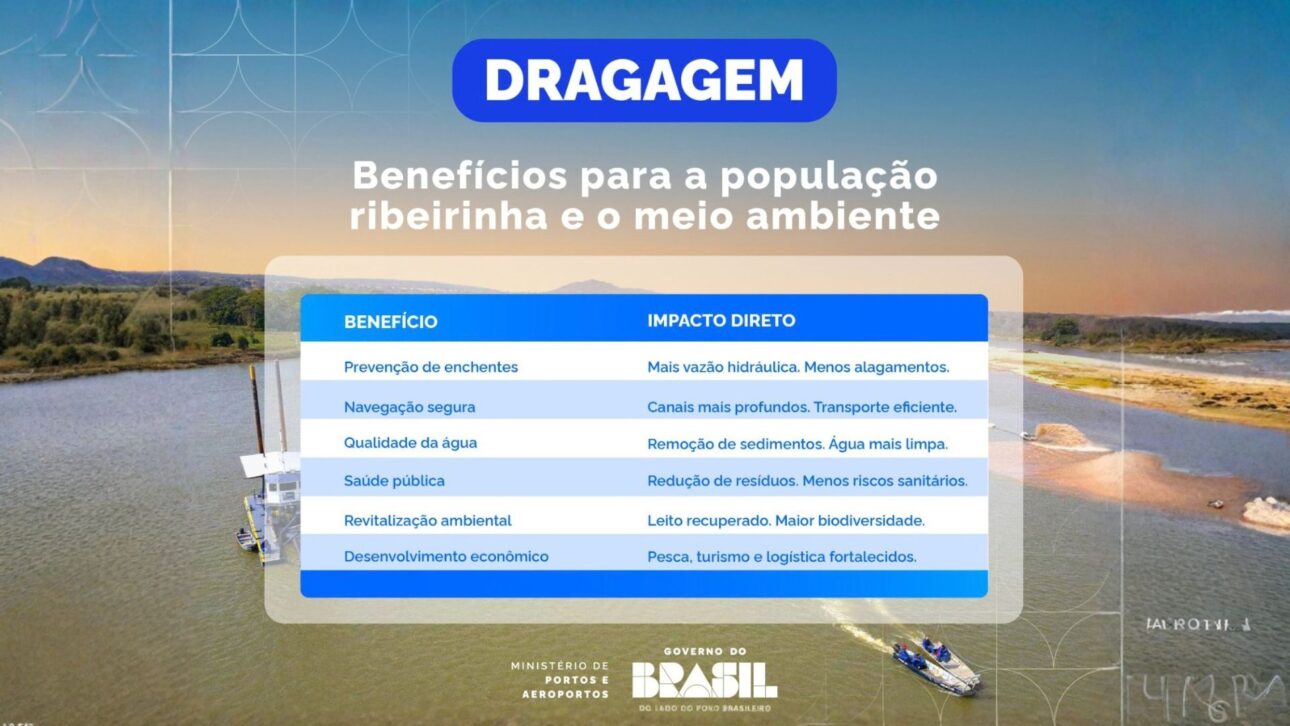
The same official disclosure states that the removal of sediments in these sections is expected to increase operational regularity and provide more predictability for trips.
Another expected effect is the reduction of logistical costs in inland transport.
The government has also begun to present inland navigation as a lower logistical cost and environmental impact alternative compared to road transportation in various contexts.
In a technical note from Antaq on waterway projects, the mode is described as an option associated with lower cost and environmental impact, a point repeated by the ministry in defending the expansion of waterway infrastructure.
Investments Expand National Waterway Policy
In the official balance published on January 14, 2026, the ministry reported having invested more than R$ 529 million throughout 2025 in maintenance dredging and improvements in waterway infrastructure.
The funds were also directed towards modernizing locks, expanding small public port facilities, and conducting studies for waterway concessions.
In the same communiqué, the ministry stated that between 2023 and 2025, investments in the sector totaled approximately R$ 1.29 billion.
These figures help to gauge the recent priority given to the Brazilian waterway system.
Especially in areas where rivers are the main access route for transport and supply for isolated communities.
The strategy also includes studies for concessions in waterways deemed priorities.
Among them are the Madeira, Tapajós, Tocantins, and Paraguai rivers, as well as the so-called Barra Norte and Lagoa Mirim.
Even so, maintenance dredging is not presented by the government itself as a transformational project for the river.
According to the current public policy, it is a periodic service to preserve navigability.
This framing is considered central to differentiating the measure from structural interventions that could alter the natural behavior of watercourses.
Navigation Safety and Environmental Monitoring
The director of Waterway Management of the ministry, Eliezé Bulhões, stated that dredging restores original navigability conditions without altering the natural course of the river.
According to him, controlled removal of sediments returns depth to the channel and increases vessel safety.
Bulhões also explained that the entire process is preceded by environmental studies and accompanied by technical monitoring.
“The controlled removal of sediments returns depth to the channel and increases vessel safety. The entire process is preceded by environmental studies and accompanied by technical monitoring to ensure protection for the ecosystem and the communities that depend on this route.”
The official documentation also supports that operations follow safety standards aimed at protecting fauna, flora and the environmental quality of the surroundings.
Before interventions, studies are conducted to identify sensitive species and define environmental mitigation measures.
Furthermore, modern equipment is used to control sediment dispersion and reduce impacts on aquatic habitats.
This point gains relevance because the debate on dredging often pits logistical need against environmental preservation.
In the most recent official documents, the justification is not limited to the flow of cargo.
It also involves the continuity of passenger transport, access to schools and the supply of isolated localities.
Direct Impacts on Riparian Communities
When the channel loses depth in critical stretches, the immediate consequence is felt in the routine of those who depend on navigation to buy supplies or transport local production.
For this reason, maintenance dredging has come to be advocated by the government as infrastructure action with a direct effect on daily life.
Especially in municipalities and communities where the river substitutes the road and serves as the main means of connection with other cities.
In this logic, the most visible gain is in maintaining navigability and reducing interruptions to inland transport.
The public policy currently implemented links dredging to operational safety, supply regularity and the preservation of the logistical function of waterways.
Especially in the northern part of the country, where terrestrial infrastructure still does not offer the same reach as transport via rivers.








-

Uma pessoa reagiu a isso.